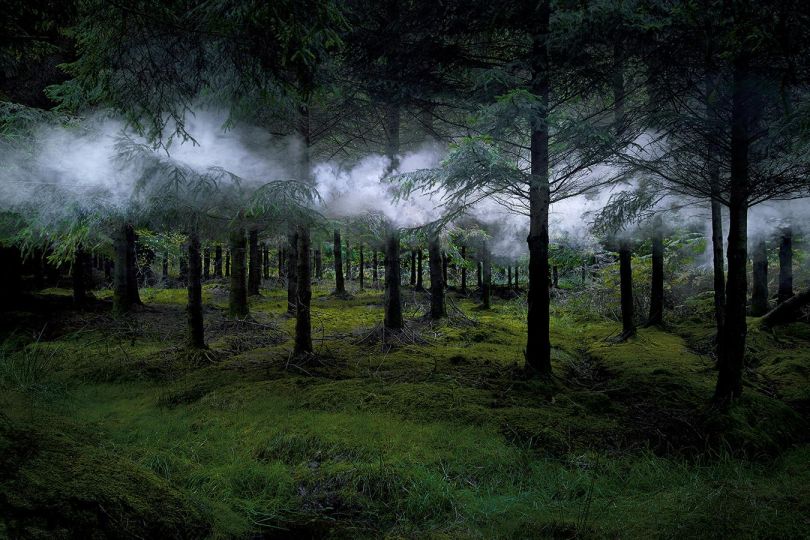
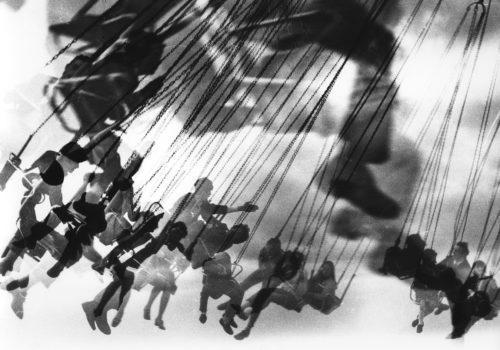
For Tomoko Yoneda, a Japanese photographer born in Akashi, objects speak to us. Places tell us the stories they contain, and landscapes are charged with the past they have experienced. The artist photographs them as if to exhume memories and sometimes ghosts. Thirty years of images are presented in London, where the photographer has long lived, at the the Daiwa Anglo-Japanese foundation. Interview.
Jean-Jacques Ader: First of all, why did you choose “Faultlines” as the title for the exhibition?
TY: As Melanie Pocock, the curator of my exhibition at the Daiwa Foundation, wrote, it refers to the faults on the Earth’s surface created by the movement of rock masses. These cracks continually widen and shift, accumulating tension that is eventually released in the form of earthquakes. In my work, geological faults also serve as a metaphor for the invisible borders that have been contested and redrawn by nation-states throughout history. This is why Melanie chose this title.
JJA: You choose to photograph places or landscapes steeped in history. What are you trying to find in them?
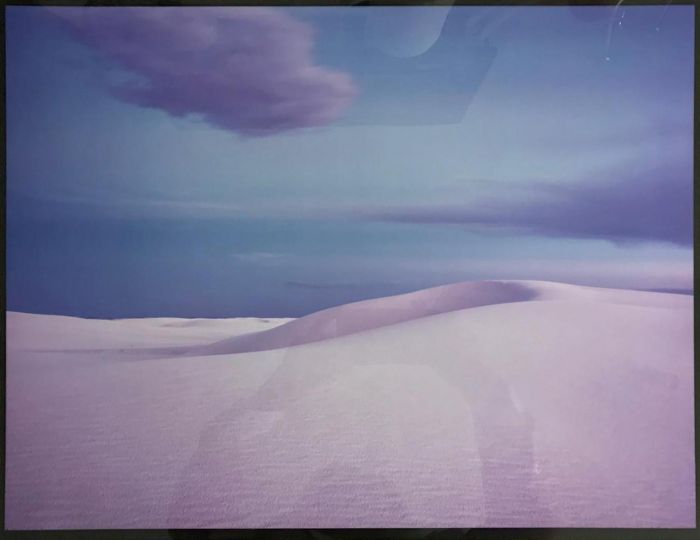
TY: First of all, when you look at the photos, you don’t see anything special. Some depict aesthetically beautiful and serene places; but when you read their captions, you realize that something happened there. It all depends on the history and knowledge of these places. These images evoke the memory of conflicts or other events that took place there, and the fact that this could happen anywhere, even in the most peaceful landscapes, or right near your home.
JJA: Photography captures the present, but how do you capture the past?
TY: I believe it’s always present. But you have to look. It’s in the places and the landscape, and you also need imagination and knowledge to understand this past.
JJA: Are you trying to find ghosts from the past?
TY: Yes, and I’m trying to bring them back to us. They may have disappeared, but unless you’re unconscious or don’t understand what happened, you’ll see them reappear.
JJA: Are you interested in history or its representation, its meaning?
TY: In the meaning of history, of course, and how people create their own. The Japanese, the French, the English—we all have different perspectives on history, and we understand it differently. Being interested in the past also means thinking about the future. We live in the present, but it also becomes history. History isn’t just the past; every second brings us into it in turn.
JJA: Some of your series are linked to writers or philosophers. How does literature inform your work?
TY: Their thoughts reflect the times they lived in and the problems the world faces, or has faced. They offer perspectives that resonate with our lives. Some of these reflections were formulated in the past, but their writings remain very relevant to us today, serving as a mirror that invites us to pause, refocus, and question reality.
JJA: Are your photos testimonies?
TY: Yes, I think so. The work I’m trying to do is like a warning. Tragedies don’t just happen to others; they can happen to anyone. A conflict can break out on your doorstep; anyone can be involved. That’s where history is important, to think about the future. And we must maintain this power to understand beyond images or words, because the world is complex.
Jean-Jacques Ader
“Faultlines,” an exhibition by Tomoko Yoneda, at the Anglo-Japanese Daïwa Foundation (London), from March 27 to June 16, 2025. Free admission. Curated by Mélanie Pocock, artistic director by Ikon Gallery. This exhibition is made possible with the support of ShugoArts.
Information: https://dajf.org.uk/