In Grasse, the Musée Jean-Honoré Fragonard presents the exhibition Qui a peur des fleurs ?
What better way to celebrate a twofold anniversary — the centenary of the Grasse perfumery and the bicentenary of photography — and to honour women and flowers, than to dive into a century of photography and gather heroic snapshots in which the flower becomes an object of power and affirmation? Carried, elevated and developed by the great-granddaughters of its founder, the Maison Fragonard has been shaped by women for more than 30 years, with quiet discretion and humility. We know it, and current events remind us of it daily: gender equality and respect for the so-called “weaker” sex remain precarious. Let us seize this double anniversary to illuminate photographic icons through a floral lens and examine their symbolic value.
WHY CHOOSE THE FLOWER?
It is not a simple colourful, decorative motif — it is often fragrant too. The flower is the very essence of perfumes; it intoxicates and inspires. If women love it so dearly, it is not only for its aesthetic properties — indeed, many cultures prove that it is far from being a feminine attribute alone (witness the exhibition we presented last year, Femmes dévoilées et hommes en fleurs, which explored Afghan men’s love of flowers) — but also for the confidence it bestows. This touch — ostensibly decorative — that so many subjects pin to their hat or jacket, weave into a crown or simply hold in their hands, becomes political when presented to the world. Like a standard, a flag, it helps to convey a message. This flower declares, loud and clear, that the one who bears it is not afraid.
FROM FLORAL PARADOX TO SCENOGRAPHIC MISE EN ABÎME
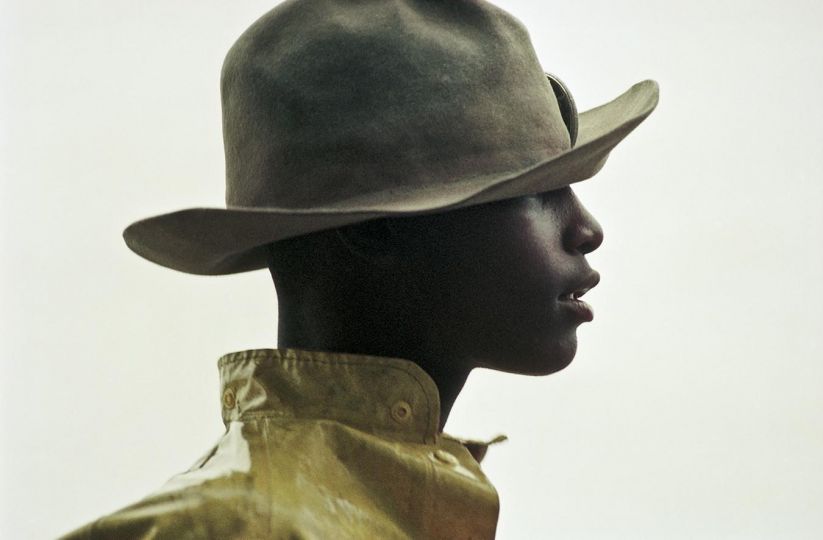
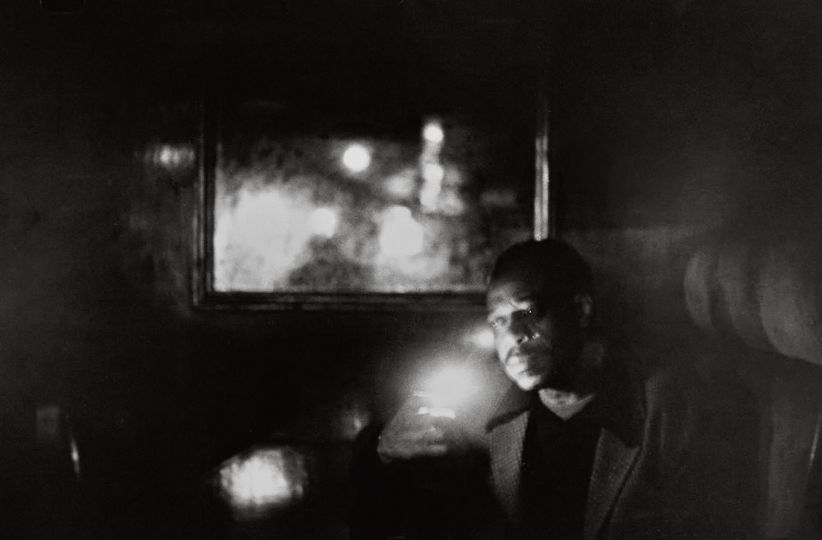
In his essay Le message photographique, published in 1961, Roland Barthes discusses the paradox inherent to the medium. While photography at first appears to deliver an objective message assimilable to tangible reality, a deeper analysis reveals a wealth of secondary meanings and interpretive biases. The semiotician speaks of a “photographic paradox”. He evokes the coded messages and hidden meanings embedded in an image, even a documentary one. Floral decoration carries a similar paradox. Freed from the innocence and aesthetics conventionally associated with it, the flower can yield an altogether different interpretation. The flower produces a message that in turn encodes the photograph. Far from being a coquettish sartorial detail, the flower does not decorate — it honours. “Qui a peur des fleurs ?” offers a joyful, colourful journey, as we love at Fragonard, but one that is engaged and activist. It is an unusual re-reading of the floral attribute across more than a century of women’s history, revolutions and everyday struggles. The photographs on display are drawn from various photographic archives (AFP, BnF, RMN, Bibliothèque du Congrès…) and the personal archives of photographers (William Klein, Marc Riboud…). The photographs (approximately 40 in total) will be presented against a backdrop of antique floral gouaches from Fragonard’s textile archive collections.
FROM THE ANCIENT CROWN TO ARTISTIC ASSERTION
From Greco-Roman antiquity onwards, the floral crown carries a plural symbolism. It is not an aesthetic ornament but a diadem symbolising power and authority. Vegetal crowns are not decorative attributes but genuine signs of recognition, honour, memory and political and religious communication in the Greco-Roman world. The artistic figure is inseparable from the flower: its most majestic embodiment is of course Frida Kahlo and her floral crowns. Crowns found across many cultures (from Russia to Central America and the islands of the Pacific), but which Frida made her hallmark, adorning her proud head with magnificent floral braids. It is impossible not to see in them an affirmation of her artistic identity — that of an artist whose work is total — and of her determination to assert her Mexican cultural belonging. The same manner of claiming cultural identity can be found among the Femen, whose bare chests caused a great stir, but who also recalled their Ukrainian origins through floral crowns.
This exhibition is also an opportunity to spotlight the women photographers who quietly shaped 20th-century photography and whom museum curators and exhibition commissioners have been helping us (re)discover in recent years (Mary Ellen Mark at the Rencontres d’Arles, Marie-Laure Decker at the MEP, Tina Modotti at the Jeu de Paume, Denise Bellon, Vivian Maier…). The most recent, Karimeh Abbud — the first free and independent Palestinian woman photographer — travelled her country, owned several studios and photographed families and landscapes. Whether women photographers or women in politics, with flowers they become heroic. And it is precisely these images that the exhibition seeks to bring to light.
Exhibition curator: Charlotte Urbain
Qui a peur des fleurs ?
From June 19 to October 18, 2026
Musée Jean-Honoré Fragonard
Collection Hélène et Jean-François Costa
14 rue Ossola, 06130 Grasse
www.fragonard.com
Open Monday to Sunday, 7 days a week
10:00 am – 1:00 pm and 2:00 pm – 6:30 pm