The Poetic Power of Photographs by Mario Giacomelli
It was amid the ferment that characterized 1950s photography that Mario Giacomelli’s images began to make their mark. They were unsettling, thought-provoking, surprising, and made it clear that the medium and the language of photography can capture something deeper than a faithful rendering of the scene being immortalized. This is what makes his photographs so relevant today. To see his works, the occasion is the exhibition Mario Giacomelli. Oltre il visibile at the Centro Saint-Bénin in Aosta.
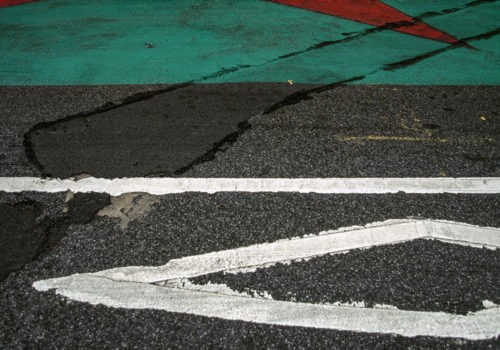
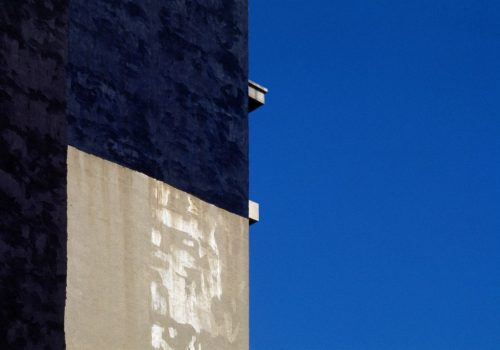
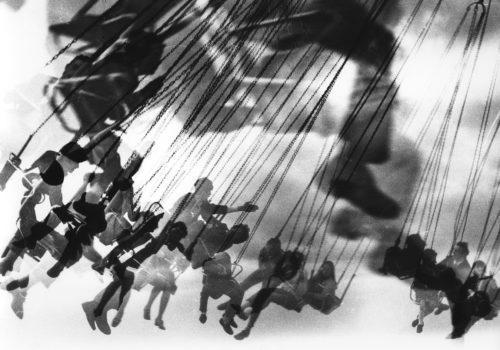
His photography is difficult to define; it is complex and multi-layered, reduced to a graphic symbol yet brimming with humanity and a sense of nature. Oltre il visibile is the title of the exhibition and the book dedicated to the artist that accompanies it, as well as the leitmotif that links the images on display. The exhibition showcases the distinctive features of his photography, which has been described as performative, evocative, poetic, and capable of being transfigured through the alchemy of the darkroom. Indeed, his body of work blends all these elements to create a balanced, harmonious and incisive whole.
Featuring 180 photographs from various series, the exhibition presents the most significant aspects of Giacomelli’s work in a non-chronological format, an approach that suited him well. It is organized around the interconnections, references and resonances that run through his body of work, ideally linking the pieces on display, which include vintage prints, contact sheets and his manuscripts and poems. In this way, curators Bartolomeo Pietromarchi and Katiuscia Biondi Giacomelli underlined Giacomelli’s perception of photography as not a linear document, but a living language in constant transformation, that transcends the visible.
From the very beginning, he developed a highly personal visual language, characterized by contrasts, discontinuities and dissonances, and closely linked to his inner feelings. In 1955, Paolo Monti called him “the new man of photography” because his work was so different from the photographic styles prevalent in Italy at the time. His “magical realism” transcended the neorealist vision, enriching it with an intimate, truthful, and tactile expressionism. Giacomelli did not, of course, rest on his innovation, but continued to experiment throughout his life.
As Bartolomeo Pietromarchi wrote, Mario Giacomelli’s photography “transcends the context in which it originated, the Marche region between the 1940s and the end of the last century, to reach a further level, where history becomes language and the landscape becomes metaphor”.
Mario Giacomelli was a self-taught photographer, with a passion for painting and literature, and his work left an indelible mark on Italian visual culture in the second half of the 20th century.
Pietromarchi adds that his vision “occupies a decisive transitional point between modernity, which is still marked by realism, and the advent of postmodern sensibility, which dissolves the boundaries between genres and shifts the focus from documentary objectivity to the subjectivity of experience”.
And this is how Giacomelli interpreted photography: he harnessed its poetic power, far from traditional photojournalism and lyrical realism, to create a new realm of expression capable of embracing thought and memory, and of blending testimony and documentation with absolute creative freedom.
According to Katiuscia Biondi Giacomelli, Mario Giacomelli “imbues the image with power, delves into pathos, exaggerates it, presenting figures as taut as violin strings and as piercing as their sound.
The result is an image so real that it embodies the mystery of life, so rich in details frozen in time and ruthlessly exposed that it reveals a world that has become unrecognizable. However, in his photography, detail has nothing to do with clarity but with obscurity. It reveals a world that is less solid, less defined, deeper, and far vaster than we are accustomed to seeing. His images have a sense of vastness: they shift to rearrange things into a new order, so essential, so raw, that it seems to emerge from a long-forgotten past. An order determined by someone who, knowing he is alive, tells his own story, which is both his story and the story of humanity”.
This is how his photography is “beyond the visible”, a connection between the reality of the scene, whether it be life in the fields, the landscape, a hospice, or a seminary, and his inner vision of the world. This vision was so powerful that it became a shared heritage for many.
“Giacomelli’s photography is cinematic: a surreal staging of characters about whom we know nothing, except that they are there, and their lives intersect within a larger narrative. This narrative follows the logic of a dream and affirms the impossibility of confining experience within rational boundaries, because, for Giacomelli, life happens where words fail to describe it,” Biondi Giacomelli adds.
The exhibition offers a chance to explore the artist’s imagery: photography as a fragment, reality as a narrative and metamorphosis, hyperrealism and abstraction. It also features photography as sculpture and as a staging of the invisible.
In 1964, Mario Giacomelli was the only Italian artist selected for The Photographer’s Eye, the exhibition curated by John Szarkowski for the Museum of Modern Art (MoMA) in New York. In 1965, he submitted his series A Silvia to the George Eastman House; in 1968, he held a retrospective solo exhibition in Rochester, New York. Those were the first steps towards his international recognition. In 1978, he was invited to exhibit his landscape photographs at the Biennale di Venezia and in 1980, the CSAC in Parma held a retrospective of his work, for which the art historian Carlo Arturo Quintavalle wrote a catalogue raisonné.
The exhibition Oltre il visibile at the Centro Saint-Bénin, accompanied by a book-catalogue published by Electa as part of the Electaphoto monograph series, is promoted by the Assessorato Istruzione, Cultura e Politiche identitarie of the Regione autonoma Valle d’Aosta, and was conceived and organized by Electa in collaboration with the Archivio Mario Giacomelli.
Paola Sammartano
Mario Giacomelli. Oltre il visibile
From March 21 to September 13, 2026
Centro Saint-Bénin
Via Festaz, 27 – 11100 Aosta
Italy
https://www.regione.vda.it/cultura/mostre_musei/musei/saint_benin/