Michael Zagaris : Raw America
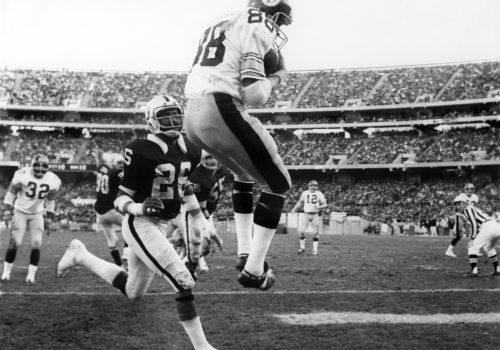
There is something in Michael Zagaris that evokes a vibrant and untamed America. An electric, battered, excessive America, where rock still smells of sweat, leather, and burning amplifiers, where sport feels less like entertainment than ritual combat. His photographs do not simply document an era: they pass through it like an emotional discharge. He photographs the way some musicians once took the stage without a safety net, without distance, with an almost physical urgency. Along the sidelines of the National Football League or in the smoke-filled backstage of concerts by Bruce Springsteen, The Rolling Stones, Bob Dylan or Nirvana, he captures his subjects at the exact moment the mask falls away. What he seeks is neither celebrity nor staging, but that almost invisible fracture where legend becomes flesh once again. His gaze carries the elegant brutality of great American narratives. Black and white becomes material in his hands: dense as rain-soaked asphalt, restless as a guitar riff, threaded with silences and tension. Each image seems to contain the noise of the world — the roar of a stadium, the saturation of a Gibson, the short breath of an artist stepping out of the light. Yet what makes his work so essential lies above all in his proximity to his subjects. He never photographs from the outside. He lives his images from within, in direct contact with energy, exhaustion, and excess. His photographs speak as much of glory as of its reverse: fatigue, adrenaline, the solitude after applause. It is within this continuity that his Pittsburgh exhibition takes place, presented at the 707 Gallery of the Pittsburgh Cultural Trust, on the occasion of the 2026 NFL Draft. The presentation acts as a return to the origins of his vision: American football as a foundational myth and an emotional stage. Through this series drawn from his archives of the National Football League, Michael Zagaris does not merely document the game: he reveals its hidden dramaturgy the sidelines, the locker rooms, the moments of rupture where glory and defeat brush against each other. His gaze, instinctive and deeply human, turns the field into a tragic and electrifying stage, where every image holds a suspended tension.The exhibition ultimately reveals the full coherence of his work: a vision of sport as contemporary myth raw, intimate, and cinematic where American football becomes the mirror of an entire culture, and of an America forever suspended between exaltation and collapse.
Website : www.zmanphotography.com
Instagram :@michaelzagaris
Actually : 60 Years of NFL Photography, curated by Anastasia James and presented by the Pittsburgh Cultural Trust, until Sun, Nov 8, 2026. www.trustarts.org
Can you give a photographic memory from your childhood?
Michael Zagaris : I started taking pictures when I was 4 or 5 years old, because once a month my grandmother would sit me down on the couch and take me through her photo books of all the things that had happened or were happening with our family. Moments like when she was a child in Greece, and when she first moved over here.
What was the first camera you shot with as a kid?
M.Z. : It wasn’t specifically a brownie, but it was small and not what I would call a good camera. I remember that sometimes there would be a roll of film in that camera and on that roll there might be a baptism, a family get together, a Thanksgiving. There could be four months of pictures on that one roll.
What camera do you use today?
M.Z. : Today I use a Canon, but it’s an old mirror camera. Most of the young people in the last five or six years, they’ve gone mirrorless, but I’m old school.
Of all the photographs in history, which image do you wish you had taken?
M.Z. : Boy, that’s a tough question. Because whatever answer I give, I’ll right away think of something else. Probably the crash of the Hindenburg Zeppelin in New Jersey. Or maybe Jack Ruby shooting Lee Harvey Oswald in Dallas. And as I’m saying this I’m thinking of five or ten others.
Looking back, are there any moments that you experienced firsthand that you wish you had captured on film but missed?
M.Z. : I remember after the 49ers lost to The Ravens at a Super Bowl in New Orleans, the 49er general manager was lying on the stairs face down and I wanted to shoot it. My PR guy stopped me and it was a great, great shot that I missed. My thing is, very often, most people get celebratory shots, but I think the opposite side of the spectrum is just as amazing… and telling.
Is there any one photograph that changed your world?
M.Z. : There are probably 2 photographs. The first shot, “The Last Note,” in late March, 1976, of The Who at Winterland where Pete Townsend is throwing his guitar in the air. That has turned out to be one of my iconic shots that I got quite by accident. The Who’s drummer, Keith Moon, had talked me into splitting a mushroom with him before the show. Halfway through the show it started taking effect and I had to leave the video stand that I was shooting on, went to the side of the stage, and it was really coming on. So I went behind the stage in the balcony and just stood there watching the show, literally entranced. My partner, Kristin, turned to me and said, “Are you shooting any of this?” I raised the camera and shot 2 or 3 black and whites and then 2 or 3 color frames and that’s when I got the shot of Pete Townsend throwing his guitar way up in the air. The second shot was of Bill Walsh, 49ers head coach and Joe Montana kneeling at the sideline in the later stages of the championship game in 1985 at Candlestick Park. The angle, the lighting, everything, it was an unbelievable picture. It was one of those rare shots that in the moment you think to yourself, “Wow, this is going to be something else.” Those two shots have probably defined my work in the sense that they’re my most recognizable images. But, the best has yet to be taken.
As a viewer, what interests you most in an image?
M.Z. : You know, I’ve always approached photography as if the camera is merely a part of me. And I walk through life, letting life go through me around me, and what I see and experience every day is what I shoot. I don’t like to have to crop pictures, because that initial image, that was the mirror of what my brain captured. And that’s how I view things. I don’t even stop to think or compose. For me, photography is very much a stream of consciousness.
Aesthetically, do you respond more to black and white or color photography?
M.Z. : It depends on the situation. I think some moments really are, black and white, kind of like Film Noir. It’s more the energy and the feel of the moment. There’s no right or wrong and every person is their own personal critic. For some people, color photography is like capturing life whereas black and white can be more dreamlike. That’s what I love about Coppola’s Rumblefish which was shot in black and white and has that quality. But then he put in those little bits of color which pull you into a different space. But yeah, very dreamlike.
What details do you look for in a face, a landscape or an object?
M.Z. : You know, I understand the question but I don’t think that way. I don’t look for certain things. More than looking, I react. It’s more of a reflex.
In your experience, can techniques sometimes take precedence over emotion?
M.Z. : No, not with me. But I think every person is different depending on how you’re wired. Other people see things that are clearly there, but maybe I don’t see, and vice versa. It comes down to your eye.
Is photography a testimony or form of manipulation?
M.Z. : It depends on who’s taking the picture. It can be either or both. In my approach, It’s merely a form rather than a manipulation. But that’s me. And again, everybody’s different. I can show you work by 5 iconic photographers and it’s like 5 different ways of looking at the world. It’s the difference between creating a moment or capturing a moment. For example, shooting a portrait might be thought to be an act of creation. For example, take Annie Liebwitz’s early photos when she was shooting for Rolling Stone magazine, all the photojournalism, it is so different. Then when she moved on to Vanity Fair, she started constructing these elaborate moments. Each thing that she did was excellent, but it was totally different from photojournalism.
How would you describe your creative process?
M.Z. : I’m always aware of whatever is happening and shoot what hits me in a moment. I always have to be alert because those special moments happen in a split second. There usually isn’t time to think “This will be great,” I have to instinctively react.
What elements can make silence visible in a photograph?
M.Z. : Light … or lack of light can affect the mood and feel of a shot. Just a bit of light or shadow can bring a scream of life into a photo.
Can a photograph change our perception of an event?
M.Z. : This makes me think about the raising of the flag at Mount Sarabachi. Joe Rosenthal, took that photo. One day I’m over at photographer Jim Marshall’s house having coffee with Jim and Joe Rosenthal. I said, “Man, it’s unbelievable that you happened to get that photo at that moment.” He kind of laughed and he said, “Actually, I had taken another photo, but I didn’t like it. So we re-staged that moment and shot it again.” He explained in detail what they did and that’s how he got the shot that just about everyone has seen. There are purists in photography, especially if you work for a newspaper. If you do that, you can be fired. You could lose your job because that’s total manipulation. The moment really happened naturally but it was then recreated moments later with the same people on the same spot. You can create your own truth in the moment as a gesture for history. He said it was hot and humid, they’d been in battle for weeks and were tired. And he says, “You know, guys, can we do that again? But let’s see, I want to get you over here, and let’s put this up here…” it blurs what’s true, even though it essentially is.
Who is the person you would have liked to have been photographed by yourself?
M.Z. : Sarah Moon or Deborah Turbeville. I love the unique romanticism of their work.
What is an essential photography book that everyone should have?
M.Z. : I never quite know how to answer these kinds of questions. I feel like the frog that you just took out of your pocket. I suppose anything by Gordon Parks or Teenie Harris, but I could just as easily say Diane Arbus but with Diane you have to engage with the subject. Be part of it, where they’re inviting you in and becoming who they are in front of you, being vulnerable. There’s an element of trust. But then there’s Robert Frank. It was almost like he was shooting from the hip or, you know, a camera in his coat. And he was certainly capturing a moment. But it was almost like… I don’t want to use the word stealing, but it was kind of like that which comes across in his photographs. For any of these photographers I named, there’s an element of bearing witness and more than capturing the moment, it’s almost like you’re being in the moment with them. As a photographer, sometimes you want to live it.
What is the last photograph you took?
M.Z. : It was last Sunday of The Chicago White Sox and the Oakland Athletics. I was at the game to visit my guys on both teams, but being there, moments unfold and I started taking pictures.
What is the image that represents the current state of the world?
M.Z. : Any number of shots. There’s plenty to go around and it cries out to where our species is at this moment of time on the planet. A lot of people have a hard time articulating what they’re feeling at this moment in history. That’s the power of photography, to help us connect with, understand, and share these feelings. The old guard is trying to hold on to power any way they can as the world crumbles and we’re all witnesses.
If you could organize your ideal dinner. Who would be at the table?
M.Z. : Fidel Castro, Marilyn Monroe, Alfred E. Newman. John Gotti, Siddhartha, Buddha, Jesus, Kate Moss, Bobby Kennedy, James Brown, Julie Christie, Visconti… now it’s turning into a big table.
What has changed in photography since the rise of social media?
M.Z. : What changed is the perception by many that photography is disposable because everyone has a powerful camera in their pockets with unlimited potential but they mostly just end up in the ether. What’s lost is that people aren’t moved by beautiful photographs or beautiful books and magazine layouts the way previous generations were. But in a way, everyone with a cell phone is participating in documenting the journey of the human race and in the end, the camera is merely mirroring what we’re experiencing.
What is one thing people absolutely must know about you?
M.Z. : I guess that I’m a searcher. I’m always in quest of something, looking for something that I haven’t yet seen or experienced and want to be touched by.
And the last question, a final word.
M.Z. : We’re at a crazy inflection point on the planet. I hope that we’re going into a time in the universe that is more equal and where everyone has a chance. I’d like to see us collectively come out of this abyss that we’re in right now. John Chipolina said it best. As long as you’re alive, you might as well live.