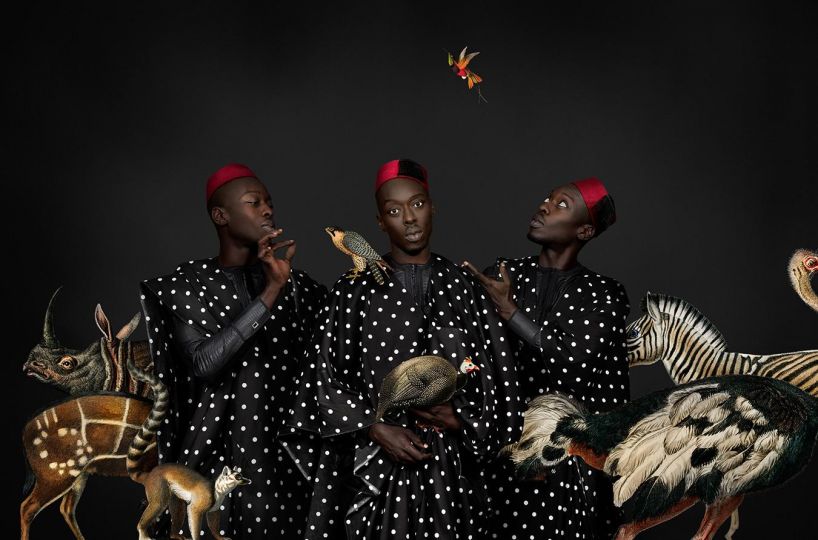
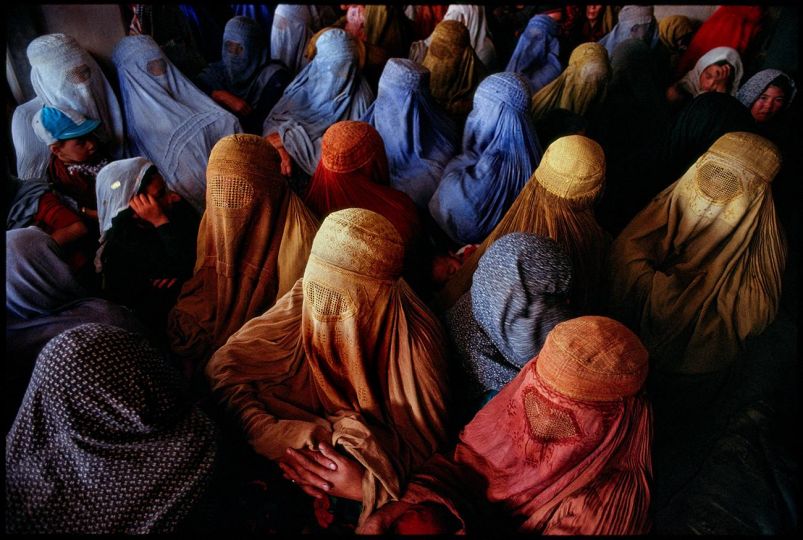
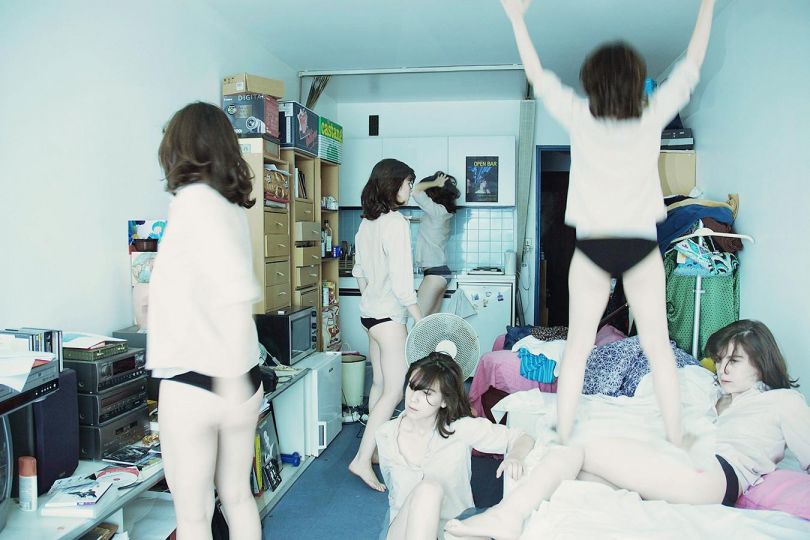
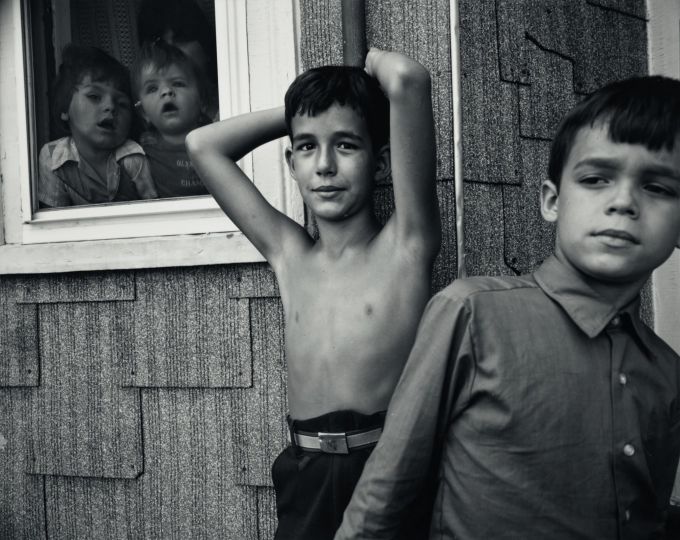
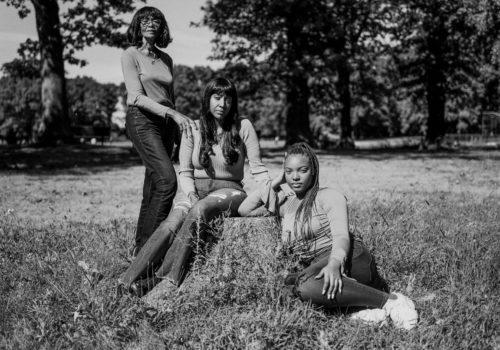
When war broke out in Sudan, Hashim Nasr was already on the other side of the border, in Egypt. From there, he watched his country descend into chaos and chose to respond not with weapons, but with images. His project On War and Displacement was born out of that forced distance out of the impossibility of acting except by witnessing.
For Hashim Nasr, photography became a language of survival. It transcended the documentary to become poetic, symbolic, and filled with silence and light. His images speak of absence, displacement, and the fragile memory of those who have had to flee. Faces vanish to reveal the universal; bodies become silhouettes suspended between two worlds — the one they lost and the one they have yet to find.
A Sudanese artist in exile, Nasr embodies a generation for whom creation itself is an act of resistance. In a world saturated with violent imagery, he chooses restraint, suggestion, and slowness — as a necessary counterpoint to the brutality of history. Through his work, he reminds us that photography, far from being a mere way of looking at, can become a space of memory, dignity, and hope.
Instagram : hashimnsr
Hashim Nasr will show a selection of works with TINTERA at 1-54 London from 16-19 October. For more information visit TINTERA.
When did you first become interested in photography?
Hashim Nasr : I began in 2019 during the revolution in Sudan. At that time, I was photographing protests in the streets, trying to reflect what was happening. But I believe my real grounding in photography started in the summer of 2020, during COVID, when I began documenting my emotions through self-portraits.
Who are the photographers who inspire you?
Hashim Nasr : There are many such as Francesca Woodman, Heba Khalifa and Aida Muluneh.
The image you would have liked to take?
Hashim Nasr : A family photo of my loved ones in Sudan before we had to leave because of the war.
The one that moved you the most?
Hashim Nasr : It’s not a photograph but a movie, The Color of Pomegranates 1969.
And the one that made you angry?
Hashim Nasr : The photograph of Alan Kurdi’s body on the beach in 2015. His small body lying there filled me with anger toward humanity.
Which photo changed the world?
Hashim Nasr : The Vulture and the Little Girl, Kevin Carter, 1993
And which photo changed your world?
Hashim Nasr : In the summer of 2020, when I began experimenting with my phone camera, I realized photography could be personal and experimental.
What interests you most in an image?
Hashim Nasr : What fascinates me most is when an image carries multiple layers of memory, emotion, and metaphor all at once. The way an image continues to echo enables you to see the ability of that image to translate emotions to its viewer .
What is the last photo you took?
Hashim Nasr : A portrait of my friend for my series On War and Displacement .
Tell us about a key image in your personal collection?
Hashim Nasr : One of my earliest self-portraits was called Unicone Fight 1 (2022) where I used blue cones as symbolic elements. That photograph became the seed of my visual language (surreal, yet deeply personal). It marked the beginning of using objects and symbols to express what words could not.
Share a photographic memory from your childhood ?
Hashim Nasr : At a family gathering during my birthday party, my uncle brought his camera and everyone was looking at the cake. The reflective decorations and smiles of everyone is something I won’t forget.
According to you, what is the necessary quality to be a good photographer?
Hashim Nasr : Sensitivity and the ability to truly see and listen and reflect those emotions.
The person you would most like to photograph?
Hashim Nasr : Lady Gaga. She is the only living artist or even person I feel would connect with my mentality and my aesthetic so easily.
The camera of your childhood ?
Hashim Nasr : My phone camera realme 8
The one you use today?
Hashim Nasr : Canon M50 Mark II
What, in your view, is the primary role of photography in our perception of the world?
Hashim Nasr : Photography shapes how we remember and want to be remembered and how we imagine. Yes, It can always document, but it can also question and reimagine reality. For me, its primary role is to make us see differently.
Should an image always be a reflection of reality, or can it break free from it?
Hashim Nasr : It definitely can and must break free. Reality is one of many layers, but imagination is what gives depth of the possibilities of an artist. Photography should have the freedom to move between truth and metaphor.
Is there a particular era or photographic movement that especially resonates with your work or your tastes?
Hashim Nasr : Surrealism. It resonates with how I would express myself, my world and my surroundings because it allows me to merge memory, dream, and reality into one visual space.
If you had to choose one photograph that represents you, which one would it be, and why?
Hashim Nasr : This one (Boxed, 2023-24). It speaks to my inner child, the elements of playfulness, surrealism, the colour blue and my parents posing for me for the first time. It’s a core part and a peak of my photography practice as I was expressing a specific feeling of entrapment in space and time, and I have never felt more proud of making a photograph.
What balance do you see between intuition and reflection in the construction of a photographic image?
Hashim Nasr : For me, intuition comes first. It is like a seed leads to the moment of the click. Reflection comes later, shaping how the photograph is presented, sequenced, or understood.
How would you define beauty in photography? Is it purely aesthetic, or does it carry a deeper message?
Hashim Nasr : Beauty is not about perfection. For me, it’s about authenticity. A photograph can be beautiful when it reveals something raw, tender, or true even if it’s not conventionally pretty.
Does photography have the power to change the collective perception of an event or an era?
Hashim Nasr : Yes, absolutely. It can redefine how events are remembered and how history is told. It has the power to shift empathy to certain events, to challenge narratives, to create new ones.
Is photography a form of testimony or of manipulation—or can it be both at once?
Hashim Nasr : Photography can be both. For me, it is testimony. I want my images to witness, to reflect, and to create space for those reflections.
What is the relationship between the intimate and the universal in your photographs?
Hashim Nasr : My work begins with the intimate, with sparks and ideas growing from my memories, my family and my own stories but through symbolism and metaphor. I always work on making my work touch on the universal experiences of finding identity and loss, exile, and longing.
How would you describe your creative process?
Hashim Nasr : I build my images from an idea I sketch in my notebook. I craft objects, stage scenes, and use symbolism to translate emotions into visual form. My process is conceptual but always rooted in personal experience.
Do you have an upcoming project that’s close to your heart?
Hashim Nasr : A project I have been developing for quite some time, and would like to immerse myself more into focusing on completing, is finding answers on gender identity and my journey through my childhood questions.
What’s your guilty pleasure?
Hashim Nasr : I find myself spending hours watching behind-the-scenes videos of artists making their work. There’s something comforting about seeing the process, the trial and error, the small rituals of creation. It reminds me that art doesn’t appear magically; it’s built slowly, with care and sometimes with mistakes.
The best way to disconnect for you?
Hashim Nasr : I live in Alexandria and I like to take early morning walks by the sea. The sounds of the waves, feels like a reset. When I’m near water, I stop thinking about deadlines, projects, or displacement, and I just disconnect.
What is your relationship with the image?
Hashim Nasr : I treat my images as a mirror of states of my mind, a glimpse of the many stories I couldn’t tell with words.
Your greatest professional extravagance?
Hashim Nasr : Spending weeks crafting simple objects and props by hand for a single photograph. It may seem extravagant in terms of time, but it’s how I bring depth to my work. Back in May I worked many hours every day to complete two giant artificial flowers made of organza fabrics. It took so long, but for me it was all about the excitement of the process rather that the final product
The city, the country or the culture you dream of discovering?
Hashim Nasr : Socotra island in Yemen which is famous for its unparalleled biodiversity and untouched beauty. It is home to unique flora and trees.
The place you never get tired of?
Hashim Nasr : The banks of river Nile in Khartoum. Its silence, the vastness of green fields, and timelessness always pull me back. It’s a landscape that feels endless and full of memories.
In terms of social networks, are you more into Instagram, Facebook, Tik Tok or Snapchat and why?
Hashim Nasr : Instagram – because I can connect and engage with other fellow artists, and be inspired by their works.
Colour or B&W?
Hashim Nasr : Why not both, although I work mostly on colored photographs. However, I always feel hooked to black and white photographs as it strips things to their essence
Daylight or artificial light?
Hashim Nasr : Daylight for sure.
If God exists would you ask him to pose for you, or would you opt for a selfie with him?
Hashim Nasr : I would ask for a portrait.
According to you, what is missing in today’s world?
Hashim Nasr : What I feel is missing most today is empathy and love for all. The ability to see each other as fully human, beyond borders, and identities, has been separated by fear, by division, and by the constant idea of who is better than others . Without empathy, we lose the very thread that ties us together. It’s what allows us to understand another person’s pain, and to recognize our shared humanity.
If you had to start all over again what would you do?
Hashim Nasr : I would still choose art in the same way but I would give myself permission to start earlier, without the weight of fear or doubt and to be able to fully express myself without fear. I would trust my instincts from the beginning and allow myself to grow into an artist without fears.
What do you like people to say about you?
Hashim Nasr : That my work made them feel something deeply, that it reached them beyond the visuals.
The one thing we absolutely must know about you?
Hashim Nasr : The most important thing to know about me is that photography is not just a practice I chose; it is something I need to do to express my unspoken words. It is how I process my emotions, how I preserve a memory, how I cope with loss. Photography allows me to exist in the world with a voice, when words often fail me. Without it, I don’t know how I would hold myself together.
A last word?
Hashim Nasr : I wish my works to be always seen as an act of playful expression of my identity and my true authentic voice.
Carole Schmitz