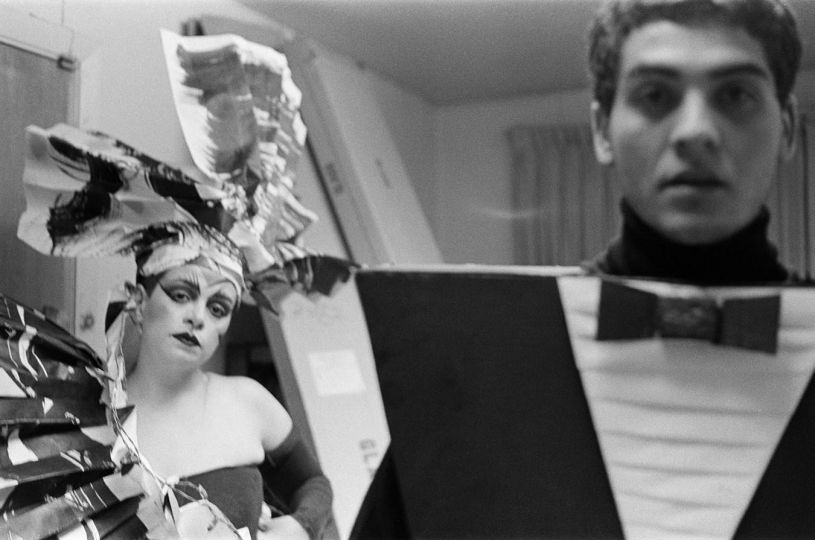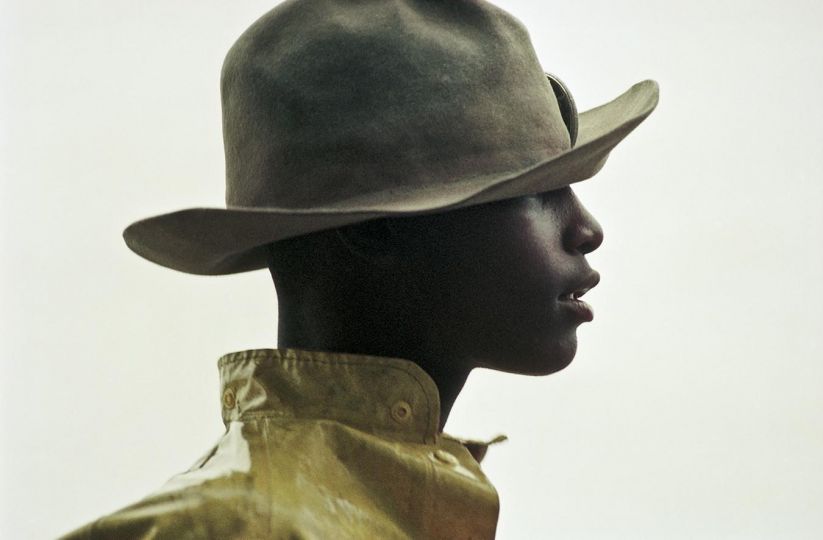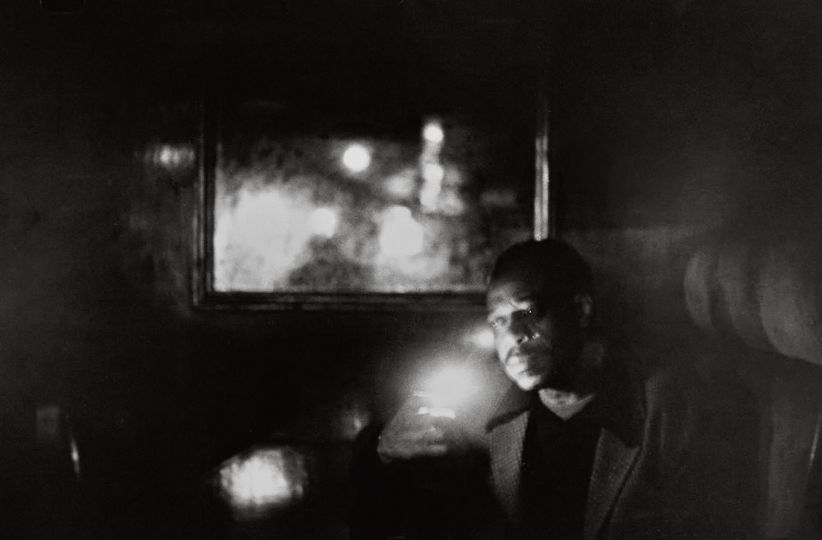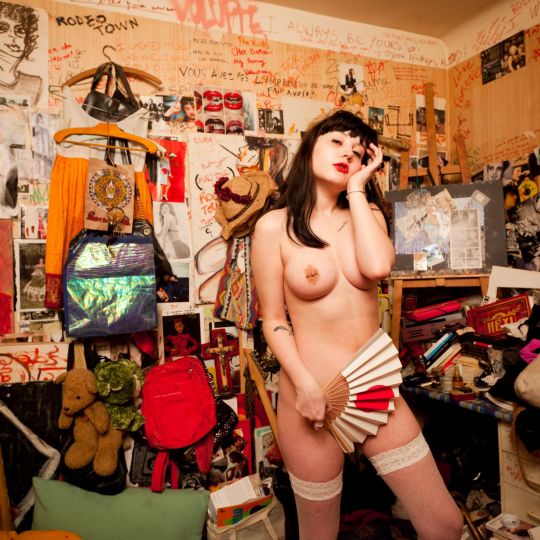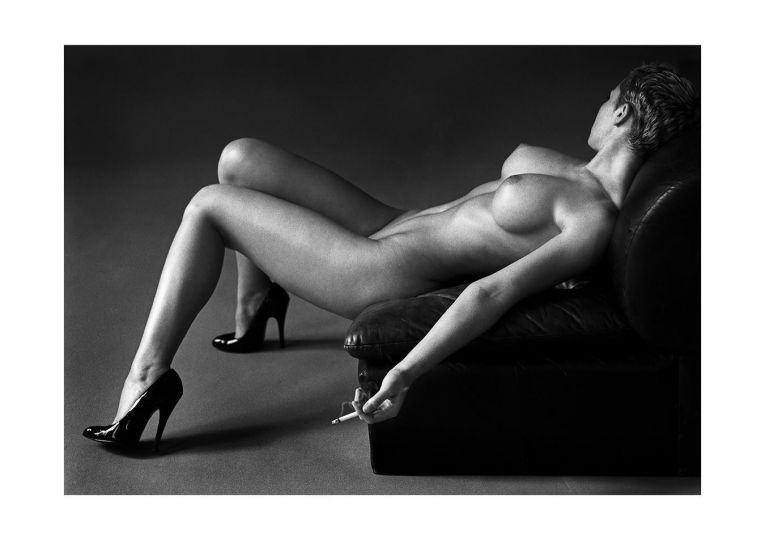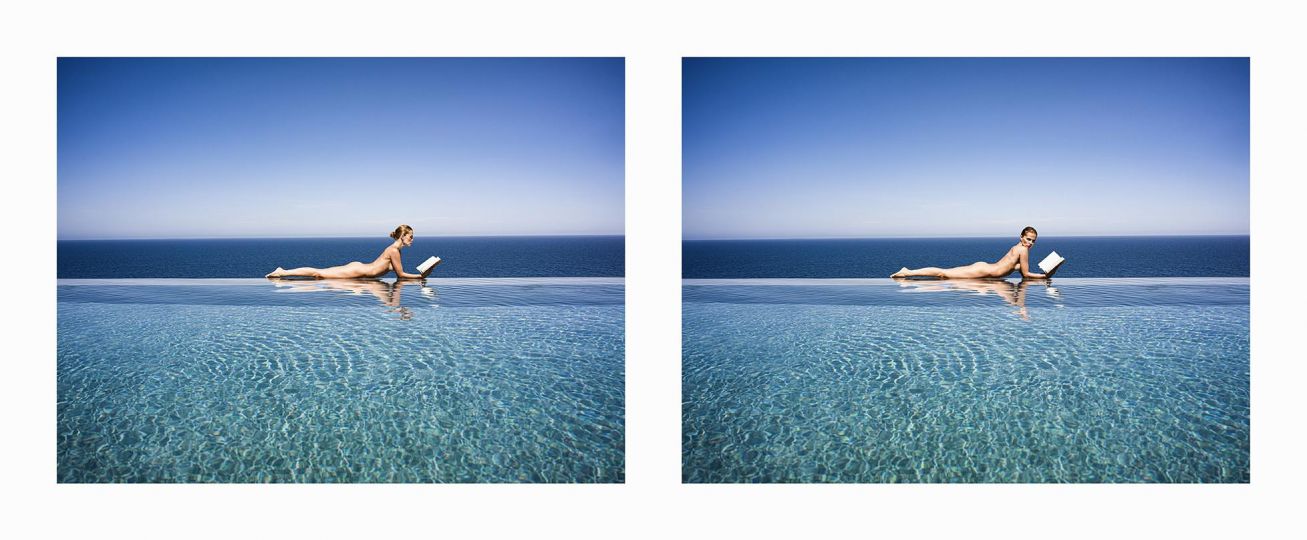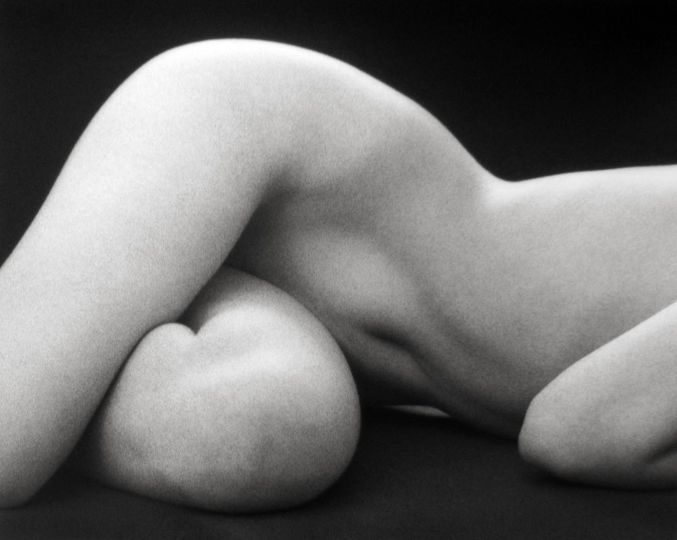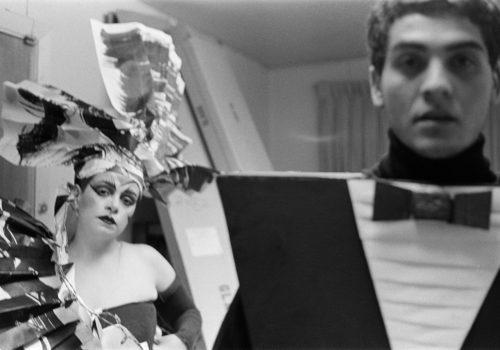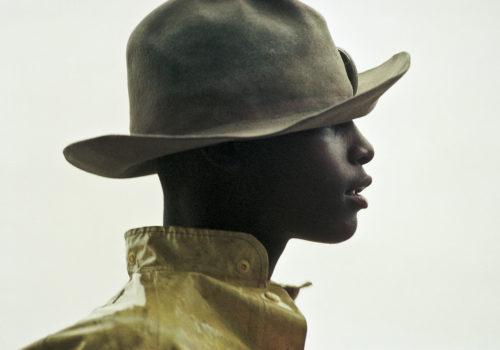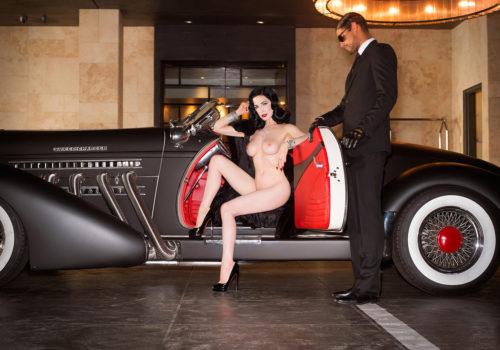
The exhibition Dialogue at Galerie GADCOLLECTION was born from a game of almost instinctive correspondences, from a silent recognition between worlds that, at first glance, seemed destined never to meet. First came the human encounter between Markus Klinko and Gad Edery, followed by a more mysterious one still: the meeting between Klinko’s visual language and the perspectives of the photographers represented by the gallery. Upon discovering the works of William Helburn and Jean- Daniel Lorieux artists he had not previously known Markus Klinko immediately sensed a shared vibration, a common fascination with the construction of desire and with elegance as a territory of fiction.
For in Markus Klinko’s work, the image is never merely a portrait, nor simply a fashion photograph: it belongs to the realm of contemporary myth. Each composition is constructed like a psychological stage where glamour becomes a dramatic, almost unsettling force. Bodies are elevated to the status of icons, gazes sculpted by light, materials stretched toward a deliberately artificial perfection. His instantly recognizable aesthetic draws as much from cinema, advertising, and pop culture as from a pictorial tradition of power and theatrical mise-en-scène.
Within this highly stylized universe, desire, danger, seduction, and domination cease to be emotions and become modern archetypes. The figures photographed by Klinko seem to belong to a mythology of the present: heroines and heroes suspended in a space beyond reality, somewhere between absolute sophistication and latent tension. Behind the brilliance of the surfaces, there is always a sense of vertigo.
It is precisely this unsettling quality that resonates with several of the historical works presented by Galerie GADCOLLECTION. In the work of William Helburn, Jean-Daniel Lorieux, and Ormond Gigli alike, photography transcends the simple aesthetic document: it tells the story of an era, a social fantasy, an idea of luxury and freedom. Yet where their images captured the luminous carelessness of a certain golden age, Markus Klinko offers a contemporary interpretation more electric, more theatrical, almost dystopian.
Dialogue thus becomes far more than an exhibition: it is a conversation between generations, between visions of glamour, between different ways of staging the world. A journey through photography as a territory of fantasy, where each photograph seems to answer another in a subtle play of echoes. The viewer discovers not only artworks, but an invisible lineage that of artists who transform beauty into language and photography into a theatre of desire.
At a time when images are consumed at the speed of endless digital scrolling, the work of Markus Klinko continues to impose a rare temporality: that of construction. In his work, nothing is left to chance. Light carves bodies the way a sculptor shapes marble, while faces seem to emerge from a suspended space somewhere between cinema, fashion, and contemporary mythology. His photographs do not seek to capture a fleeting moment; they create an apparition.
The Discipline of Vision
This almost obsessive mastery undoubtedly finds its roots in a previous artistic life. Before photography, Klinko was a classical harpist, trained within the great European tradition. A discipline of gesture, rhythm, and harmony that still permeates each of his compositions today. One finds in his images the rigor of a musical score: silent tensions, the architecture of emptiness, the choreographic precision of lines and volumes. Then came the rupture. An injury forced the artist to abandon music. What could have marked an ending instead became a radical creative displacement. Klinko entered photography as one steps onto a stage after a long passage through silence. Very quickly, his visual language distinguished itself through a hyper-constructed aesthetic in which portraiture ceased to be descriptive and became iconic.
The Invention of the Icon
His encounter with David Bowie marked a decisive turning point. When Bowie entrusted him with the visual creation of Heathen, Klinko understood that portraiture could transcend reality and reach a form of symbolic abstraction. The image of Bowie spectral and almost immaterial immediately became part of the collective imagination. From that moment onward, Klinko no longer merely photographed celebrities: he orchestrated their transformation into absolute cultural figures. Beyoncé, Lady Gaga, Kate Winslet, and Naomi Campbell move through his universe like almost liturgical presences. Yet beneath the overt glamour, his work interrogates something deeper: our contemporary need for icons. His photographs reveal the way our era manufactures its visual mythologies with the same intensity that past centuries devoted to erecting deities or painting saints.
Between Hyperreality and Vulnerability
This tension between extreme sophistication and inner fragility constitutes the true strength of his work. Beneath the technical perfection, a form of vulnerability always emerges: an unsteady gaze, a silent distance, a humanity still resisting the machinery of spectacle. The importance of his work has long surpassed the boundaries of fashion photography and celebrity portraiture alone. Several of his images have entered the collections of the Victoria and Albert Museum, affirming the institutional and patrimonial significance of his practice. His prints also belong to numerous major international private collections, where they are regarded as emblematic works of the visual culture of the early twenty-first century.
The Visible as Theatre
A documentary currently in production revisits this singular trajectory from classical harpist to one of the leading figures of international photography revealing the many layers of an artist whose path escapes traditional categories. The film is expected to be released on major international streaming platforms by the end of this year. With Dialogue, presented at Galerie GADCOLLECTION from June 11, 2026, Markus Klinko situates his work within a broader conversation about contemporary imagery and its powers of fascination. In resonance with other major photographic voices such as William Helburn, Ormond Gigli, and Jean-Daniel Lorieux, the exhibition reveals the full complexity of a body of work too often reduced to its pop brilliance, when it is above all a sophisticated reflection on the staging of the visible. For ultimately, Markus Klinko photographs less individuals than mental constructions. And within this ability to transform a familiar face into a timeless apparition may lie the true power of his work.
Carole Schmitz
Markus Klinko : Dialogue
from June 11 to July 19, 2026
Galerie GADCOLLECTION
4 Rue du Pont Louis-Philippe 75004 Paris
+33 143 707 259
www.gadcollection.com