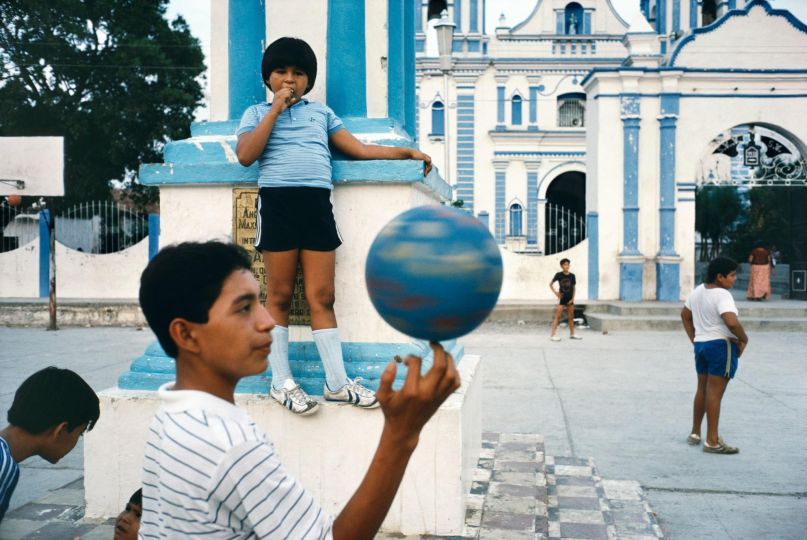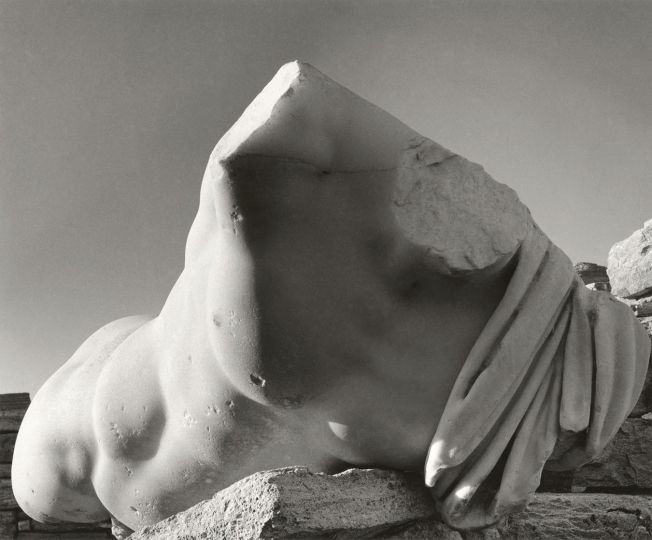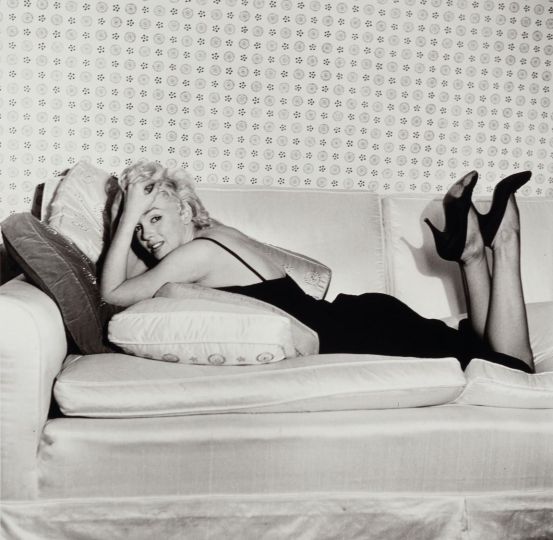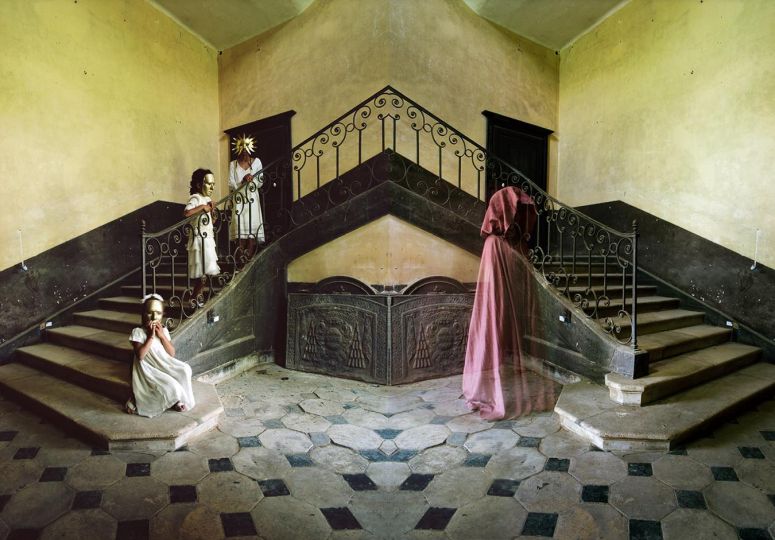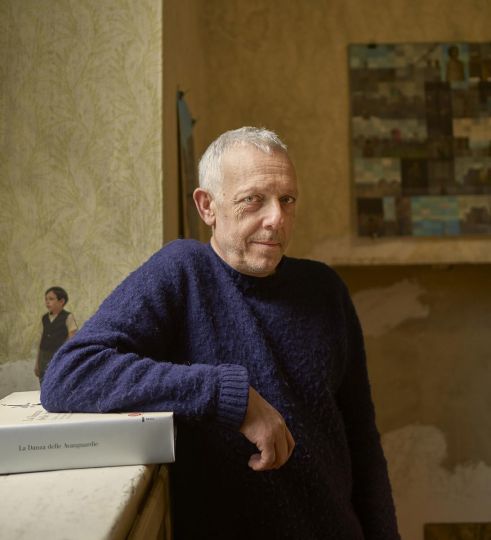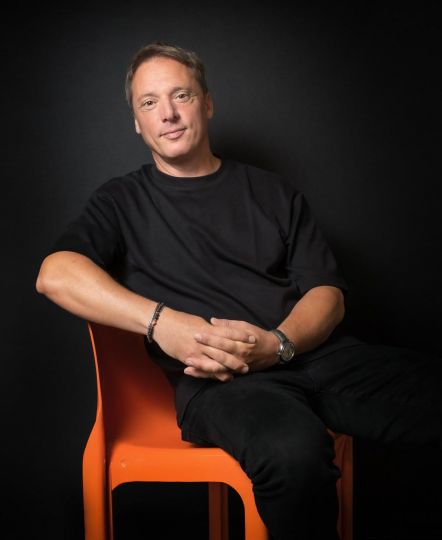
For several years, Laurent-Elie Badessi has explored shifting territories where photography becomes at once an encounter, a mirror, and a relational device. With Friends, Artists and Collectors – an Invitation to My Table, he presents a series of portraits that goes beyond the simple exercise of face-to-face representation to probe a network of human affinities gravitating around contemporary creation. At the center of this project lies a simple and universal motif: the table. A place of sharing, conversation, and sometimes negotiation, it becomes here a discreet stage where the complex relationships between artists, collectors, and figures of the art world unfold. Laurent-Elie Badessi is less interested in documenting a milieu than in revealing the profoundly human dimension of this ecosystem, a fabric of complicities, loyalties, and intersecting gazes. In these portraits, the artist captures that fragile moment when representation shifts toward intimacy. The photographic device no longer merely records a presence; it becomes the instrument of a reciprocal trust. The photographed subjects friends, artists, or collectors appear less as figures of a system than as fragments of an affective constellation that nourishes creation. Through this series, Badessi subtly questions the place of the collector within the dramaturgy of contemporary art. Traditionally remaining in the background behind the artwork, the collector becomes here a visible character, almost a protagonist of the artistic scene. The portrait then acts as a gesture of mutual recognition: between the one who creates, the one who supports, and the one who looks.
This conversation with Laurent-Elie Badessi revisits the genesis of this project, his conception of portraiture, and the role photography can play today between testimony, contemplation, and engagement.
Through this series, are you seeking to reveal an intimacy, or to capture a social ecosystem of the art world?
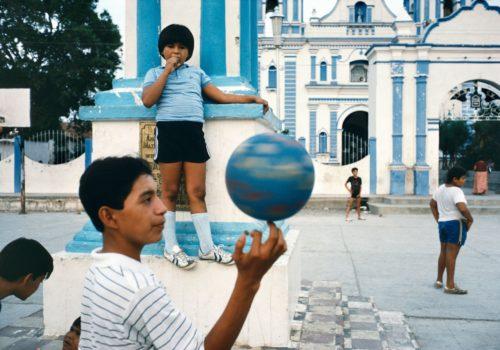
Laurent-Elie Badessi: In this series, my primary aim is to create intimacy with my subjects. Each invited person must correspond to at least one of these three criteria friends, artists, or collectors thus drawing the portrait of a human ecosystem gravitating around art. The relationship between the photographer and the sitter has always fascinated me. I explored it very early in my career, notably when I went to live with African tribes who had never, or very rarely, been in contact with the photographic medium. That experience made me realize the almost magical dimension of the photographic act between the one who takes the picture and the one who poses.
What takes place when an artist and their collector stand before your lens: dialogue, tension, or alliance?
L.E.B.: Every portrait begins with a process of building trust. It is about creating an atmosphere in which the subject feels comfortable. We are all partially aware of the image we project. My goal is to gradually lead the person beyond the idea they have of themselves, in order to reveal a facet that may sometimes be unexpected. The portrait remains consensual, but the photographer guides the encounter so that something deeper may emerge.
Do your portraits explore friendship, influence, or power more strongly?
L.E.B.: Above all, friendship. My intention is to establish a human and friendly relationship. I make no distinction between the different kinds of people who stand before my lens. Trust and respect are essential. I accompany my subjects beyond their comfort zone, but always with respect, so that they never regret having trusted me and feel proud of what we have created together.
In this series, who truly “collects” the other: the collector, the artist, or the artist the collector?
L.E.B.: Several subjects are artists or collectors of my work or not. The series began with a very close friend who had already been collecting my work for years. Some of the people photographed later became collectors of my work. In a way, the photographer becomes a collector: through these portraits, I myself am building a collection of encounters and faces.
Does the collector become a character in contemporary creation?
L.E.B.: Yes. By agreeing to be photographed, the collector participates in contemporary creation. They become an actor in the artistic process, revealing the often invisible relationship between artist and supporter. The collector is no longer only the one who owns the work: they become one of its characters.
Do you photograph these figures to document private relationships or to tell the story of the art market?
L.E.B.: My intention is to gather faces and emotions around a single element a symbolic object: the table. The table evokes gathering, community, sharing, and human bonds. It also embodies a form of openness, generosity, and inclusiveness. Through this everyday symbol, I have been able to create, in a certain way, a mosaic of individuals who contribute to the energy and cultural richness of New York. The initial goal is not to document the history of the art market. Through this project, I highlight friends and collectors who contribute, in their own way, to the vitality of our city’s artistic scene.
How do you capture the sometimes fragile balance between admiration, desire, and recognition?
L.E.B.: That balance is built within the relationship during the shoot: admiration nourishes the gaze, desire is the desire to create a truthful image, and recognition arises from shared respect and trust. I aim to capture a portrait that touches both of us, and that also awakens the viewer’s curiosity. I like images that make one want to meet the person or imagine their story.
Do your images reveal a tacit pact between creation and possession, or an emotional relationship?
L.E.B.: I would say both. Creating an image, a portrait, always implies a form of appropriation: the face, the presence, and a part of the subject’s identity. But there is also an emotional dimension. Over time, these portraits become like family photographs. They remind me of moments, encounters, and shared memories.
What do these portraits say about the role of the collector in an artist’s career?
L.E.B.: Collecting means recognizing an artistic vision and engaging in a dialogue with it. In that sense, the collector often plays a discreet but essential role in an artist’s journey. Here, the collector participates in the creation and becomes, in a way, the artwork they choose to collect. These portraits reveal a relationship that is often invisible and suggest that collecting can also be a form of collaboration, where dialogue contributes to the emergence of the work.
Is this series a portrait of singular friendships or a radiography of the art world?
L.E.B.: This series is first and foremost a portrait of friendship and complicity with people passionate about art. The word Friends at the beginning of the title reminds us that friendship comes first. Even if some subjects are artists, collectors, or both, what matters to me is the human bond that connects us. The series speaks about encounters and relationships rather than an analysis of the art world and its actors.
More broadly, what is the guiding thread of your photographic work the one that runs through all your series?
L.E.B.: My work explores human presence and the way we interact with the world. Even when human figures are absent, they often remain present in filigree. My signature is to create aesthetic images that reveal deeper readings of our condition, our dreams, our contradictions, and the society in which we evolve. Timelessness is essential. I try to create photographs that escape the precise moment in which they were taken, so that they may continue to resonate with the viewer’s gaze today and in the years to come.
What influences or experiences have most nourished your view of humanity and society?
L.E.B.: Very early on, I felt the desire to travel to Africa to meet different communities. Living and working with them allowed me to share their daily life and use photography as a tool for human encounter and cultural discovery. For the past three years, I have been working with people with albinism in Africa. Through portraits and testimonies, I make their reality visible and highlight the ways in which they are still marginalized. These experiences and encounters have deeply nourished my perspective. They have taught me listening, respect, and humility in the presence of individuals whose dignity and resilience inspire profound admiration. The portraits make their reality and the challenges they face visible, giving them a voice beyond borders.
How do you decide where the boundary lies between documentary reality and artistic staging?
L.E.B.: Every photograph contains a documentary dimension and often a degree of staging. Even when an image is taken spontaneously, the photographer’s intention is already present through framing, angle, or choice of lens. In a way, it is an extension of their gaze. Over time, a photographer develops their own vision of the world and of others. There is always an artistic approach in the conception of an image. Even in war journalism, often produced in urgency and in extremely difficult contexts, some images become true masterpieces because of their powerful construction. They remain engraved in our memory and document our world. In my work with people with albinism, my priority is to highlight them, because they deserve to be represented with dignity and beauty. I therefore reflect beforehand on the artistic vision I will adopt for these portraits.
The approach nevertheless remains documentary: it is about bearing witness to the difficulties these individuals face daily — strabismus, depigmentation — without ever “correcting” anything in post-production so as not to betray their reality. It is our collective responsibility to better understand, accept, and support them. Through this artistic project, my wish is to help change the way difference is perceived.
Is photography for you a tool of testimony, contemplation, or provocation?
L.E.B.: All three are important, even if they are not always present in every image. If I had to rank them: contemplation first, then testimony, and finally, sometimes, provocation. In my series American Dream or Age of Innocence, these three dimensions coexist. The provocation remains subtle; it does not seek to shock, but to provoke reflection and dialogue. Art can be a powerful tool for addressing social issues and generating awareness. For me, photography is a tool that allows us to contemplate the world with empathy, to bear witness to it, and to question it.