Marcus Schaefer : Reinterpreting reality
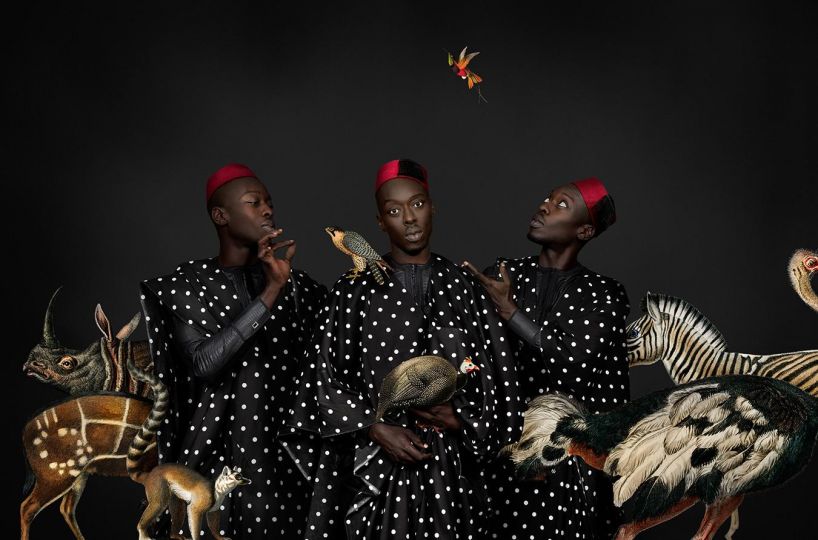
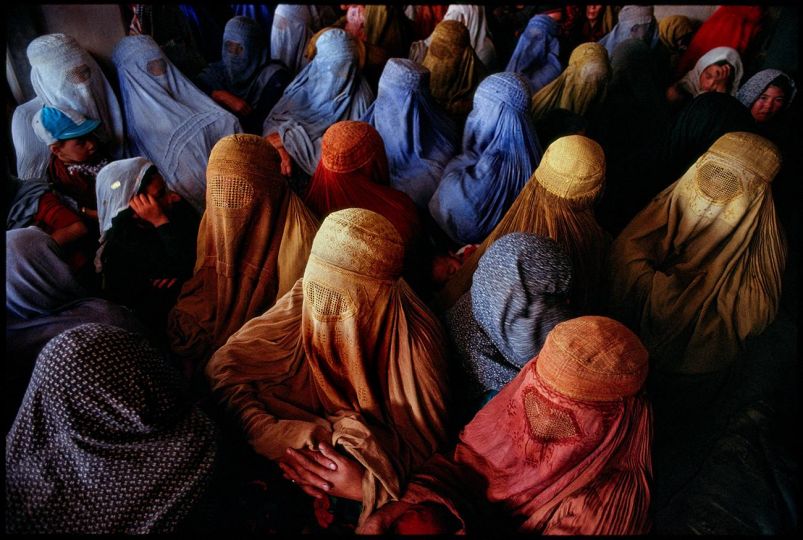
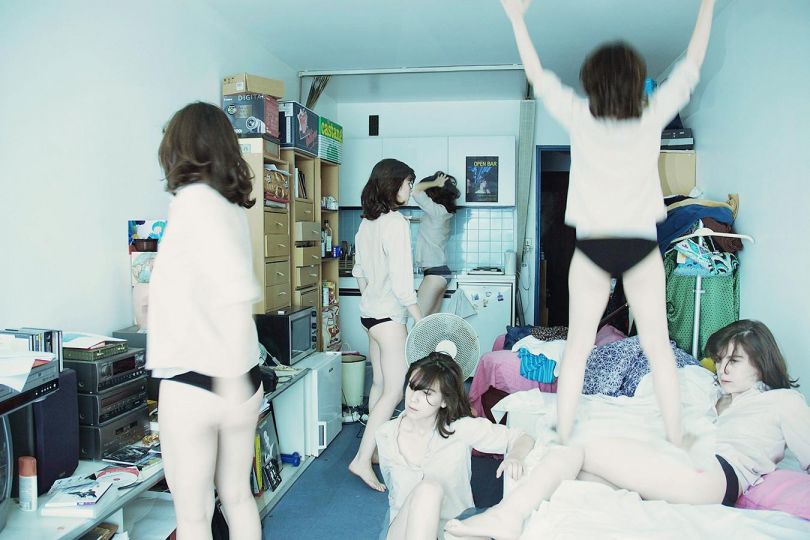
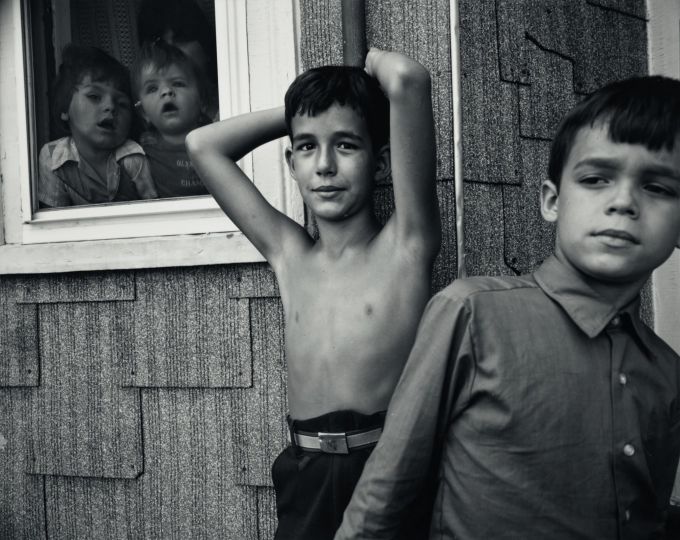
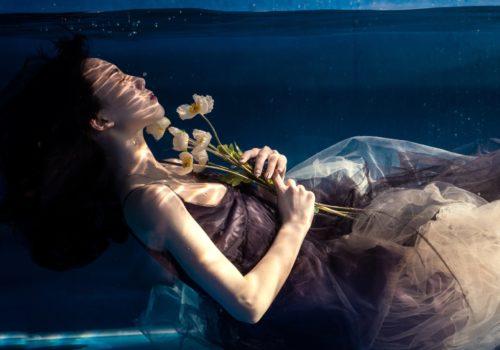
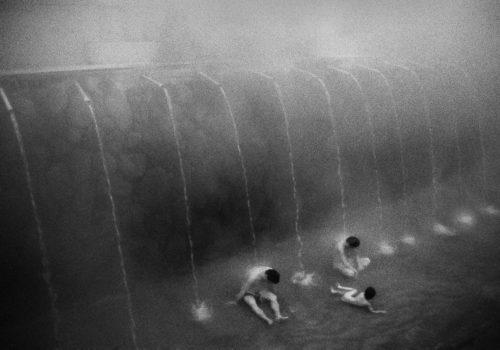
In Marcus Schaefer’s work, photography no longer seeks to show the world; it orchestrates its disappearance. This is undoubtedly where the disturbing power of his work resides: in his ability to produce images that seem to emerge from a place prior to the visible, as though they had been extracted not from reality itself but from residual memory. At a time when contemporary photography often exhausts itself in the overproduction of instantly readable images, Schaefer instead embraces opacity, slowness, and uncertainty. His work, moreover, escapes the traditional categories of the photographic medium. It neither documents, narrates, nor demonstrates anything. His images function more like psychological states. The body appears fragmented, absorbed into deep blacks, dissolved within almost mineral textures. The human figure no longer possesses stability; it hovers between appearing and disappearing, between physical presence and mental hallucination. What makes his work particularly contemporary is precisely his refusal of spectacular images. Marcus Schaefer understands that we now live in a civilization saturated with visibility, where everything must be immediately identifiable, consumable, shareable. He chooses the opposite path. He reintroduces mystery as an aesthetic experience. His photographs never fully deliver their meaning; instead, they establish a silent tension with the viewer. One does not simply “read” a Schaefer image one enters it slowly, almost by touch. Black plays a fundamental role in his work. It is not the absence of light but a mental space. A dense material that swallows as much as it reveals. This use of monochrome sometimes brings his work close to certain pictorial traditions from fin-de-siècle symbolism to the darkest abstractions of contemporary painting yet without ever falling into intellectual quotation. Schaefer does not look toward the past with nostalgia; he uses these resonances to construct an iconography that is profoundly contemporary, haunted by questions of disappearance, identity, and the fragmentation of the contemporary body. There is also an almost sculptural dimension to his work. Surfaces, textures, and shadows give his images an unusual physicality for photography. The gaze does not merely move through a composition; it seems to collide with materials, resistances, and densities. This tactile relationship to the image undoubtedly explains why his work extends far beyond the photographic field alone, entering the realm of installation and object-making. Marcus Schaefer belongs to that rare category of artists who have understood that photography no longer serves to reproduce reality, but to reveal its fractures. His images do not show the world; they reveal its instability. And within this deliberate darkness, within this refusal of immediate transparency, lies the full critical power of his work.
Website : www.marcusschaefer.com
Instagram : @marcusschaeferatelier
Your first photographic trigger?
Marcus Schaefer : A portrait photograph taken with a Canon EOS 500D at the train station in Düsseldorf, Germany.
A photographic memory from your childhood?
Marcus Schaefer : Seeing myself sitting in my childhood living room digging out my mum’s precious plant pot and making a mess all over the place whilest telling my mum that she can’t come in as I am in the middle of something.
The camera of your childhood?
Marcus Schaefer : I didn’t have a camera as a child. My photographic path began when I was already in my 20s.
The one you use today?
Marcus Schaefer : Fujifilm GFX50s (Studio camera) and Fujifilm XT-3 (Travel camera).
The man or woman of the image who inspired you?
Marcus Schaefer : There is no specific person that inspires me to take photographs, it’s life itself and the world at large that inspires me to use the medium of photography not as a recorder but as a re-interpreter – a tool of alchemy that transforms the seen into the felt, the real into the surreal.
The image you wish you had taken?
Marcus Schaefer : I hopefully haven’t taken it yet.
The one that moved you the most?
Marcus Schaefer : The cover image of my first monograph “Mapping Subconsciousness” published in 2024 by Patrick Remy Studio.
And the one that made you angry?
Marcus Schaefer : I have never captured a photograph that made me angry.
Which photograph changed the world?
Marcus Schaefer : Many, but the one that stuck with me is “The Falling Man” taken by Richard Drew during the September 11 attackes, which shows a man falling from the World Trade Center.
And which photograph changed your world?
Marcus Schaefer : Photographs of Edward Leedskalnin’s Coral Castle changed my world because it made me want to create sculptures.
A key image in your personal pantheon?
Marcus Schaefer : Ed Leedskalnin sitting in one of his carved coral chairs at Coral Castle, then called Rock Gate Park, ca. 1923.
What interests you most in an image?
Marcus Schaefer : My photography – like all my work – is meant to reflect an internal landscape, not the external one. I am less concerned with the outer appearance of things than with the inward resonance they provoke. It’s the mental space that matters most to me. If an image can provoke that, I am interested in it – otherwise it’s not intriguing to me.
What details do you look for in a face, a landscape, or an object?
Marcus Schaefer : I am not interested in capturing mere likeness. I approach the human form and objects not as subjects, but as sites—terrains where emotion, light, and memory converge. What draws me is not simply a face, a body, a landscape, or an object, but the way each becomes a living archive, holding traces of presence, experience, and time.
Elliott Erwitt said: “Color is descriptive. Black and white is interpretative.” Do you agree?
Marcus Schaefer : Yes, I agree and would go further. For me the world of black and white is like entering an “upside-down world,” one that is far more sensitive, abstract, and intimate than the world of color. It offers entirely new avenues of escape and expression. Black helps in composing and guiding otherworldly vibrations within a non-color space. In my eyes, black embodies a dichotomy: on the one hand, it is very dominant, strong, and intimidating; on the other, it is somehow vulnerable, melancholic, and sensitive. Black is multidimensional, seemingly endless, and makes me think of the dark, infinite universe, black holes, gravity, and the beginning of life. It is fascinating and makes me reflect on myself, as if looking into a mirror. Black is captivating and, for many, appears depressing, frustrating, and lifeless, but in reality, it is incredibly sexy, vibrant, and inspiring. Its polarizing versatility is what I truly love about it, and that’s why the element of black and white is fundamental to all my creative endeavors and I place it at the heart of my work, using it as a central component of my visual message.
In your opinion, can technique sometimes take precedence over emotion in photography?
Marcus Schaefer : Yes, and it can kill photography.
Is beauty in photography, for you, purely aesthetic?
Marcus Schaefer : No.
What elements can make silence visible in a photograph?
Marcus Schaefer : A smart use of light and shadows.
Does the uniqueness of a photograph come from the moment or from staging? Can a photograph be truer than reality?
Marcus Schaefer : A truly unique photograph arises from the photographer’s singular point of view. Through the camera and its lens, reality is not merely captured but reinterpreted—transformed into something that can feel even more truthful than what is seen with the naked eye. Photography becomes a portal, reshaping perception and revealing that reality is not fixed, but layered. In this way, the photograph serves as a gateway to the many realities that exist beyond the obvious.
Can a photograph change our perception of an event?
Marcus Schaefer : Yes—because a photograph is not a neutral record, but a reinterpretation shaped by the photographer’s point of view. By transforming reality through light, framing, and intention, it can reveal layered meanings and shift how an event is seen, remembered, and understood.
Is photography a testimony or a form of manipulation?
Marcus Schaefer : I think photography exists between testimony and manipulation. It bears witness to a moment, yet it is always shaped by the photographer’s perspective, choices, and intent. So again – in this way, it does not simply record reality—it interprets and redefines it.
What makes a good photograph?
Marcus Schaefer : A good photograph is one that transcends mere depiction and offers a distinct way of seeing. As mentioned above – it is shaped by a clear point of view, where light, form, and moment converge with intention. Rather than simply showing what is there, I think it reveals something beneath the surface—an emotion, a tension, a memory. It holds presence, invites interpretation, and lingers beyond the instant it was taken.
In your opinion, what quality is necessary to be a good photographer?
Marcus Schaefer : A unique point of view.
How do you choose your projects?
Marcus Schaefer : I don’t, they come to me.
How would you describe your creative process?
Marcus Schaefer : My creative process is something I hold as both sacred and deeply personal. While it shapes everything I create, it isn’t something I can fully articulate or expose. What I can say is that it’s guided by intuition, attention, and a sensitivity to what unfolds in the moment—something that resists being neatly defined or explained.
An upcoming project that is particularly close to your heart?
Marcus Schaefer : My new photographic monograph which I have just wrapped up and released this month.
The person you would like to photograph?
Marcus Schaefer :I would have loved to photograph Robin Williams or Philip Seymour Hoffman.
The person by whom you would like to be photographed?
Marcus Schaefer : Chantal Elisabeth Ariëns
An essential photography book?
Marcus Schaefer : Masterworks of Modern Photography 1900-1940. The Thomas Walther Collection at The Museum of Modern Art, New York
What is the last photograph you took?
Marcus Schaefer : Photographs of my new monograph.
On social media, are you more Instagram, Facebook, TikTok — and why?
Marcus Schaefer : Instagram only because that is more than enough distraction from real life.
What has changed in photography since the rise of social media?
Marcus Schaefer : Since the rise of social media, photography has surely become more immediate and accessible—but also increasingly devalued. The constant flow of images has shifted attention from depth and intention to speed and consumption – it’s a shame really.
An Instagram account everyone should follow?
Marcus Schaefer : @historyfromeveryday
What is your view on AI?
Marcus Schaefer : I don’t really have one and I don’t care about it.
Color or black and white?
Marcus Schaefer : Black and white.
Natural light or artificial light?
Marcus Schaefer : Both equally great.
Which city seems the most photogenic to you?
Marcus Schaefer : Empty, lost cities.
The city, country, or culture you dream of discovering?
Marcus Schaefer : Japan
A place you never tire of?
Marcus Schaefer : My atelier.
The image that, for you, represents the current state of the world?
Markus Marcus Schaefer : My photograph called “Consumed by the algorithm” which also serves as the cover image of my second monograph “Photographic Works 2013–2025”.
In your opinion, what is missing in today’s world?
Marcus Schaefer : What feels missing today is a certain distance from technology—a space less saturated by the digital. In that absence, there might be more room for presence, for slowness, and for a deeper, more attentive way of engaging with the world.
If God existed, would you ask Him to pose for you, or would you opt for a selfie with Him?
Marcus Schaefer : We are god! Or at least are we, in a sense, fragments of the divine—so perhaps every selfie is already a quiet attempt to capture that presence within ourselves.
Your favorite drug?
Marcus Schaefer : Coffee.
Your best way to disconnect?
Marcus Schaefer : Working on a new sculpture.
Your latest madness?
Marcus Schaefer : My new atelier space.
Your greatest professional extravagance?
Marcus Schaefer : Doing what I love for a living.
A profession you would not have liked to pursue?
Marcus Schaefer : Banker.
Which question unsettles you the most?
Marcus Schaefer : What else do they lie about?
The last thing you did for the first time?
Marcus Schaefer : Getting married.
Your greatest regret?
Marcus Schaefer : My overthinking.
If you had to start all over again?
Marcus Schaefer : Straight to art school.
If I could organize your ideal dinner, who would be at the table?
Marcus Schaefer : Isamu Noguchi, Milton Resnick, Anton Prinner, Edward Leedskalnin
What do you like people to say about you… after you’re gone?
Marcus Schaefer : The truth.
The one thing people absolutely must know about you?
Marcus Schaefer : I am loyal.
A final word?
Marcus Schaefer : Find an offline shelter.