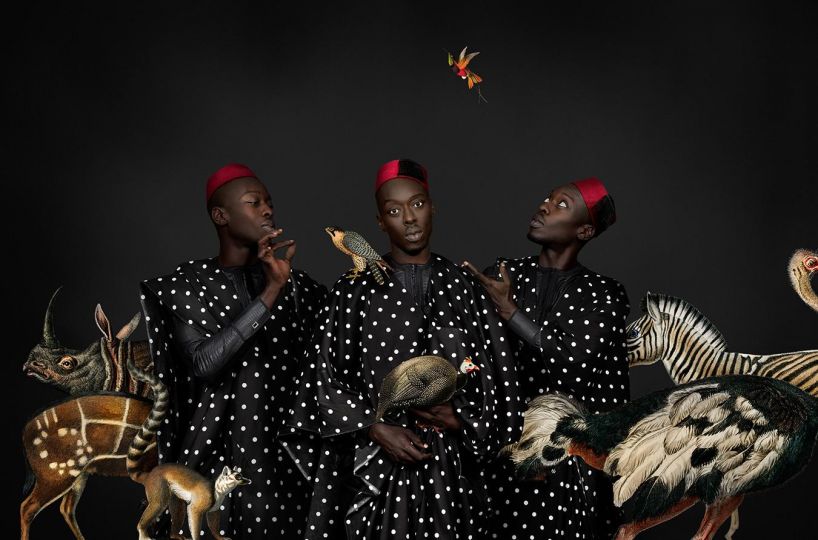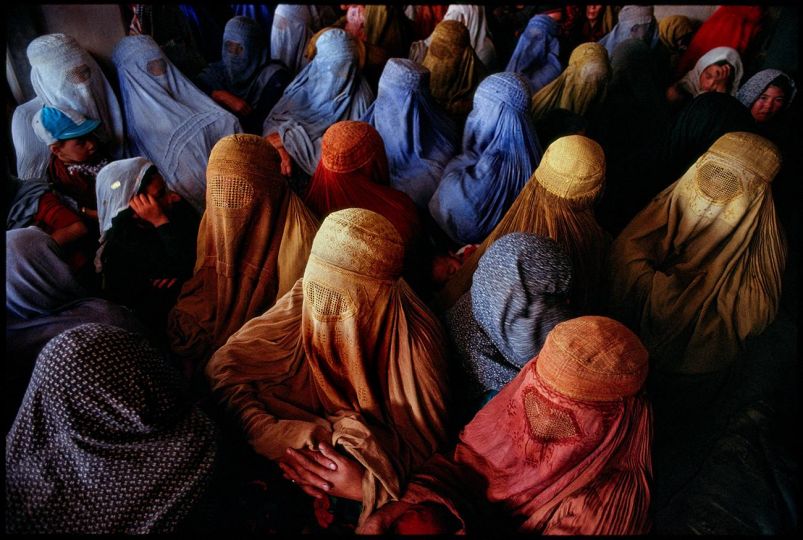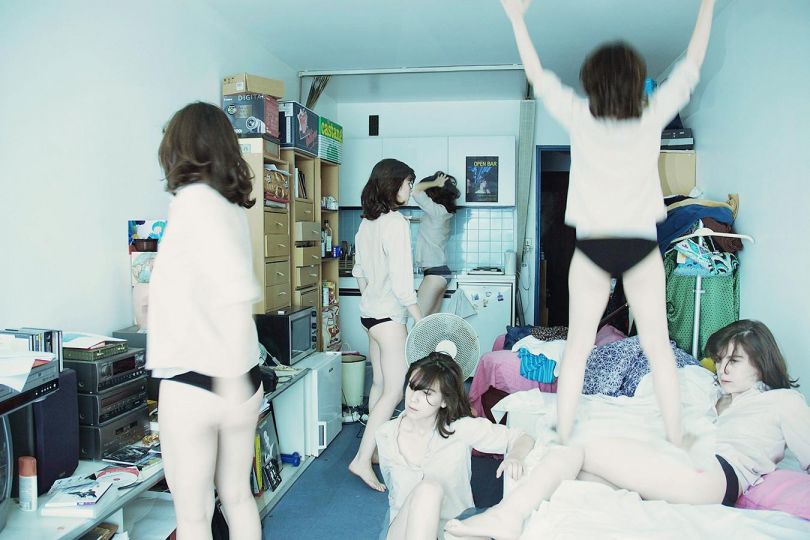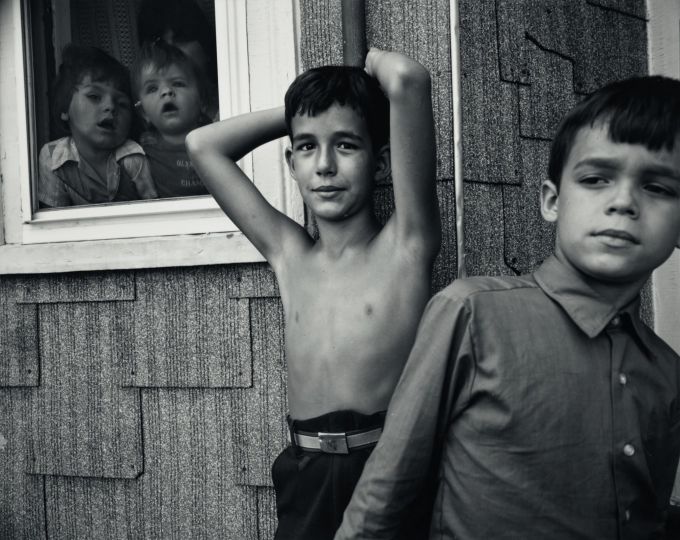
Laurent Rigail : Between reality and the construction of gaze.
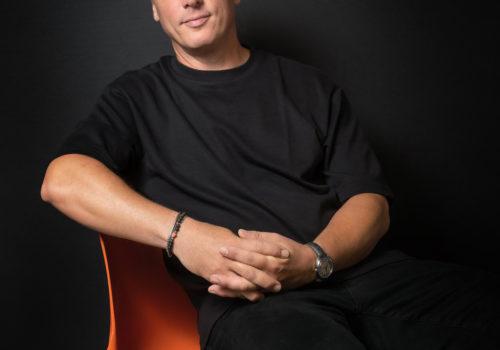
For Laurent Rigail, the act of looking is never reduced to simple contemplation: it is constructed, refined, and constantly repositioned. A passionate gallerist, deeply rooted in a demanding practice of contemporary art, he maintains a singular relationship with photography, shaped equally by critical attention and intuitive fascination. For him, an image is neither about capture nor the decisive moment, but about a patient, almost mental elaboration, where every element appears weighed, shifted, and reinterpreted.
This sensibility informs the way he approaches the works and artists he supports. He positions himself precisely within that fragile space between reality and fiction, where photography ceases to be a simple record and becomes a territory of interpretation and projection. Nothing is ever fully given; everything is suggested, open, in tension.
His approach favors restraint and silent density over obviousness. He is drawn to visual languages that resist immediate effects those that establish rather than demonstrate, that displace the gaze rather than impose it. This rigor shapes a subtle curatorial thinking, in which the viewer’s experience becomes central.
It is within this constant attention to the forms of the visible, and to what they reveal as much as they conceal, that his intimate relationship with photography takes shape. A relationship less thematic than structural, one that continuously questions: what are we actually looking at, and what do we project onto what we see? It is within this interstice that his universe unfolds.
Website : www.laurentrigail.com
Instagram : @galerie_laurent_rigail
News:
- Exhibition “La Quadrature du Cercle” until June 20 at the Paris gallery, 40 rue Volta, 75003 Paris
- Exhibition “Quartiers d’été” by M.Chat from June 4 to August 1 at the Montpellier gallery, 1 rue Voltaire, 34000 Montpellier
Your first photographic trigger?
Laurent Rigail: Beauty not as a fixed aesthetic notion, but as an immediate, almost physical certainty when faced with something that goes beyond mere seeing.
A photographic memory from your childhood?
Laurent Rigail: The pine trees in the park of our family home. A very precise light, motionless silhouettes, and already that feeling that the world is made up of isolated visual fragments.
Your childhood camera?
Laurent Rigail: A Polaroid, with that instant miracle that produced an image before you even understood what you had framed.
The one you use today?
Laurent Rigail: An iPhone… reluctantly, but because everything has become faster than the photographic gesture itself.
The image or person that inspired you?
Laurent Rigail: Wings of Desire by Wim Wenders. A way of looking at the world from a melancholic distance, as if the image itself were already a memory.
The image you wish you had taken?
Laurent Rigail: The Earth seen from the Moon—not for the feat, but for that shift in perspective: seeing the entire world become fragile and silent.
The one that moved you the most?
Laurent Rigail: Omayra Sánchez, filmed and photographed in 1985. An unbearable image, where dignity and tragedy coexist within the same frozen gaze.
And the one that made you angry?
Laurent Rigail: The “Napalm Girl” by Nick Ut. A necessary image, but one that also questions the role of the photographer in relation to what they document.
Which photograph changed the world?
Laurent Rigail: The first step on the Moon: an image of conquest that became a collective symbol, almost unreal in how much it feels staged by history itself.
And the one that changed your world?
Laurent Rigail: War photographs those that forever prevent you from looking at images the same way, because they permanently shift the boundary between seeing and understanding.
A key image in your personal pantheon?
Laurent Rigail: The photographs of Auschwitz: images that cannot simply be looked at, but that demand a form of inner silence.
What interests you most in an image?
Laurent Rigail: Barely visible details what escapes the first glance yet builds the entire tension of the image.
What details do you look for?
Laurent Rigail: Flaws. What resists composition, what disturbs balance, what makes the image alive.
Elliott Erwitt said: “Color is descriptive. Black and white is interpretive.” Do you agree?
Laurent Rigail: Yes, completely. Black and white removes the noise of reality to retain only its emotional structure.
Can technique outweigh emotion?
Laurent Rigail: No. Technique must disappear behind what it makes possible, never impose itself.
Is beauty in photography purely aesthetic?
Laurent Rigail: No, it is entirely subjective it depends more on the viewer’s inner state than on the image itself.
How do you make silence visible?
Laurent Rigail: Through death, or through absence when something has been removed from the world but still weighs within the image.
Does the uniqueness of an image come from the moment or the staging?
Laurent Rigail: From the moment but a moment can be intensified, shifted, almost heightened by the way it is captured.
Can a photograph change our perception of an event?
Laurent Rigail: Often, yes, sometimes it even replaces the event in collective memory.
Photography: testimony or manipulation?
Laurent Rigail: Perhaps both at once or the testimony of a manipulation of reality.
What makes a good photograph?
Laurent Rigail: The capture of a living instant, that moment when something is already slipping out of control.
The essential quality of a good photographer?
Laurent Rigail: Fragility the ability to remain permeable to what happens without trying to dominate it.
How do you choose your projects?
Laurent Rigail: By instinct, without prior logic, like a necessity rather than a decision.
Your creative process?
Laurent Rigail: Bulimic—an accumulation of images, sensations, attempts, until saturation.
A project close to your heart?
Laurent Rigail: Transforming a 1960s double-decker bus into a traveling mini-museum, designed to reach audiences far removed from culture. Bringing images to places they never reach.
The person you would like to photograph?
Laurent Rigail: Véronique Sanson, for her assumed fragility and her way of inhabiting emotion.
The one who would photograph you?
Laurent Rigail: Pierre et Gilles for their constructed, excessive, yet deeply tender universe.
An essential photography book?
Laurent Rigail: A work by Joel-Peter Witkin for the way it pushes the limits of vision and of what is bearable.
The last photo you took?
Laurent Rigail: A painting because sometimes painting itself becomes a form of frozen image.
Your point of view about social media?
Laurent Rigail: I hate them and perhaps that hatred already says enough.
What have they changed in photography?
Laurent Rigail: They have shifted the center of gravity toward the ego: the image is no longer made to be seen, but to be published.
An Instagram account to follow?
Laurent Rigail: Mine irony intended or embraced.
Your view on AI?
Laurent Rigail: I asked it the question… and it didn’t know how to answer. That silence may already be an unsettling response.
Color or black and white?
Laurent Rigail: Black and white for what it removes from the world as much as for what it reveals.
Natural or artificial light?
Laurent Rigail: Natural, because it always slightly escapes control.
The most photogenic city?
Laurent Rigail: Hard to say I haven’t traveled enough to decide.
A country or culture to discover?
Laurent Rigail: South America, for its contrasts, its density, its visual excess.
A place you never tire of?
Laurent Rigail: The stable horizon of the seashore, which is never the same.
An image of the current state of the world?
Laurent Rigail: A mudslide something that advances, engulfs, mixes everything without distinction.
What is missing in the world today?
Laurent Rigail: Humanity not as an idea, but as a daily practice.
If God existed?
Laurent Rigail: I would ask him to pose not as a symbol, but as a subject among others.
Your favorite drug?
Laurent Rigail: Calmn which is rare, therefore precious.
The best way to disconnect for you?
Laurent Rigail: To isolate myself in a place without direction, without signal, without expectation.
Your last madness?
Laurent Rigail: Too distant to be told, or perhaps too insignificant to be remembered.
Your greatest professional extravagance?
Laurent Rigail: Creating a company in France a simultaneously irrational and completely absurd act.
The job you would not have liked to do?
Laurent Rigail: Teacher too much constrained transmission, not enough doubt.
The question that unsettles you the most?
Laurent Rigail: “Are you okay?” a simple question that assumes too quick an answer.
The last thing you did for the first time?
Laurent Rigail:???… I don’t remember anymore! (Laughs)
Your greatest regret?
Laurent Rigail: None or at least none that I claim.
If you had to start over?
Laurent Rigail: I would do the same, but differently which may ultimately be exactly the same thing.
Your ideal dinner? Who would sit at your table ?
Laurent Rigail: The twelve apostles… and a table where symbols would finally have an explanation.
What would you like people to say about you afterward?
Laurent Rigail: “Who? Never heard of him.” to disappear without a legend.
The one thing to know about you?
Laurent Rigail: I love what I do, not necessarily who I am.
One last word?
Laurent Rigail: This questionnaire is exhausting… but strangely revealing.