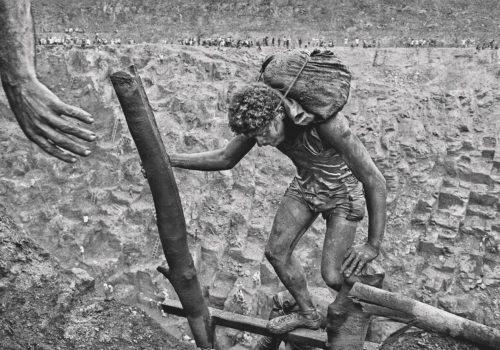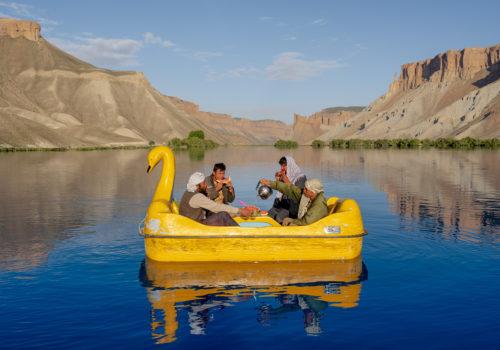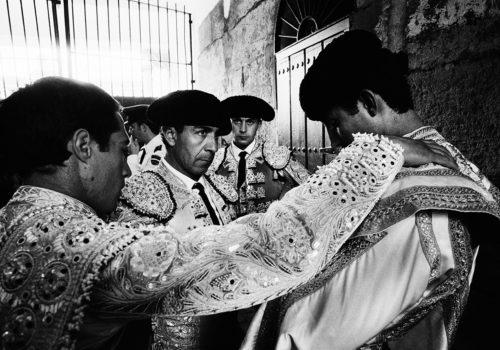
Lena Herzog an American living in Los Angeles, California (immigrated in 1990, naturalized in 1999), b. 1970 in Russia. She is a multidisciplinary conceptual artist whose work is centered around themes of ritual and gesture, loss and dislocation. In order to convey them, Herzog has explored the intersection of art and science both as a subject and as a process, by utilizing early photographic, contemporary and alternative experimental techniques in her printing work, as well as cutting-edge sound, immersive installation and virtual reality technologies for other projects.
Having grown up among scientists in the Ural mountains on the Western border of Siberia, she continued her formal education at the University of St. Petersburg, Russia, studying languages and literature, and later, in California, at Mills College and Stanford, where her focus shifted to the history and philosophy of science. After discovering photography in the late 1990s, she apprenticed to Italian and French master printers, focusing on early and alternative photographic processes. Open to experimentation in her darkroom, Herzog combined techniques from the beginning of the photographic medium, like Pyrogallol, with contemporary digital ones.
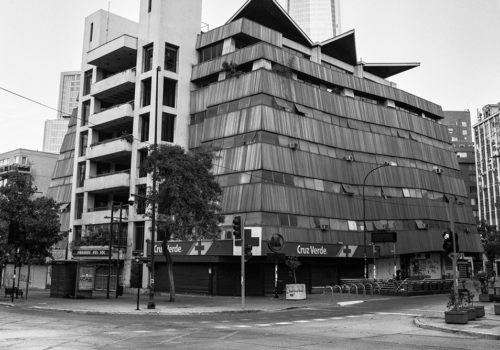
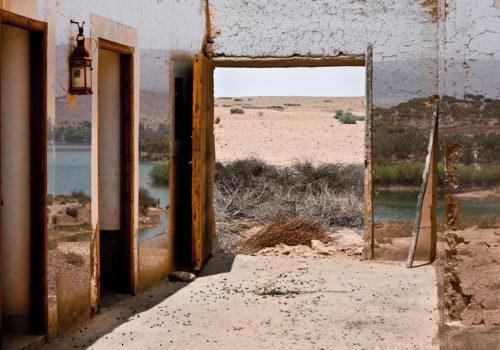
Lena Herzog: In a Vanishing World is the first comprehensive monograph of her artistic career and work, an exhaustive review of three decades of activity published by Skira, Milan. Lena Herzog’s undaunted and engaging look spans over boundaries and chasms between different levels of life, time, and memory. Her work investigates the universal mystery of being human, from the Cabinets of Wonder and Curiosities of the 18th and 19th centuries to the hollowed-out rock formations atop of tepuis in Amazonia, from the deep rituals of the West to the emptiness of nameless lands in the Far East. The various portfolios, here transversally arranged, provide a fascinating cartography of our time and history.
WEBSITE: https://www.lenaherzog.com
https://www.instagram.com/lenaherzog_photo/
https://x.com/i/flow/login?redirect_after_login=%2FLena_Herzog
BOOK SALES INFO: https://www.lenaherzog.com/books
Patricia Lanza : Lena Herzog, In a Vanishing World is a monograph spanning thirty years of an artistic and photographic career and your seventh book. How did you decide what to select, include and highlight?
Lena Herzog : It was myself and the authors of the book, who have also been my brilliant curators, professors Silvia Burini and Giuseppe Barbieri. They worked with my projects for two seasons of the Venice Art Biennale (2022 and 2024) and got to know my work so well. Also, the extraordinary picture editor Stacey Clarkson, with whom I have worked for many years for Harper’s Magazine. Stacey was key to the final selection of the images and identifying the basic currents in my body of work. During these conversations in Venice with the professors and with Stacey, I recognized clearly where my interests were guiding me all these years. I saw my world reflected in their eyes, because they were keen to understand me. So, it was a collaborative work with the authors of the essay and with my editor.
What is the meaning of the title, In a Vanishing World ?
Herzog : This title, too, was a find by Silvia and Giuseppe. When they sent me the text and the title, my heart sank because I knew it was true. I do chase things that are vanishing; ghosts do haunt me. I do not know why it made me sad … I guess, it is because I feel that the world slips through my fingers like sand, like water … I try to hold onto it and I can’t. Then again, I am a photographer, and so I do what every photographer does: I seize the moment by the hair of the fraction of time and I make a keepsake—a photograph—out of it.
The driving force behind the work is to capture reality and to re-enchant it, to see the beauty in it, stripped of kitsch, just the beating heart of the moment or a thing, and grasp the best of it. That process makes it even more melancholic. After all, if all you see in the world is ugliness, why keep it? But beauty makes you want to hold onto the world for dear life. So, all the vanishing rituals around the world, cultures and languages, but also moments of beauty and what seems for a moment like insight—I collected them in a desperate effort of preservation. The impulse is futile yet earnest, nevertheless.
Discuss your photographic process and how it has evolved over time? Who or What were your influences?
Herzog : First, it should be noted that I wanted to be a writer at the outset. However, living in between languages scrambled that original plan. And I gravitated towards academic work in philosophy, in particular philosophy of language and linguistics (e.g. Chomsky on universal grammar) and history and philosophy of science (my thesis was: Kuhn vs Feyerabend). So, I started pretty late in photography: I was 27. I had my grandfather’s camera which was a Leica offshoot. Got black-and-white film and started to shoot in the street. My first place was Spain. Since I was a child, Goya lodged in my mind, maybe even my cerebellum, and unconsciously, at first, I sought out bullfights and hooded penitents during the Semana Santa. My very first book, published by a UK publisher Periplus Publishing London with the editor Daniele Naveau took a chance with me. Tauromaquia: the Art of Bullfighting, that was my first book. And I just started to love making books. What a satisfying way to wrap up a project.
Then, I decided that I need to learn my tool and my craft. I wanted to be at ease with it, as if it were my second nature. To continue the Spanish theme, I smuggled myself into a Flamenco class in San Francisco where I was living at the time. The great Yaelisa taught at the dance school there. So, I had to learn how to shoot many fast-moving bodies between giant windows and floor to ceiling mirrors; and the difference between the darkest corner and the brightest one was four stops. I had no meter, my newly acquired Leica M6 was all manual of course. That is when I really learned how to shoot. It was trial by fire. And also resulted in a book Flamenco: Dance Class.
I began to rent a darkroom on Polk Street and learned how to process film and how to print. So, all my mistakes during shooting were all too painfully clear. But there, at that Yaelisa’s Flamenco dance class, was where I learned to make judgements about the light and composition very quickly. Darkroom taught me even more than I can say. My husband and I moved to Los Angeles in 2001 and I built my own studio and darkroom. Great French printmaker Marc Valesella taught me everything I know (by the way, in this very magazine, I wrote about Marc and published an interview with him). Another printmaker Ivan Dalla Tana from Milan also taught me how to experiment with different processes, that were established and as well as ones you had to invent to fulfill an idea. Pyro became my favorite technique for developing film and printing with split toning became my process.
Ideas I learned from painters and philosophers, from literature and music affected me even more than work of my fellow photographers although I admire many of my colleagues. In some strange ways, I do not know exactly how, but Ezra Pound’s tiny essay on Chinese character, Russian Cosmists … Goya’s drawings and John Berger’s writings on art influenced my work among many other things. A photographer has no time to hide. What you’ve seen and read and dreamed about coalesces in a fraction of a second and reveals the residue of what stayed in your soul. It would be hard to name all influences. Literature has always meant a lot to me. Great novels, they make you dream, think, they make you have sleepless nights. Then when you create something of your own, in any medium, all you hope for is to resonate like that in others.
What assignment or work had a leading or major impact on your career and life?
Herzog : I think it is the trilogy I am completing now. It is called TRINITY (duration: over 1 hour) which is an experiential and an immersive poem. Also, it is radically experimental: synthesizing immersive animation, spatialized music and sound design, in order to address the age of Anthropocene and a dream for a corrective. It is a trilogy, with its first chapter Last Whispers about our cultural extinction; second—Any War Any Enemy—about human physical extinction because of a nuclear war; and the final chapter—Reversal—a counterpoint to the first two chapters. TRINITY is made in all immersive formats and it is flexible for site-specific installation as a dome, a sphere, a room scale projection mapping show or a VR, expanding its ability to reach audiences. Also, oversize murals, objects, canvas prints and mezzotints can accompany the immersive exhibit of TRINITY as they did for the exhibitions during the Venice Biennale 2022 and 2024.
It is a departure from photography, and yet it is completely influenced by my work as a photographer (e.g. many three-dimensional objects, like the forest, are created from my photographs or based on them). I work with a team of a VR engineer Jonathan Yomayuza and animator Amanda Tasse, as well as composers Marco Capalbo and Mark Mangini, others. It was a steep learning curve to take a leap into new very complex media and to work with others after a solitary work of a photographer out on a limb. However, it was so satisfying to bring together my imagination as an artist together with philosophy, music, and politics and create something completely new, something synthesizing various media and ideas to make something that feels like an organic whole. A world which reflects my world view. The most startling difference from photography is the relationship to the frame. A photograph has it; immersive work does not. Or, rather, the observer, ends up inside the frame. And that, is a whole other story.
What are you working on currently?
Herzog : Finishing up this trilogy.