Thomas Paquet: “Poetics of shadow”
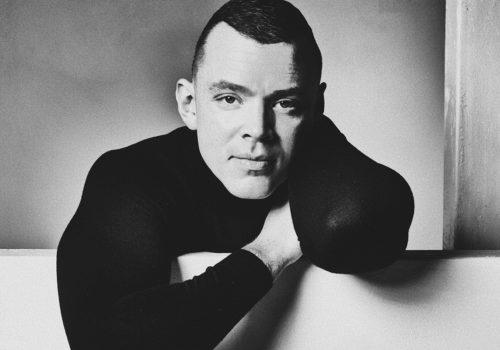
In an age overwhelmed by instant imagery, Thomas Paquet embraces slowness, experimentation, and doubt. The French-Canadian photographic artist, deliberately works against the grain of the visual industry’s fast-paced production logic. No cutting-edge digital gear or post-processing tricks here—photography, in his hands, becomes a space of physical, chemical, and optical exploration. He invents his own tools, works with cyanotypes, pinhole cameras, or wet collodion, revives darkroom techniques, and plays with the unpredictable nature of early photographic processes. Each image is the result of time—sometimes long, sometimes erratic—where exposure can last hours or even days. But beyond this learned technicality lies a true poetics of light and silence. Paquet’s works capture phenomena invisible to the naked eye, give form to intangible flows, to the rhythms of the cosmos, to the trace of a breath or a shadow. His work is not about recording but about revealing, revealing impermanence, fragility, and the inexpressible. In his series L’Ombre des heures (“The Shadow of Hours”), he uses a gnomon to trace the changing sunlight on light-sensitive paper, composing abstract scores of passing time. In De la chambre noire (“From the Darkroom”), shown at the Approche Salon, he questions the very instruments of vision, reconnecting with the materiality of the image and the magic of the photographic gesture. His approach borders on the phenomenological: each piece becomes an attempt to re-enchant our perception of the world. At a time when photography is often reduced to a fast-moving stream of visual consumption, Thomas Paquet invites us to pause, to contemplate, to feel. His approach—radical, meditative, and deeply artisanal—opens up a space of pure emotion where science and poetry meet. A conversation with an artist who crafts his own visions and who, far from freezing reality, allows it to emerge.
Instagram: @thomaspaquet__
Website: www.thomas-paquet.com
Currently: Featured in Mondes en commun, Festival of Contemporary Photography, at the Musée départemental Albert-Kahn, until September 7, 2025.
www.albert-kahn.hauts-de-seine.fr
Your first photographic spark?
Thomas Paquet: The smell of chemicals and the red light of the darkroom in the basement of our apartment—I was 10 years old.
The image-maker who inspires you?
T.P.: Berenice Abbott, especially her work on science. The images she created—and for which she invented special devices that visually demonstrate concepts like movement, electricity, magnetism, light, optics, and waves. Reconnecting with the experiments of the historical avant-garde, notably the rayogram, these images combine strong documentary ambition with deeply poetic aesthetics. Beyond her prolific career, Abbott also wrote extensively on photography, taught, and challenged society’s expectations of women.
The image you wish you had taken?
T.P.: UA Playhouse, New York (1978), from the Theaters series by Hiroshi Sugimoto.
The image that moved you the most?
T.P.: The family album photos preserved by my mother.
The image that made you angry?
T.P.: Any photo of Trump—his political actions enrage me.
A key image from your personal pantheon?
T.P.: FPS (120) by Liz Deschenes: 120 tall, narrow photograms installed in a row, referencing the frames per second needed for the human eye to perceive motion from still images.
A photographic memory from your childhood?
T.P.: More cinematic than photographic—the long psychedelic sequence in 2001: A Space Odyssey by Stanley Kubrick. An intense, hallucinatory trip into infinity.
The image that obsesses you?
T.P.: The one I’m currently working on.
The image that changed the world?
T.P.: Earthrise, 1968, by William Anders.
The image that changed your world?
T.P.: An exhibition: Shadow Catchers at the V&A in London, 2010. It was composed exclusively of works by artists who worked without a camera (Pierre Cordier, Susan Derges, Adam Fuss, Garry Fabian Miller, and Floris Neusüss).
If money were no object, what work would you dream of acquiring?
T.P.: An outdoor installation by James Turrell—a luminous, spiritual journey.
In your view, what quality is essential to be a good photographer?
T.P.: Being a good photographer or a good artist today means having artistic skills and being able to handle communication, social media, administrative paper work, clients, and project calls. You have to be a bit of a Swiss Army knife.
The secret to a perfect image, if there is one?
T.P.: The perfect image doesn’t exist. Perfection means giving up the desire to go further, giving up exploration and longing.
The person you’d most like to photograph?
T.P.: Valeria Golino, on a 20×25 ferrotype using natural light.
The person you’d like to be photographed by?
T.P.: Richard Avedon, an absolute master.
A must-have photography book?
T.P.: The Writing of Stones by Roger Caillois—for both the extraordinary collection of stone photographs and his meditative texts. A true delight.
Your childhood camera?
T.P.: My father’s Nikkormat, a sturdy 35mm reflex.
The one you use today?
T.P.: I no longer use a camera. In my work, I build devices to capture light, space, and time.
Your favorite drug?
T.P.: Maple syrup.
Your best way to disconnect?
T.P.: Swimming in a river.
Your relationship with the image?
T.P.: We’re oversaturated with images—I sometimes wish I were less exposed.
Your greatest quality?
T.P.: Perseverance.
An image for a new banknote?
T.P.: A fern—an Anna Atkins cyanotype.
A job you’re glad you never had to do?
T.P.: Any job with imposed, predictable hours. As artists, we’re lucky—there’s no routine.
Your greatest professional extravagance?
T.P.: I’m not very extravagant when it comes to work…
Can photography change the collective perception of an event or era?
T.P.: I believe images have the power to spread ideas and raise awareness about the state of the world. But to prevent them from serving ideology, we must trust our information networks—and for that, defend our democracies.
How do you perceive the influence of social media on how photographs are created and perceived today?
T.P.: More and more images will be created with AI. We must remain vigilant about the information shared on social media and the ideas conveyed by those images. Let’s keep our critical thinking sharp.
One Instagram account everyone should follow?
T.P.: Mine!
The last thing you did for the first time?
T.P.: A 20-meter-long color silver gelatin print for PM23, the new space of the Valentino Garavani and Giancarlo Giammetti Foundation in Rome.
What makes a photo successful?
T.P.: A photo you continue to love over time.
What interests you most in an image?
T.P.: The sensations it evokes.
What’s the difference between photography and fine art photography?
T.P.: Fine art photography, to me, is a singular image that carries a creative, aesthetic, intellectual, or emotional intention. And it’s often very subjective…
The city, country, or culture you dream of discovering?
T.P.: Rome, actually—and Italy, which I don’t know well enough…
The place you never tire of?
T.P.: The Louvre Museum.
Your greatest regret?
T.P.: I have no regrets.
Color or black and white?
T.P.: At the moment—color.
Natural or artificial light?
T.P.: Natural light for outdoor projects, artificial light in the darkroom.
What city do you find most photogenic?
T.P.: Paris.
If God existed, would you ask him to pose or take a selfie with him?
T.P.: A selfie.
If I could organize your dream dinner, who would be at the table?
T.P.: I haven’t finished my guest list yet, but if I could have Alain Passard in the kitchen—what a treat!
The image that reflects the current state of the world?
T.P.: HAL 9000, the supercomputer from Arthur C. Clarke—when fiction catches up with reality.
If you had to start all over again?
T.P.: Oh no, definitely not!
Final word?
T.P.: Photography is not an image.