Marthe Lazarus: Memory as a Territory of Resistance
On the occasion of the exhibition presented by Mémoire Magnétique, Marthe Lazarus unveils around forty photographs, collages, photo-films, and mixed-media experiments spanning several periods of her artistic production. The exhibition brings together recent series, earlier works, previously unseen pieces, and a selection of self-published editions from her long-term project TIME MACHINE.
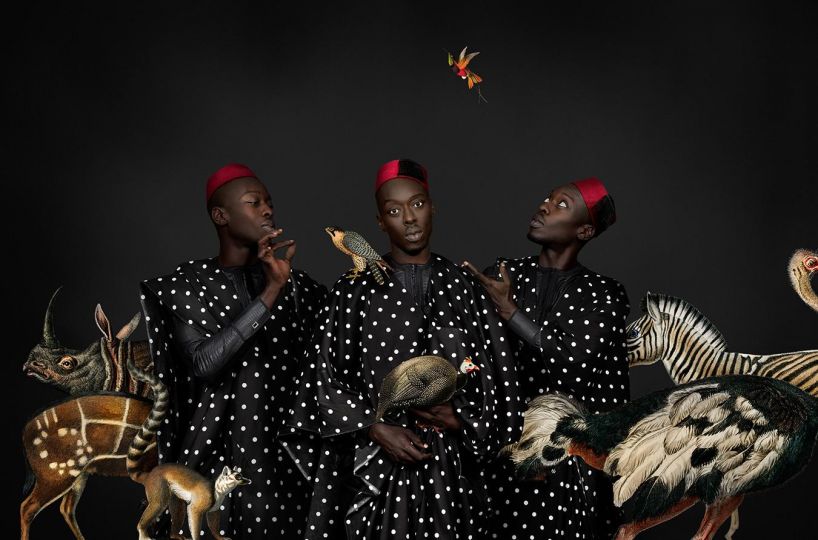
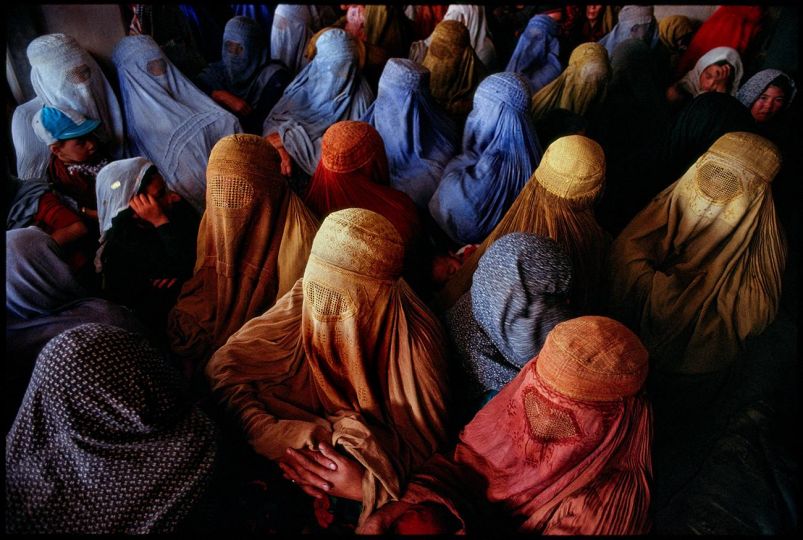
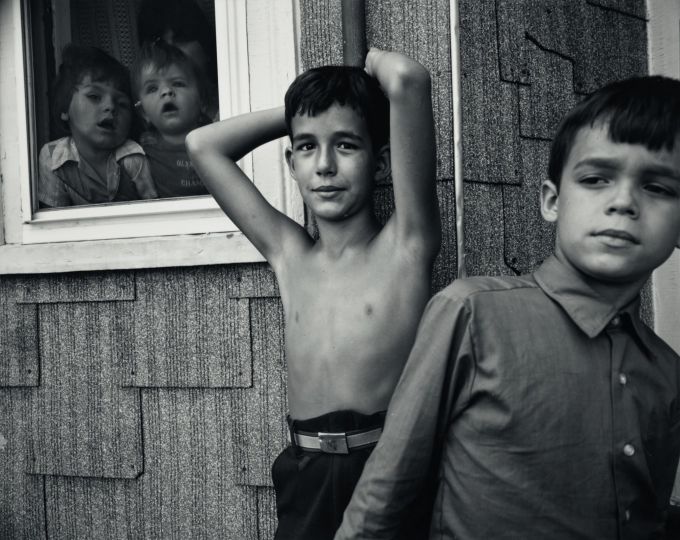
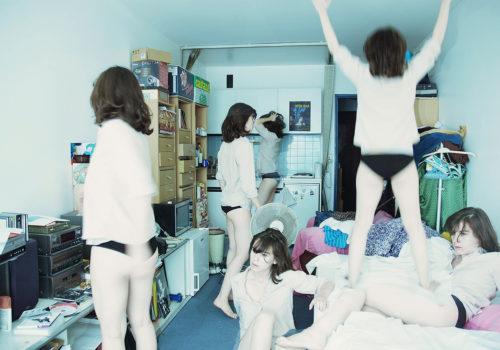
For Marthe Lazarus, photography is never merely a tool for recording reality. It constitutes a space of circulation where memories, emotions, found images, fragments of lives, and mental projections intersect. Her work is built within this in-between space, where memory becomes raw material a shifting, unstable territory constantly rewritten through the act of looking. Through self-portraits, portraits of loved ones, staged scenes, personal archives, and collections of images gathered online, the artist constructs a sensitive cartography of intimacy. Images overlap, cancel one another, and recur. They form a complex network in which past and present, reality and fiction, lived experience and imagination deliberately merge. “I need my images to be traversed by multiple layers, just as our minds are constantly crossed by memories, thoughts, and mental images,” she explains. This layering constitutes one of the fundamental gestures of her practice. Collages, interventions on photographs, photographic montages, and photo-films all stem from the same desire: to make visible what usually escapes representation. Marthe Lazarus does not seek to document the world but rather to translate the way it leaves its imprint on her how it persists, transforms, and resurfaces.
Her project TIME MACHINE embodies this reflection in a particularly compelling way. Inspired both by the continuous stream of digital images that saturate our daily lives and by Apple’s backup system of the same name, the project functions as an attempt to capture contemporary time itself. Through thematic self-published editions, handcrafted and printed in her studio, the artist collects, archives, and recomposes part of the visual flow that passes through our existence. Each publication operates like a poetic hard drive where traces of an individual memory intersect with collective imagery. At a time when algorithms shape our relationship to the visible and digital streams accelerate forgetting as much as they generate archives, Marthe Lazarus develops a body of work that opposes the rapid consumption of images through processes of reappropriation, montage, and reactivation. Her gaze lingers on residues, accidents, reminiscences, and areas of uncertainty that classification systems struggle to contain.
This approach resonates particularly strongly within the exhibition (DE)GENERATED, presented at Étoile de la Roquette as part of the 2026 Arles OFF Festival. By reclaiming and reversing the infamous term “degenerate art,” used by the Nazi regime in 1937 to condemn artistic forms deemed deviant, the exhibition questions the new visual norms shaping our contemporary world. Within this context, Marthe Lazarus’s work emerges as a form of poetic resistance to any simplification of reality. Her images reject fixed categories, linear narratives, and rigid identities. They embrace complexity, ambiguity, and the permeability of human experience. They remind us that memory is never a neutral archive but an ongoing construction shaped by desire, oblivion, fiction, and emotion. Far removed from nostalgia, her work explores what it means to remember in the digital age: how to preserve traces in a world saturated with images; how to maintain the depth of experience amid endless circulation; and how to articulate a singular voice within the overwhelming visual noise of contemporary culture.
Today, her practice stands as one of the most personal and sensitive explorations of the connections between photography, memory, and imagination, transforming each image into a fragment of an autobiography in perpetual recomposition.
Website : www.marthelazarus.com
Instagram : @marthelazarus
Marthe Lazarus Photography Exhibition – Paris Montparnasse
Until September 5, 2026
Tuesday to Saturday, 2:00 PM – 6:00 PM
The artist will be present on Saturdays (except July 11 and July 25), on July 15, 16, and 17, and by appointment.
Closed on public holidays and from July 25 to August 25.
Venue: Villa Vassilieff / Chemin du Montparnasse
Entrance via 21 Avenue du Maine, at the foot of Montparnasse Metro Station.
Group Exhibition – Lazarus, Generated and Degenerated Photography, Arles
July 8–26, 2026
Wednesday to Sunday, 3:00 PM – 8:00 PM
The artists will be present during the professional week of the Rencontres d’Arles.
Opening Reception: Friday, July 10, at 5:00 PM
Venue: Étoile de la Roquette
20 Rue Genive, Arles.
What was your first photographic trigger?
Marthe Lazarus: Certain kinds of light. Certain lines drawn by light. That is often where everything begins.
A photographic memory from your childhood?
Marthe Lazarus: The first photographs I took of my sister and my first self-portraits, made when I was eight or nine years old. They are images I exhibit today!
The camera of your childhood?
Marthe Lazarus: A Kodak Instamatic with 110 film.
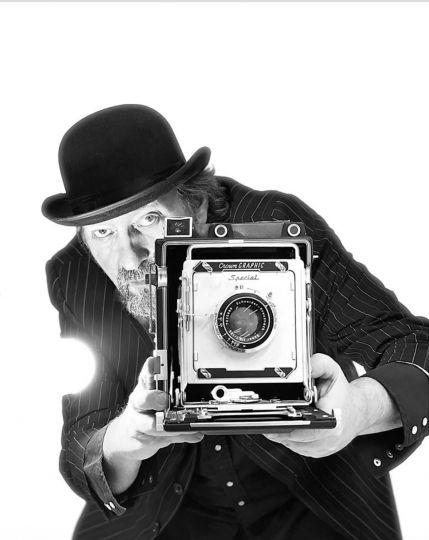
The one you use today?
Marthe Lazarus: I am quite eclectic. I use everything from a phone to a Leica.
The man or woman of the image world who inspired you?
Marthe Lazarus: My earliest inspirations probably came from cinema and painting. As a child, I read Télérama at my parents’ house and cut out photographs from films I loved. I also watched a lot of movies. There were many books and reproductions of paintings around me.
An image you wish you had created?
Marthe Lazarus: Marc Chagall’s painting Above the Town (1918–1924).
The image that moved you the most?
Marthe Lazarus: When I discovered the work of Zofia Kulik at the Rencontres d’Arles, I burst into tears.
And the one that made you angry?
Marthe Lazarus: The subject of a photograph can make me angry, but rarely the photograph itself. On the other hand, certain paparazzi images deeply shock me. They sometimes amount to harassment. People, even celebrities, are not circus attractions. I’m thinking in particular of the photographs of Britney Spears when she shaved her head.
Which photograph changed the world?
Marthe Lazarus: The very first one. The invention of photography itself.
And which photograph changed your world?
Marthe Lazarus: The photograph of Marilyn Monroe by Eve Arnold on the set of The Misfits. Marilyn’s magic and the grace of that photograph. I had that poster in my bedroom when I was a young girl.
A key image in your personal pantheon?
Marthe Lazarus: Araki’s cat in the snow on his terrace.
What interests you most in an image?
Marthe Lazarus: Emotion.
What details do you look for in a face, a landscape, or an object?
Marthe Lazarus: I don’t really look for details. That’s not what interests me. I am looking more for an overall vibration.
Elliott Erwitt said: “Color is descriptive. Black and white is interpretive.” Do you agree?
Marthe Lazarus: Elliott Erwitt’s work and mine are so far apart that it is difficult for me to truly appropriate that statement! I would say that I am interested in both description and interpretation, and that black-and-white and color are not opposites for me. In my overlays and collages, I sometimes combine a color photograph with a black-and-white one. For example, in my series Haute Intensité, the black-and-white elements can represent the long duration of the twentieth century’s world wars, while color represents the present.
Can technique take precedence over emotion in photography?
Marthe Lazarus: Yes. Some photographs tend toward demonstrations of technical virtuosity. For me, technique ultimately matters very little. It can sometimes even block the energy that guides me when I create. I use whatever is at hand. Sometimes I develop a technique for a single series. Technique interests me when it allows me to manipulate, touch, and transform things, but not in the pursuit of perfection. I also deliberately leave “technical mistakes” in my images, especially in my collages. It is important to me that viewers understand these are constructions. I am very interested in outsider art.
Is beauty in photography, for you, purely aesthetic?
Marthe Lazarus: First, we would have to define beauty. I would rather speak of accuracy or vibration. I remain fascinated by the fact that certain images touch human beings almost universally.
What elements can make silence visible in a photograph?
Marthe Lazarus: For me, a photograph is silent when it does not move me, when I have no desire to look at it. It simply does not speak to me.
Does the uniqueness of a photograph come from the moment or from staging? Can a photograph be truer than reality?
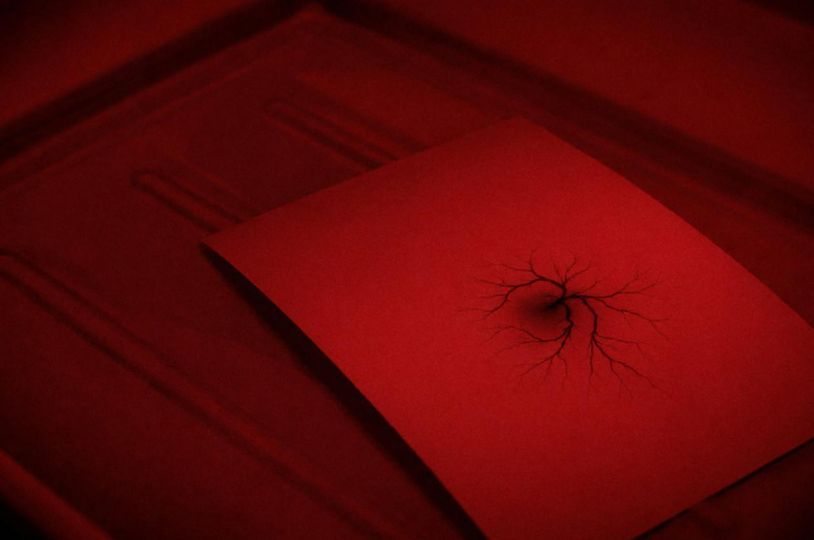
Marthe Lazarus: For me, my reality is made up of my mental images. I use slices of reality captured by photography to create my intimate fictions. I fantasize, blur, and mix things together. I let images come to me. At the moment, I often use a self-portrait that I reshape, revisit, and reinterpret. In one image, I surrounded it with elephant fetuses; in another, I overlaid it with veins; in another, I replaced the face with other images. I did not do all this on the same day. It is simply a photograph that keeps speaking to me at this moment.
Can a photograph change our perception of an event?
Marthe Lazarus: Of course. First because it fixes and records the event. Then because it can also manipulate it, distort it, or, on the contrary, reveal it to us.
Is photography a testimony or a form of manipulation?
Marthe Lazarus: What is fascinating about photography is that it can be both at the same time—and much more besides. I operate precisely in that in-between space. That may be why I manipulate my images so much, especially through overlays, in a visual arts approach.
What makes a good photograph?
Marthe Lazarus: Probably something that traps the eye and carries us into a world.
In your opinion, what quality is necessary to be a good photographer?
Marthe Lazarus: Letting go. Looking deep within yourself and taking the risk of showing it, even if you may not be understood.
How do you choose your projects?
Marthe Lazarus: I often create what costs me little, following a DIY and lo-fi logic that I really enjoy. But I currently have a project in mind that would require significant technical and financial resources. I will have to find funding. I hate writing grant applications!
How would you describe your creative process?
Marthe Lazarus: Intuitive.
An upcoming project particularly close to your heart?
Marthe Lazarus: Developing my formal research. And above all, bringing to life this project based on an expensive process that would require financial and technical partnerships.
The person you would most like to photograph?
Marthe Lazarus: My cat. He senses when I try to photograph him and immediately turns away.
The person by whom you would like to be photographed?
Marthe Lazarus: I find it very difficult to be photographed by others. That is probably why I practice self-portraiture so much.
An essential photography book?
Marthe Lazarus: Coming and Going by Jim Goldberg. I am a passionate bibliophile: I buy a huge number of photography books. I also produce my own in the form of self-published editions. It is an important aspect of my work.
What is the last photograph you took?
Marthe Lazarus: Views of my exhibition.
On social media, are you more Instagram, Facebook, or TikTok?
Marthe Lazarus: Instagram.
What has changed in photography since the rise of social media?
Marthe Lazarus: Instagram has created an image effect: some works appear very interesting on a screen and disappoint when seen in person. But it is also a tremendous tool for dissemination, observation, and exchange. I discover other people’s work there, and I show my own.
An Instagram account everyone should follow?
Marthe Lazarus: Japanese Avant-Garde Books.
What is your view of AI?
Marthe Lazarus: Like everyone else, I find it fascinating and dangerous, especially for democracy, individual freedoms, and employment. Going further, I would ask myself what AI’s view of me is. It is offered to me in the form of extraordinary retouching tools, for example. What is it learning about me when I use it? And what will it do with that information?
Color or black and white?
Marthe Lazarus: Color. I can always convert it to black and white later if I feel like it.
Natural light or artificial light?
Marthe Lazarus: I like it when the two are mixed.
Which city seems the most photogenic to you?
Marthe Lazarus: The grass is always greener elsewhere!
The city, country, or culture you dream of discovering?
Marthe Lazarus: Tanzania. To see the great animals. A kind of Garden of Eden.
A place you never tire of?
Marthe Lazarus: My bed.
The image that best represents the current state of the world?
Marthe Lazarus: A drone.
In your opinion, what is missing from the world today?
Marthe Lazarus: What an immense question… It is too big for me.
If God existed, would you ask Him to pose for you, or would you opt for a selfie with Him?
Marthe Lazarus: I would ask Him for nothing. On the other hand, I would find it very amusing if He wanted to be photographed or demanded selfies with His admirers.
Your favorite drug?
Marthe Lazarus: Television.
Your best way to disconnect?
Marthe Lazarus: I have a hard time disconnecting. But there is Tetris on my phone. I spend far too much time playing it.
Your latest extravagance?
Marthe Lazarus: A naïve painting of a horse, bought on Le Bon Coin. I am fascinated by vintage and kitsch objects.
Your greatest professional extravagance?
Marthe Lazarus: Presenting collages made from screenshots taken on the web to a photography competition that worshipped polished imagery. Unsurprisingly, I was not selected!
A profession you would not have liked to do?
Marthe Lazarus: There is no such thing as a foolish profession.
Which question unsettles you the most?
Marthe Lazarus: This one.
The last thing you did for the first time?
Marthe Lazarus: Entering the archives of the Bibliothèque nationale de France for a project. It was fascinating.
Your greatest regret?
Marthe Lazarus: Nostalgia is deeply rooted in me, and it is one of the reasons why I return so often to images taken throughout my life, reshaping and layering them. It is a way of reliving moments, reconnecting with people, or revisiting places. But regret is not really part of the way I think. On the other hand, I do have remorse about certain things.
If you had to start all over again?
Marthe Lazarus: I would organize my archives better and keep all my cameras.
If I could arrange your ideal dinner party, who would be at the table?
Marthe Lazarus: My dead.
What do you like people to say about you… afterwards?
Marthe Lazarus: If it is after a dinner at my home: “That was delicious!” Unfortunately, I am terrible cook!
The one thing everyone absolutely must know about you?
Marthe Lazarus: I am deeply attached to my freedom.
One final word?
Marthe Lazarus: I love accidents and surprises.