Waiting for Palms
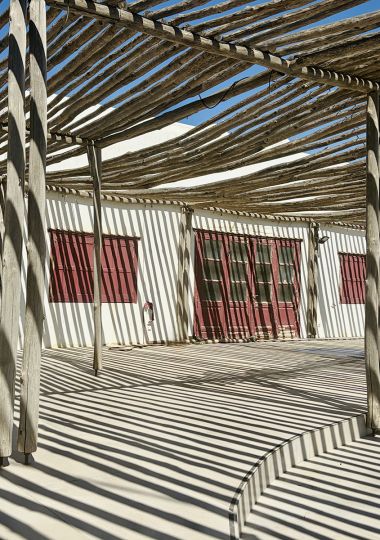
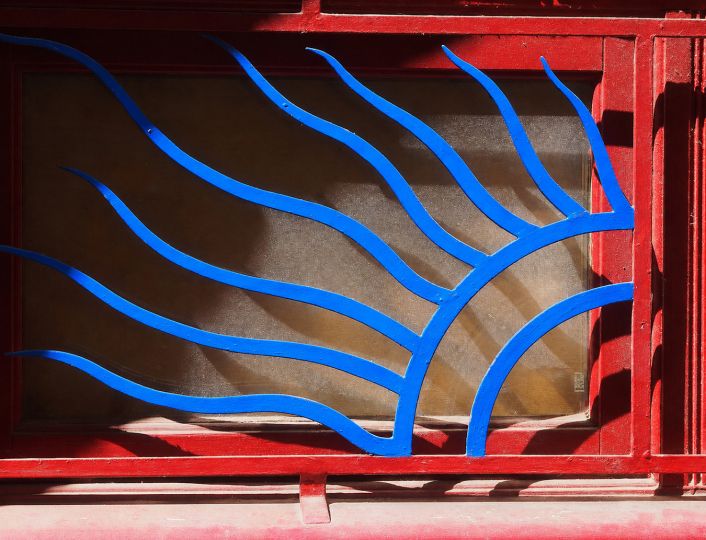
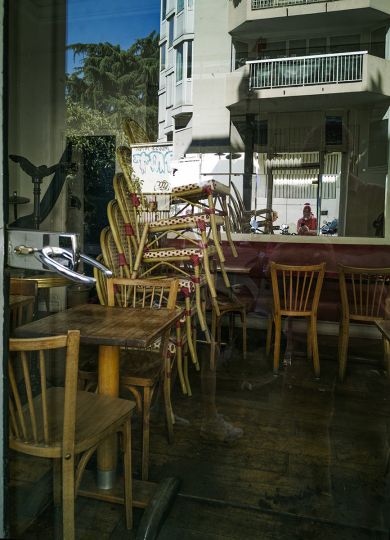
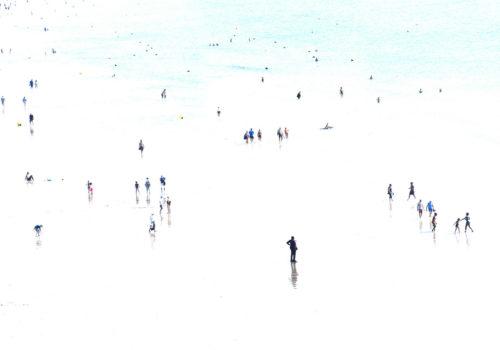
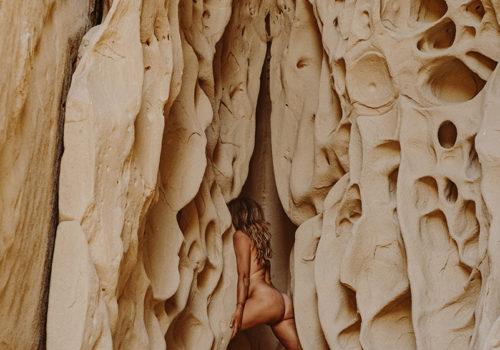
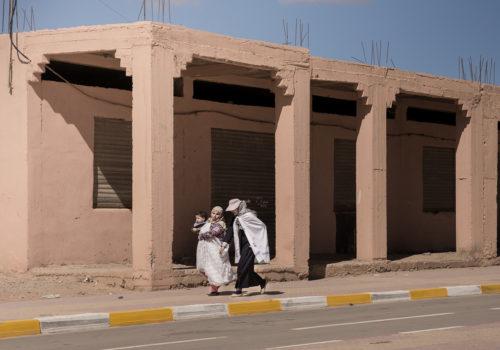
Waiting for Palms is a series of urban landscape photographs taken in Morocco and Egypt, which explores where the quiet traces of tradition intersect with the turbulence of modern expansion. The geography travels across central Morocco, from Essaouira to Marrakech, through the Atlas Mountains, into the arid stretches of Drâa-Tafilalet, and back over the mountains to the old medina of Fes; in Egypt it follows the train tracks along the Nile, from Cairo to Luxor to Aswan and back. The images linger on the everyday, set within monumental landscapes and constructed from an accumulation of small, inglorious moments. Together, they form a mosaic of worlds that are immediate and enigmatic, intimate yet always elusive, offering an experience of perpetual interpretation.
In Morocco, a false sense of timelessness at first seems to permeate the landscapes. Daily life in the medina of Marrakech does not bustle; instead, scooters and people seem to glide above the market floor in a quiet commerce, frozen by the photographs in an ubiquitous calm. In the deserts, solitary citadels rise along the roadside in uneventful silence, ancient and magnificent yet nondescript all at once. The villages and canyons of the Dades Valley feel emphatically empty, as in the image of a lone donkey, the seemingly sole inhabitant of an earthen mountain village. Yet within this harshness, life insists on its own interactions, fracturing the austerity through murals, fruit stands, and countless quotidian interventions that emerge like thoughts made manifest. These reveal a subtle interplay between permanence and transience, suggesting not an immortal place but one where time is not master, but instead a negotiable guest.
The Egyptian journey moves from Cairo’s cacophonous modernity to the temple-shadowed quiet of Aswan, unfolding as a palimpsest in which each era inscribes itself without fully erasing what preceded it. In Cairo, a billboard’s comical and watchful eyes gaze over a speeding motorbike on the expressway, while in a market corner cats gather against faded movie posters in small tableaux that hint at the city’s layered mythology. Moving south, urban density gives way to countryside, punctured by crossings where crowds gather in an orchestrated chaos, clamoring, unhurried yet urgent. Two women shop happily, their traditional dress a counterpoint to the plastic toys of modernity around them, while a restaurant’s modern domes nod to ancient Nubian architecture. All scenes which tempt the tropes of timelessness, returning the traveler to the same disregard of time that surrounds Morocco’s vignettes, where the eternal and the immediate coexist within a single frame. This persistence of the everyday within monumental landscapes emerges as a magnificence of countless small and unheroic moments.
To the photographer, so foreign to these worlds, capture becomes an act of provisional translation, an attempt to hold the poetics of space where gestures of privacy contrast with tradition and where stillness and motion create an unspoken choreography of the streets. The camera draws away one veil only to create another, turning the private language of seeing into something shareable yet transformed. Each viewer brings their own encounter to the image, so that a boy glancing back at his friend on a bicycle might equally belong to an alley in Luxor or a narrow street half a world away. Together these frozen vignettes form a tapestry of two places brought near not through understanding but through a common relevance that remains beyond translation, worlds that are immediate and enigmatic, intimate yet always elusive, holding the observer in patient suspension and perpetual interpretation.
https://peterydeen.com/