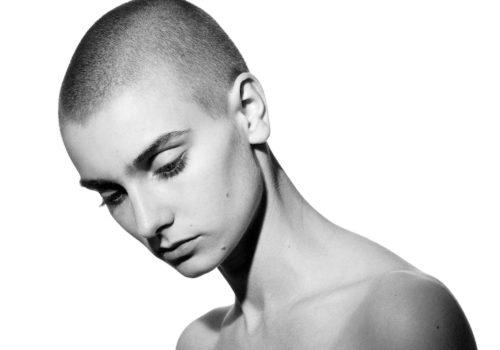
Richard Schroeder : The eye that reveals the soul
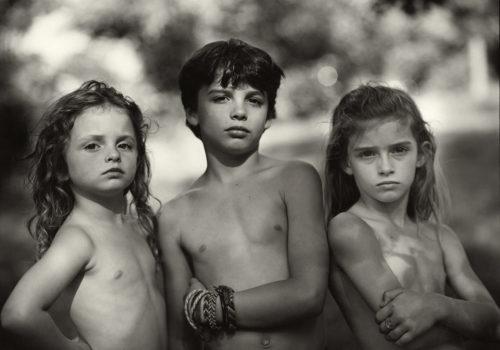
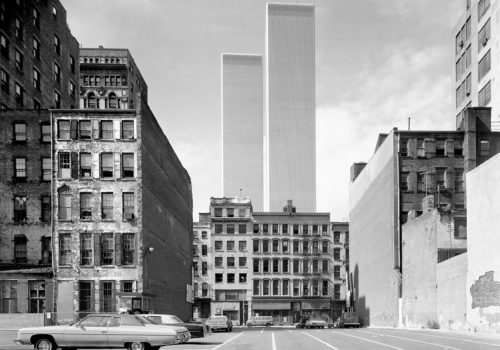
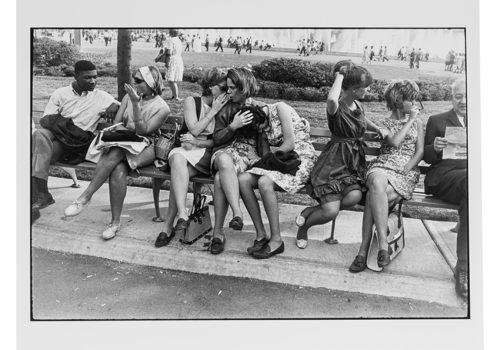
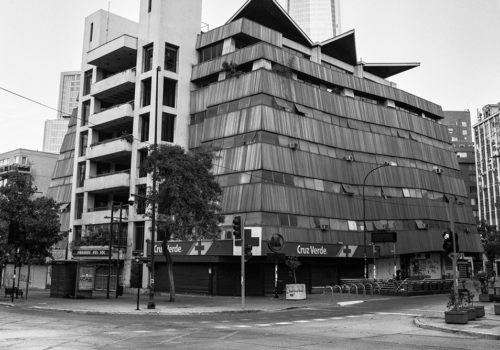
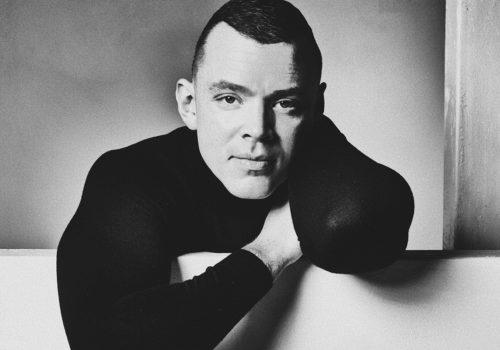
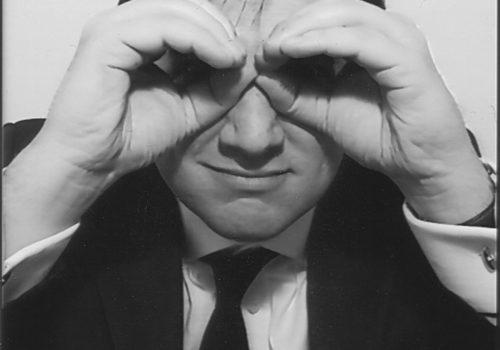
Richard Schroeder , doesn’t photograph to freeze time he photographs to bring into existence. Moving between fashion, music, and cinema, his gaze is that of an explorer, attuned to the fragile tension between presence and disappearance, fame and anonymity. His square frames, frontal light, and preferred black-and-white are not mere aesthetic codes they are instruments used to seize the instant when the soul reveals itself, even in silence or sobriety. Every face becomes a landscape, every gesture a vibration. Throughout his career, he has developed a singular approach that transcends genres and eras. From his early punk and rock images to portraits of cinema and literature stars, from fashion photography to his more personal black-and-white works, Schroeder has remained faithful to one constant demand: to capture the human being in their truth whether celebrated or anonymous. His body of work is a continuous exploration of light, form, and suspended time, an ongoing dialogue between aesthetics, emotion, and memory.
Moment Parfait (published by Éditions Odyssée) is not meant to be read it is meant to be lived. The book is a road movie in images, where icons meet unknowns, where color and black-and-white converse like two voices in a musical score, and where the soundtrack curated by Richard Schroeder gives rhythm and pulse to each moment. Chronology is suspended; the reader is invited to drift, to listen to the silence between the images, to feel the texture of time standing still. Critique and poetry collide in this work. Formal mastery and rigorous elegance impose an order that fascinates, yet true audacity emerges in the in-betweens a fleeting glance, a subtle imperfection, an emotion escaping the pose. Schroeder rejects the ease of the “beautiful for the beauty’s sake” of photographs, transforming each portrait into an act of encounter a meditation on humanity, memory, and perception. Moment Parfait is both manifesto and mirror. It questions our relationship to the image, to archives, to fame, and to the present moment. It reminds us that photography is not limited to what we see but extends to what we feel to what survives within the silence of the image. Here, Schroeder doesn’t merely capture faces: he seizes those rare moments when life becomes image, and when the image, in turn, becomes alive.
Website : www.richardschroeder.fr
Instagram : @richardschroederphoto
News: Release of his book Moment Parfait published by Éditions Odyssée / Exhibition at Galerie Atsikal, 90 rue d’Assas, Paris 6th, on view until November 27.
Your first photographic trigger?
Richard Schroeder: A stolen picture taken through the window of a men’s tailor shop on Avenue Mozart.
A photographic memory from your childhood?
R.S. : The Beatles’ portraits by Richard Avedon.
Your childhood camera?
R.S. : A Brownie Kodak as a kid, then a Pentax Spotmatic at 15 that’s when it all began.
The camera you use today?
R.S. : A twin-lens Rolleiflex Schneider 3.5 + Hasselblad 500 CM with Phase One back + Canon 5 D SR + Fuji X100F.
The man or woman behind the image who inspired you?
R.S. : Richard Avedon.
The image you wish you had made?
R.S. : Marilyn Monroe with her lost gaze by Avedon.
The one that moved you the most?
R.S. : The same one.
And the one that made you angry?
R.S. : Every sensationalist photograph.
Which photograph changed the world?
R.S. : If only a photograph could change the world.
And which one changed your world?
R.S. : The Beatles by Avedon, and the Blow-Up movie poster by Antonioni.
A key image from your personal pantheon?
R.S. : Among mine Bashung nude. Among others Marilyn…
What interests you most in an image?
R.S. : The image itself!
What details do you look for in a face, a landscape, or an object?
R.S. : An emotion.
Elliott Erwitt once said: “Color is descriptive. Black and white is interpretative.” Do you agree?
R.S. : Rather.
In your opinion, can technique sometimes take precedence over emotion in photography?
R.S. : If technique dominates, the photo is a failure.
Is beauty in photography, for you, purely aesthetic?
R.S. : Of course not!
What elements can make silence visible in a photograph?
R.S. : The gaze.
Does the uniqueness of a photograph come from the moment or from the staging?
R.S. : Anything is possible.
Can a photograph be truer than reality?
R.S. : Of course.
Can a photograph change our perception of an event?
R.S.: Of course sometimes, alas, unfortunately.
Is photography a testimony or a form of manipulation?
R.S. : One or the other again, unfortunately.
What makes a good photo?
R.S. : If we knew that, there would only be good photos.
In your opinion, what quality is essential to being a good photographer?
R.S. : Curiosity and empathy.
How do you choose your projects?
R.S. : Other people’s desire or chance.
How would you describe your creative process?
R.S. : I don’t know. I look and it comes, or it doesn’t.
An upcoming project particularly close to your heart?
R.S. : To photograph my granddaughter for as long as possible.
The person you would most like to photograph?
R.S. : Bob Dylan or Lauren Bacall if we could go back, say, fifteen years.
The person you’d like to be photographed by?
R.S. : Patrick Swirc or Laura Stevens.
An essential photography book?
R.S. : In the American West by Avedon.
What’s the last photo you took?
R.S. : A withered rose.
On social media, are you more Instagram, Facebook, or TikTok — and why?
R.S. : Instagram. It still seems to me the most honest and best suited to photography.
What has changed in photography since the rise of social media?
R.S. : Everything since now everyone is a photographer.
An Instagram account we should absolutely follow?
R.S. : Two of them! The MEP (Maison Européenne de la Photographie) and Paolo Roversi’s.
What’s your view on AI?
R.S.: Yoo-hoo Rintintin!
Color or black and white?
R.S. : Black and white.
Natural or artificial light?
R.S. : Natural.
Which city do you find the most photogenic?
R.S. : New York — in the ’70s and ’80s.
The city, country, or culture you dream of discovering?
R.S. : Japan.
A place you never get tired of?
R.S. : Any bench facing the sea.
The image that best represents the current state of the world?
R.S. : If it can be a non-photographic image The Raft of the Medusa by Géricault.
What do you think the world lacks today?
R.S. : Common sense and empathy.
If God existed, would you ask Him to pose for you — or take a selfie with Him?
R.S. : No selfie how awful!
Your favorite drug?
R.S. : The song by Serge Gainsbourg and Michel Simon: “L’herbe tendre”!
Your best way to disconnect?
R.S. : Listening to music.
Your last act of madness?
R.S. : Making my book.
Your greatest professional extravagance?
R.S. : Making that book — Moment Parfait — with the excellent Antoinette Chalumeau.
The job you’d never have wanted to do?
R.S. : Executioner.
Which question throws you off the most?
R.S. : Beatles or Rolling Stones?
The last thing you did for the first time?
R.S.: Listening to the new Bertrand Belin.
Your biggest regret?
R.S. : None.
If you had to start all over again?
R.S. : Almost the same.
If I could organize your ideal dinner, who would be at the table?
R.S. : Modiano, Françoise Sagan, PJ Harvey, John Lennon.
What would you like people to say about you… afterwards?
R.S. : Couldn’t care less — or maybe just that I was a pretty nice guy.
The one thing people absolutely should know about you?
R.S. : I was born the day Stalin died!
A last word?
R.S. : Thank you.