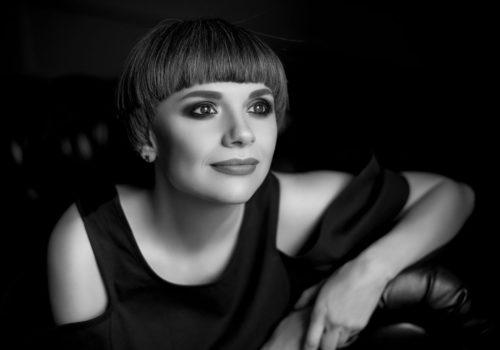
Polina Kostanda : Dream Hacker
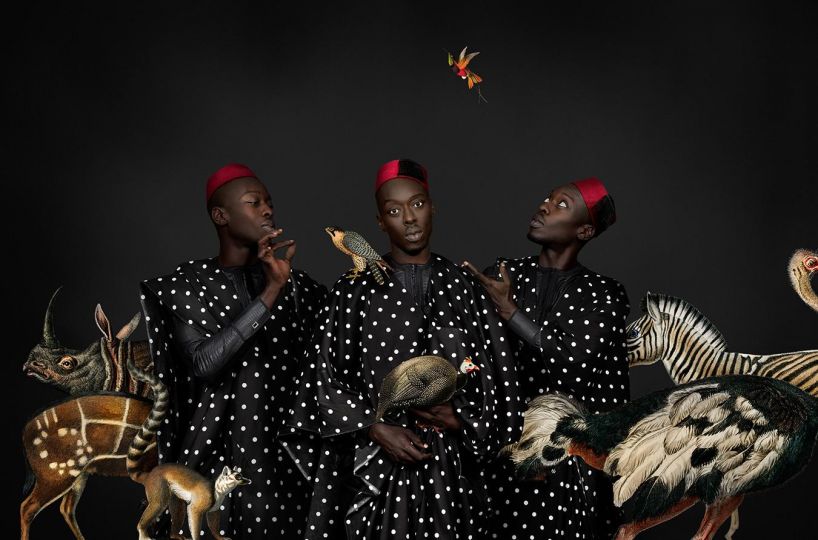
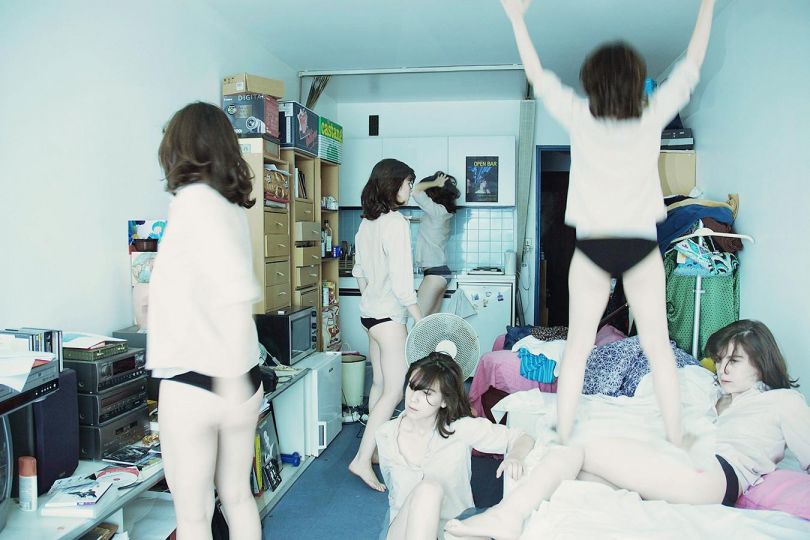
There are artists who observe the world, others transform it. Polina Kostanda, a.k.a. Polly in Wonderland, reinvents it with every breath. Poet, playwright, creative copywriter… this Ukrainian artist spent years exploring words and the stage before embarking on an unexpected dialogue with an unlikely partner: artificial intelligence. Far from seeing it as a cold machine, she treats it as an unpredictable creative companion one with its own flashes of inspiration, capable of conjuring visions no single mind could ever dream up.
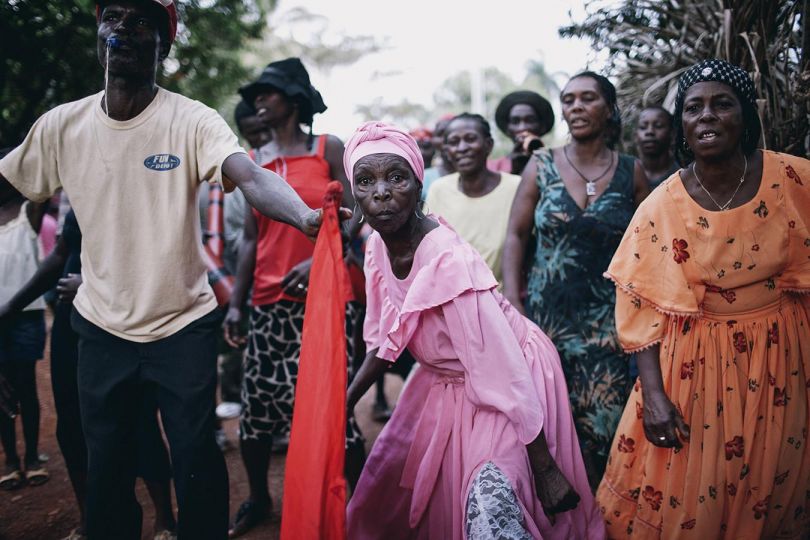
With her, AI becomes an alchemist. Each image is an unstable, explosive fusion between human intention and algorithmic surprise. The result: worlds where the strange flirts with the marvellous, where retro-futurism mingles with surreal blooms, where you might encounter radiant elderly women with rock-star swagger or uncanny visions that seem to have escaped from the realms of Hieronymus Bosch or David Lynch. Nothing is smooth, nothing is gratuitous: her images are portals, distorting mirrors that invite us to question our perceptions and throw our certainties into play.
Inspired by Tarkovsky, Wes Anderson, Viktor Pelevin, and the wisdom of Buddhism, Polly in Wonderland refuses to settle into a fixed style. She moves through successive explorations, constantly shifting her own boundaries. Each series is a new territory; each project, a sensory and philosophical experiment. Present on the international art scene—from PhEST to the visual campaign of WEMW 2025 she works with the conviction that the true role of art is not to reproduce reality, but to open passageways to other worlds.
With Polly in Wonderland, you don’t simply look at images. You walk through doors. You venture into a realm where imagination reigns, where bizarre is a form of beauty, and where the journey always matters more than the destination.
Website : www.pollyinwonderland.com
Instagram : polly__in-wonderland
Carole Schmitz : Your first photographic trigger ?
Polina Kostanda : In my case, it’s not exactly photography. It’s the creation of images with the help of artificial intelligence images that are realistic and resemble photographs. The trigger for this activity was the appearance of the tool itself AI. My images, although they look like photos, go a little beyond the boundaries of familiar reality. I had always wanted to create something like this, but there was no technical possibility: drawing it was difficult, and taking real photographs was almost impossible, since the scenes don’t fit into our reality. But when AI appeared, I said, “Hooray! This is exactly what I needed!”
The man or woman of image who inspired you?
Polina Kostanda : I don’t want to be disingenuous and start listing famous photographers I admire (there are many of them). Because, to be honest, in visual terms I’m more inspired not by static images, but by cinema. My icons are Lynch, Tarkovsky, Wes Anderson, and other cult directors.
The image you would have liked to take?Polina Kostanda : I can’t say for sure what the exact visual image would be, but I can say what effect I would like my work to have on the viewer. I want my image to touch something deep inside, to make someone freeze, cry, suddenly see their whole life before their eyes, and realize what truly matters in life. I’m still searching for the story and idea for that image. In fact, all of my works are about this to inspire the viewer to open their eyes and their heart. And the stronger the effect, the better.
The one that moved you the most?
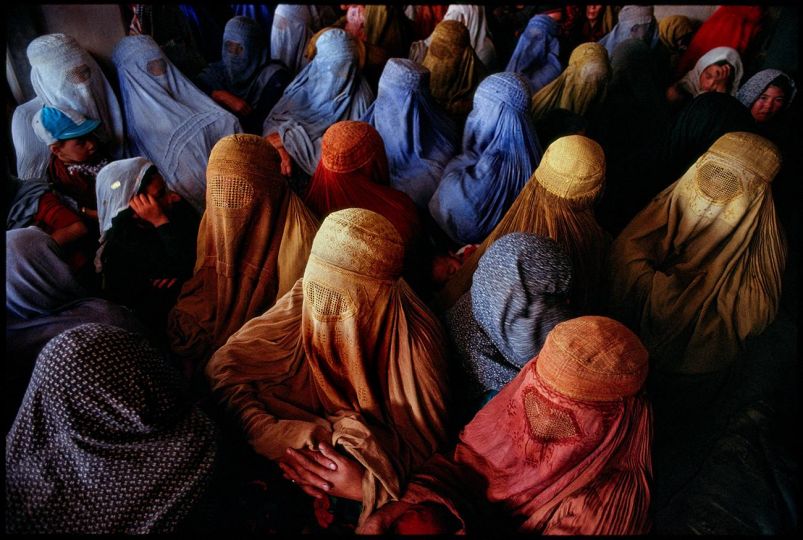
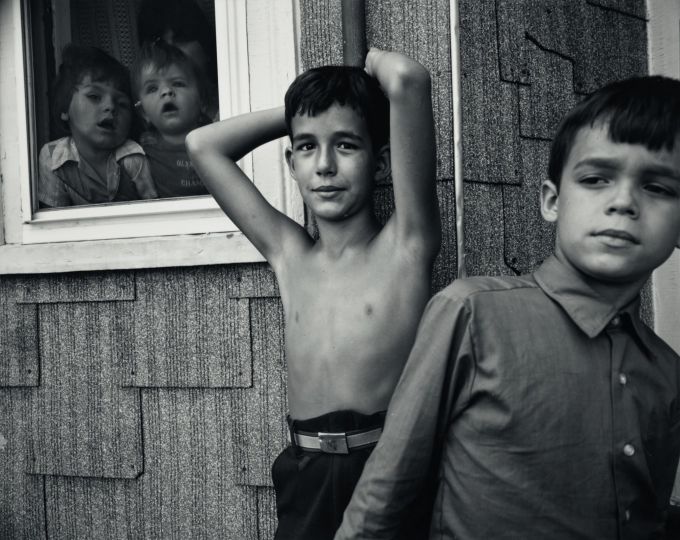
Polina Kostanda : I love people and genuine emotions, which is why I prefer portrait photography. I like the famous portrait of Einstein (Mike Rucker) or the photo of the Afghan girl (Steve McCurry). They are vivid and atmospheric. At the same time, of course, I can’t ignore photographs that cry out about pain and draw attention to pressing issues for example, the 1980 photograph of the starving boy and the missionary. Despite their heavy context, I also love such images very much.
And the one that made you angry?
Polina Kostanda : I don’t like it when ugliness is cultivated and made into a standard of beauty. That’s why I get angry and irritated by photographs that feature unnatural beauty all those dreadful silicone lips, identical faces, and the like. It’s awful, it’s tasteless, it’s boring, and it’s vulgar.
Which photo changed the world?
Polina Kostanda : If the world could be changed through photography or art in general, we would have been living without hunger, wars, and problems long ago. A photograph can influence an individual, perhaps even push them toward change. But not the world as a whole. Alas.
And which photo changed your world?
Polina Kostanda : There is no such photograph. What changed my world was not a picture, but a worldview Buddhism. Of course, a love for literature, art, painting, and photography shapes a person’s sense of taste and inner aesthetics. But that alone is not enough. Beyond art, there needs to be some kind of intellectual foundation for a worldview. For me, that is Buddhism. Philosophy plus art now that’s a crazy cocktail, I’ll tell you.
What interests you most in an image?
Polina Kostanda : Above all, what matters to me is the message what the author wanted to say. And even if it is done somewhat awkwardly or unartistically, I will always prefer a photograph with meaning and a message over a technically perfect, well-composed, and well-lit photo that feels “empty.”
What is the last photo you took ?
Polina Kostanda : My latest series of images features a woman with an eye-shaped brooch. The main idea of this series is to show that every person has their own perspective and their own vision of the world. This vision is shaped by the uniqueness of their personality and their personal experience, and there is no such thing as the same world for everyone.
A key image in your personal pantheon?
Polina Kostanda : I don’t have a photograph that I could call a defining one.
A photographic memory from your childhood?
Polina Kostanda : When I was a child, I grew up in a family that loved to read, and we had a lot of magazines and books. One day, I came across a magazine with a photograph a girl with tousled hair sitting on the seashore, gazing into the distance at a sailboat. At first glance, it was the most ordinary picture. But I liked it so much that I cut it out and even made a sort of frame for it. I don’t know what exactly caught me in that photo maybe the windblown hair, maybe a certain lightness but that picture stayed with me for several years, and I loved looking at it. Unfortunately, I don’t remember the author or the magazine.
According to you, what is the necessary quality to be a good photographer?
Polina Kostanda : The ability to see beauty and meaning in the moment. Everything else is superficial.
What makes a good photo?
Polina Kostanda : It shouldn’t just be a photo it should be a story about something. The most important thing in a photograph is that it’s not an “empty beautiful picture,” but a message.
The person you would like to photograph?
Polina Kostanda : No one. I don’t have idols or “icons.” Moreover, in my view, celebrities draw attention away from the photograph and onto themselves, and the idea itself can get lost.
An indispensable photo book?
Polina Kostanda : Well, let’s say Nudes by David Lynch.
The camera of your childhood?
Polina Kostanda : My childhood was in the USSR, and we were all poor. A camera was a luxury. In my childhood, it was foolish even to dream of having one.
The one you use today?
Polina Kostanda : My tools are my imagination and AI (the MidJourney app), and I wouldn’t trade them for any camera in the world.
How do you choose your projects ?
Polina Kostanda : My projects are the result of my imagination. I simply close my eyes and start imagining, and then I bring it to life with the help of AI.
How would you describe your creative process?
Polina Kostanda : Creativity is always magic. In my case, I first feel something an inner “creative restlessness” that later turns into an idea or a project. Sometimes it happens instantly, in a moment; other times, after several hours of work, you suddenly see it there it is! It worked! That’s it!
An upcoming project that’s close to your heart?
Polina Kostanda : I have a separate series about elderly women, which I call Joyful Old Age. In my country, there is no culture of aging; older people are forced to survive, and they are often gloomy. Many fear old age, many turn a blind eye. My works are about showing that aging is not frightening, that it can be joyful and beautiful. This is important to me.
Your favorite drug?
Polina Kostanda : Ha-ha. I’m a boring person I don’t drink, I don’t smoke, I don’t use drugs. My drug is life itself. Every single minute of it. It’s the best thing that could have happened to us. And I also really love reading and watching good films.
The best way to disconnect for you ?
Polina Kostanda : The best way to disconnect from everything is meditation and walks by the river. I love both.
What is your relationship with the image ?
Polina Kostanda : Well, since you came to me with questions, it seems that my relationships aren’t too bad 🙂
Who would you like to be photographed by ?
Polina Kostanda : A difficult question… how do you pick the very best out of a multitude of masters? Well, let’s go with today’s mood let it be Maren Parr.
Your latest folly?
Polina Kostanda : I’ll repeat, I’m quite a boring and ordinary person. My biggest madness in recent days I, a hardcore introvert, agreed to go on a trip with relatives to a huge, crowded hotel. That’s what counts as madness for me, ha-ha.
An image to illustrate a new banknote?
Polina Kostanda : I’ll be banal, but I would depict an hourglass on a banknote, as a symbol that the most important thing your time cannot be bought with money. Money has become the idol of the 21st century, and that’s sad. Simple joys have ceased to be important, and people spend most of their lives earning, without knowing how to simply live.
The job you would not have liked to do ?
Polina Kostanda : I definitely couldn’t kill anyone. So a soldier or a butcher in a meat shop that’s definitely not me.
Your greatest professional extravagance?
Polina Kostanda : I can hardly call myself extravagant.
What question gets you off track?
Polina Kostanda : Pushy questions about collaborations leave me stunned. I’m an introvert, and I like to work alone. When I’m offered a creative partnership, I politely decline. When people start asking intrusive and persistent questions, it tires me out.
What was the last thing you did for the first time?
Polina Kostanda : Very often I have moments of “it’s the first time I’ve read a certain book or watched a certain film.” But that’s not it. Perhaps the same goes for new foods I’ve tried also not quite it. My most recent experience was a sad one: I live in Ukraine, amid the war, and my “first experience” was hearing the sound of a missile explosion, feeling the blast wave. That is probably my freshest impression.
The city, the country or the culture you dream of discovering?
Polina Kostanda : I haven’t been to many places. But I want to visit Italy, Spain, and Greece. These three countries attract me the most. I might even want to live in them.
The place you never get tired of ?
Polina Kostanda : The seashore, at any time of day or year, in any weather. I could sit there forever. I dream of living by the sea.
Your biggest regret ?
Polina Kostanda : I can’t say that I regret anything. I don’t regret any of my actions. Sometimes I feel embarrassed about the foolish things I did in my youth. BUT I was young, and that’s normal. I do feel sad that my father has passed away and doesn’t see his grandson growing up. But could I have changed that? Probably, I don’t have major regrets.
In terms of social networks, are you more into Instagram, Facebook, Tik Tok or Snapchat and why?
Polina Kostanda : Definitely Instagram I’m in love with it.
Color or B&W?
Polina Kostanda : Almost all of my images are in color, but I prefer black and white.
Daylight or artificial light?
Polina Kostanda : Daylight!
Which city do you think is the most photogenic?
Polina Kostanda : I don’t find cities photogenic. They are pretentious, overdone, overcrowded. The most photogenic place is a small village somewhere in the mountains or by the sea. Tiny, unremarkable. It will be much more expressive.
If God existed would you ask him to pose for you, or would you opt for a selfie with him?
Polina Kostanda : I should have asked him what his favorite photograph is. And how he truly sees me through his lens. Posing and selfies are awful. Especially next to God.
If I could organize your ideal dinner party, who would be at the table?
Polina Kostanda : The perfect dinner is a dinner alone. I would sit at the table by myself.
The image that represents for you the current state of the world?
Polina Kostanda : A bustling, dirty street, crowded with passersby lost in themselves; they don’t see the sky or the sun, and smoke hangs in the air. In the middle of the street sits an old man, a beggar. He looks into the lens. His gaze is captivating. Our world is a world of contrasts. As always.
According to you, what is missing in today’s world?
Polina Kostanda : Love and compassion
If you had to start all over again?
Polina Kostanda : If I could choose, I would walk this path with the same mistakes, pain, and joys. I like who I am. I wouldn’t want to change it.
What do you like people to say about you?
Polina Kostanda : It seems strange to me. Amazing. I don’t think I’m an important person worth talking about.
The one thing we absolutely must know about you?
Polina Kostanda : There is no such information everything is banal and simple.
A last word ?
Polina Kostanda : As my last words, I choose gratitude: thank you for the wonderful questions! It was exciting! Some of them moved me, some embarrassed me, some made me think!