Pieter Henket : The politics of presence
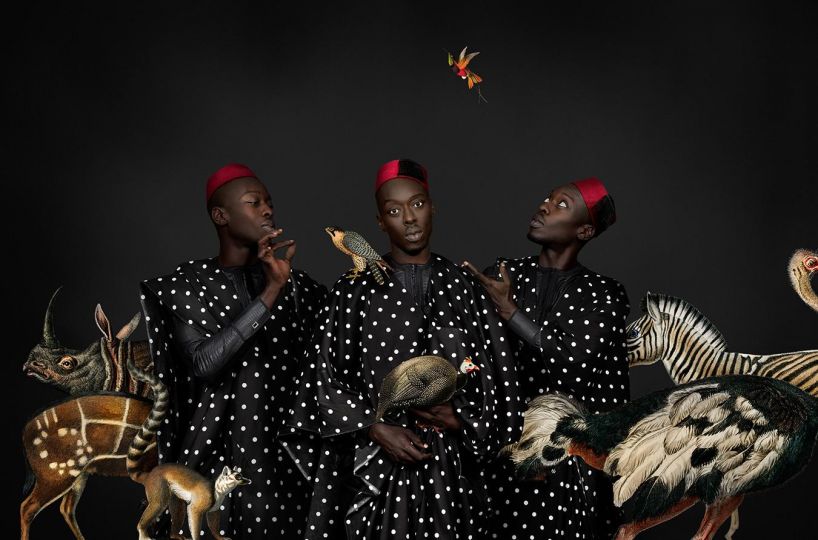
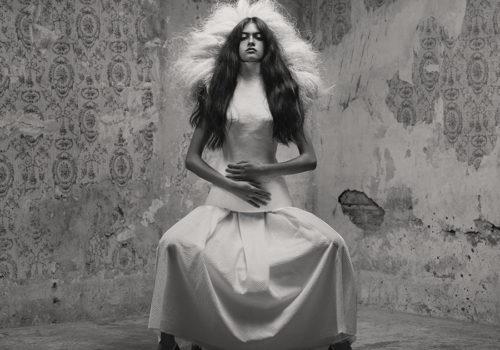
Pieter Henket belongs to that rare category of photographers capable of bringing formal elegance into dialogue with a profound reflection on representation, identity, and the power of the eye. Heir to a visual tradition in which the legacy of the Flemish masters meets the sophistication of contemporary portraiture, Henket has spent years developing a body of work driven by a singular obsession: to restore to its subjects control over their own image. Based in New York, he chose a path in photography where staging never serves the decorative, but instead becomes a tool of revelation. Beneath the precision of the lighting and the flawless mastery of composition, there always remains a human tension — subtle, almost silent. His work has long explored notions of dignity, visibility, and belonging — from The Invisible Ones to Congo Tales — yet his new project, Birds of Mexico City (Damiani, Spring 2026), undoubtedly marks a decisive shift in his photographic language. Here, Pieter Henket does not simply document an artistic scene or a contemporary youth culture; he accompanies a generation of Mexican performers, dancers, actors, and creatives who are reinventing the codes of identity and self-representation beyond any fixed norm. What immediately stands out in this series is its rejection of the photographer’s traditional authority. Developed in close collaboration with stylist Chino Castilla, editor Justin Gaspar, and an entirely Mexican queer creative team, the project abandons the logic of observation in favor of co-construction. The images feel less “taken” than shared, less imposed than negotiated. Henket does not look at his subjects from the outside; he builds with them a space of visibility in which each individual participates in the creation of their own mythology. At the center of the project is La Mujer, a striking portrait of Mexican artist Ixchel Paz, photographed entirely unretouched and uncompromising, with a frontal presence that is as disarming as it is assertive. Wearing a lucha libre mask — a symbol historically associated with masculinity, performance, and Mexican popular culture Ixchel Paz reclaims this virile imagery, transforming it into a territory of vulnerability and strength. The image thus becomes as much a political act as an aesthetic gesture: a reclaiming of the body, the gaze, and representation itself. In Henket’s work, this radicality never relies on effect or provocation. On the contrary, it is rooted in an extraordinarily controlled restraint. His photography resists contemporary injunctions toward visual perfection; instead, it embraces fractures, ambiguities, and the shifting territories of identity. Where so many contemporary images seek to fix individuals within instantly legible categories, Henket opens a more complex and fluid space, where bodies exist in their irreducible plurality. This is precisely where Pieter Henket’s singularity lies: in his ability to unite the visual sophistication of editorial portraiture with a subtle reflection on queer visibility, the autonomy of the subject, and the contemporary politics of the image. His photographs never attempt merely to illustrate an era; rather, they seek to reveal the invisible fractures, silent metamorphoses, and the new forms of freedom emerging from the margins.
Website : www.pieterhenket.com
Instagram : @pieterhenket @damiani_books @rizzolibookstore @bildhalle
News : Pieter Henket — (Birds of Mexico City) — will present the project at Rizzoli Bookstore in New York on May 19 before the work travels to Bildhalle Gallery in Amsterdam this summer.
Your first photographic trigger?
Pieter Henket : I always wanted to be a film maker I spend my childhood making films with my friends as the actors in my stories. When I started working for interior designer Tucker Robbins in Chelsea New York running his freight elevator, I asked him if I could make a video of him traveling, The Philippines, there deep in the mountains of Sagada I made a video of a lady when I came home, I paused those images and printed it out. That’s when I realized I wanted to learn to tell a whole story in one frame.
A photographic memory from your childhood?
Pieter Henket : My entire childhood is a photographic memory. I grew up in a visual heaven. If I had to pick one moment. I used to create theatre under the big Beech tree in front of my house. The tree was so large that under her arms it was like a cathedral. I hung sheets as curtains, and I had a crow her name was KraKra and together we did plays where I was a witch. That’s a beautiful memory for me. I can go on.
The camera of your childhood?
Pieter Henket : Sony Hi 8 video camera.
The one you use today?
Pieter Henket : Fujifilm gfx 100s Pentax 6 7
The man or woman of the image who inspired you?
Pieter Henket : For Birds of Mexico City I photographed a girl called Ixchel Paz, in the image La Mujer. She really stayed with me. She is full figured, beautiful, and has this kind of confidence that feels very real. Not performative, just completely comfortable in who she is. That inspired me a lot. Especially now, where it feels like everyone is trying to change themselves, to be thinner, to fix things, to follow these extreme beauty standards. Being around her felt like the opposite of that. She was just herself, and that felt very powerful. In the image she wears a lucha libre mask, a symbol of masculinity and strength in Mexican culture. She claims it as her own. That gesture says a lot. It shows that power does not belong to one gender, and that she can define it for herself. For me, that image is a reminder that we don’t need all these procedures or pressure to look a certain way. There is something much stronger in just being at ease in your own body. After the shoot I asked her what she thought of the photograph, and she said: “For me, modeling has always been a form of revolution. Showing myself in an industry full of stereotypical beauty standards is my way of saying that diversity exists, and that I hope more people see themselves represented. That is why being part of your lens has been more than an honor. It was a beautiful, respectful session, and it feels like a great achievement I never thought I would reach. The fact that it has had the reach it has, especially now, when women are being pushed toward medications and procedures to meet unrealistic beauty standards that put our health at risk, makes it mean even more. To me, the photograph represents the dignity of bodies and the right to show ourselves without fear. And being Mexican and Latina adds another layer to that.”
The image you wish you had taken?
Pieter Henket : I don’t really have an image I wish I had taken. When someone else captures a moment, I am happy it happened for them. They saw something, and they saw it their way. I would have seen it differently, through my own eye, so it wouldn’t have been the same image anyway. That’s what makes it interesting to me, that every photograph is tied to the person who made it.
The one that moved you the most?
Pieter Henket : I think I would say Gideon Mendel’s AIDS-ward photographs a photo of a young gay couple where one kisses the other in a hospital bed.
And the one that made you angry?
Pieter Henket : The one that made me angry is The Falling Man by Richard Drew. It’s an incredibly powerful photograph, but also deeply unsettling. There’s something difficult about seeing such a final, intimate moment of a person’s life made public. It raises questions about dignity, about what we choose to show, and what it means to witness something like that. It also stays with me on a personal level, as I saw the towers collapse. But even beyond that, it’s the tension in the image itself that makes it impossible to forget.
Which photograph changed the world?
Pieter Henket : I would say there are to many.
And which photograph changed your world?
Pieter Henket : Not one single image changed my world. I love a lot of photographs for different reasons. Not one image changed my world.
A key image in your personal pantheon?
Pieter Henket : I don’t really have one. I don’t think in terms of key images or a personal pantheon. Images stay with me for a while, and then I move on.
What interests you most in an image?
Pieter Henket : The story told through the eye of the subject.
What details do you look for in a face, a landscape, or an object?
Pieter Henket : Even when my work is staged, I’m always looking for something real in the face, especially in the eyes. That’s where the story is. You can build everything around it the light, the composition, the setting but if that isn’t there, the image doesn’t work. The tension between the fantasy of the stage and the reality of the subject is key in my work. People need to connect with a portrait, and that connection is in the eyes. I focus on making the subject central, often very still, so they claim their space. The details I look for are small a certain tension, a stillness, a moment where someone is fully present rather than performing. That’s when it becomes interesting to me.
Elliott Erwitt said: “Color is descriptive. Black and white is interpretative.” Do you agree?
Pieter Henket : I very much agree. For Birds of Mexico City, I made a conscious decision to work in black and white. I wanted the attention to be solely on the subject, and not have the colors of the already extravagant costumes take away from the person being photographed. Black and white strips it back. It puts the focus on presence, on the face, on the eyes — which is where the connection happens.
In your opinion, can technique sometimes take precedence over emotion in photography?
Pieter Henket : For me, technique is a given. It’s an expertise that needs to be in place. Once that is set and the scene is staged, that’s when I bring in the subject. We talk about how they would tell the story in their own way. They take ownership of it, and that’s what makes the portrait feel real. Technique sets the stage, but the emotion comes from the person.
Is beauty in photography, for you, purely aesthetic?
Pieter Henket : No, it’s in the story the emotions all of it.
What elements can make silence visible in a photograph?
Pieter Henket : It is in stillness. A subject that isn’t performing, but simply present. It is in simplicity. Not too many elements competing for attention. It is also in space. Letting the image breathe, allowing emptiness to exist. And in light. Soft, controlled light. I feel it is in all these elements.
Does the uniqueness of a photograph come from the moment or from staging? Can a photograph be truer than reality?
Pieter Henket : I don’t think it’s one or the other. The uniqueness comes from the combination. You can stage everything, but the moment between you and the subject is always real. That’s where something happens that you can’t control. For me, staging is about creating the right conditions. It gives the subject a space to step into, but how they take that space is what makes the image. And yes, I think a photograph can feel truer than reality. Not because it’s more factual, but because it’s more focused. You remove distractions and tell a whole story in one frame, in a way reality often doesn’t.
Can a photograph change our perception of an event?
Pieter Henket : Obviously.
Is photography a testimony or a form of manipulation?
Pieter Henket : It’s both. A photograph always comes from reality, but it’s never neutral. The moment you choose a frame, you’re already shaping it. Where you stand, what you include, what you leave out. In my work the manipulation is clear, because I often stage scenes. But it’s not about distorting something, it’s about creating the right conditions for something real to happen. So, in the end it still becomes a kind of testimony of that moment between me and the subject, even if everything around it is constructed.
What makes a good photograph?
Pieter Henket : One that makes people stop and look when it evokes an emotion. There are billions of pictures taken a day, so a good photograph is one that makes someone stop and think and feel.
In your opinion, what quality is necessary to be a good photographer?
Pieter Henket : You have to be genuinely interested in your subject. People feel it immediately if you’re not. It’s about making someone feel seen, without making it about yourself. At the same time, you need a strong sense of composition and light. That’s your language. But without that connection to the person in front of you, it doesn’t really matter. And you must find your own signature. Not just follow or copy what’s already out there but develop a way of seeing that is yours.
How do you choose your projects?
Pieter Henket : They come to me in different ways. Sometimes I feel something or see something that stays with me. Other times people come to me with a subject, often NGOs working with communities that deserve a spotlight. What matters most to me is that the work can uplift people. That it gives a stage to voices and communities that need to be seen.
How would you describe your creative process?
Pieter Henket : My process usually starts with a feeling or an idea that stays with me. What’s the story and how do we want to tell it. From there I begin to shape it visually, thinking about the light and the setting. I build the scene quite precisely, but once everything is in place, I bring in the subject and give them space. We talk about how they want to exist within it. That balance is important to me. I create the structure, but the subject brings the life into it
An upcoming project that is particularly close to your heart?
Pieter Henket : An upcoming project that is very close to my heart is Wings of Light. It’s a series I’m creating with Ukrainian ballet dancers who have been displaced by the war. 18 dancers tell their story of the resilience of the Ukrainian people through large compositions.
The person you would like to photograph?
Pieter Henket : Pope Leo XIV or Barak Obama.
The person by whom you would like to be photographed?
Pieter Henket : Gregory Crewdson.
An essential photography book?
Pieter Henket : A hundred summers a hundred winters, a epic photography book by my late aunt Bertien van Manen.
What is the last photograph you took?
Pieter Henket : A portrait of actress Queen Latifa for designer Thom Browne.
On social media, are you more Instagram, Facebook, TikTok — and why?
Pieter Henket : I use instagram as my main outlet, which is linked to my Facebook for my mom’s friends.
What has changed in photography since the rise of social media?
Pieter Henket : Everything.
Everyone is not a pro photographer. Everyone has a pro camera in their back pocket.
An Instagram account everyone should follow?
Pieter Henket : @mattxiv This has nothing to do with photography though.
What is your view on AI?
Pieter Henket : I find it very sad. I think there should be very tight regulations. There is nothing more beautiful than the honest humble sometimes simple creativity of a human being. Why would we want to take that away. Perfection is not interesting, it means nothing. But I feel in the fine art world we won’t have to deal with AI.
Color or black and white?
Pieter Henket : Depends on the project
Natural light or artificial light?
Pieter Henket : If I can create a fantasy world with the available natural light, I will use it. But otherwise, I will add artificial light even if it’s just a little I want to create a world that’s unique to that moment.
Which city seems the most photogenic to you?
Pieter Henket : There is not one city. The whole world is full of fascinating cities.
I was so fascinated by Mexico City went there to shoot Birds of Mexico City and decided to strip out the whole city because I felt the whole city was visible in the eyes of the subjects.
The city, country, or culture you dream of discovering?
Pieter Henket : India, I have spent allot of time there as a teenager but it’s time to go back.
A place you never tire of?
Pieter Henket : The forest I grew up in in the south of the Netherlands.
The image that, for you, represents the current state of the world?
Pieter Henket : I couldn’t name you one.
In your opinion, what is missing in today’s world?
Pieter Henket : Wisdom and compassion
If God existed, would you ask Him to pose for you, or would you opt for a selfie with Him?
Pieter Henket : I would love to photograph him. I would not need to take a selfie with him.
Your favorite drug?
Pieter Henket : Weed.
Your best way to disconnect?
Pieter Henket : Find nature.
Your latest madness?
Pieter Henket : Spending everything I have in creating a book to share stories of people I feel need to be seen.
Your greatest professional extravagance?
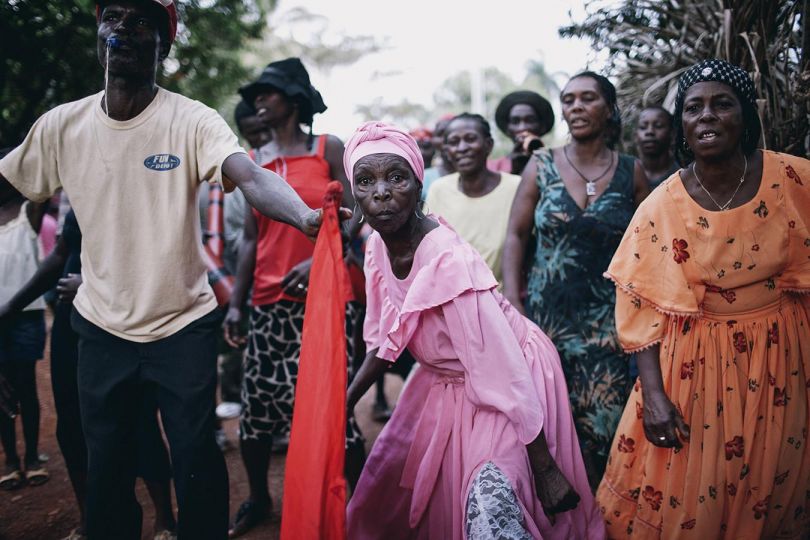
Pieter Henket : Congo Tales.
A profession you would not have liked to pursue?
Pieter Henket : A lawyer, I don’t care to be right. I don’t care to proof my point, and I do not care to win.
Which question unsettles you the most?
Pieter Henket : I don’t get unsettled by questions. I look at life with a curious eye and ear so even a unsettling question I could find interesting.
The last thing you did for the first time?
Pieter Henket : Drove with my father in a Waymo in Los Angeles.
Your greatest regret?
Pieter Henket : I don’t have a great regret.
If you had to start all over again?
Pieter Henket : I would have taken photography classes, I did it all by myself which took a long time. I guess that’s what made me who I am today, but I am a fully self-made man, and that path is not the easy one.
If I could organize your ideal dinner, who would be at the table?
Pieter Henket : I wouldn’t build it around famous names. For me it’s about the energy at the table. I’d want a mix of people who are open, curious, and completely themselves. People from different backgrounds and religions, with stories to tell. I feel like I already live that at home. I love bringing people together. Through sharing stories, we learn from each other.
What do you like people to say about you… after you’re gone?
Pieter Henket : That I was kind, and that I cared about uplifting others through my work. That my photography made people feel seen and empowered. And that I made them laugh. I love making people laugh.
The one thing people absolutely must know about you?
Pieter Henket : I don’t need people to have to know something about me. That feels like ego. Just look at my work, it should speak for itself.
A final word?
Pieter Henket : I think for me it comes back to people. In the end, it’s always about creating a space where someone can be seen. If an image can do that, even for a moment, then it has done what it needed to do.