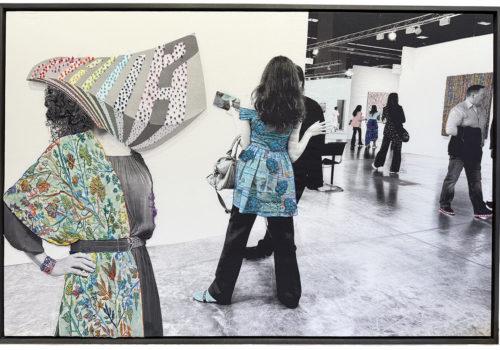
Delphine Blast: The Eye on Intimacy and the Collective
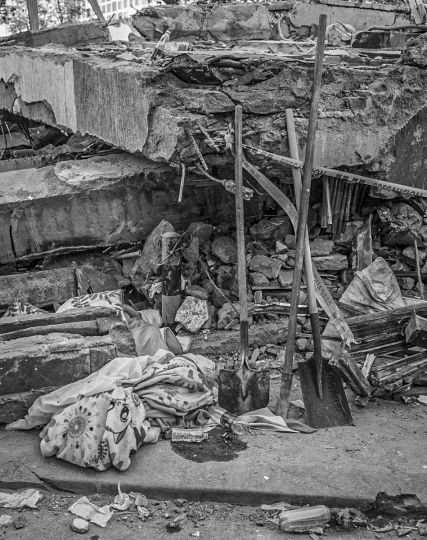
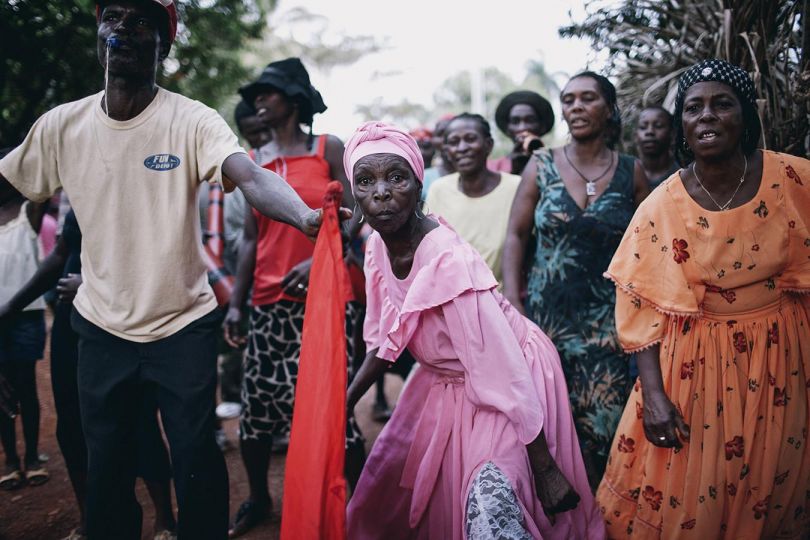
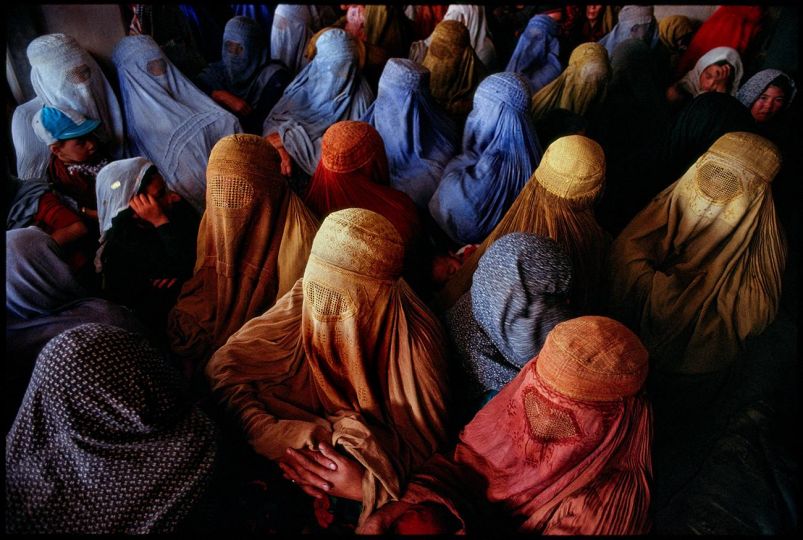
Delphine Blast stands out as one of the most singular voices in contemporary French documentary photography. At the intersection of social engagement and artistry, her work probes identities, traditions, and contemporary issues affecting women, communities, and minorities, with a particular focus on Latin America, a region she has explored extensively over the years.
Her images do more than document: they narrate, question, and provoke. Each series is a visual story where the intimate meets the collective, and emotion dialogues with history. Memory, resilience, cultural transmission, social struggles, and the role of women in society: Themes covered by Blast unfold with an intensity that transforms documentary into a deeply felt experience. Her photographs speak as much of the human condition as they do of the individual lives they illuminate, giving shape to realities often invisible or overlooked.
Collaborating with prestigious institutions and exhibiting internationally, Blast has established a way of looking that is both rigorous and deeply empathetic. She gives voice and visibility to those rarely heard, avoiding voyeurism and simplification. Each image captures silences, gestures, and emotions, revealing the dignity and complexity of her subjects. In doing so, Delphine Blast redefines the role of the photographer: no longer a mere observer, but an engaged actor capable of combining ethical rigor, formal precision, and poetic power. Her work embodies a photography of connection and attentive listening, where every image becomes a space for encounter, reflection, and transmission, offering the viewer both thought and emotion.
Website : www.delphineblast.com
Instagram : @delphine_blast
News : Until november 2nd, Delphine Blast participates to the 13e photographic season of l’Abbaye Royale de l’Epau, next to Le Mans (Yvré-l’Evêque).
Your first photographic trigger?
Delphine Blast: During a first trip to Bolivia, in 2004.
The image-maker who inspires you?
D.B.: Graciela Iturbide inspires me with her ability to reveal intimacy with poetry and respect, weaving a deep connection with the cultures and people she photographs.
The image you wish you had taken?
D.B.: Rather than a specific image, it’s an atmosphere I would have loved to create: a photograph capable of capturing both human fragility and strength, an image that tells a story beyond what we see.
The one that moved you the most?
D.B.: A photograph from Christophe Agou’s series Face au silence. It shows a farmer sitting in her modest kitchen, with her German shepherd licking her wounded foot. This image conveys the strength, resilience, and tenacity of farmers, and reveals their deep bond with the land and animals.
The one that made you angry?
D.B.: There are many. Recently, the images of famine in Gaza — in particular, the photograph of a mother holding her little daughter in her arms in a makeshift hospital.
A key image from your personal pantheon?
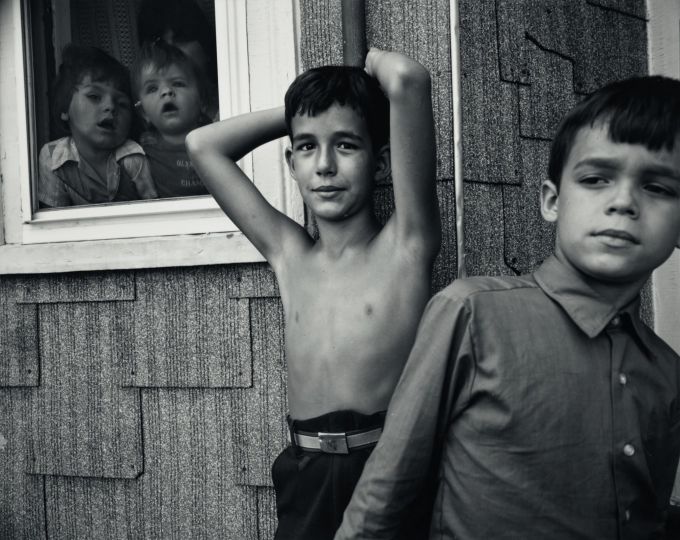
D.B.: An image by Mary Ellen Mark from her Streetwise series. The tenderness and harshness of her portraits of street children still move me today. They remind me of how photography can be both a tool of memory and of humanity.
A photographic memory from your childhood?
D.B.: I have very few…
The image that haunts you?
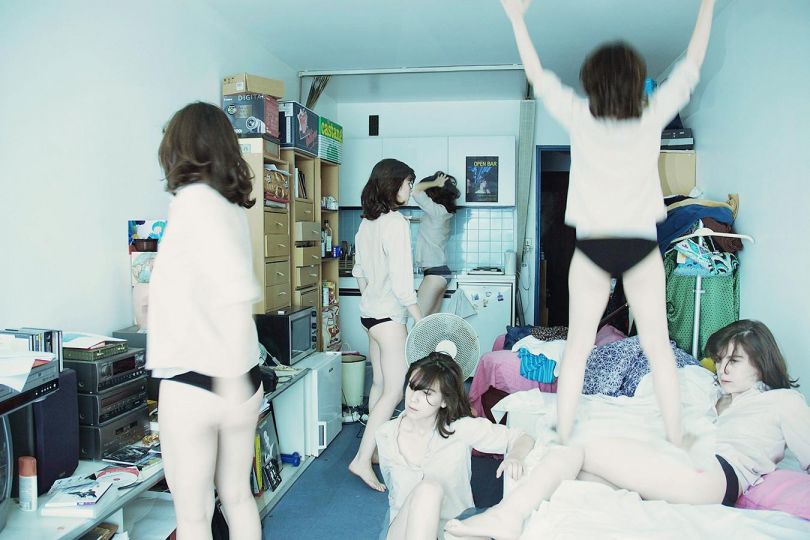
D.B.: A photograph by Gulnara Samoilova, from her Lost Family series (“My mother, grandma and imaginable grandmother”). This image moves me deeply, not only for the strength of its intervention and aesthetics, but above all for what it represents for the artist herself: memory, absence, the bond between generations. Within this image lies something universal: a way of speaking to us about loss, family, and transmission, which resonates deeply with me.
The image that changed the world?
D.B.: The image of young Alan Kurdi, the Syrian child found lifeless on a beach in 2015. It encapsulates the tragedy of migration and the immense suffering it brings, especially to children.
The one that changed your world?
D.B.: As a child, I saw Rembrandt’s Portrait of an Old Man in Red. The light falling on his face, revealing every wrinkle and emotion while plunging the rest into shadow, left a deep mark on me. I understood that light could tell stories and that every image could capture far more than what is visible at first glance. This experience shaped my vision and continues to inspire my artistic practice.
Without budget limits, which artwork would you dream of acquiring?
D.B.: Cuzco Woman Looking Down, 1948. A photograph by Irving Penn, from his Peruvian studio series.
In your opinion, what quality is essential to be a good photographer?
D.B.: Humility.
The secret of the perfect image, if it exists?
D.B.: It lies in a combination of things: good light and composition, of course, but above all a story being told through the image and the emotion it evokes. Ultimately, it’s about being fully present in the right moment, with the right gaze and the right listening.
The person you would have loved to photograph?
D.B.: Nelson Mandela.
The one you would like to be photographed by?
D.B.: Graciela Iturbide.
An indispensable photo book?
D.B.: Women Street Photographers.
The camera of your childhood?
D.B.: I didn’t have a camera as a child; I discovered photography later.
The one you use today?
D.B.: I use several, including a SONY Alpha 7 IV with prime lenses.
Your favorite addiction?
D.B.: Traveling.
The best way for you to disconnect?
D.B.: Leaving.
What is your relationship with the image?
D.B.: My relationship with images is therapeutic: I feel in my place. Photographing allows me to understand and explore the world around me, while giving meaning to what I feel.
Your greatest quality?
D.B.: Empathy.
Your last indulgence?
D.B.: Turning down a major photo project to recharge at the other end of the world.
An image to illustrate a new banknote?
D.B.: I would imagine a child playing — a simple but universal moment symbolizing freedom, joy, and hope.
The job you would never have wanted to do?
D.B.: Covering conflicts, war zones.
Your greatest professional extravagance?
D.B.: Staging a project as a true performance, blending photography, sound, and light.
Does photography have the power to change the collective perception of an event or an era?
D.B.: Yes, photography has this unique power to crystallize a moment, to make it historical and even universal. Images like Tank Man in Tiananmen, the fall of the Berlin Wall, or the Arab Spring protests have transcended their contexts to become symbols of resistance, freedom, and transformation. These photographs influenced collective consciousness, redefining our understanding of history and the struggle for human rights.
How do you perceive the influence of social media on how photographs are created and perceived today?
D.B.: Ambivalently. On the one hand, they offer an excellent means of communication, allowing stories to be shared instantly and reaching a wide audience. On the other, they encourage excessive consumption of images and a race for speed, where reflection and depth can sometimes take a back seat.
An Instagram account worth following?
D.B.: Maya Goded (@mayagoded).
What makes a successful photo?
D.B.: An image that captures something real but goes beyond mere representation. It’s a photo that makes you feel, that tells a story, and that lingers in the memory of the viewer.
What interests you most in an image?
D.B.: What it reveals beyond appearance: emotions, gestures, silences, and that invisible connection it creates between the viewer and what is photographed.
What differences do you see between photography and art photography?
D.B.: I don’t really draw a line between photography and art photography. To me, a documentary photograph can absolutely be considered a work of art, and conversely, an art photograph can bear witness to reality. What matters most to me is the strength of the image, its ability to move, to tell, and to touch more than labels.
The city, country, or culture you dream of discovering?
D.B.: Nepal.
The place you never get tired of?
D.B.: A small fishing village on Mexico’s west coast, a place of light and inspiration that I prefer to keep to myself 😉
Your greatest regret?
D.B.: Not having started earlier.
Color or black & white?
D.B.: Color!
Daylight or artificial light?
D.B.: Depends on the context — so both.
In your opinion, the most photogenic city?
D.B.: They all are, more or less, but if I had to choose one: Guanajuato, Mexico.
If God existed, would you ask Him to pose for you, or would you opt for a selfie with Him?
D.B.: Selfie 😉
If you had to start all over again?
D.B.: If I had to start over, I would do it again without hesitation, but with even more confidence in myself and in my choices. I would take the same paths, the same risks, but I would let myself be guided more by instinct and by the conviction that what I do has meaning.
The final word?
D.B.: Trust. Trust in yourself, in others, and in the path you choose to follow.