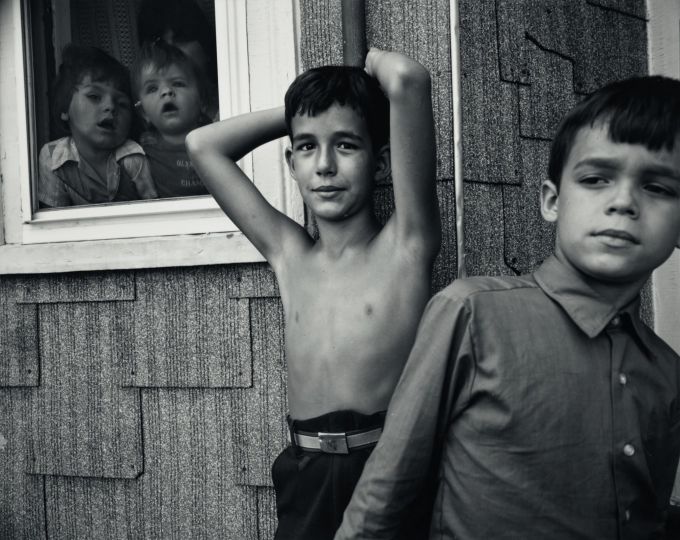
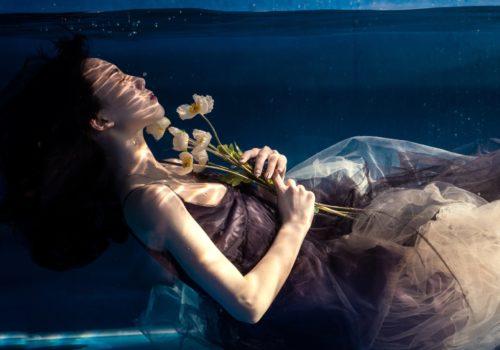
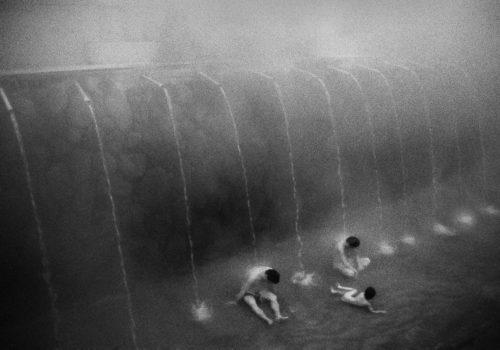
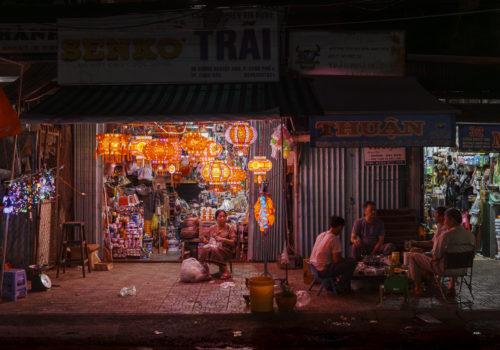
Exhibition gallery, production tool, transmission space — the Item collective is a structure founded in 2001 on values of sharing, solidarity, and commitment. As a fundraising campaign highlights the fragility of independent models, Bertrand Gaudillère and Hugo Ribes reflect on the collective’s journey and its battles.
You’re currently in the Galerie Item. What’s happening here right now?
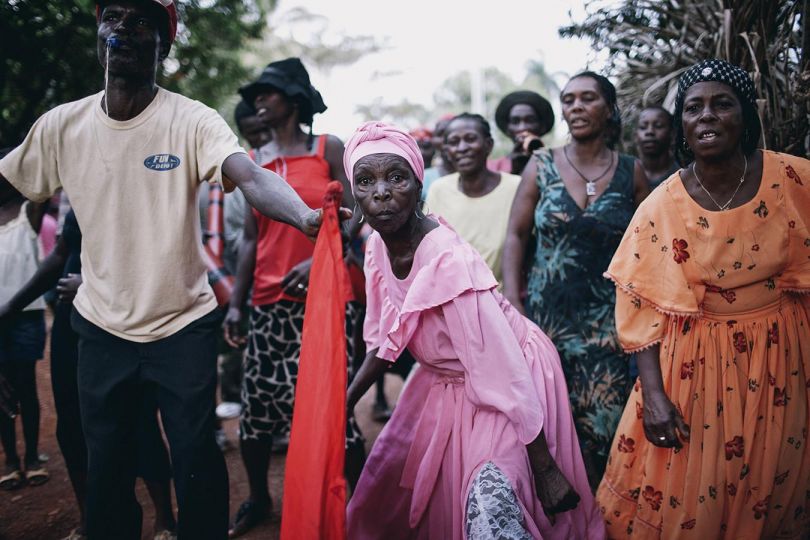
Bertrand: We finished an exhibition: Faire Face by Camille Gharbi, which ended in April, and openned Ejo, Rwanda between Yesterday and Tomorrow by Paloma Laudet, that came up on May 15. We always decide on exhibitions as a team. I’m mainly involved in events and curation alongside Yannick Bailly. I do a first edit with the photographer, then Yannick takes over to check whether the story works scenographically. He’s been an essential partner from day one — he’s a scenographer and graphic designer.
Item was born in 2001. What remains from the early days?
Bertrand: Not many of us are left! I’m the only original photographer. Yannick Bailly and Romain Etienne were already there, but not as photographers. Romain helped us a lot in organizing ourselves as an association, before becoming a photographer within the collective. It was a different era, with more open possibilities. We hesitated for a long time between settling in Lyon or Paris. Eventually, we chose to stay in Lyon and serve as correspondents for national media. We didn’t necessarily foresee the long-term consequences, but it was a real choice.
What were your goals back then?
Bertrand: When you gather together, you’re stronger — for contacts, having a website, etc. It was also a way to answer the question: how can you align a social and political vision as a citizen within a professional space? Especially regarding solidarity: creating a space for structure, inspiration, exchange, and also sharing. Very quickly, we divided up the workload by splitting assignments. I’m not sure that would still be possible today. We still stand for the same values, but in a different way. We’ve become more professional in terms of organization and structure.
How is the collective organized?
Bertrand: There has always been some form of leadership, with clear directions and implementation managed by two people. Today, Hugo and Laureen Quincy have taken over. This brings fresh ideas, a new perspective, a second wind.
Hugo: I’m the director, though unofficially. We moved away from a purely horizontal model in 2016 because we were wasting too much time on unimportant matters. It became more effective to have someone leading the execution. But we still hold an annual four-day seminar where we decide all major directions together.
Is the collective constantly evolving?
Hugo: I joined in 2012, during a time of major change. There was a strong DNA, a political stance, a clear commitment. A deeply rooted ethic that’s passed on to new generations. Artistically, we’re constantly evolving. When new photographers join, things inevitably shift. Morgan Fache, for example, was part of the collective for a few years. He introduced territory-based residencies, which inspired others. That gave rise to new practices. We really expanded the exhibition aspect starting in 2010, especially focusing on scenography. We also moved away from traditional photojournalism. We prefer to speak of documentary, or more contemporary practices.
How much energy does managing a collective take?
Bertrand: A collective is a virtuous circle. Artistically, humanly, financially — it feeds the photographers, and they feed it in return. But it needs constant maintenance. Realistically, without Hugo and Laureen, the collective wouldn’t function today. I focus more on the gallery and events, while Yannick handles communications and scenography.
Hugo: Some of us dedicate a lot of time. But there are also photographers handling communications, social media, and others assigned to specific projects.
What are the collective’s main missions?
Hugo: In short, there’s production — each photographer has his/her research topics, and we also develop collective projects. Our mission is to best support those efforts. Then there’s distribution we have a catalog of about 50 exhibitions that tour in the region and throughout France. We also manage the Galerie Item: a permanent venue that asserts its presence in Lyon as a major player in photography. And there’s education: image literacy through workshops, especially with schools.
Bertrand: For that educational side, we’ve also created a mentorship program: this year, we’re supporting seven photographers. These are people with projects we follow for a year, culminating in a gallery exhibition. We’re committed to both transmission and accessibility — through exhibitions, workshops, mediation… and even through a print sale before Christmas, where prices are three to four times lower than usual. The idea is to make image ownership more accessible. And many photographers play along.
Is that one way of opening up photography to a wider audience?
Bertrand: We also want to highlight the connections between different cultural practices. At each event, we try to bring in audiences beyond photography. For example, for Camille Gharbi’s exhibition, we hosted a non-mixed writing workshop, a panel discussion with La Maison des Femmes, a lawyer specializing in gender-based violence, and a representative from the Nous Toutes collective. It helps people see that photography is a form of writing that tackles contemporary issues. Addressing those, opening them up for debate with others, is essential.
On your website, you also mention the desire to “reaffirm good practices (production budgets, fair artist compensation, gender parity in programming).”
Bertrand: Good practices mean going beyond talk and applying them. It’s about committing to this approach: refusing to rely on unpaid interns, paying our staff fairly. If we’re subsidized to showcase exhibitions, then it’s only right to pay the artists. Here, they earn €800 — a bit above the Ministry of Culture’s recommendations. And we ensure that all our partners are French. The printing is made in France. We work together, and they share the same values.
Hugo: As for gender parity, it’s a challenge within the collective — there are more men than women. We know we can’t double in size, so balance is tough. But at the gallery, we aim for 50% of exhibited artists to be women. In 2024, we’re actually closer to 70%. Where and when we can act, we do.
Bertrand: In short, we try to apply internally what we’d like to see applied elsewhere. It’s about setting high standards.
Hugo: Good practices are what unite us, but they also sometimes work against us. I remember an offer for Arles: not only were we not going to be paid, but we had to pay to participate. It seemed absurd. We refuse to take part in contests where you have to pay an entry fee.
Bertrand: Today, the field is highly competitive, and visibility is overvalued. That gets used to justify everything. We disagree with that.
Hugo: That’s also why mentorship matters. If there are younger generations, it’s better to support them than to just criticize.
A few weeks ago, you launched a donation campaign titled “Collectif en péril” (Collective in Peril). What led to that decision?
Bertrand: Due to a drop in activity and budget uncertainty regarding subsidies… We’re in a very unstable period, and it became urgent to find solutions.
Hugo: We know we have a loyal audience. Some have been following us for 20 years, attending every exhibition. There’s a real community supporting us. That confirms our belief in engaging with the public, in building dialogue. We wanted support from a critical mass — and we got 200 donors. That’s significant. It’s a financial success, but also a moral one: we received lots of messages of encouragement. That really means a lot — it shows our work matters.
Bertrand: It helps us realize we’re still in tune with people, not out of touch.
Does this allow you to breathe and look to the future?
Hugo: For me, photography is a combat sport. The struggle has been there from the start, and it continues. But we know how to fight. I wish I could say we have three years of visibility ahead of us — we don’t. But now, we know we can get through the year calmly, and prepare for the next. It also gives us leverage with our funders, showing we bounced back.
Bertrand: We’ll have to make decisions about which activities to maintain, but the goal is to keep developing projects — and inventing new ones.
More information