Within Europe’s largest walled park, there is the Reggia Monza, designed in the 1700s by the architect Giuseppe Piermarini for Archduke Ferdinand of Habsburg. Here, the Belvedere houses the exhibition A Window Dotted with Raindrops, dedicated to the photographer and painter Saul Leiter, who used to work for the main magazines of his time, while pursuing his own exploration of the world far from clichés.
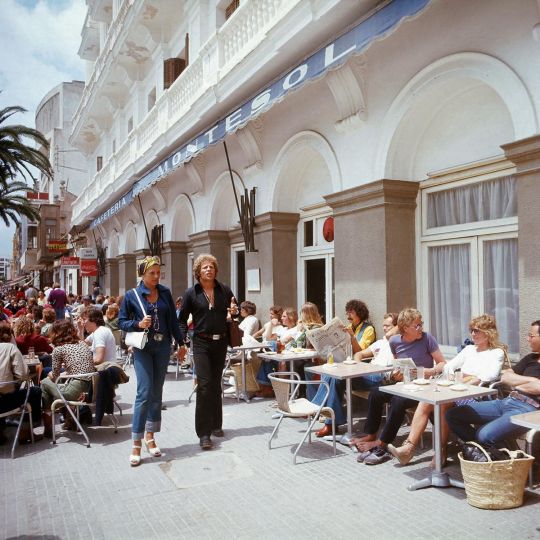
In the 1950s photographers aimed to capture the modernity of New York City. Leiter, on the other hand, sought the everyday, often portraying it through the interposition of foggy glass, reflections in shop windows and rain. This produced a filtered, thought-provoking view of his subjects. He shied away from fame and only had a few of the many photos he took printed during his lifetime. Many of them re-emerged after his death. As Saul Leiter used to say, he happened to believe in the beauty of simple things because he believed that even the most ordinary things could be very interesting. Indeed, rather than the documentary style that was popular at the time, he favoured intimate glimpses of life that blended reality and abstraction. Leiter did not see the world from just one point of view but from many.
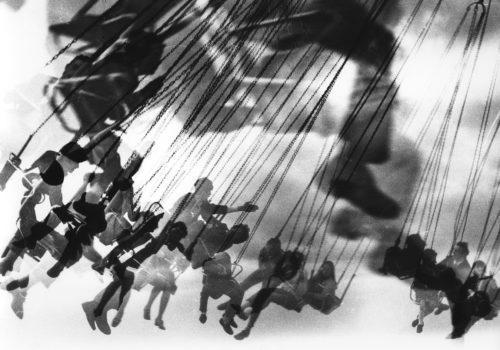
“Leiter invented optical games, tangles of shapes and planes that conceal and reveal what lies in the intervals, in the vicinity, in the invisible margins of a New York City that leaves nothing to chance. Backgrounds come to the surface, the positive becomes negative”, curator Ann Morin says. “His is a work built from elements and fragments, all of varying intensity and depth, making up this ensemble symphony while composing an ‘unfinished world’. He dedicated himself to collecting the infinitely small. These images are like annotations, statements of reality. Our reading of the image is disturbed as Leiter overturns the epidermis of the world before our eyes, using mirrors, reflections, shadows, as well as the duplication produced by each of these elements, thereby managing to challenge appearances”.
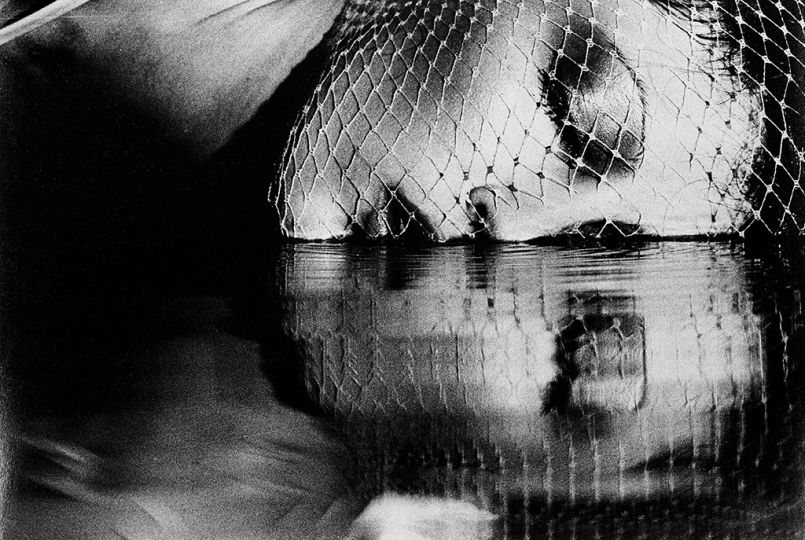
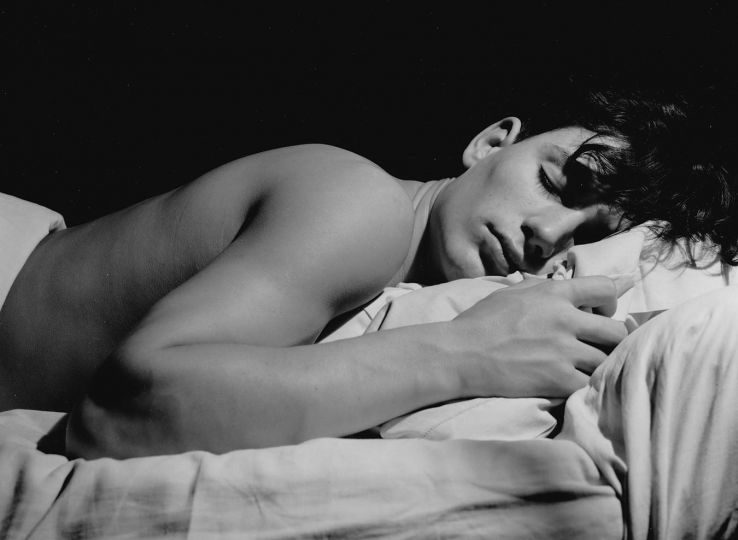
The exhibition features 126 black-and-white and 40 colour photographs (including vintage and modern prints), magazines from the period, and a film, as well as 42 paintings. The exhibition offers an opportunity to discover a lesser-known body of work: black-and-white nudes, taken in the late 1940s and early 1960s; it also explores the affinity between his photographic and painting works.
“Photography is about finding things,” Leiter said. “Painting is different. It’s about making something.”
In fact, he is recognized primarily for his photography, but he used to be a painter too. “He maintained a lifelong habit of painting daily, the majority of them abstract. Among his primary influences were Japanese woodblock artists (you can see the emptiness as a form even in his photographs, ed.) and French Impressionists”, Morin says.
As for the use of colour in fine-art photography, he refused to analyze his own work. “I don’t have a philosophy. I have a camera” he used to say, adding that his photographs only captured the smallest part of what he saw and what could have been photographed.
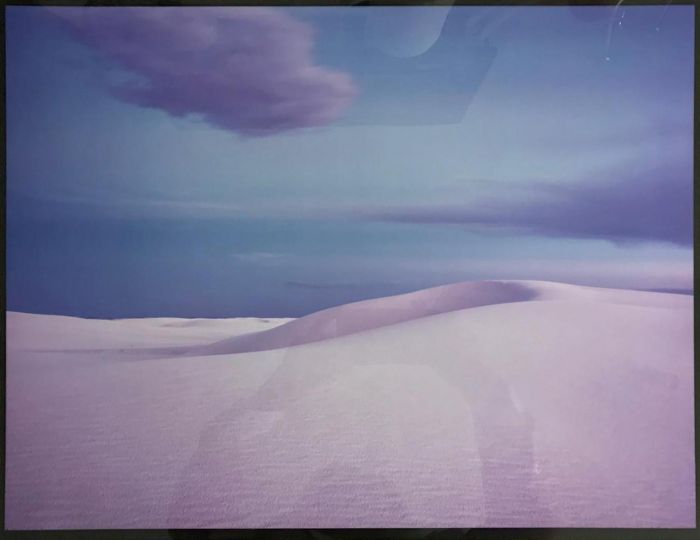
Leiter began experimenting with colour photography in the late 1940s using it as an expressive tool, saturating his images, so transforming ordinary street scenes into abstract compositions. Approaching colour with his painter’s gaze, he achieved a reconciliation between photography and painting. For Leiter, colour photography was situated at the junction between these two disciplines. According to Morin, “Leiter’s black-and-white work, much of which he printed himself, reveals an equally bold compositional style, often flipping the focus from foreground to background and playing with the dynamics of shadow and reflection”.
Leiter collaborated with magazines such as Harper’s Bazaar, Elle, Vogue and LIFE, but he would never bow to editorial guidelines, defending his fashion photographs as personal work that assignment requirements could not change.
The son of a respected rabbi, Saul Leiter rejected the theological path his father would have wanted him to follow. He moved to New York in 1946 to dedicate himself to painting. Introduced to the art world in New York by colleagues such as Richard Pousette-Dart and W. Eugene Smith, he continued the photographic experiments he had begun as a teenager with a camera his mother had gifted him. At the age of 23, in New York, he “became a kind of underground figure, chose not to be part of any community, any artistic, political or social group. He was never part of the Photo League, nor the New York school, nor the street photography movement, nor abstract expressionism. Leiter was a free wanderer all his life, compiling small fragments of an unfinished world. His work is a complex unity whose boundaries are flexible and porous, composed of “the found image (photography) and the fabricated image (his paintings), the instant, the detonation and continuous time of doing, representation and abstraction”, Ann Morin explains.
Paola Sammartano
Saul Leiter. Una finestra punteggiata di gocce di pioggia
From May 1 to July 27, 2025
Belvedere della Reggia di Monza
viale Brianza, 1
20900 Monza
Italy