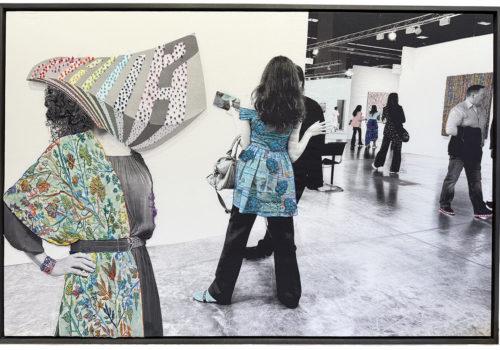
Lauri Gaffin: Between Memory, Vision, and Truth
For Lauri Gaffin, photography is not a matter of chance but of necessity. Born in Los Angeles and shaped by life more than by formal education, she first built worlds of fiction before turning her lens toward reality. Her work as a set decorator for film sharpened her sense of composition, detail, and light elements that, in her hands, are not decoration but revelation.
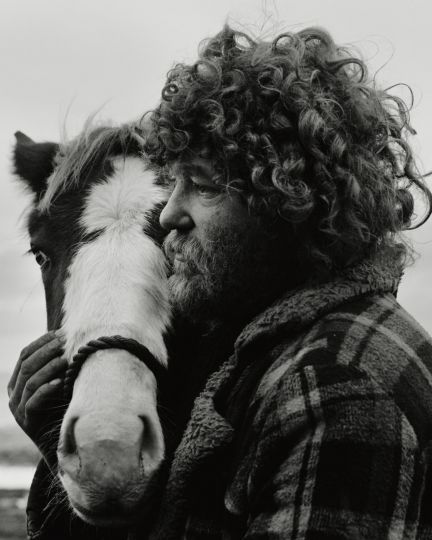
Her photography is rooted in visceral emotion and a curiosity that borders on instinct. Far from technical virtuosity or aesthetic posturing, Gaffin privileges sincerity over spectacle. She doesn’t seek to seduce but to understand what she sees, to translate the emotional resonance of the moment. Her images carry traces of fragile humanity, of acute attentiveness to others, and of a worldview shaped by time, memory, and loss.
Memory is her guiding thread. From the aging hands of her grandmother to those of her parents, she photographs the body as an archive of experience, as a landscape of tenderness and mortality. With her, the intimate becomes universal: photography is not an act of possession but a way of holding on — of connecting with what is fading away.
Her visual language, often marked by natural light, exudes a poetic sobriety, almost meditative in tone. Water, a recurring motif in her imagery, serves as a metaphor for impermanence and renewal — a theme that runs through both her work and her relationship to the world. Yet what stands out most is the coherence between the woman and her work. Lauri Gaffin photographs to remain present, to anchor herself in reality, as if the act of taking a picture was a form of breathing. Her gaze is neither cynical nor disillusioned; it is that of a lucid, sensitive observer at once moved, disarmed, and precise.
In a photographic landscape often driven by the pursuit of style or recognition, Gaffin offers another ethic: that of emotional truth, of honest gesture. She belongs to the lineage of photographers such as Dorothea Lange and Mary Ellen Mark both of whom she cites who placed humanity at the heart of their vision.
Her images do not shout; they whisper. They do not impose; they invite. And in that whisper, in that restraint, lies the full power of a body of work still in motion — at once personal, universal, and profoundly necessary.
Site Web : www.laurigaffin.com
Instagram : @gaffinlauri
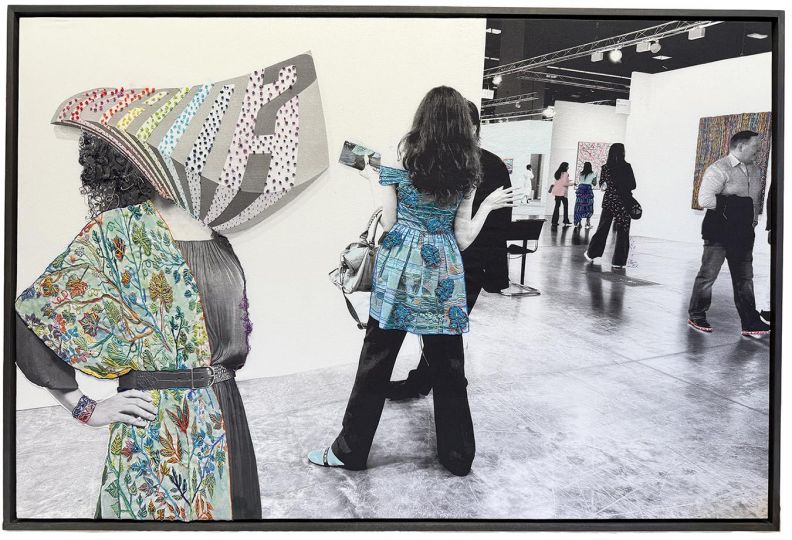
Current Activities: Lauri Gaffin is currently at the center of the art world’s attention with her project Moving Still: A Cinematic Life Frame-by-Frame. This work, both a book (published by Damiani) and an exhibition, offers an immersive look behind the scenes of iconic films such as Fargo, Iron Man, Charlie’s Angels, and Captain Marvel. It combines previously unseen photographs taken on set with personal narratives, revealing the intimacy of a four-decade-long career in the film industry.
What was your first photographic trigger?
Lauri Gaffin: It was when I was 16. I went on a high school trip to Spain, and I was desperate to record my experiences there for my parents. Neither of them had ever had the opportunity to travel to Europe, and they were both struggling in their separate lives after a divorce.
A photographic memory from your childhood?
Lauri Gaffin: My earliest photographic memories were from my teenage years when I took pictures of my grandmother Fanny with my Kodak Instamatic. I was incredibly close to her and acutely aware of her looming mortality. She arrived in the U.S. from Russia when she was 17 years old. I was one of the few in the family who had the patience to teach her to read and write English.
Which woman or man of images has inspired you the most?
Lauri Gaffin: Early in my photographic career, Stieglitz’s photographs of Georgia O’Keeffe—especially her hands—held me spellbound. I loved that his portraits of her showed the beauty of her body rather than just her face. Consequently, I was inspired to photograph my grandmother’s old hands and went on to photograph each of my parents’ hands as they aged.
Which photograph do you wish you had taken (someone else’s, or one you missed)?
Lauri Gaffin: I wish I had taken any photograph by Elger Esser. I admire how he captures an atmosphere and sense of place that completely envelops the viewer.
Which image has moved you the most?
Lauri Gaffin: Water has always captivated me, and the painting by Vija Celmins, Untitled (Waves)—which looks like a photograph—depicts the ocean in its immensity. Growing up in Los Angeles, the Pacific Ocean was the boundless place I could go to escape my emotional turmoil.
And which one made you angry?
Lauri Gaffin: Any photos from the concentration camps of WWII make me furious, sad, and despairing.
Which photograph, in your opinion, changed the world?
Lauri Gaffin: The first photos of the whole Earth we all saw in 1967 changed our vision of ourselves. It made a tremendous impression on my 16-year-old brain.
And which one changed your world?
Lauri Gaffin: The first photos of the assassination of President Kennedy in 1963 changed my young mind. I realized that there was tremendous danger in the world and that no one was safe.
It’s said that a picture is worth a thousand words — what do you think?
Lauri Gaffin: I’m not a verbal person. I am a visual person, and for me, nothing is more emotional, informative, and enduring than a photograph.
What captivates you most in a photo?
Lauri Gaffin: I am torn between photographs of people and the power of the natural world, so it is impossible to draw a conclusion.
The image that haunts you?
Lauri Gaffin: I lived through the era of the Vietnam War, where photography changed the minds of the American people. So yes, I definitely believe photography can change the world. I’d also say that the revelation of the Holocaust through photography finally brought the horrors to the consciousness of the world, despite the fact that so many people wanted to believe otherwise.
In your eyes, what quality is essential to be a good photographer?
Lauri Gaffin: I think a good photographer is emotionally invested and able to communicate that through her photography.
A photography book that is absolutely essential?
Lauri Gaffin: If I could only own one photography book, it would be Henri Cartier-Bresson’s The Decisive Moment. It’s a study of instinctive, spontaneous photography where the artist must trust their intuition.
Your first camera?
Lauri Gaffin: The first camera I remember using a lot was a Kodak Instamatic in the late 1960s. One of my favorite cameras was a Leica D-Lux 3 until it eventually became unrepairable. Recently, I’ve been using my iPhone 15 Pro.
Color or black and white? Natural light or studio light?
Lauri Gaffin: I shoot in both color and black and white. I love to shoot in natural light. When I work on a film set, of course, I use artificial and practical lights.
How do you choose your projects, and how would you define your creative process?
Lauri Gaffin: I’m intensely curious and spontaneous to a fault. Who I am is what you see in my photography. When I’m at work as a set decorator, I’m fascinated by the behind-the-scenes action—the tweaking and fussing, the hurry-up-and-wait atmosphere. When I travel or have any adventure, I immediately shoot what I see in the moment and am delighted to catch it before it slips away.
The person you dream of photographing?
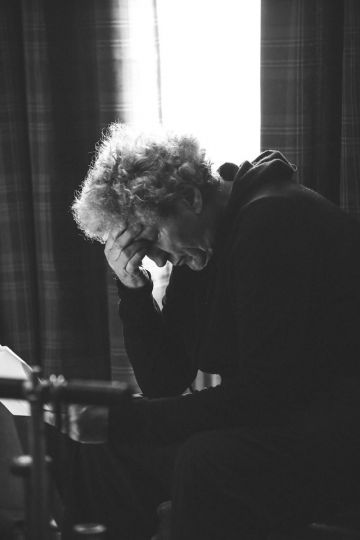
Lauri Gaffin: I’m lucky enough to have already photographed someone I always wanted to shoot. I was a great fan of the novelist Jim Harrison and suddenly spotted him at the airport in Traverse City, Michigan. I was in the middle of reading his book Dalva, so I walked up to him and asked him to autograph my copy. We struck up a conversation about food because he was on his way to Paris to write an epicurean article. Then, I worked up the courage to ask if I could photograph him right there in the airport. He consented—and he met all my expectations. I love how I captured him, his wandering eye and all.
By whom would you like to be photographed?
Lauri Gaffin: If I could choose photographers—dead or alive—to photograph me, I would say Dorothea Lange, Eve Arnold, Mary Ellen Mark, or cinematographers who are also still photographers, like Stephen Goldblatt or Roger Deakins.
Your greatest professional extravagance?
Lauri Gaffin: The most extravagant places for my photography were Alaska and Hawaii—for total immersion in nature. Rome was the best place for centuries of decadence.
What’s the last thing you did for the first time?
Lauri Gaffin: The last thing I did for the first time was photograph my mother as she was dying, and finally, when she passed. I never thought I would photograph that moment of transition.
The city, country, or culture you dream of discovering?
Lauri Gaffin: I dream of discovering Japan because I love the culture: Kurosawa’s films, the architecture, the food, and what I think has always been an atmosphere ripe for photography. I especially liked Wim Wenders’ film Perfect Days and Hiroshi Teshigahara’s classic Woman in the Dunes.
The place you never get tired of?
Lauri Gaffin: The ocean and my bed are two places I never get tired of visiting.
If I could organize your ideal dinner, who would be at your table?
Lauri Gaffin: My ideal dinner table guests would include my collaborator and fellow set decorator Florence Fellman, along with people I admire who’ve made me laugh or cry in the past: Catherine O’Hara, Bob Dylan (who I always thought I would marry), Joni Mitchell, and Jim Harrison. Ruth Reichl and Alice Waters would, of course, be invited to ensure the food is good.
The essential thing people should absolutely know about you?
Lauri Gaffin: I take photos as artistic expression and to keep myself present. It is my memory and my practice. It is a chronicle of how I am thinking at any one time, and it can be catalogued so that I may access it. Photography is my language. It’s where I allow my internal life to come into focus.