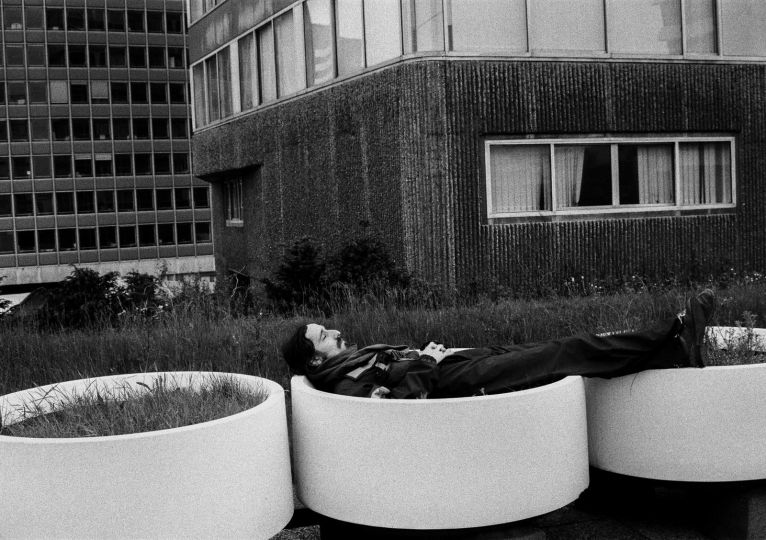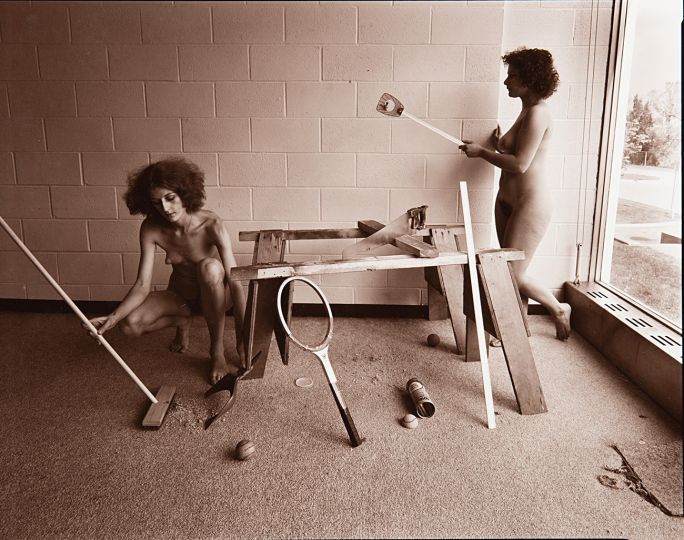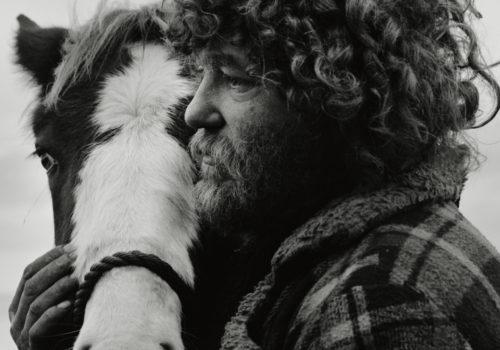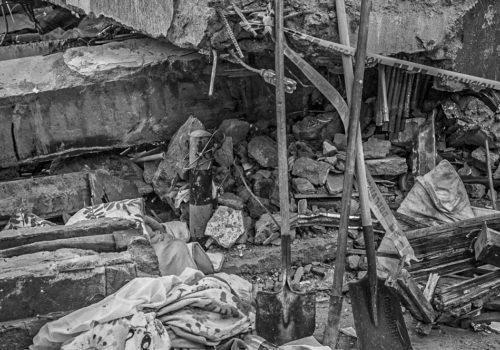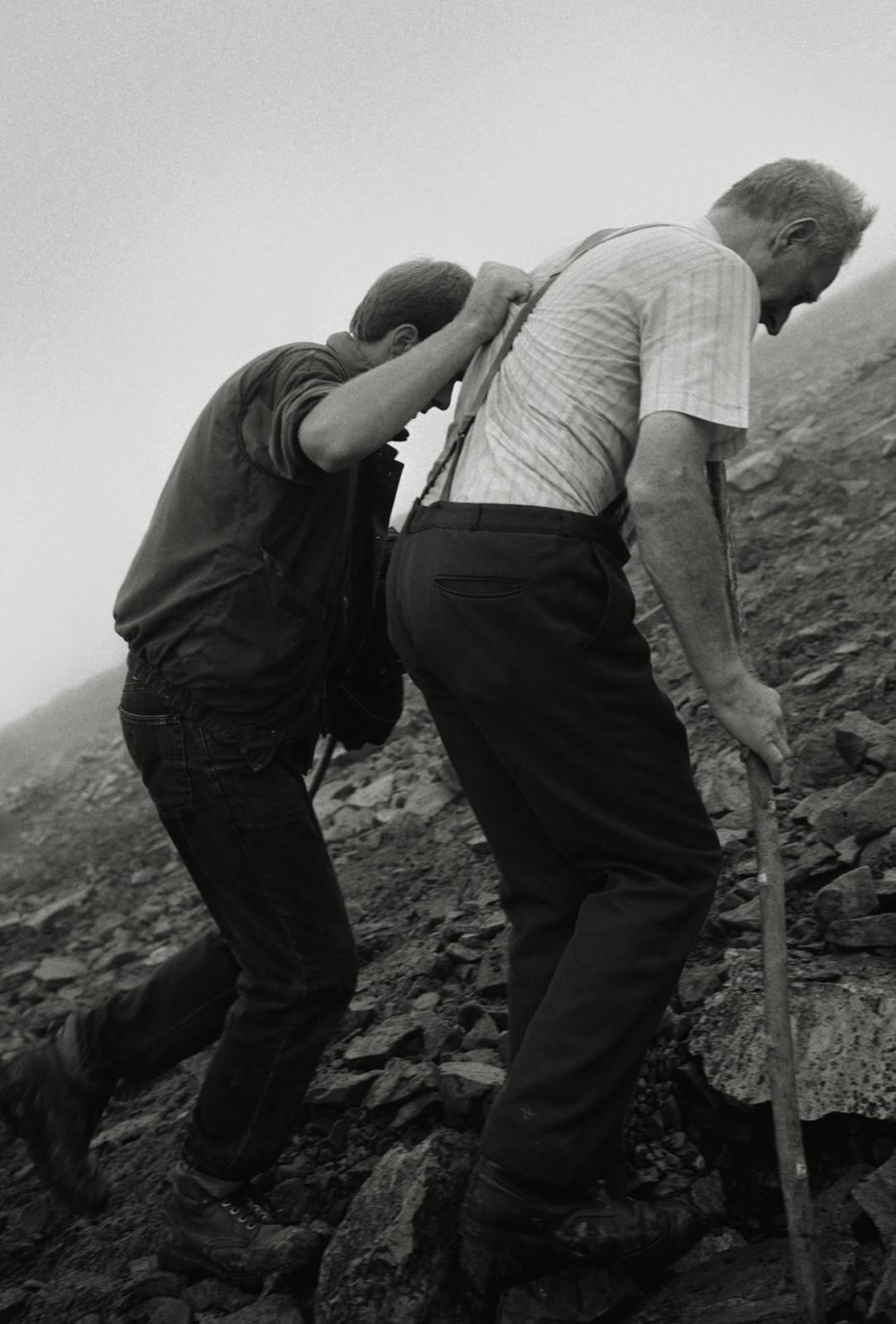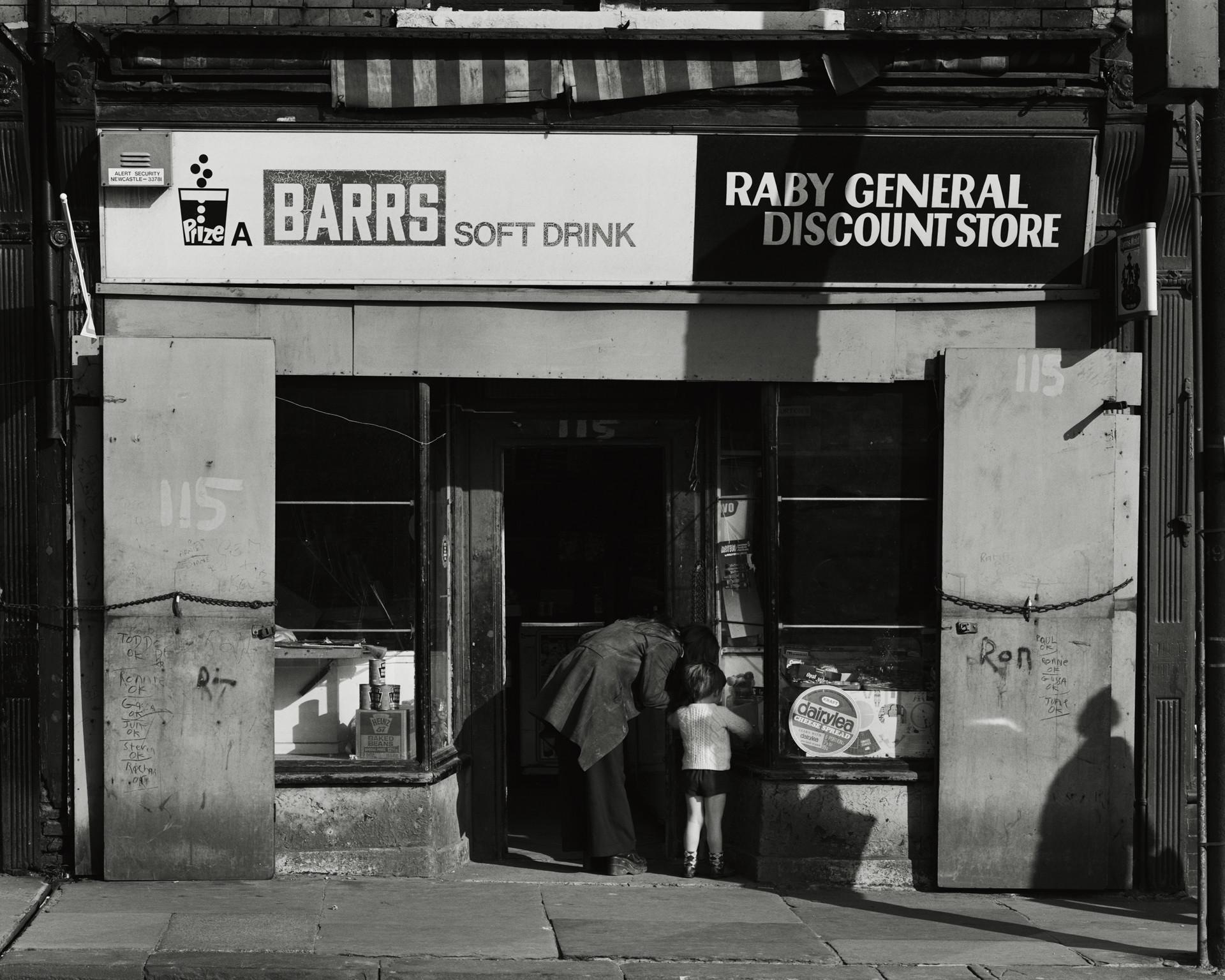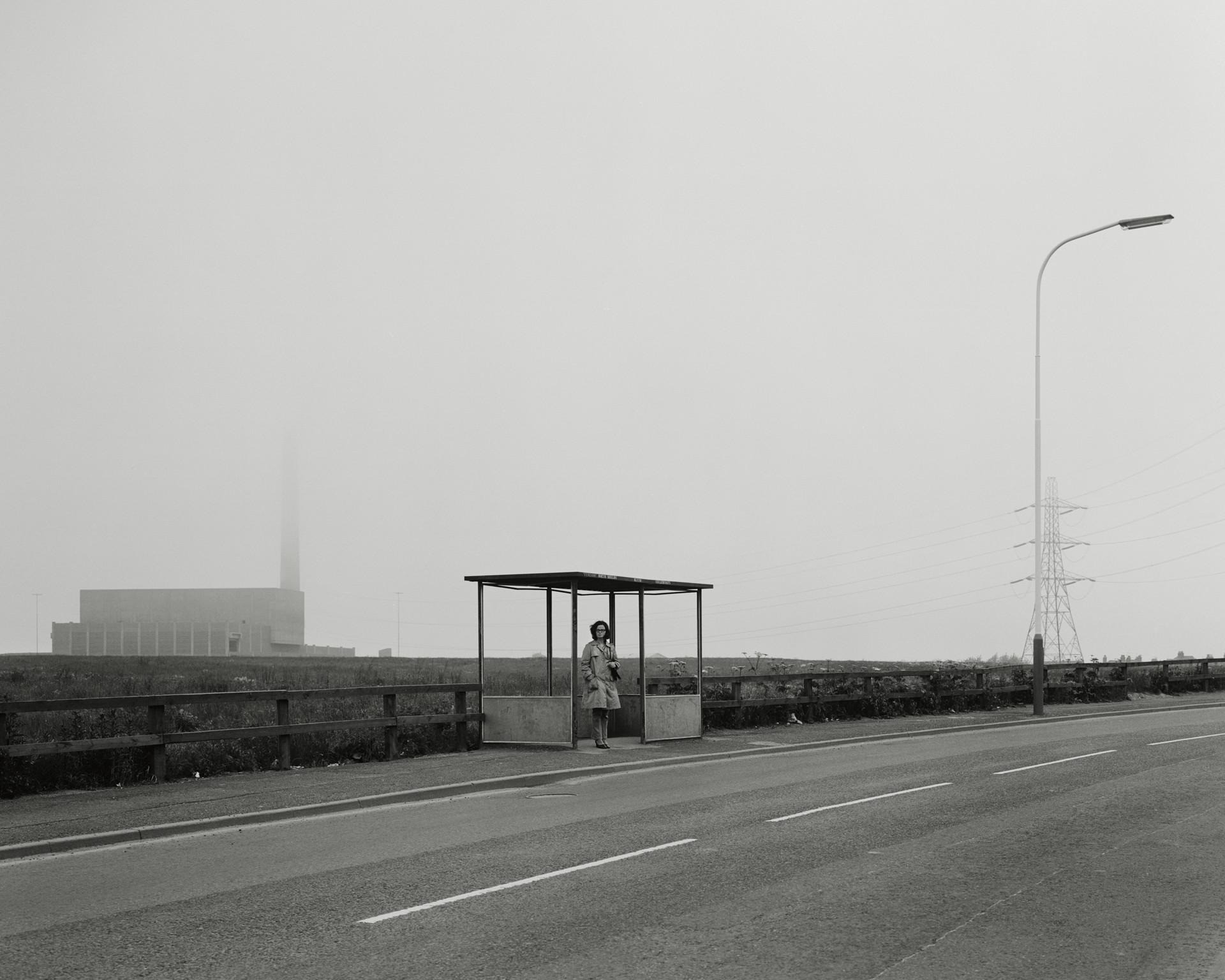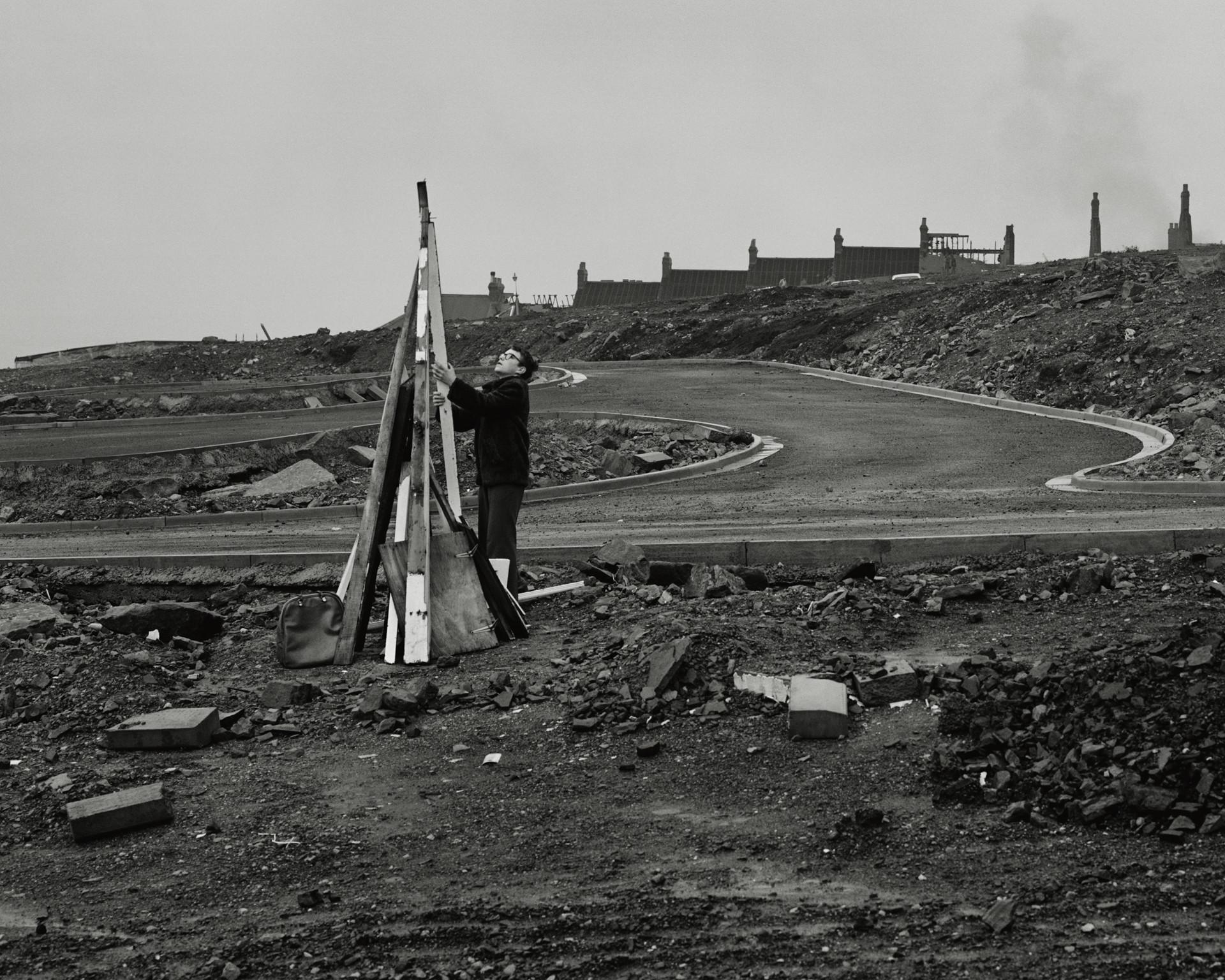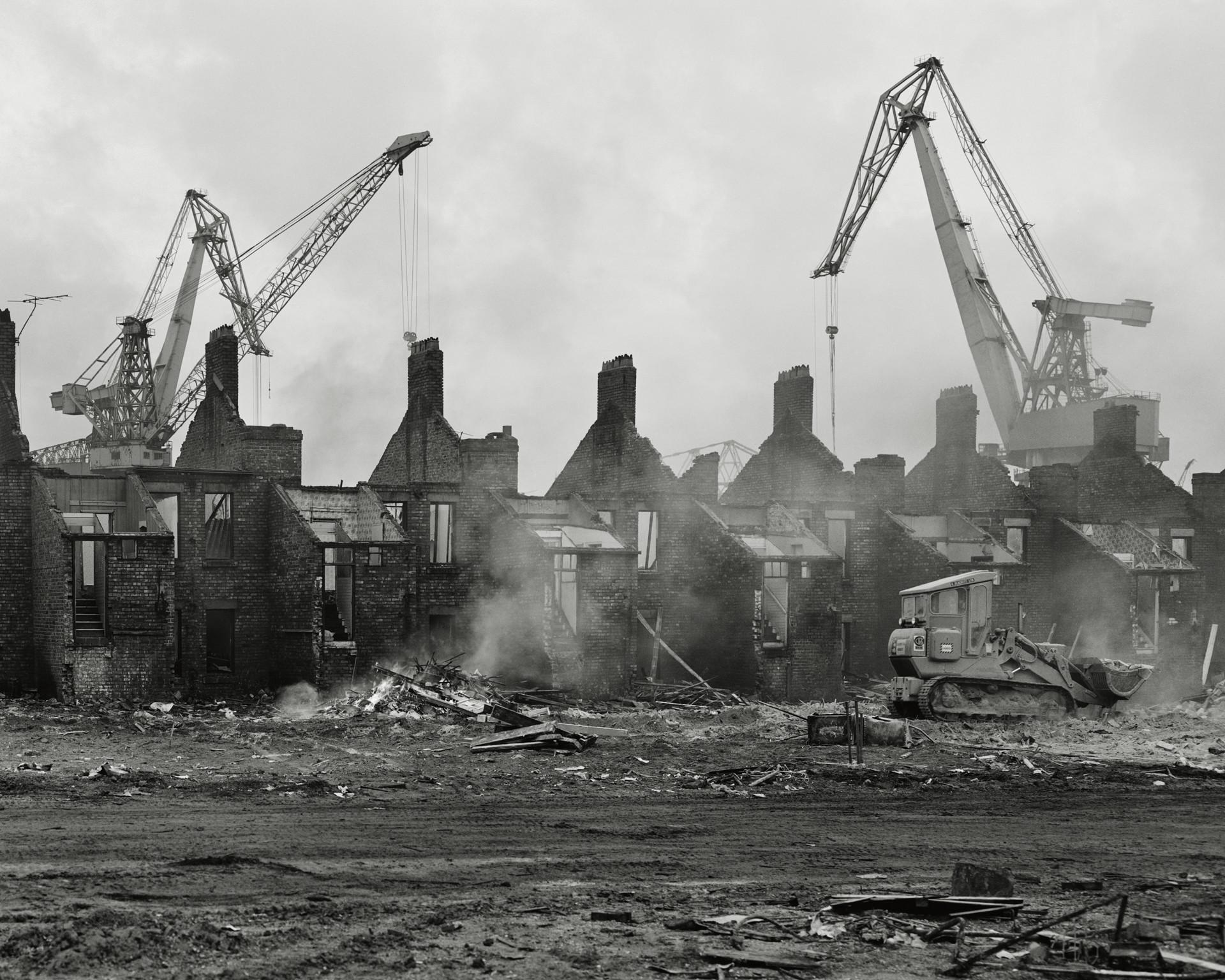
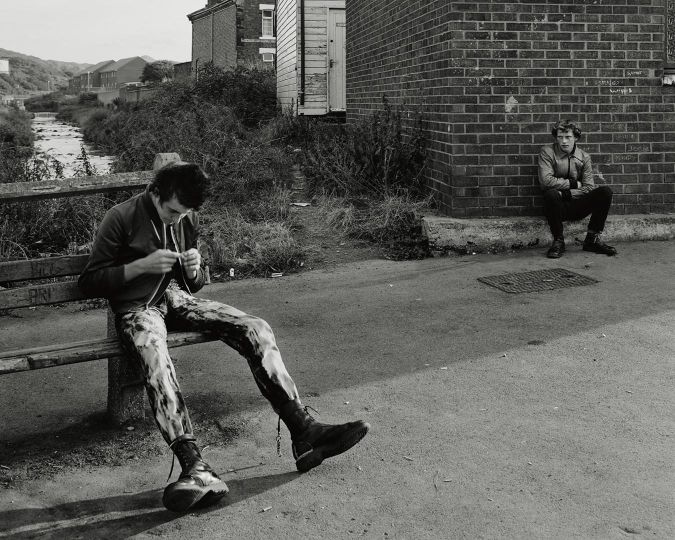
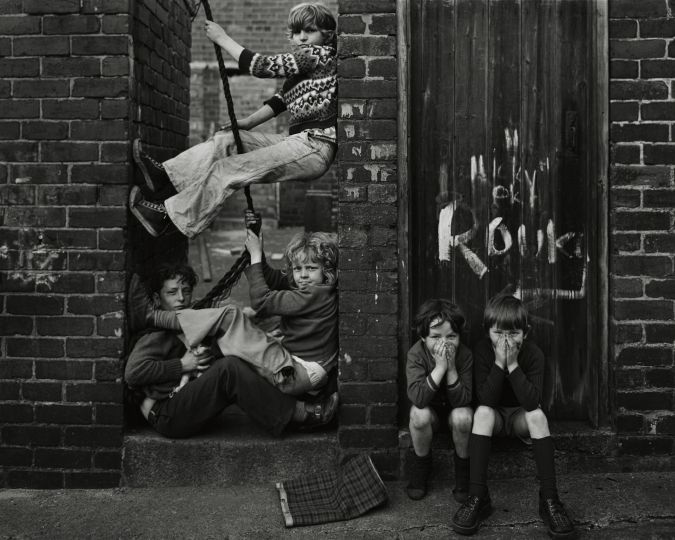
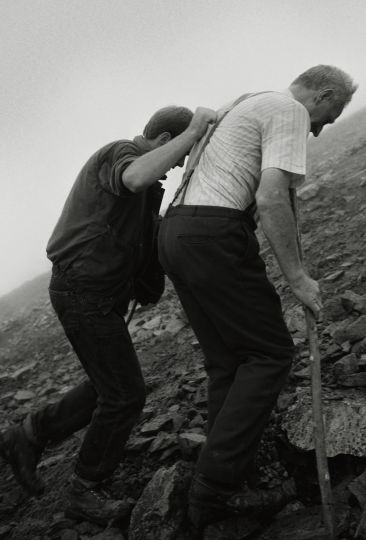
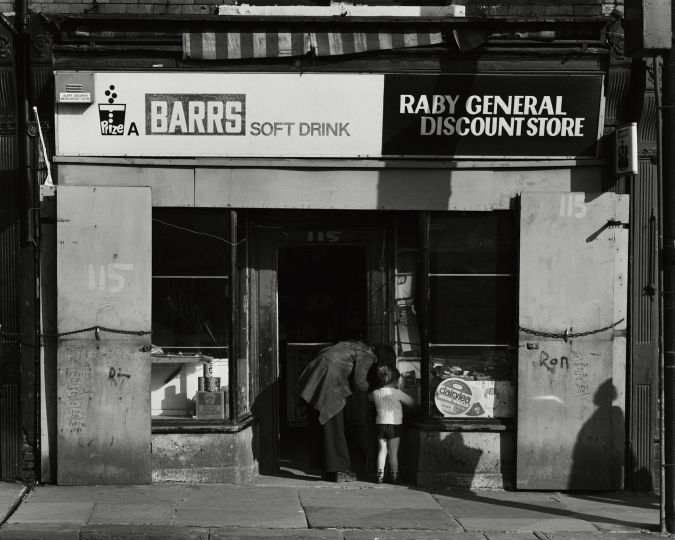

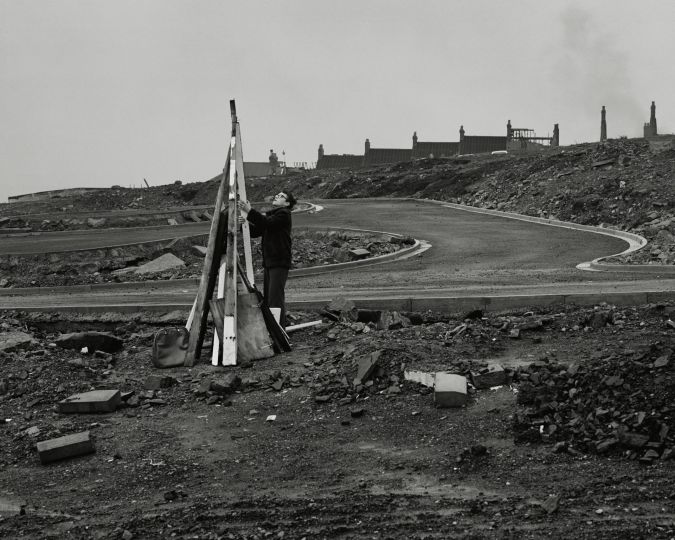
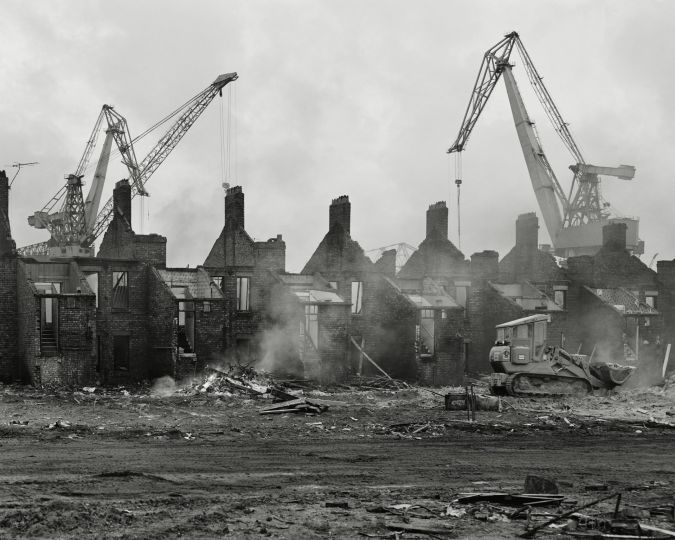

It was on a page of Paris Match that a Cartier-Bresson image– the famous one of a small boy carrying two large wine bottles on Rue Mouffetard in the French capital – caught the attention of Chris Killip, enrolled at the time on a hotel-management course on the Isle of Man. His life took a new direction when he abandoned the management course and dedicated himself to becoming a photographer. The veracity of the street scene on Rue Mouffetard and the attention given to a human face must surely have impressed him because the tangible reality of working life – the boy with the wine bottles, after all, has been charged with a task and he is fulfilling the job – and a concern for portraiture grounded in the unrehearsed are two enduring characteristics of Killip’s photography. Later in life, he would come to be influenced by the work of Walker Evans, evident in what became Killip’s documentary instinct, and in the two photographers’ shared regard for the functional and vernacular. Material entities – bus stops and brickwork, clothes and chimneys – are significant elements in his compositions and they matter because they are not commoditised (indeed, did he ever photograph a commodity?). An inconspicuously ordinary object, like a lamppost, comes to stand out as a part of a built environment that shares living space with a ship’s hulk being constructed in a South Shields shipyard or a boat being attended to in a Yorkshire fishing village.
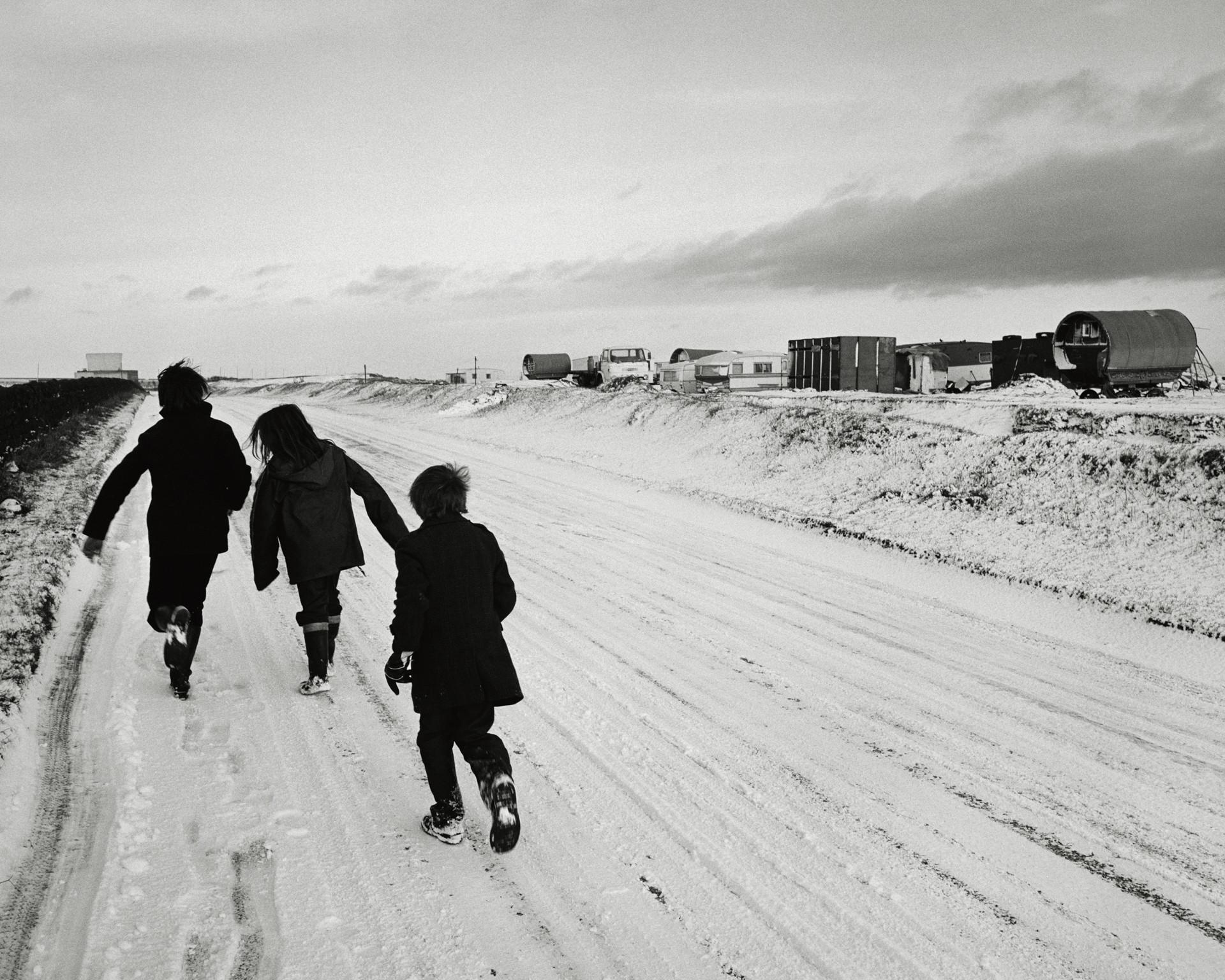
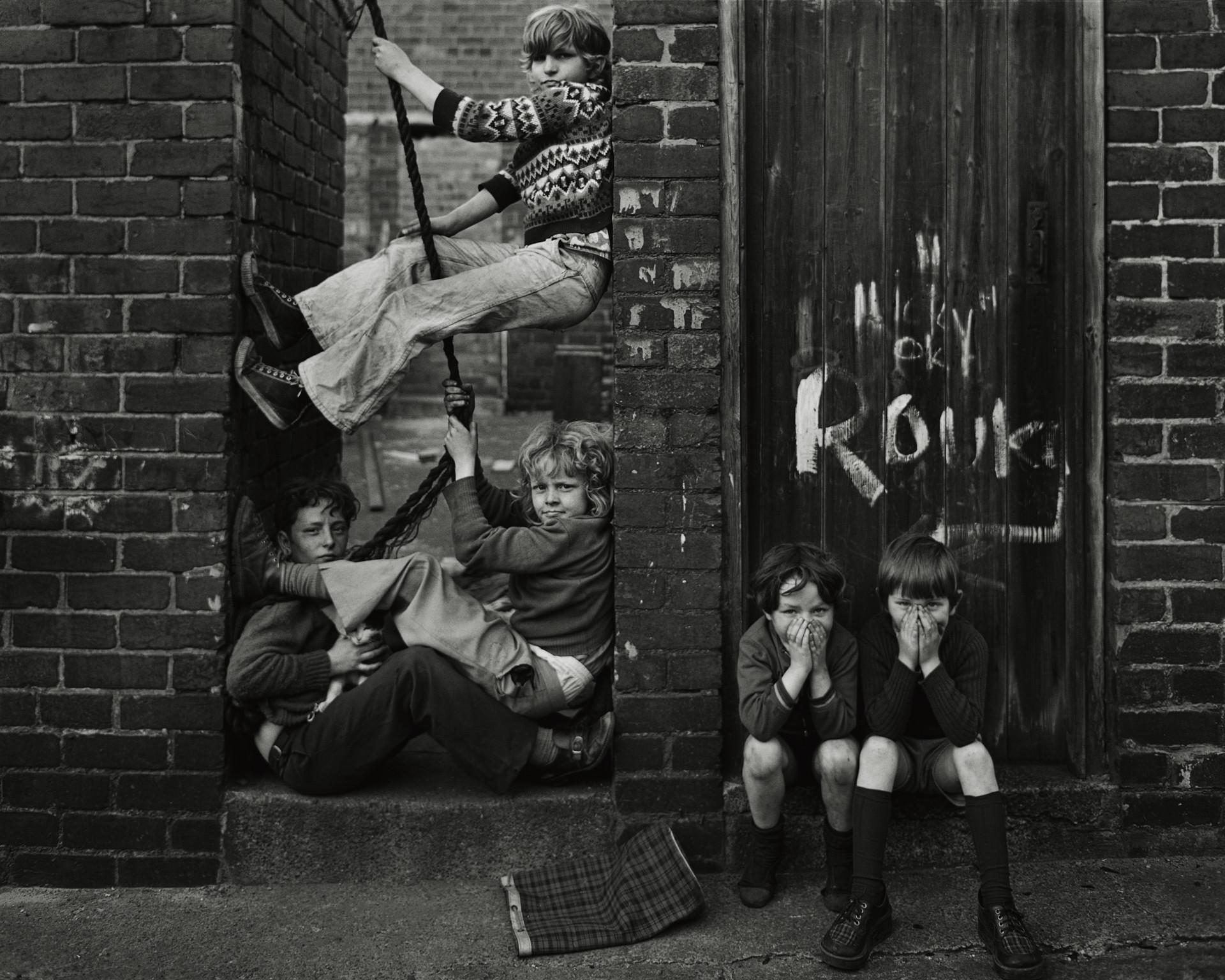
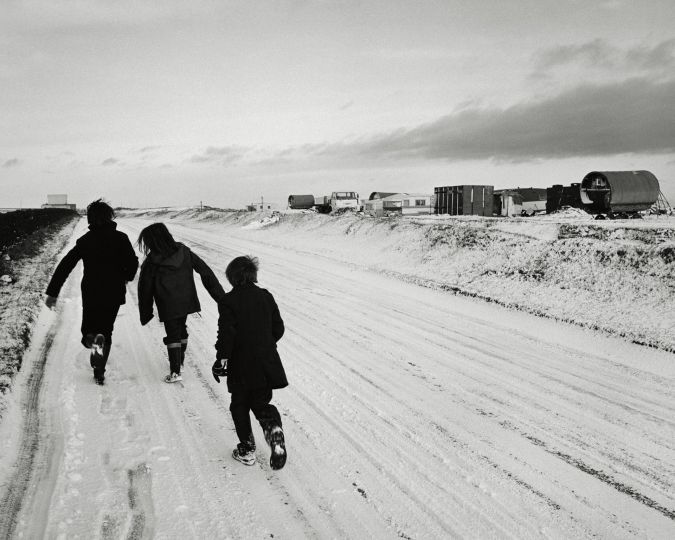
Chris Killip North encompasses the photographer’s output in England’s north-east, north west and Yorkshire, bookended by work on the Isle of Man and Mayo and Galway in Ireland, between 1975 and 1986. The editor in his introduction claims that the photographs transcend the political polarities of Left and Right but this is challengeable when looking at the images at the level of their empirical content and the inequitable material deprivation they so starkly depict. Killip’s work from this period amounts to photography’s equivalent of Vasily Grossman’s dispatches from the Eastern Front during World War II. In a way that is comparable to the Soviet’s astonishing reportage, Killip compiles visual testimony, impersonal in nature, to a social context that insists on being seen: a contextual frame announcing the advent of a prescriptive ideology damaging working-class communities. He photographs a combat zone where the enemy is powerful but unable to defeat the spirit of those on the receiving end of an attritional assault. The vital presence of children in many of his scenes – imbued with tenderness but shorn of romanticism – comes to embody this spirit of resistance and resilience.
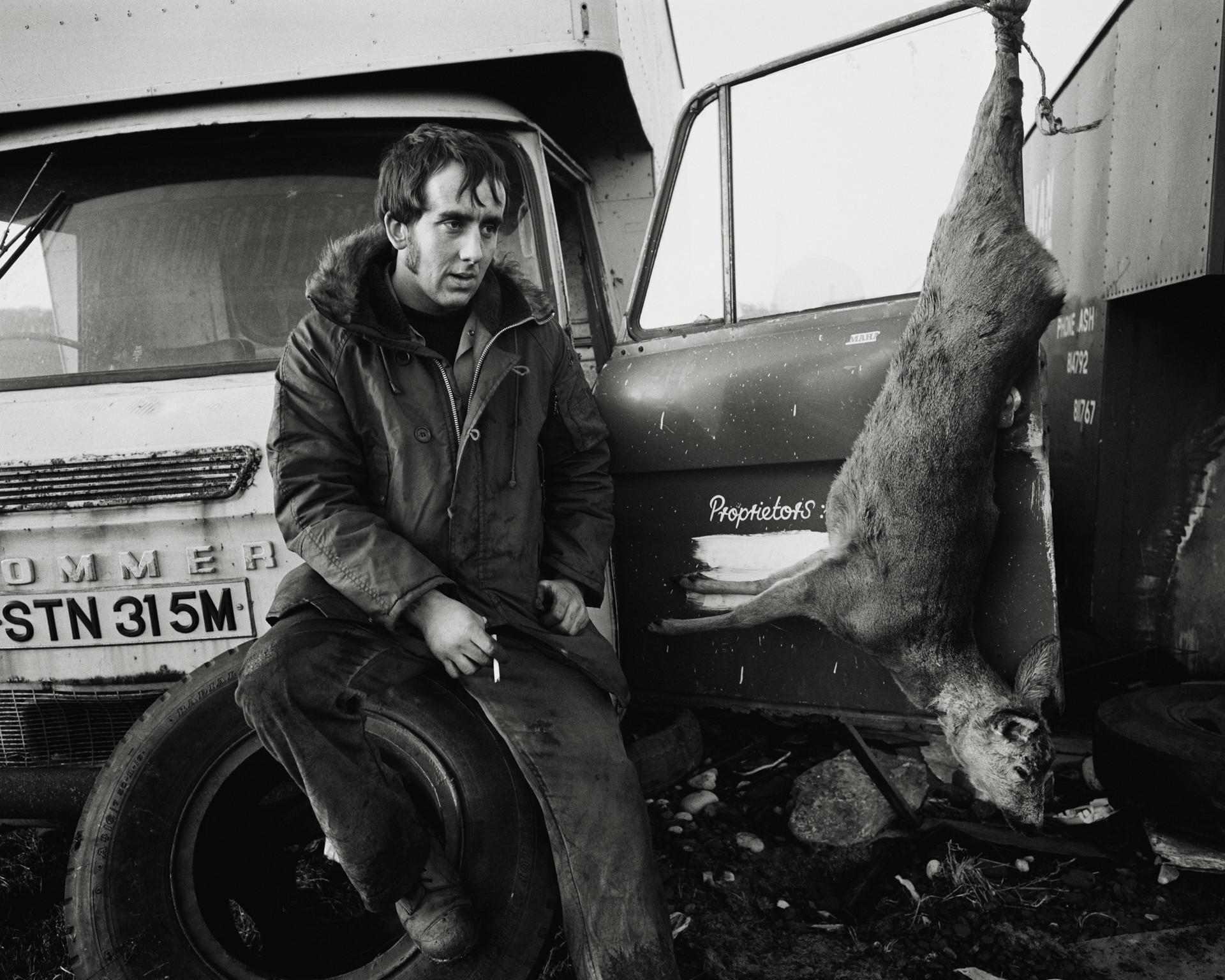
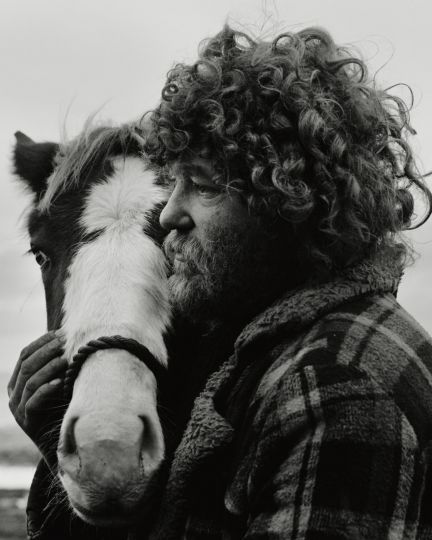
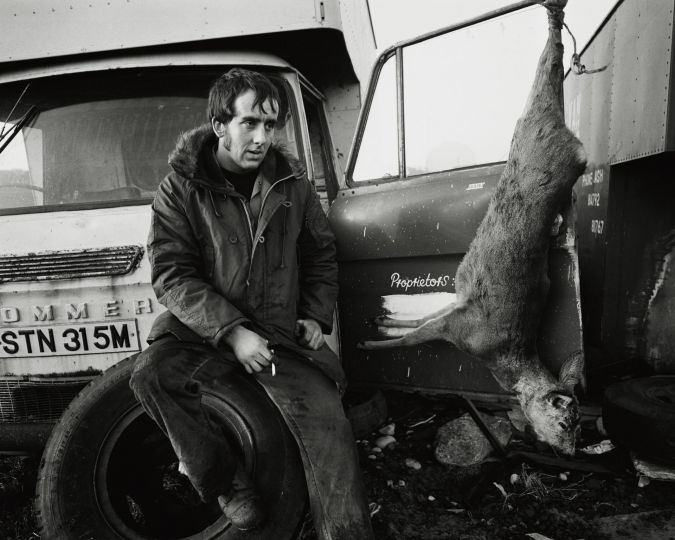
At the same time, vitally complementing the need for a political point of view, Grossman and Killip both had the ability to attend to individual voices and allow people to present themselves. In their different forms, each of the two artists cast particular people, in a place and time not of their own choosing, whose concretely visible being compels respect. Individuals are pictured in a way that serves as a reminder that the etymology of the word portrait, the Latin protrahere, comes from a verb meaning to draw forth/reveal. But the subjects of Killip’s portraits are showing aspects of themselves that remain outside the photographer’s intentions and the viewer must abide with this. In this sense, his photos do transcend political polarities and cannot be reduced to being epitaphs of the past. They may be photographed in their place of work but their employment does not define them.
At an early stage, Killip switched from 35mm to a large format camera on a tripod and this allowed for precision within a pictorial structure constructed around more than one focus of concern. Such a nuancing of what might otherwise seem too masculine is hugely impressive. It shows how the past that Killip’s images preserve is not a realm of simple pieties but a mode of living and a measure of things that is not only different but possibly more worthy of being cherished than many of our own.
Chris Killip North
Thames & Hudson
Mark Holborn (editor)
Extent: 304 pp
Size: 31.75 x 4.06 x 27.18 cm
ISBN: 978-0500030769
https://heyzine.com/flip-book/Autumn2026.html#page/27