Camille Lévêque: Inherited Intimacy
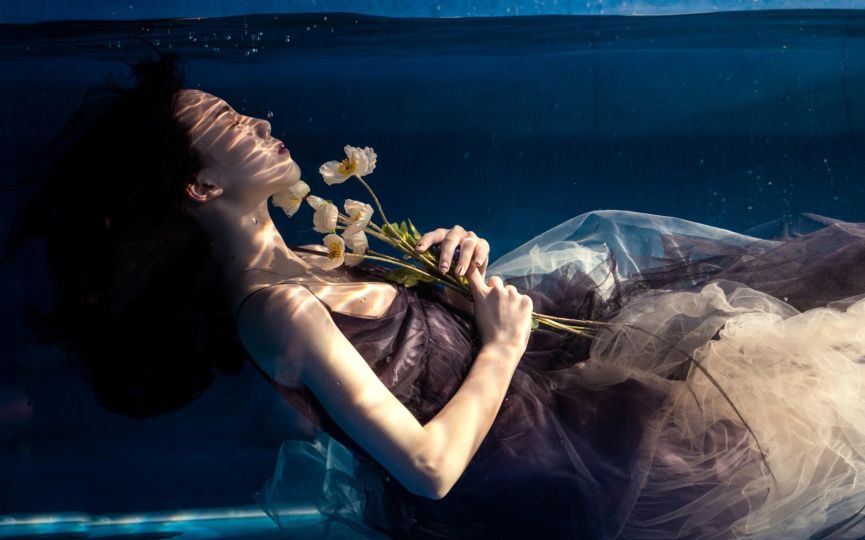
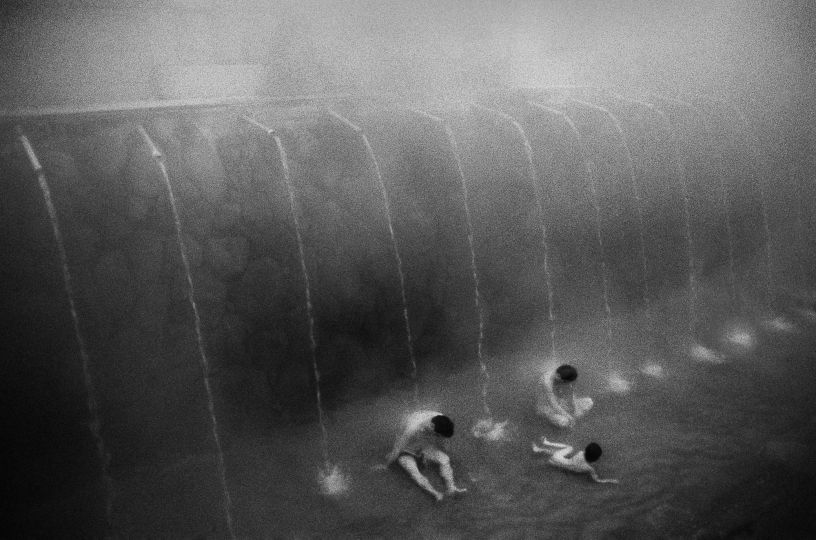
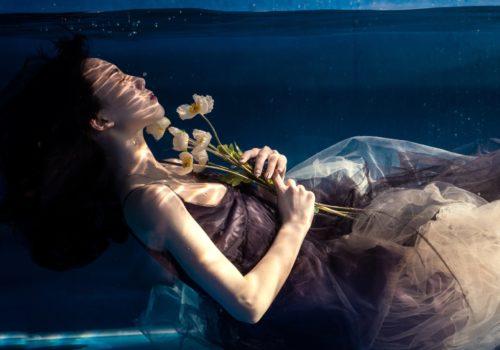
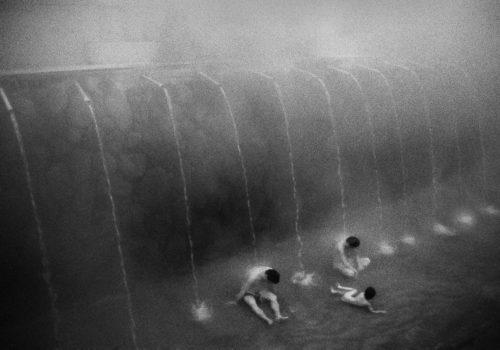
A multifaceted artist and storyteller of the invisible, Camille Lévêque explores the memories territories with rare sensitivity and a deliberate political edge. At the intersection of photography, family archives, installation, writing, and textiles, she weaves a deeply embodied body of work, where each image becomes a narrative fragment, an act of repair, a clue left on the surface of the visible.
For the photographer, the image does not document it reveals: through layers, silences, and resonances. Her work excavates the folds of the past, unspoken histories, marginal memories, family shame, and the erased or sacrificed female figures of personal mythology. Rejecting didacticism and frontal approaches, she embraces suggestion, ellipsis, and the poetry of blur. She hybridizes formats, repurposes materials, and builds emotional cartographies where the intimate becomes political, and absence becomes presence.
Invited of the Rencontres d’Arles 2025, she continues her sensitive archaeology through an immersive and previously unseen work that questions what we transmit — knowingly or not. What remains of what was never said? How can forgotten voices be made to exist again? How can an image both testify to a void and help mend a lineage?
In a world saturated with normative narratives, her work slows down the gaze and invents a language of fragments and connections. It gives shape and voice to sidelined memories, opening a space where art becomes a form of soft justice — a gentle yet radical act of resistance, a way to inscribe the forgotten back into history. At Arles, Camille Lévêque reminds us that memory can be material, and photography, a space for reclamation.
Website : www.camilleleveque.com
Instagram : @thelivewildcollective
Your first photographic revelation?
Camille Lévêque: Discovering Tarkovsky’s Polaroids in his book Instant Light.
The image-maker who inspires you most?
C.L.: Sophie Calle.
The image that moved you the most?
C.L.: My family archives.
Can we talk about photography without mentioning time?
C.L.: No. Whether in substance or in form, time is inherently linked to the photographic object.
What role does the invisible play in your images?
C.L.: A fundamental one it drives both the research and the creation. It’s at the very center of my practice. I like working with invisibility through absence, the unsaid, and creating images that rely on suggestion rather than revelation.
Can a photo be truer than reality?
C.L.: If there’s one thing we’ve come to face in recent years especially in how images inform, is the concept of “reality” and subjective “truth.” A photograph is the product of a gaze and an individual perspective. An image can say very different things depending on whether it’s seen in context or out of it. Between what we intend to show and what’s perceived, there can be a huge gap in the idea of reality.
Can a photo change our perception of an event?
C.L.: Absolutely which is why context is so crucial, and why there’s an ethical imperative in the making and dissemination of images (especially in journalism).
Is photography testimony or manipulation?
C.L.: Photography is multifaceted it can take different forms and serve different purposes. We also need to move beyond the heavily ingrained (and somewhat burdensome) French model of photojournalism as image-proof. Let’s not forget about experimental and non-figurative forms, or work focused on light, material, emptiness, etc.
A photographic memory from your childhood?
C.L.: My mother taking our traditional vacation photos every year.
With no budget limits, what artwork would you dream of owning?
C.L.: Any painting by Alekos Fassianos.
The secret to the perfect image, if it exists?
C.L.: I don’t believe it exists. Technical perfection is boring, and emotional perfection is subjective. Objective perfection would make for a consensual image and therefore, is of no interest to me.
The person you would like to (or dream of) photographing?
C.L.: My daughter.
An indispensable photo book?
C.L.: Sophie Calle’s early books, Instant Light by Andrei Tarkovsky, any book by Peter Beard, and Photographs Not Taken.
Your childhood camera?
C.L.: Disposable 35mm cameras my mother gave us during the holidays.
The one you use today?
C.L.: I use many. The only constant is that I work exclusively with Carl Zeiss lenses.
Your favorite addiction?
C.L.: Risking cliché taking pictures.
Your best way to disconnect?
C.L.: Nature.
What is your personal relationship to images?
C.L.: Obsessive. I collect images in every form: photographs, drawings, postcards, paintings. Even though words are my primary source of inspiration, images are what make me happiest.
Your last indulgence?
C.L.: Buying a professional scanner.
Your biggest professional extravagance?
C.L.: Working under seven different names for the past ten years.
What makes a photograph successful?
C.L.: An image that evokes emotion.
What interests you most in an image?
C.L.: Unsurprisingly… emotion. Also, textures.
What’s the difference between photography and fine art photography?
C.L.: I believe the difference lies in intention. Fine art photography is driven by a concept, by a thoughtful approach to the creation of an image and how it’s meant to be experienced.
The city, country, or culture that excites you most?
C.L.: Armenia.
A place you never get tired of?
C.L.: The United States.
Color or black & white?
C.L.: Color.
Natural light or artificial?
C.L.: Artificial.
In your opinion, the most photogenic city?
C.L.: Los Angeles.
If I could host your dream dinner party, who’d be at the table?
C.L.: Christiane Taubira, Werner Herzog, Guillaume Nicloux, and Donald Glover.
If your camera could talk, what would it say about you?
C.L.: That I have obsessive-compulsive disorder.
What do you think is photography’s role in how we perceive the world?
C.L.: To broaden how we see things, to make us really look instead of just seeing.
What are the greatest challenges ahead for photography?
C.L.: Its ability to reinvent itself.
How do social media influence the creation and reception of images today?
C.L.: They spotlight how we consume especially images. We accumulate in mass without necessarily understanding or appreciating what we receive. That said, social media also allows distant and diverse audiences to connect, which is a powerful opportunity that many are seizing.
If you had to start all over again?
C.L.: I would do everything the same.
Last word?
C.L.: Everything is political. Act or react in the name of a more just, inclusive, and humane world. We’ve learned too much shame from history to build another history of shame.
CAMILLE LÉVÊQUE — À LA RECHERCHE DU PÈRE
DELPIRE & CO
https://www.delpireandco.com/produit/a-la-recherche-du-pere/