PhotoMonth central Hub will be based at the Art Pavilion in Mile End Park, where four exhibitions will be open at the same time. Highlight of the programme is the group exhibition entitled “Longing”, selected via Open Call by the festival’s Curatorial Advisory Board (Monica Allende, Avijit Datta, Cherelle Sappleton, Fiona Shields, Charan Singh).
Some of the winner images and their statements:
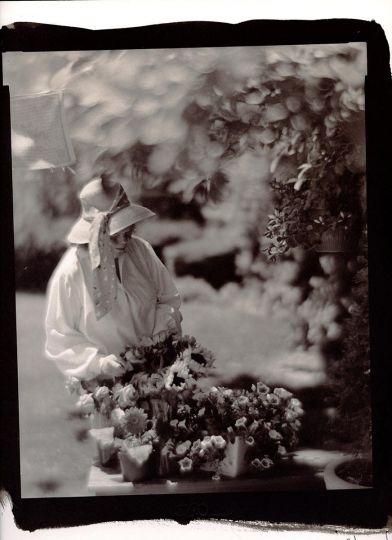
Shreya Jakhar, Beyond Boundaries
“This project explores the quiet resilience of my Naaniji (maternal grandmother), a woman navigating generational expectations within a patriarchal Indian society. In India, a married woman returning to care for her parents is still taboo—her duty is presumed to lie with her inlaws. Yet Naaniji, defying norms, moved to Mandawa, a small town in Rajasthan, to care for her ailing mother.
As the eldest of seven siblings, Naaniji had always been the pillar of her family. But now, ageing herself, she faced emotional isolation—no support from her emotionally distant husband or grown children—and societal judgment for stepping outside traditional roles. Despite these constraints, she bore her duties in silence, embodying a love that asked for nothing in return.
Through my lens, I followed her quiet routines: tending to her mother, growing vegetables, managing household tasks, navigating land disputes, all under the watchful, often critical eye of the very woman she cared for. The village house, surrounded by fences, seemed to mirror the emo tional walls she confronted daily—her labour unseen, her presence tolerated rather than embraced.
And yet, she turned this space into a home, infusing it with care and small rituals of hope. Her mother passed away after a year, leaving Naaniji with grief but little closure. What does it mean to give without end—not for praise or return, but because love carries a quiet longing, one that gives and keeps giving, even when no one is watching?
As her granddaughter—and as a woman in the same society—I am a silent witness to this legacy. These photographs are not just of her, but perhaps of my future self: a woman making a life within the margins, sustaining others, and longing quietly for recognition, warmth, and rest.”
Jay Lim, Singapo-ren love
Singapo-ren Love explores Jay Lim’s identity as a gay Singaporean Chinese man, tracing his experiences of love, intimacy, and belonging through a lens of reflection and resistance. Created between London and Singapore, the series navigates tensions within relationships between family members and lovers by borrowing the framework of “inscrutability” to communicate gay experiences that lie outside of dominant narratives.
The images in Singapo-ren Love depict scenes familiar to any Singaporean: from cafe dates, holiday getaways, and family gatherings, employing specific compositional and aesthetic choices to serve as camouflage. The work makes present the author’s queer lived experiences within postcolonial Singaporean society where similar narratives have remained largely invisible.
This photographic archive of quiet queer life points to ways of articulating and negotiating experiences that exist outside of what is possible in a controlled and censored space. To further explore these ideas, the series expands into a photobook that features notes, letters, recipes and memorabilia, providing additional contextualisation.
Singapo-ren Love explores how inscrutable looking, a non-pragmatic way of seeing, can function as a quiet yet powerful form of resistance when applied to photographs. In doing so, Lim constructs not only a personal archive of queer life rendered through opacity but also a visual language for feeling, remembering, and resisting.
Syd Shelton, A Doctor’s story 1980-1990, Some Lives-David Widgery
“AGP is as much a witness as an executant; a privileged observer of pain endured, private sadness and jubilant recover.”
– David Widgery,1990
For a generation of East-Enders Dr David Widgery was ‘The Doc’, the GP at the end of hours in the waiting room at Dr Liebson’s surgery in Bethnal Green and the Gill Street practice in Limehouse or running around the housing estates on home visits. I visited and photographed many of his patents with him before his untimely death in 1991.
David Widgery, born in 1947 was an early beneficiary of the new health service having been a victim of the 1950s polio epidemic. This early experience was to cement his love of the NHS as well as a hatred of the evidence that the diseases he was treating were really caused by poor housing, poverty and racism which plagued the East End of London.
Oliver Woods, Dad Side of the Bed, from You Are My One and Only
“These images are from a wider series about the house I grew up in, which I photographed extensively following the death of my parents. Within this sits another story about my own childhood and my relationship with my parents, following the death of my younger brother and sister from an ultrarare genetic condition.
In the years that followed, mum used to say to me: You are my one and only. This phrase always felt finely balanced between love and loss. I had became an only child, and I stopped being the eldest. But I felt that I was neither. In photographing the house have wanted to examine everything in it, as if looking for something. Perhaps what I have been looking for is a sense of identity and looking to find myself. Maybe all I want to say is that once I was a brother.
These images are from a wider series about the house I grew up in, which I photographed extensively following the death of my parents. Within this sits another story about my own childhood and my relationship with my parents, following the death of my younger brother and sister from an ultrarare genetic condition.
In the years that followed, mum used to say to me: You are my one and only. This phrase always felt finely balanced between love and loss. I had became an only child, and I stopped being the eldest. But I felt that I was neither.
In photographing the house have wanted to examine everything in it, as if looking for something. Perhaps what I have been looking for is a sense of identity and looking to find myself. Maybe all I want to say is that once I was a brother. ”
Melanie Issaka, Blueprint 16
Blueprint: Black Skin, White Mask explores the emotional and politcal terrain of longing—a desire for belonging, rootedness, and recognition in spaces where Black bodies are often seen as out of place. Set against the backdrop of British society, this series interrogates the complexities of diasporic identity, asking: what does it mean to exist as a Black body in a white space? Drawing from Frantz Fanon’s Black Skin, White Masks, the work delves into the psychological consequences of colonialism, racialisation, and internalised oppression.
Using cyanotype, a process that renders the artist’s body as a white void on blue fabric , these prints visualise the paradox of being both hypervisible and invisible. The physical absence of the body, yet the undeniable presence of its outline, reflects the tension of being constantly seen through racialised lenses yet unheard or unacknowledged in one’s full humanity. This symbolic negation of form questions how Blackness is read, constructed, and mythologised within Western frameworks.
The theme of longing is embedded in the very act of reclaiming: reclaiming history through the Ghanaian concept of Sankofa, reclaiming agency through photographic self-representation, and reclaiming voice in a society that seeks to silence. The work reveals the emotional toll of navigating identities that are persistently questioned, both in Britain and across diasporic homelands. Longing, here, is not just for place but for wholeness—for a history not interrupted, a future not denied, and a self not split. Through this lens, Blueprint becomes more than docu mentation; it becomes a personal and collective blueprint for survival, remembrance, and resistance.
Eliska Sky, Miri and Kazuki, from The Red String
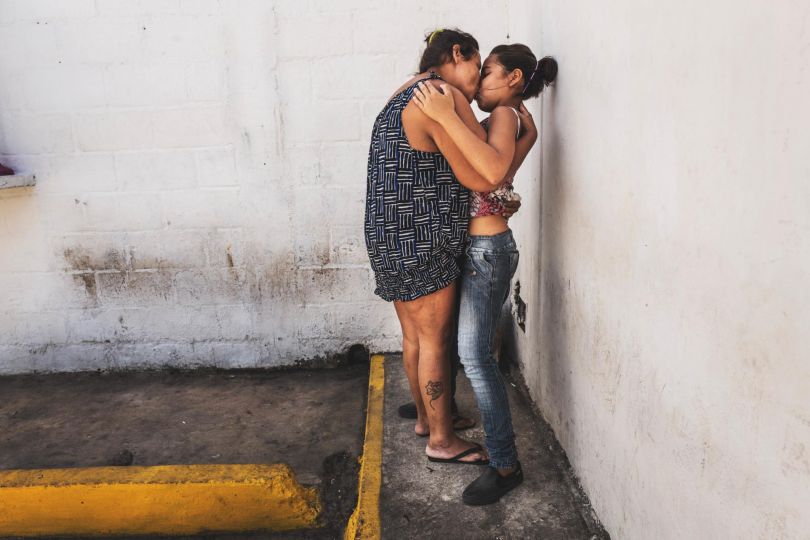
The Red String is series inspired by love and connection regardless of cultural upbringing, different religions, appearance or physical ability. In the world often filled with a division, I wanted to find the message of love and connection in the melting pot which is London for me.
Inspired by the Japanese legend of the Red String of Fate, I capture couples, families, siblings and friends from diverse backgrounds&nationalities.According to this legend, an invisible red thread connects those who are destined to meet, regardless of time, place, or circumstance.This string may stretch or tangle, but it will never break, symbolizing the ties that bind us to one another.
The Red String is a then celebration of a human connection—a series of intimate portraits that capture the inclusivity of love in its many forms and expressions.
Reshma Teelar, My Blossoming Graveyards
“I’m not proud of what my body has to show. There are marks on me that were inflicted by someone else, marks I inflicted on myself and there ones that formed on their own because my body couldn’t take it anymore. I still don’t feel like a warrior or a survivor. I just want to be normal. I want to have something basic. I realise how powerful and important being a regular person is.
I tried and tried till I felt ashamed. Drank gallons of water till I felt sick to my stomach. And I fasted— Oh no, I starved. I became scared of what’s on my plate. At 5, I was served with an empty plate because I was plump. At 7, I was told that I will never get married because I was a little bigger than my friends. At 12, I was given a prize by a few of my classmates for being the fattest in the class. At 15, my father got me the smallest lunch box so that I would eat only so much. Over the years, I was humiliated, taunted, threatened and forgotten. For many years, I existed for the sake of existing.
9 years ago when I started this project I didn’t know that it was a start for my healing process. I want to help others dealing with similar problems but what help will I be of if I can’t help myself first? This project is me trying and longing for a normal/regular me. Facing what I’m so scared to face, exposing the truth to myself, showing that it is okay to be what one is. If this flawed world can exist, so can you, intact.”
Marguax Revol, Augustine and Dido, from The Pain Fugue
The Pain Fugue is a documentary-portraits series about longing for a normal, carefree life. It follows Augustine, a woman in her twenties living with ravaging endometriosis, a chronic illness that affects one in ten women and is yet still invisible, overlooked, dismissed and misdiagnosed.
This is not just a story of illness, but of a life paused — of a body that cannot escape itself. Augustine’s days are now mostly spent lying down, her world confined to her bed, her bath, or her sofa. In these small spaces, her pain loops endlessly, and so does her longing: to get a respite from suffering, to move her body smoothly, to go out, to see friends outside of home for once, to stop being ruled by her pain. The title, The Pain Fugue, is how Augustine describes her flare-ups — dissociative episodes of such pain that time blurs and the self vanishes beneath layers of agony.
Through intimate portraits of her confined home by pain, wishing she could be out, and images of her body, scarred in red by years of pressing boiling water bottles to numb the torture, or an image of her reaching to her jar of painkillers, the work creates space for concrete but poetic representations of this existence, the ache to get better, the urgency to be believed. By seeing Augustine’s pain and her longing to get better, we can maybe start to see the countless others rendered invisible by a world that too often fails to believe women when they say they are in pain.
The Pain Fugue asserts the legitimacy of a condition, and acts as witness, resistance, and a call for empathy.
Marcos Azulay, God’s Garden
In many traditions, gardens symbolize humanity’s longing for connection with the sacred. They are spaces of harmony, beauty, and contemplation—metaphors for a direct relationship between God and humankind. From the Garden of Eden to Islamic visions of paradise, the garden often represents an ideal world: a place of purity, peace, and divine presence.
In sacred texts and cultural memory, the garden is both origin and aspiration—a place where humanity once lived in unity with creation, and a vision of what might be restored. Whether enclosed or wild, cultivated or imagined, gardens invite us to pause, reflect, and sense something greater than ourselves.
They serve as reminders that paradise is not only a story of the past but a possibility for the present—a space where the spiritual and the earthly meet, where beauty becomes a path to the divine.
More information