Today is the first day of this month-long photography frenzy that will take over Paris.
7 festivals, 200 galleries, 90 publishing houses, 150 exhibitions, auctions; everything in Paris will be spelled: PHOTOGRAPHY.
It begins with OFFSCREEN, of which we present three parts:
– An interview with its director, Julien Frydman.
– A series of Albert Londe during Dr. Charcot’s sessions.
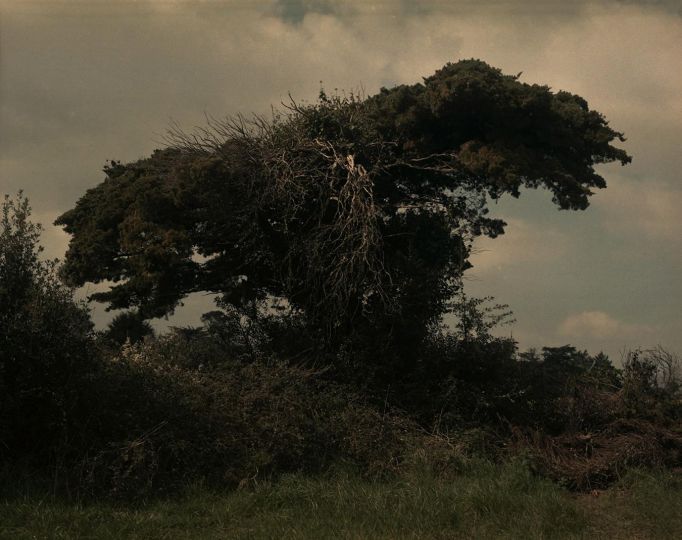
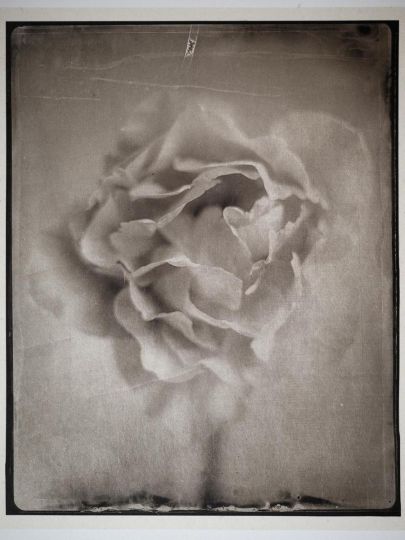
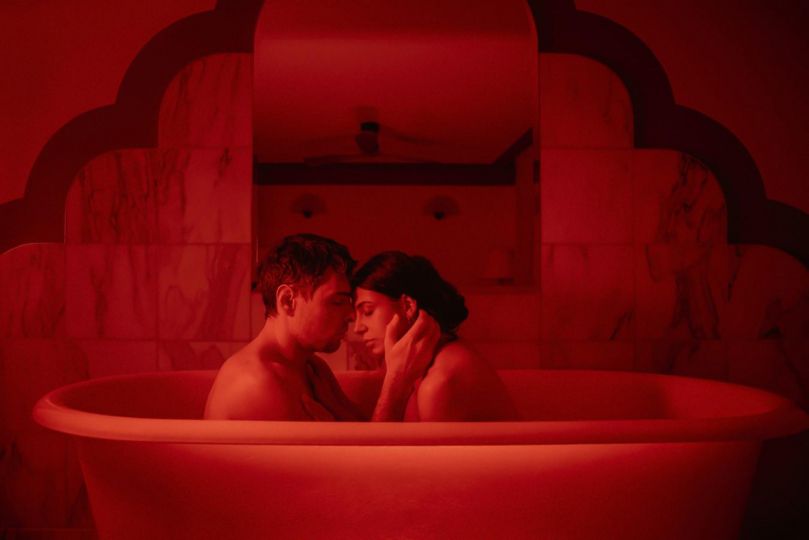
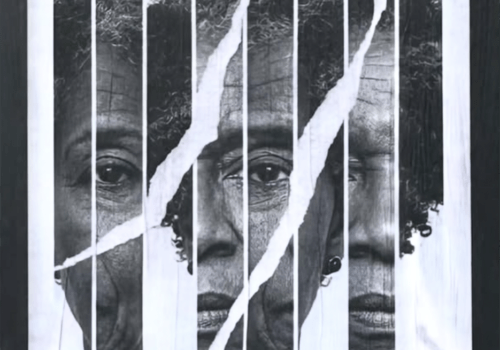
– A preview of the exhibitions presented.
OFFSCREEN, a trade show dedicated to experimental practices in still and moving images, is one of the most original and challenging offerings of recent years. On the occasion of its fourth edition, which will be held from October 21 to 26 at the Chapelle Saint-Louis de la Salpêtrière, L’Œil de la Photographie met with its founder and artistic director, Julien Frydman.
Interview with Julien Frydman, founder of OFFSCREEN
Zoé Isle de Beauchaine : Julien Frydman, you are the artistic director of OFFSCREEN, which you founded in 2022 after having previously led Paris Photo—at the Grand Palais and in Los Angeles—the Magnum agency, and Delpire Publishing, among others. Could you tell us about the ambition of this trade show and the context of its creation?
Julien Frydman : It all started with the observation, linked to my professional background, that there was a lack of a solution that would bring to life all the forms of image-based writing, whether in movement, in the form of installations or sculptures, photographic or performance. Many artists are now versatile in their use of images or photography. Some don’t even perceive this medium as such, but use it at the heart of their practice. It was therefore necessary to create a space to connect all these approaches, a place where they could be presented in a way other than as a work displayed at a fair or a museum.
The idea was to create an environment where we question, but also where we sense connections. This is the starting point, the curatorial DNA of OFFSCREEN.
You inscribe this DNA within a market logic.
There is indeed also a market dimension: these works are sorely lacking in venues and dissemination structures. There is, of course, Loop Fair in Barcelona for moving images, or Paris Photo for photography, but ultimately, few spaces give visibility to these practices, particularly to masterful works installed in situ, which lack a real market framework. OFFSCREEN therefore also provides an opportunity to create a moment for these practices which, even if they sometimes follow on from historical works, are today profoundly contemporary. And they had to be present during Contemporary Art Week in Paris.
OFFSCREEN also stands out for its intimacy, linked to the limited number of artists represented. Can you tell us more about this choice?
Julien Frydman : I think the eye needs to be able to absorb it: we can see that at some point, we get tired. Between twenty-five and thirty artists participate in each edition, each presenting a statement. One could call it a solo show, but I prefer the term statement, because it’s truly a proposition, a work, an articulated effort. Moreover, since the aim is to create an immersive experience, we work in locations that aren’t traditional event spaces. It needs to breathe, there needs to be dialogue between the works.
The first edition was held at the Hôtel Salomon de Rothschild, a historic venue in the 8th arrondissement. The next two were held in a large Haussmann-style garage. For this edition, you are taking over the Chapelle Saint-Louis de la Salpêtrière.
Julien Frydman : It’s an exceptional opportunity to be able to exhibit in this sublime and historic setting. There’s nothing better than a place dedicated to contemplation to showcase works. This allows you to bring unique offerings, establish a sensitive relationship with the works, and initiate a genuine dialogue. In the chapel, several large paintings will be on display—Piétas, Christs on the Cross—creating a subliminal exchange between contemporary works and religious iconography.
What is the history of this place?
Julien Frydman : In the 1980s and 1990s and until the early 2000s, the chapel hosted large installations by contemporary artists as part of the Autumn Festival, including Jenny Holzer, Christian Boltanski, Anselm Kiefer, Bill Viola, and Nan Goldin. The Salpêtrière is also a place steeped in history. Even if this wasn’t its original purpose, it quickly became a place of confinement for women in the 17th and 18th centuries, and this continued thereafter. Without going into all the details, it’s an inhabited space, marked by this memory. We know that there are works, even though we didn’t choose them for that purpose, that resonate with this history. It was also here that the famous neurologist Dr. Charcot developed his theories on hysteria, particularly so-called female hysteria: a subject that needs to be explored, of course, and which resonates with several works in this edition. In particular, in collaboration with the Galerie Baudoin Lebon, we are presenting a portfolio of images by Albert Londe (1858-1917), who was the photographer at the Salpêtrière. It was important to be part of this history and to give it a place, especially since the chapel is now developing a Culture and Health program.
Can you tell me a few words about this year’s guest of honor, Shigeko Kubota (1937-2015)?
Julien Frydman : Each year, we highlight artists who are emblematic of the OFFSCREEN spirit: Anthony McCall, Rosa Barba, Chantal Akerman. For this edition, we wanted to place greater emphasis on the video art dimension. Kubota is a pioneer of the genre, particularly of video sculpture, where what happens on the screen matters, but also what accompanies it. The first video sculpture work to be included in a museum collection is by Shigeko Kubota. She is a key figure, whose influence has not been sufficiently highlighted. This was therefore an opportunity to honor her, present some of her works, and place her within this continuum of work with images.
A new feature this year is the creation of the Acquisition and Discovery program.
Julien Frydman : Yes, the idea was to showcase, at a market event, certain works perceived as puzzling or unusual, which are actually collected by institutions. It’s a way to shed light on institutional risk-taking—building a collection, being at the forefront, identifying artists who are still little understood—and to place OFFSCREEN within this institutional and structuring dimension of understanding art history. Two institutions, the Centre Pompidou (Paris, France) and the ZKM, Karlsruhe Center for Art and Media Technology (Germany), will be showing works recently acquired, rediscovered, or highlighted in their archives.
Let’s conclude with a question that’s on everyone’s lips right now: how is the image market doing?
Julien Frydman : Ah! I think this question should apply to the market in general! We’re obviously going through a period of tension. At the same time, I’ve just returned from Frieze, where several gallery owners were very satisfied with their sales, right from the very first day. I think there’s a real demand for important works, strong offerings. We’re emerging, at least I hope so, from a somewhat wait-and-see period, but the market and collectors are still there, eager. And so much the better if there are more demanding works: it’s a good thing. That’s what we’re trying to do at OFFSCREEN: be as demanding as possible, both in the choice of works and in the way we show them, while avoiding unnecessary saturation. If the current market contraction is accompanied by increased demands, it will be beneficial to everyone.
Interview by Zoé Isle de Beauchaine
OFFSCREEN PARIS – 4th edition
October 21-26, 2025
La Chapelle Saint-Louis de la Salpêtrière
Entrance via Square Marie-Curie
47 Boulevard de l’Hôpital
75013 Paris
www.offscreenparis.com
@OFFSCREEN_Paris