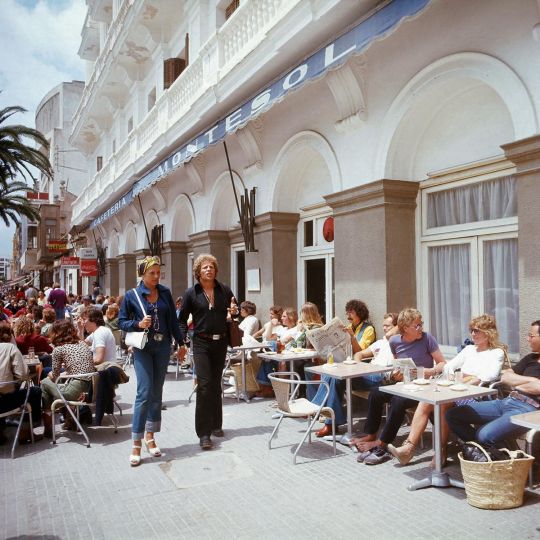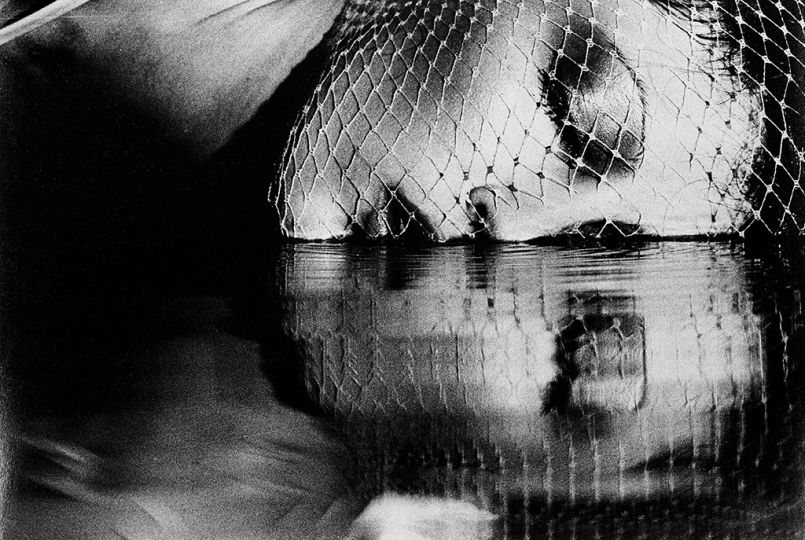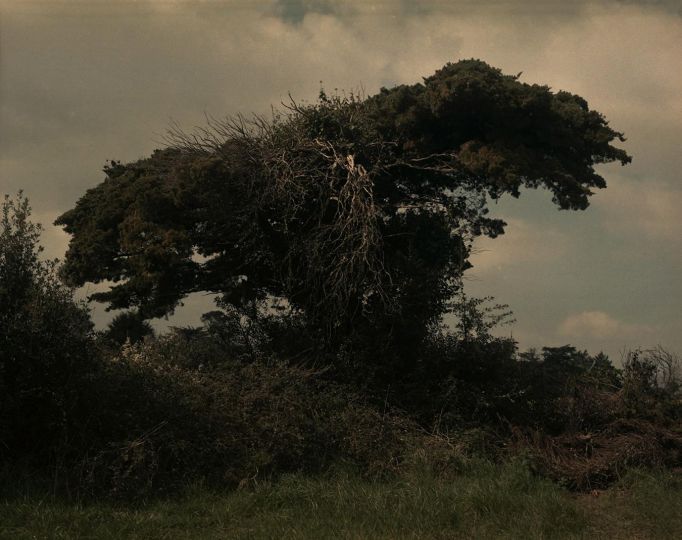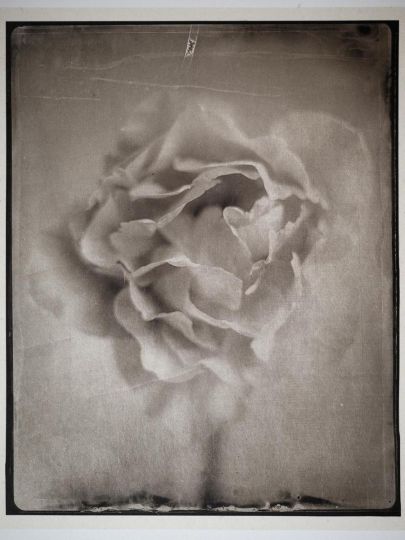






The Eye of Photography launches a new column on Eastern European photography, thanks to the words and perspective of Tímea Urbantsok.
I conducted an interview with the photographer Lujza Hevesi-Szabó, and then presented her remarks. Given that her work is a form of social and political art, I will first present her method, then the social environments she discusses namely, her origins and Hungarian society and finally, her technique.
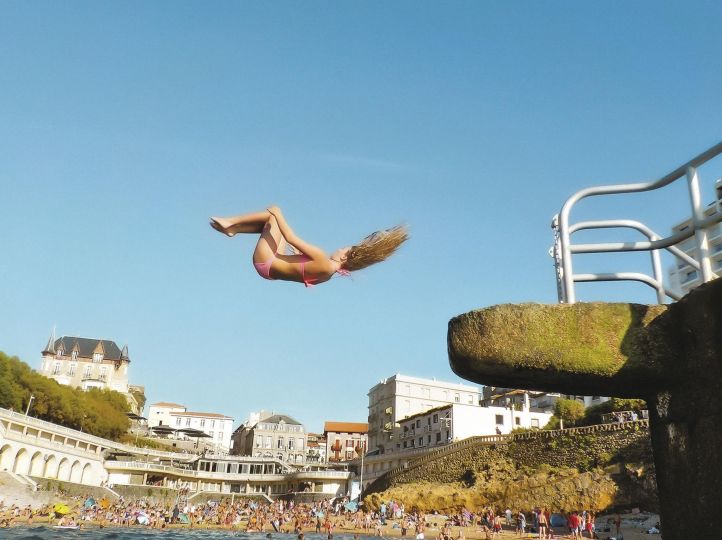
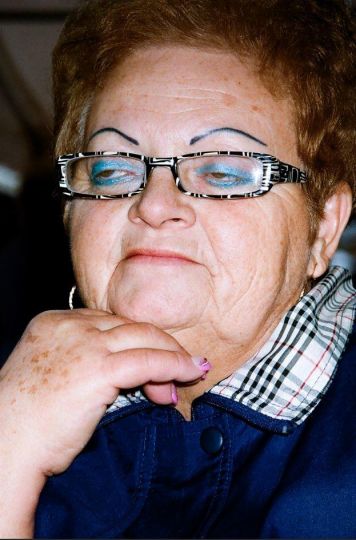
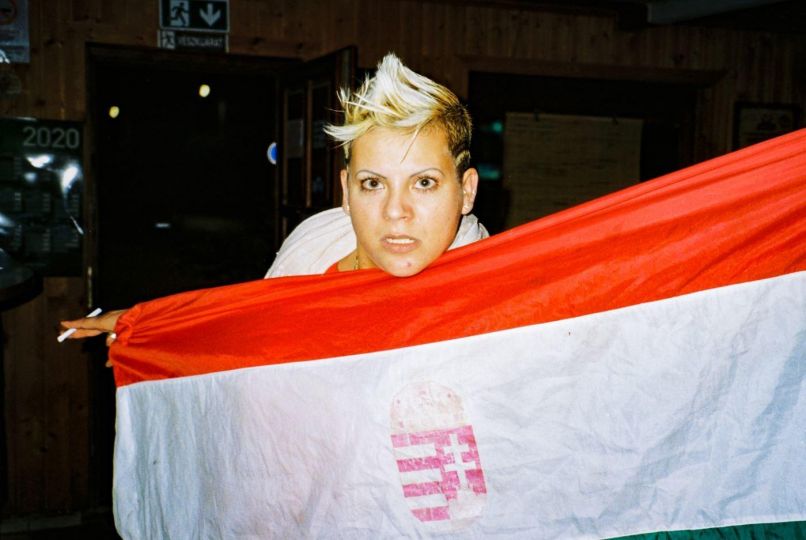
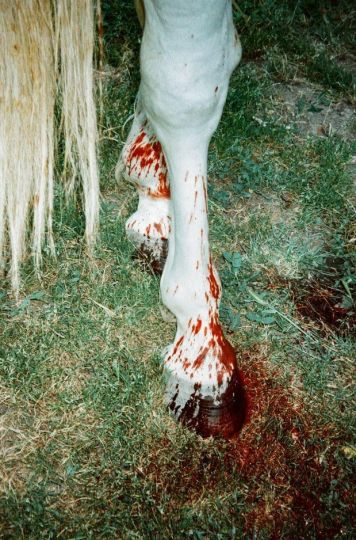
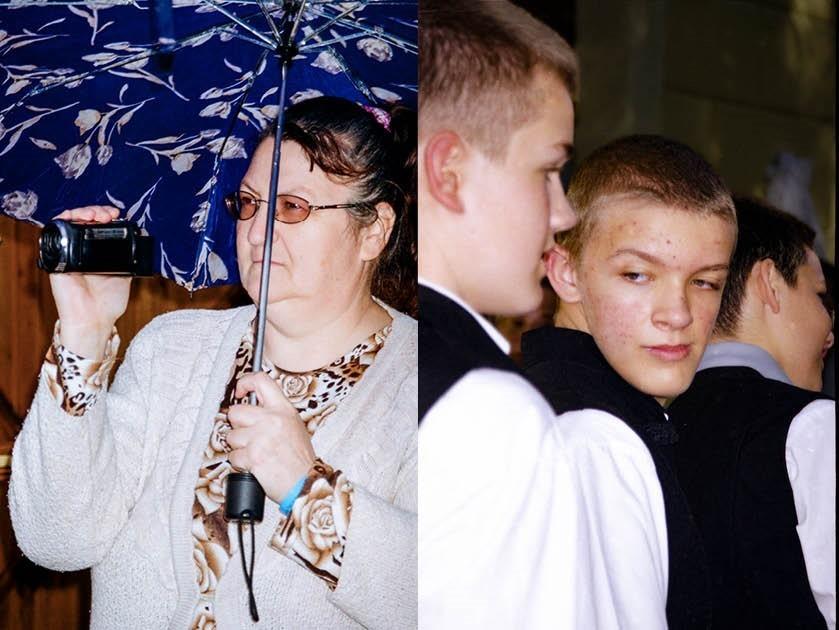
Lujza Hevesi-Szabó oscillates between press photography and art photography ; this entanglement can be described as subjective documentarism. Through this approach, she captures the contradictions of contemporary Hungarian society in the countryside, whether during festivals or in daily life. She unveils a world that can completely escape our attention if we only visit Budapest. Her method, subjective documentary, is becoming increasingly widespread, for example, in documentary cinema. Rather than adopting a detached posture of observation, this type of work seeks to highlight personal narratives. It can take a poetic, symbolic form and focus on an intimate truth, instead of offering a factual and exhaustive report.
© Lujza Hevesi-Szabó

© Lujza Hevesi-Szabó
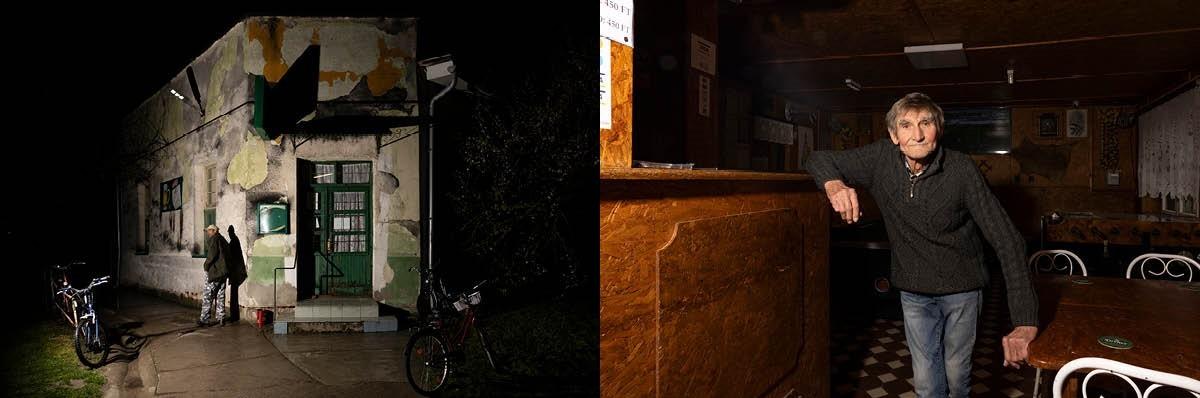
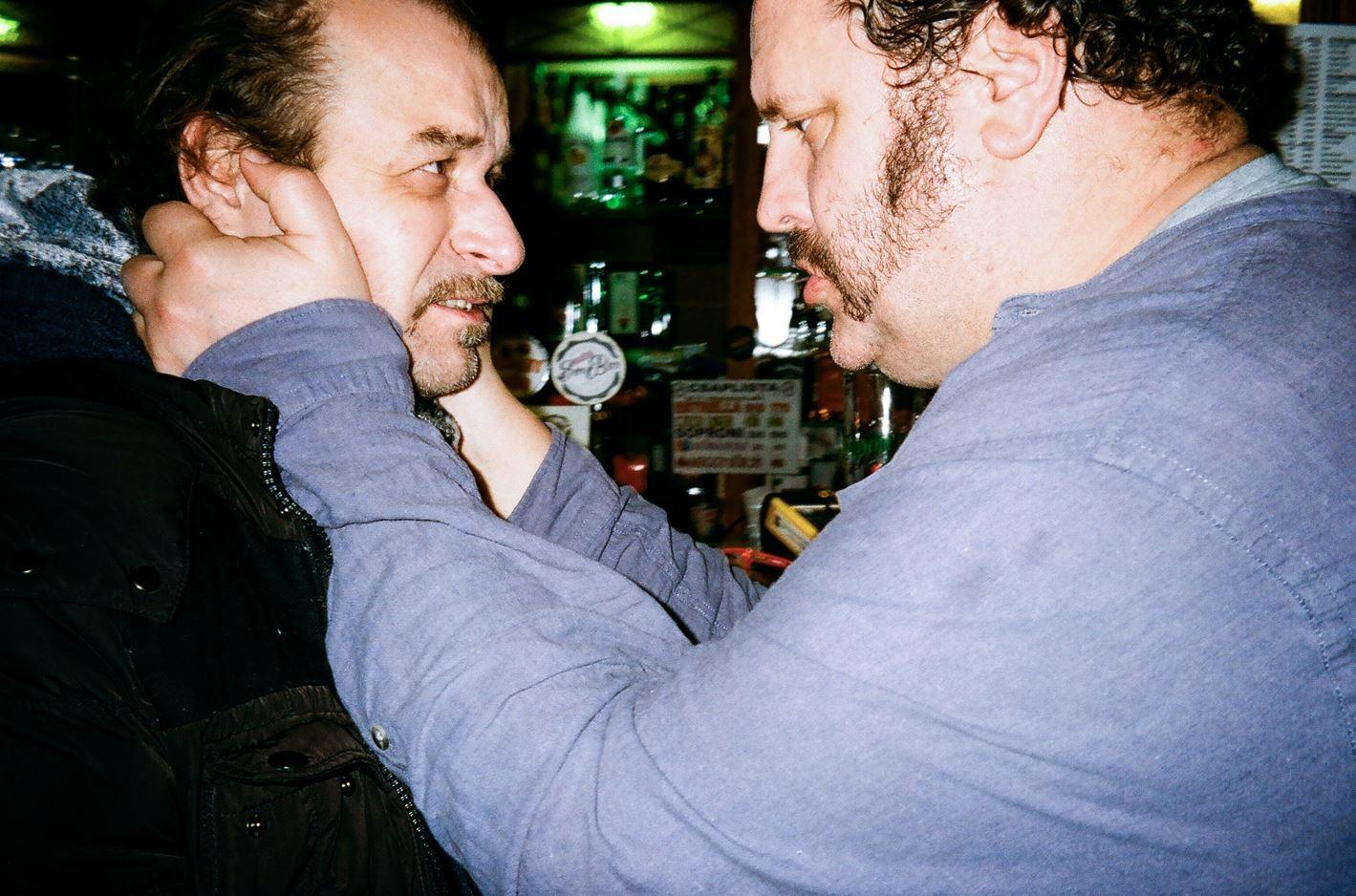
Bars are one of the emblematic locations in the Hungarian countryside, and Hevesi-Szabó has therefore made sure to photograph them. Truthfully, it is not quite accurate to use the word “bar” for the Hungarian term “kocsma“: they designate very different realities. While “bar” suggests an urban and more chic setting, the village kocsma is closer to a local pub, a hangout for often alcoholic men where a gloomy atmosphere reigns and the alcohol is of mediocre quality. That said, my description is also tinged with an outsider’s perspective.
© Lujza Hevesi-Szabó
Another theme that Hevesi-Szabó documents every year for the newspaper Telex is Tusványos, which has become a political festival today. Is an event organized in Transylvania with massive funding from the Hungarian state, and one in which Prime Minister Viktor Orbán’s party, Fidesz, intensively participates: they hold round tables there and the entire event reflects their values.
© Lujza Hevesi-Szabó
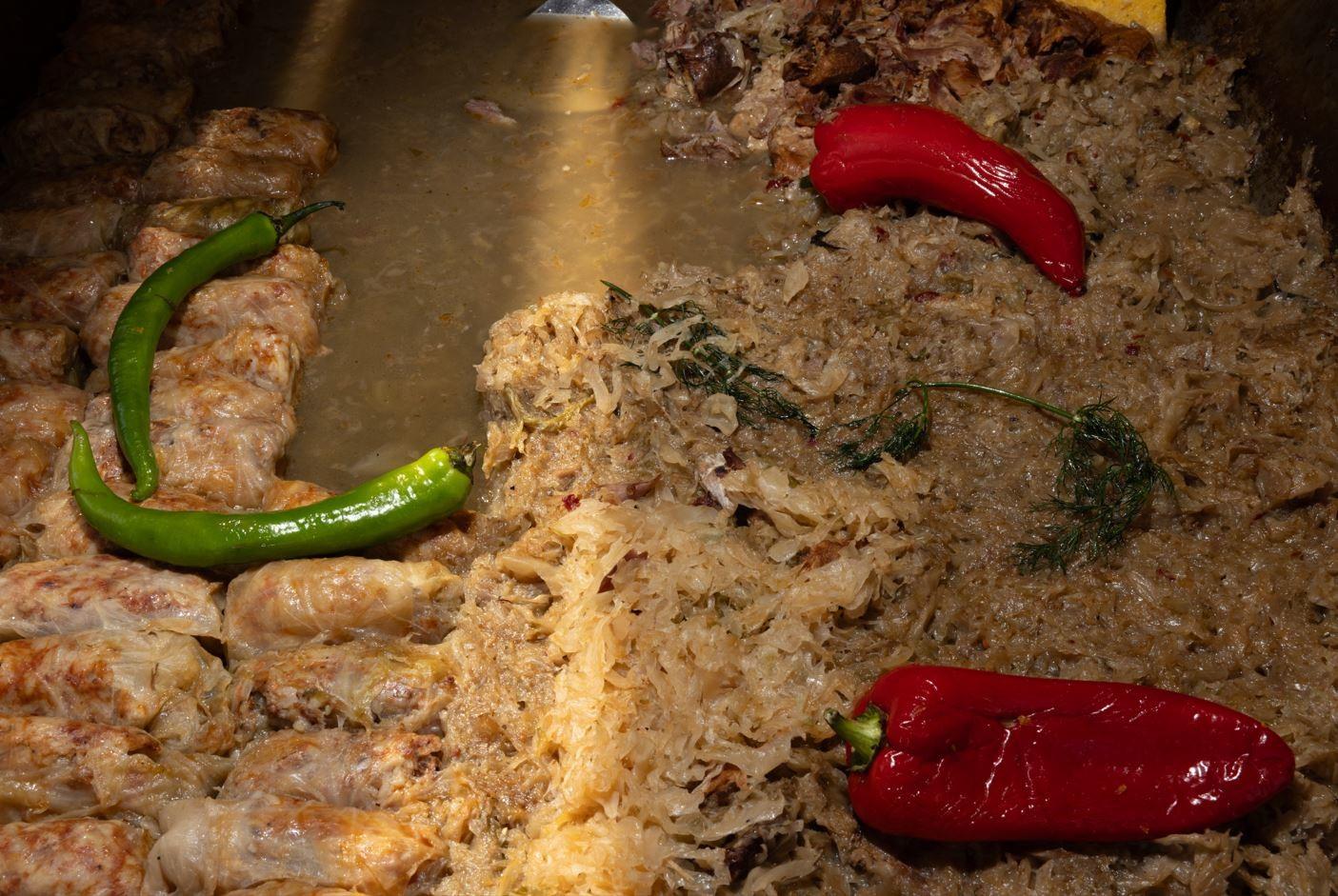
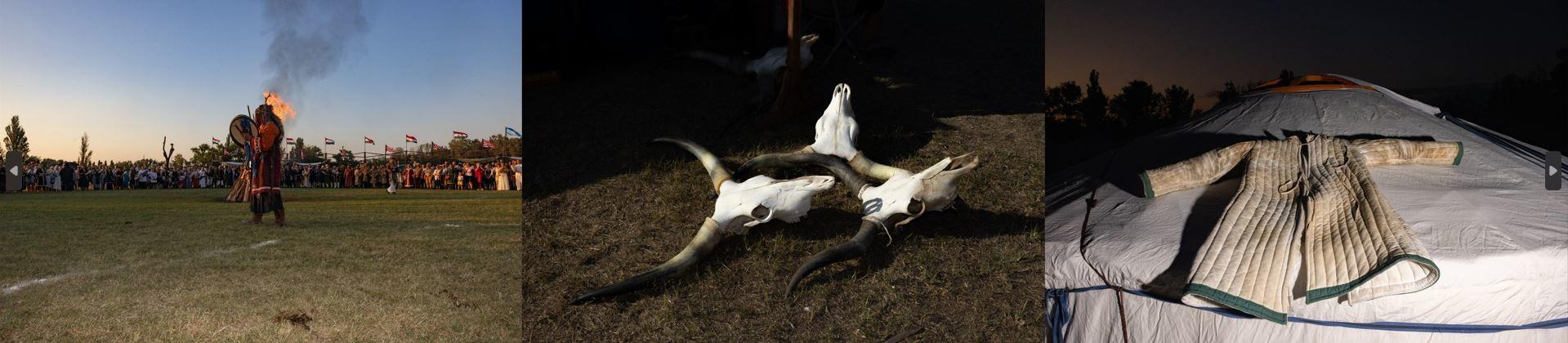
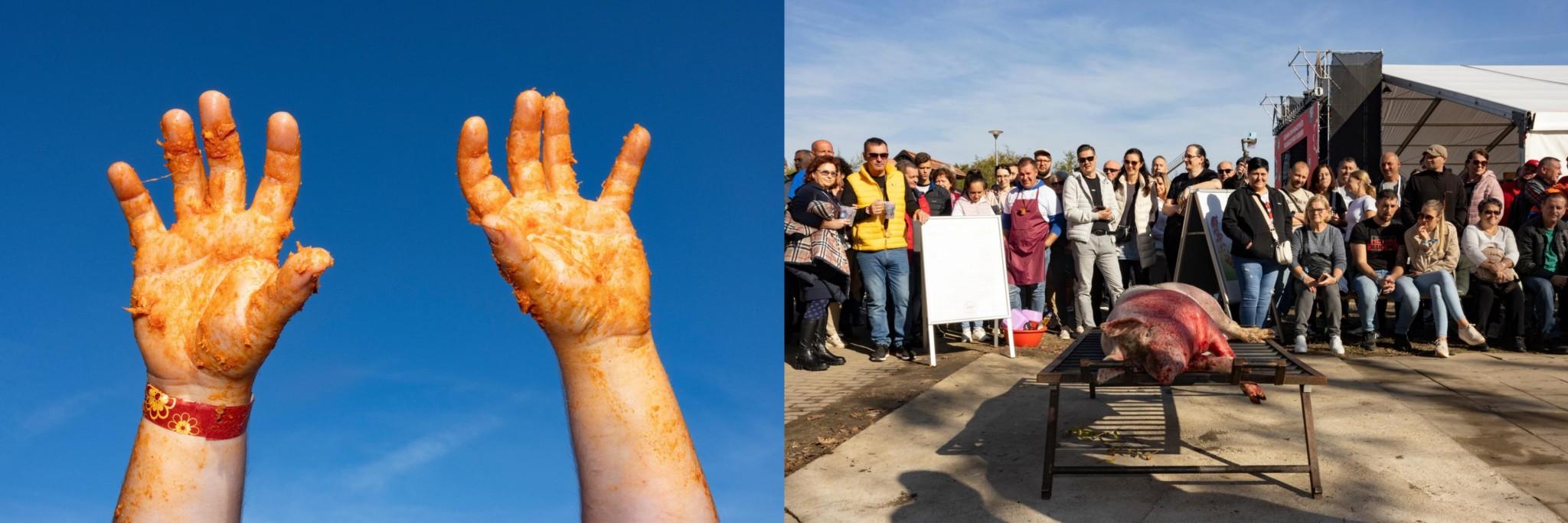
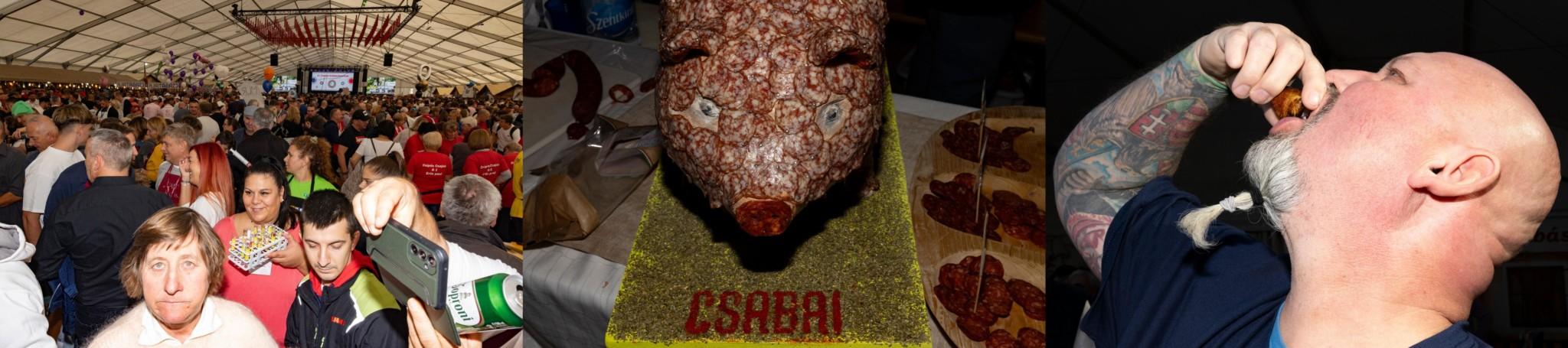
A recently discovered topic is the Ancestors’ Festival, a reenactment festival that commemorates the conquest of the homeland as well as the clothing, warfare, housing, musical, and craft traditions of the era, bringing together various historical reenactment communities from the Carpathian Basin. In addition, last fall, she took photos at the Békéscsaba Sausage Festival, in a town very close to her native village.

© Lujza Hevesi-Szabó
© Lujza Hevesi-Szabó
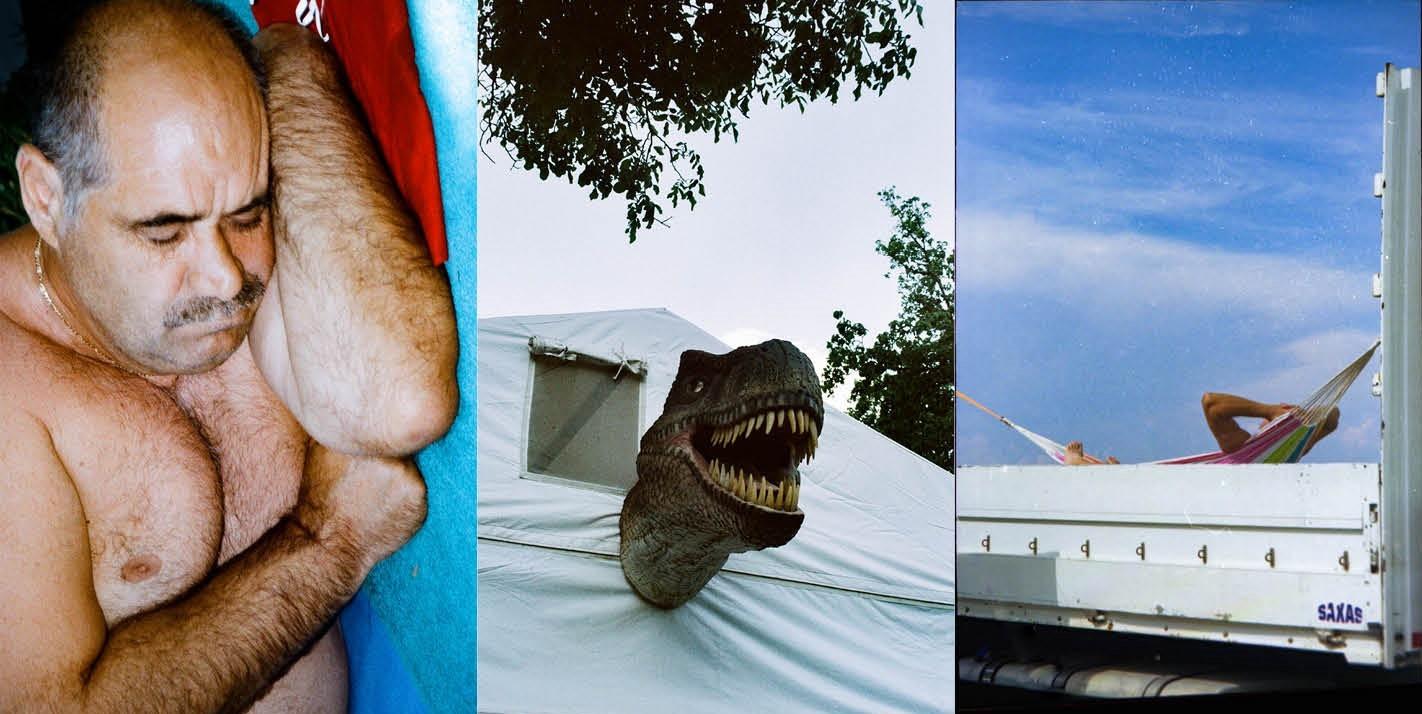
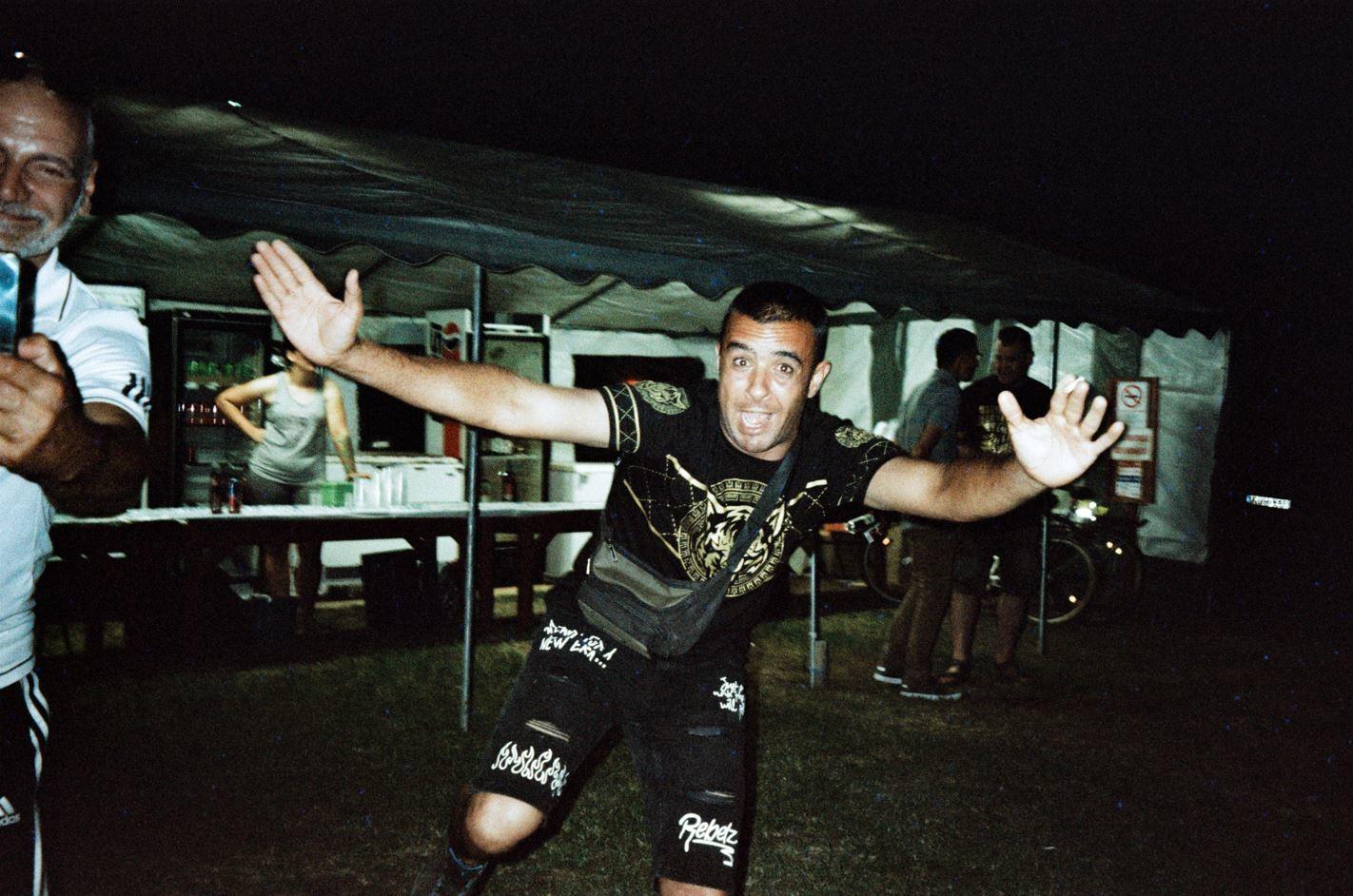
Although Hevesi-Szabó’s daily social environment is different today, she continues to frequent these rural events, particularly those in her native region, and in her own words, it is with the participants that she feels most in sync. At village festivals, for example, she goes alone, without friends, and fully identifies with this environment. This attitude is evident in her work, which demonstrates a deeply internal perspective.
© Lujza Hevesi-Szabó
© Lujza Hevesi-Szabó
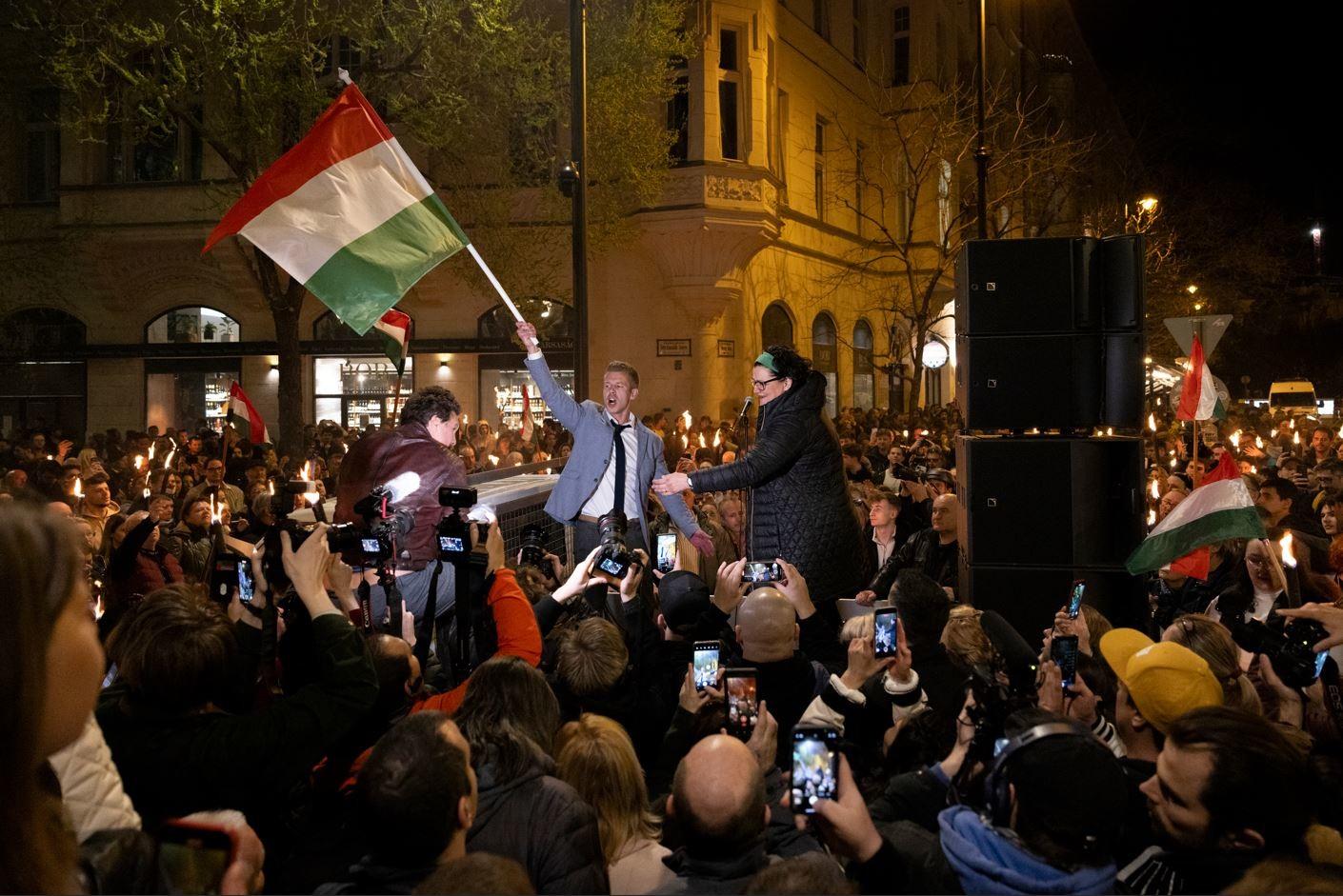
Lujza Hevesi-Szabó’s work immortalizes the “petite réalité hongroise” (the little Hungarian reality). The most precise adjective to describe the state and mood of contemporary Hungarian society is “apolitical”. This is a legacy of socialism: we have maintained the mental habit that citizens should not interfere in political affairs, which are considered outside their scope. This likely originates in the one-party system, where the individual felt they had no choice. In Hungary, this sense of political powerlessness still persists today. Hungarians are generally reserved and non-violent – sometimes excessively so, particularly during protests. A protest, when it happens, is nothing like those seen in France, where citizens do not hesitate to send radical signals to the government, for example, by setting fire to garbage bins and cars. Hungarians, on the other hand, would not dare do that; they fear the retaliation of the government, which they still perceive as omnipotent.
© Lujza Hevesi-Szabó
In many of Hevesi-Szabó’s photographs, one can see a young man in various populist postures. This is Péter Magyar (whose surname means “Hungarian”), the opponent of the Orbán government for the parliamentary elections scheduled for spring 2026. Many place new hopes in him. He also belongs more to the right and uses populist rhetoric, but unfortunately, Hungarian society, especially in rural, less-educated areas, does not seem receptive to other political languages. He spends his time on national tours, even speaking to the inhabitants of the smallest villages a clever strategy. The previous oppositions that sporadically appeared against Orbán’s party, Fidesz, often made the mistake of believing they could transform the country and make them act like the intellectual elite of Budapest. Moreover, the capital has largely opposed Fidesz for a long time, and it has had an opposition mayor for six years.
© Lujza Hevesi-Szabó
© Lujza Hevesi-Szabó
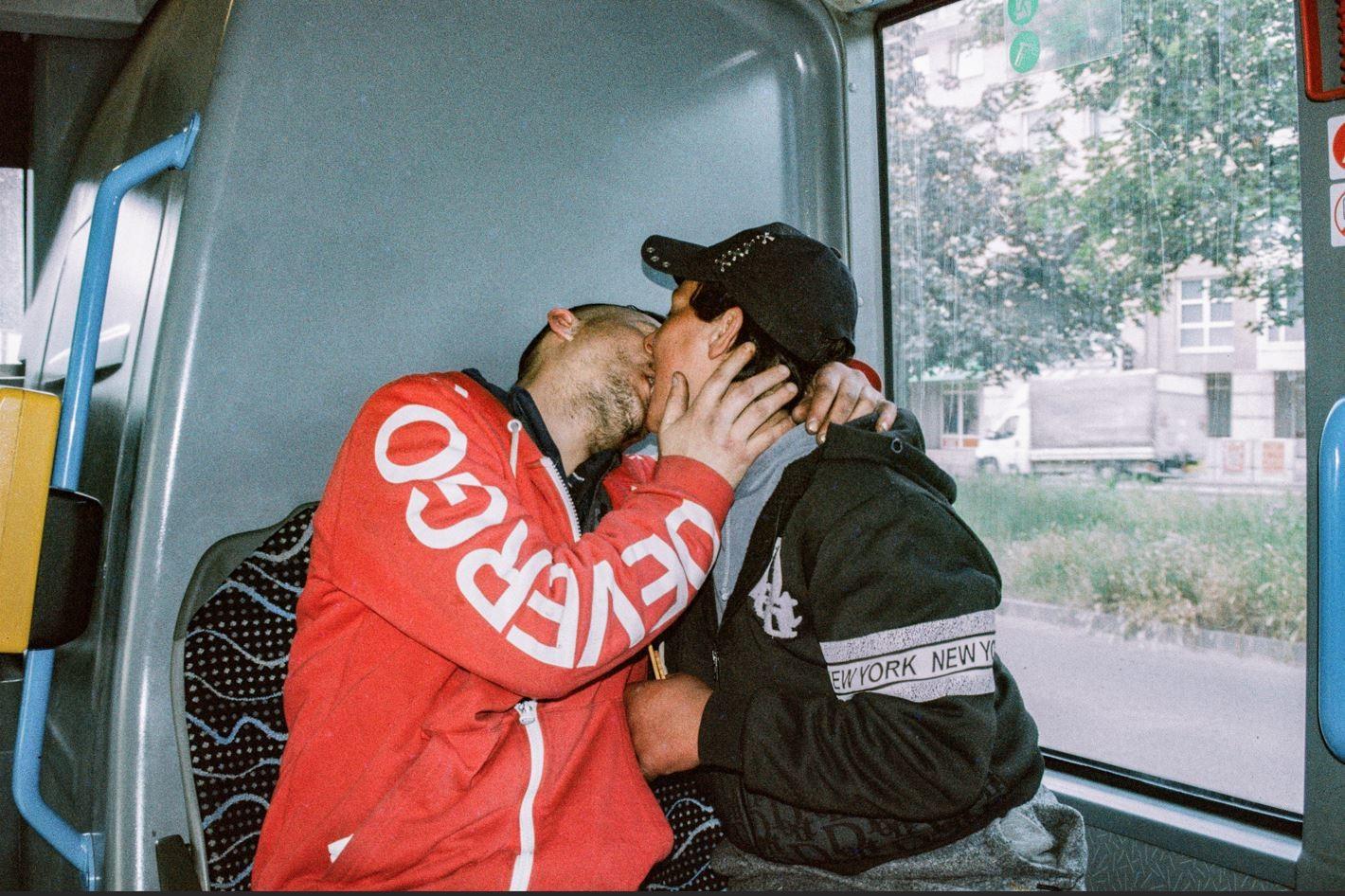
Throughout Hevesi-Szabó’s career, she has often faced a recurring criticism: that her perspective (and therefore her photography) is cruel, cold, and displays a lack of affection for the people she represents. I do not share this view. Because even if, from an external spectator’s point of view, Hevesi-Szabó’s images might seem tinged with a certain sophisticated sarcasm, one must not forget that the person represented in the photo is generally very proud of the event they are taking part in. I believe that Hevesi-Szabó seeks to restore a form of impressionistic reality — the reality of a moment, that of contemporary Hungary. And even the reality of those who are generally underrepresented.
© Lujza Hevesi-Szabó
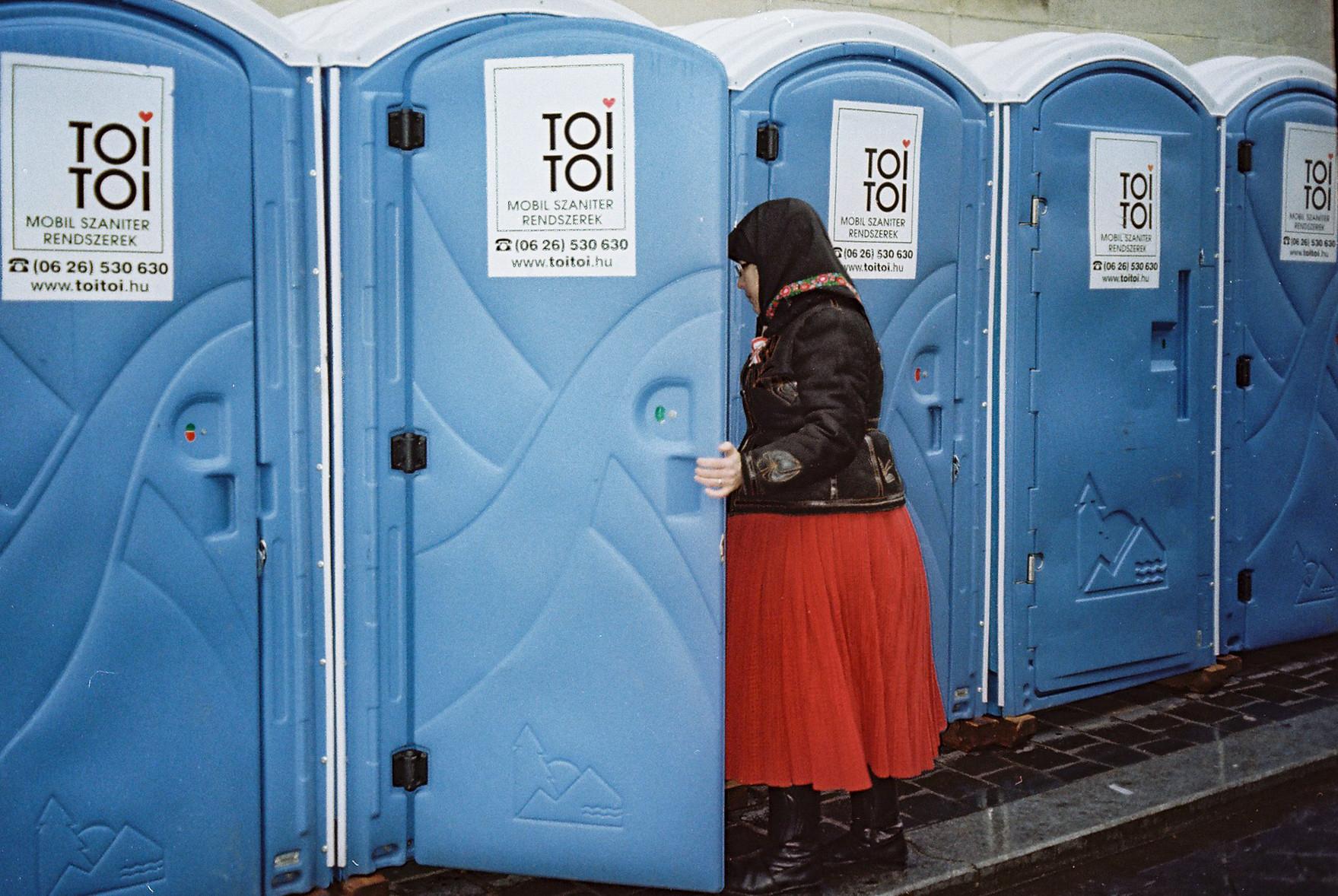
It is commendable that her work escapes the “McWorld culture,” which already dominates a large part of the planet. “McWorld” refers to a homogeneous and universal culture. This term, stemming from the expansion of the McDonald’s chain, refers to the phenomenon in which, particularly in large cities, we are gradually losing our historically and anthropologically diverse cultures to adopt uniform behaviors: wearing the same clothes, from the same brand, eating the same foods. Hevesi-Szabó photographs the exact opposite: she captures authentic charm.
© Lujza Hevesi-Szabó
© Lujza Hevesi-Szabó
Ultimately, Lujza Hevesi-Szabó’s work reminds us that photography is not only a means of documentation but also of sensitively exploring the deep layers of a society. From the gloom of rural kocsmák to the vibrant colors of festivals, she captures what Hungarians readily call the “little Hungarian reality”: an everyday, modest but rich world that escapes the glitter of the capital. Through her subjective documentarism Hevesi-Szabó doesn’t just preserve this ephemeral reality ; she illuminates it with subtle empathy, thus redrawing the cultural and political map of contemporary Hungary.