Our contributor Jacques Revon visited the Musée Niépce in Chalon-sur-Saône for the presentation of the book dedicated to Louis Dufay, pioneer inventor of color photography and cinema, at the initiative of the Société des Amis du Musée. He tells us about it.
A 400-pages book published by the Niépce-Lumière club brought together three authors to introduce a little-known pioneer of color photography and cinema to the general public. The book took the authors three years to complete.
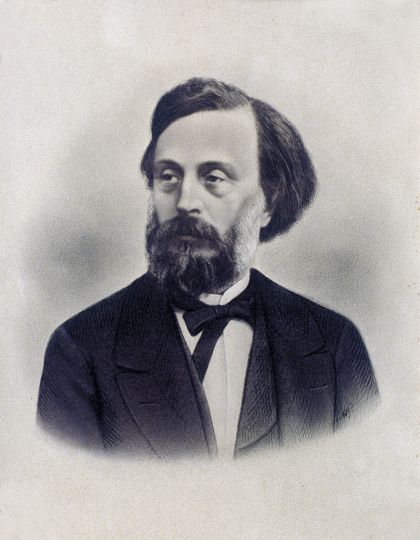
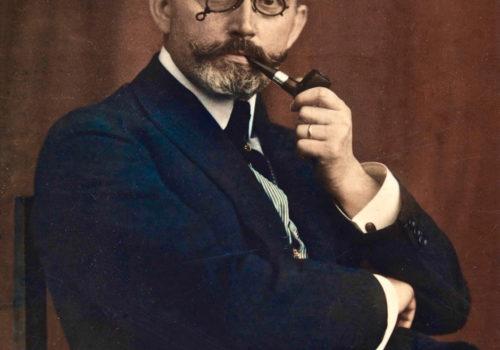
A native of Franche-Comté, like the brothers Louis and Auguste Lumière, inventors of the Autochrome, born in Besançon, Louis Dufay was born in Baume-les-Dames in 1874 (photo 1). He never enjoyed the fame of his fellow citizens, yet Louis Dufay, not only an inventor, but also a painter with a passion for lepidoptera and a visionary in the field of imagery. Through observation and then his inventions, he created several photographic companies directly involved in the world of color at the beginning of the twentieth century.
This book, co-written by inventor Jean-Luc Dufay’s grandson, Patrick Fourneret (photo 19), also from Franche-Comté, and director Edouard Hollande, editor-in-chief, tells us about the passionate and professional life and career of this great figure.
My goal here is not to recount this book, but rather to make it known, as much as possible, this is the first time such an important document has had the merit of seeing the light of day, 89 years after the death of this pioneer from Franche-Comté.
This book, lavishly illustrated with archives, photographs, and various period documents, allows us to gain a detailed understanding of the history and chaotic development of Louis Dufay’s inventions. The commercial development, however, proved difficult, as each new invention failed to secure the necessary funding to industrialize the important discovery.
His research in photography led him in July 1907 to present his Dioptichrome plate, renowned for its technical qualities, a color plate competing with the Autochrome invented by the Lumière brothers.
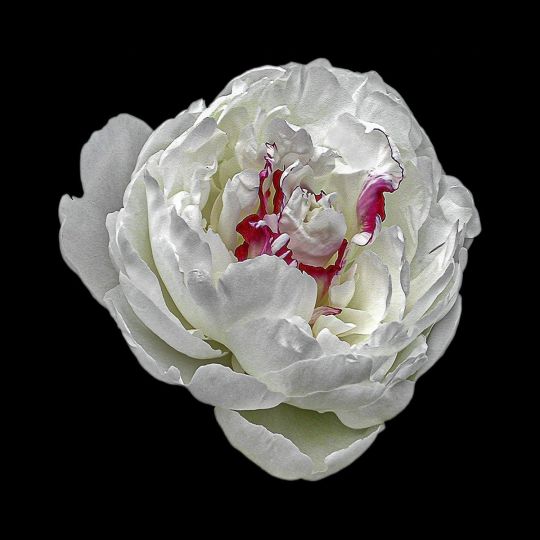
Already remaining a true enigma, Louis Dufay, previously a lawyer in Chaumont, presented in 1905 at an exhibition in Langres in Haute-Marne, some early color paper prints, a panel comprising 12 studies, and documents in this book attest to this. (an early color print of a portrait of Joséphine Dufay).
In 1907, his first company was named Société de Plaques et de Produits Dufay (photo 3). A merger of interests was then established with the company of industrialist René Guilleminot, whose large factory in Chantilly, near Paris, manufactured photographic papers and products.
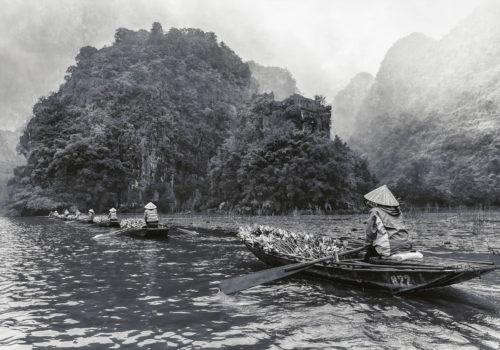
The dioptichrome plate is designed with a transparent geometric network of red, blue, and green colored gelatin, placed in front of the black and white panchromatic emulsion (photo 8). Light rays pass through this colored network and then sensitize the emulsion, film, and cinema film (photo 9/10).
After development and inversion, the resulting image is in color (photos 5/6/7/10).
As the years went by, Dufay created 35mm cinema films in 1913, using an additive system and processing carried out by the Fantasia company in Paris, with Versicolor films in various formats being marketed.
Dufay was based in Paris, at Place de la Madeleine, where high-ranking personalities and military personnel went to have their color photographs taken
For the inventor, all his beautiful color creations and achievements were unfortunately punctuated by recurring cash flow problems. Thus, negotiations were initiated with foreign companies to seek capital. We learned that the famous English company Ilford was even very interested. But ultimately, it was the English company Spicer who acquired the Dufay Versicolor patents related to cinema in 1925. (photo 11/12/13).
Flexible films using the Dufaycolor process for amateurs and professionals in 35, 16, and 9.5 mm formats were thus produced from 1935 to 1953, but production ended in 1957. (photo 4)
An advantage over other three-color processes for cinema was that they did not require a specific camera or projection device.
It was Ilford that would solve the problems of copying master film.
A large number of films were shot using Dufaycolor (documentaries and feature films) in England, Spain, and Switzerland. The first European feature-length color cartoon film was made in 1945, followed by two more in 1948 and 1952.
In the United States, between 1936 and 1939, photographers from the National Geographic Society used Dufaycolor sheet film (approximately 900 are archived), and a total solar eclipse was photographed in color for the first time using Dufaycolor film.
Another important invention resulted from Louis Dufay’s observations. Passionate about butterflies and a collector in this very important field, he discovered under the microscope the structure of the wings of a large, metallic, iridescent blue butterfly from South America: the Morphos! (photo 14).
The wings of this largest butterfly in existence modify the reflections of light depending on their exposure, a natural camouflage system against predators.
This reflective aspect inspired him, and gave him the idea to research and reproduce these effects by meticulously engraving patterns on a thin sheet of aluminum. Then, by moving this sheet in different ways with the light, the iridescent effect of the Morphos butterfly’s wings was reproduced: thus was born a process called Heliophore.
This will be followed by several derivative products of important commercial achievements, printing of vinyl record sleeves, decorations, postcards, book covers, etc. (photos 15/16/17) this latest discovery of the man from Franche-Comté will be exported in a significant way to the United States. The year 2012 marks the end of printing in Heliophore style, the year during which the reproduction of some of the most beautiful paintings was carried out with this innovative technique for the Amsterdam Museum.
Two pioneering inventors of photography, both from Franche-Comté at the same time and with the same first name, Louis, thus marked the history of this medium with their respective families. But it is finally that of Louis Dufay that is told to us here in detail in this important work published last May. We had to wait a very long time before learning about his great adventure. Perhaps by chance for the story of this inventor, at the end of his life Louis Dufay returned to live in his region of Franche-Comté and it was in a building in Besançon that he came to retire, just 250 meters from the building where Louis and Auguste Lumière were born, on Place Victor Hugo.
His grandson Jean-Luc, a historian and history professor, one of the three authors, had never delved into the life of his grandfather Louis before 1980. Indeed, it was at the age of 34, when it was necessary to clear out a garage, that he discovered in fortunately well-preserved archives the industrial epic of his ancestor, an unknown pioneer of photography. Today, thanks to the remarkable edition of this book, it has finally been done. (photo 18/20). There have undoubtedly been other preserved color plates and films in some places to be discovered.
Will we, too, one day have the opportunity to view some of Louis Dufay’s inventions?
I’ve, of course, asked his grandson, but to date, nothing has really been decided about the future of the very important archives of this pioneer of color photography and cinema.
These documents have now become, whether we like it or not, a real and important national heritage that will undoubtedly need to be preserved and, we hope, presented to the general public. Indeed, we are, and I think this would be a great opportunity to consider it, during the next bicentennial of the birth of photography, a bicentennial that will be celebrated in 2026 and 2027.
Jacques Revon
LOUIS DUFAY (1874-1936)
PIONNIER DE LA PHOTOGRAPHIE ET DU CINÉMA EN COULEURS INVENTEUR DU PROCÉDÉ HÉLIOPHORE
Descriptions of color photographic and cinematographic processes based on the unpublished archives of the Dufay family.
Published by CLUB NIEPCE LUMIERE
Foreword by Jean-Noël Jeanneney
Authors: Jean-Luc Dufay, Patrick Fourneret, Edouard Hollande.
399 Pages.
ISBN. 979-10-91258-19-7
www.club-niepce-lumiere.org