Ellen von Unwerth’s world: between chaos, desire and staging
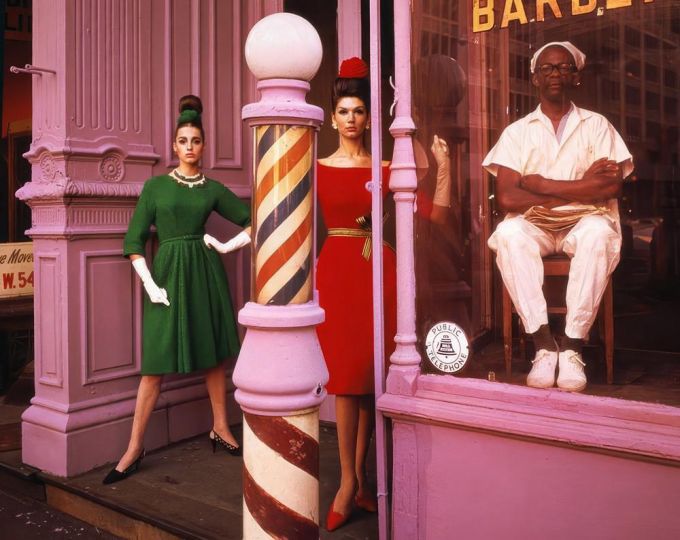
In the heart of Maastricht’s old town, the Fotomuseum aan het Vrijthof is dedicating a major exhibition to Ellen von Unwerth, My Circus, running until September 13, 2026. More than a retrospective, the exhibition offers an immersive dive into a jubilant visual universe where glamour, humor, and theatricality have coexisted for four decades, turning fashion photography into a true narrative playground. From her earliest days behind the camera, after a decade as a model, she established an immediately recognizable style: narrative seduction, burlesque energy, and deliberate exuberance. Her iconic portraits Claudia Schiffer, Naomi Campbell, Kate Moss, Madonna, Beyoncé oscillate between spontaneity and carefully constructed staging, humor and provocation, transforming each model into a character and every image into a scene. The exhibition’s central thread, the circus, is not merely an aesthetic motif: it refers to a formative teenage experience at Munich’s Circus Roncalli, where she encountered clowns, magicians, and knife throwers. In My Circus, the circus becomes a metaphor for von Unwerth’s universe: performance, freedom, and femininity in constant play. Through these images, the exhibition explores the ambiguity that defines her work: neither strictly documentary nor purely commercial, her photography sits at the crossroads of art, fashion, and pop culture. To extend this exploration, we met Ellen von Unwerth. In our interview, she reflects on My Circus, her relationship with her models, her strategic use of humor, and her unique way of merging theater and photography a rare opportunity to understand the energy, freedom, and precision that run through every image in her world.
www.fotomuseumaanhetvrijthof.nl
The circus seems to be at the heart of your new exhibition My Circus. What does it represent for you?
Ellen von Unwerth: The circus is part of my life, a place where illusion and freedom reign. It has always fascinated me. As a child, I was deeply marked by Circus Roncalli, co-founded by André Heller, in Munich. When I went there, André simply told me: “You look like a circus girl, you can start tomorrow.” I worked there for four months doing many things: assistant to the magician, to the knife thrower, clown’s partner, sometimes ring mistress, and also performances. Everything attracted me: the glamour, the glitter, the exuberance… but also that slight sadness after the show ends, when everything stops. The circus is a form of escape, a wonderfully beautiful world, very far from reality.
Is the circus in My Circus purely aesthetic, or an intimate reflection of your journey and your vision of spectacle and control of the gaze?
Ellen von Unwerth: Yes, absolutely. When I was younger, I lived in a hippie community; we were constantly making music, but also dancing and performing. It became part of me, and with the circus things became concrete. It also allowed me to develop the makeup aspect with clowns, and the eccentric side of things — it became an obsession for me. I am fascinated both by the performances of great actors and by those of burlesque dancers. All of this amuses and inspires me. Movement allows me to capture moments like no other.
Your photography often seems to capture spontaneous, almost stolen moments. Is that intentional?
Ellen von Unwerth: Yes, completely. I imagine a scenario and a setup that are already very elaborate, and then I let things unfold naturally. The best images are often the ones I take in a hurry, when the models think the shoot is over. I don’t like frozen poses. I was a model for ten years, and I hated standing still like a statue. I like movement, when people let go, laugh, dance. I play music, sometimes champagne… It has to be alive. And then I act a bit like a sniper. That’s why my photos are often slightly blurred: because the models are moving. I conceive my shoots like films, with a story, but where everything can overflow.
Where do you place the boundary between documentary photography and visual theater in your work?
Ellen von Unwerth: I don’t really place that boundary… it bores me a little, to be honest. For me, even when I photograph something “real,” there is always staging. People perform, look at each other, seduce, exaggerate. And that is precisely where truth appears. Pure documentary doesn’t exist in my world — the moment there is a camera, there is a relationship, therefore a form of theater. I like when life spills over a little, when it becomes funnier, sexier, more intense than reality itself. I don’t try to capture a neutral moment, but a charged, almost electric one. So let’s say I don’t choose between the two: I make documentary that dreams, or theater that tells the truth.
There is always a lot of humor in your images. What role does it play for you?
Ellen von Unwerth: Humor is essential. It’s a strength. When you can look at difficult things with a certain lightness, they become less heavy. Humor makes you resilient. I like to mix sensuality and playfulness. For example, Naomi Campbell with cans used as curlers, or Kylie Minogue as a magician cutting herself in half… There is always a form of exaggeration, almost ridiculous, which I find very amusing. And at the same time, it tells a story.
Do irony and exuberance serve to divert or subvert the codes of fashion and glamour?
Ellen von Unwerth: Fashion is a way for me to express myself, to tell stories. Designers inspire me enormously as well. I like to dig into their ideas, to see the world through their eyes, even if in the end it is my own gaze, tinged with humor, that prevails. I don’t take myself seriously, so you can imagine I don’t take fashion too seriously either. After all, it’s just clothes! Fashion doesn’t really change that much anyway. What matters is the joy of life that fashion allows me to express.
You revealed some of fashion’s greatest icons. How do you work with your models?
Ellen von Unwerth: The most important thing is to get the casting right. Whether the model is established or just starting out, what matters is that they fit my world, that they understand my way of working. I need a real connection with the models I work with. Then, the models always bring their own personality. Claudia Schiffer, Kate Moss, Linda Evangelista… they are complex, fascinating women. When I photographed Claudia for the Guess campaign, I didn’t immediately see her potential. But when I looked at the images, I understood that resemblance to Brigitte Bardot, that gaze… That campaign was a turning point for her as it was for me. At that time, fashion was a very creative space. There was energy, money to produce beautiful images. It was a unique moment.
How do you create the necessary sense of complicity with your models to achieve such free and intimate images?
Ellen von Unwerth: There is nothing premeditated or calculated about it, it’s almost animal, instinctive. It either happens or it doesn’t.
You now have a rather critical view of the evolution of the fashion world…
Ellen von Unwerth: Yes… Emotion has somewhat disappeared. Everything has become more homogeneous, more serious. People are on their phones, we laugh less. Fashion shows are faster, more formatted. I have nothing against influencers, but that sense of eccentricity and freedom we once had is missing, with figures like Anna Piaggi. Today, everything is much more business-driven.
In your opinion, has fashion photography lost boldness and storytelling, or gained in diversity?
Ellen von Unwerth: I would say there are almost two questions in one there. Yes, it’s true, photography has lost some boldness over the past ten years. We are living in a different era. For example, I could not make the kind of books I used to make today. The freedom is no longer the same. The #MeToo movement has happened, and many other things as well. Today, I censor myself a lot; I ask myself whether an image might be misinterpreted. In itself, questioning is a good thing, as long as it doesn’t restrict your freedom. On the other hand, fashion photography has gained in diversity, which is a very good thing — although for me, diversity has always been part of my DNA. I have long photographed girls kissing, drag queens, women from different ethnic backgrounds. For me, there is nothing more natural about it; it has always been exciting, and I’m glad it is now given more importance.
Has the current context also changed the way you work?
Ellen von Unwerth: Of course. The #MeToo movement is very important, and I think it is essential that voices are heard. But at the same time, I sometimes feel less free in my mind. I ask myself questions I didn’t used to ask: how will this image be perceived? How will this pose be interpreted? A book like Revenge, which I published in 2003, I’m not sure it would be possible today.
Social media, smartphones, AI: threat or natural extension of visual creation?
Ellen von Unwerth: I would say both. It is clearly a huge threat to photographic creation, because AI replaces the human, but at the same time it is part of evolution and allows incredible things to be done. For me, it feels rather depressing and cold, and it makes things heavier. As for social media, there are pros and cons. On one hand, it is an amazing tool to show your work; on the other, it comes at the expense of magazines, which have less and less money because brands prefer influencers. But again, everything depends on how you use these tools.
Much is said about the “male gaze” and the “female gaze.” Where do you position yourself in relation to these notions?
Ellen von Unwerth: I have never really thought in those terms. I believe I simply have my own gaze. I have never treated women as objects. I try to create an atmosphere in which they can be themselves. My images have always been a form of empowerment, even before the word became fashionable. I like showing femininity in all its complexity: sexy, strong, fragile, playful…
How has your perception of femininity evolved in light of debates on consent and the representation of the body?
Ellen von Unwerth: I like women who have strong personalities, who express themselves, who are bold and proud of who they are, who are confident. I find that charming and attractive.
Is there a woman you would have dreamed of photographing?
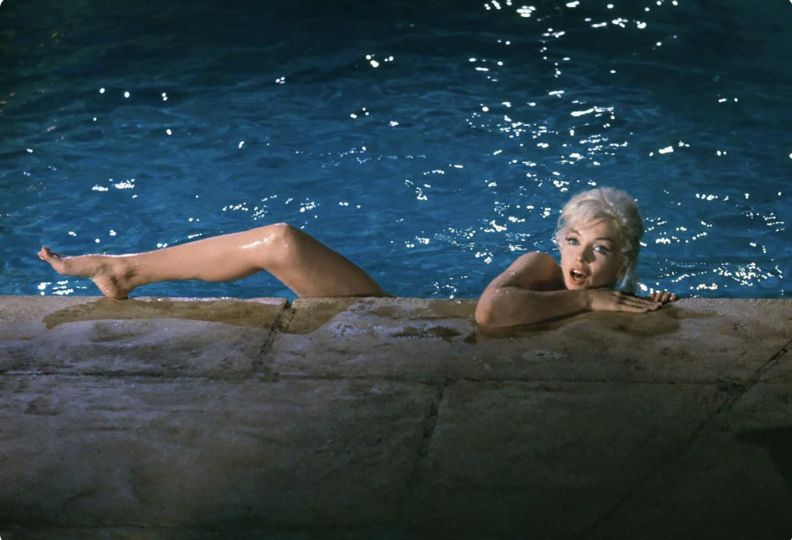
Ellen von Unwerth: Yes, of course: Marilyn Monroe for women. She was so sparkling, alive and funny. She is my great missed encounter. She had everything: beauty, sensuality, vulnerability, strength… What talent. It would have been an incredible meeting if it had been possible. And Marlon Brando for men. He was so powerful.
How have you maintained your visual identity in a highly controlled industry?
Ellen von Unwerth: I am lucky to have a name. So when people call me, they know what to expect. I have my style, I do what I love, and I invest myself deeply in every project.
What essential advice would you give to a young photographer building a personal and lasting body of work?
Ellen von Unwerth: You absolutely have to forge your own identity, not copy, go out into the street, observe, find what you love, and sometimes even photograph what you don’t like. You also need to learn how to compose an image and master light. And above all, believe in yourself and have confidence — that is essential.
Finally, what does My Circus ultimately represent in your career today?
Ellen von Unwerth: It is a return to something very deep. The circus, for me, is an escape — a way of dreaming, of moving away from reality. With this exhibition at the Fotomuseum aan het Vrijthof, I wanted to bring together this universe that is, unfortunately, disappearing — this freedom, this energy, this blend of beauty and melancholy. It is a world where everything is possible. And I hope that is felt in the images.