My Grandfather’s Croatia: 140 Years After He Arrived in the United States
My grandfather, Martin Anthony Petrich, was only seven years old when he was brought to the United States in 1877. His father had preceded him, disembarking in Los Angeles, but he died shortly after his arrival. On his deathbed, he told his son: “Martin, you are now the head of the family.”
When I was still a very young boy, I asked my grandfather—that same Martin, now an old man and a successful boat builder—if he would agree to teach me his native tongue. He flew into a blind rage. He froze instantly. He turned toward me and cried out: “NEVER! You are an American! You will speak American!”
I was deeply humiliated by this, and I vowed never to learn that hated language, nor ever to visit that despised land. I kept that oath until the age of seventy-four.
I had been a photographer all my life. At the exact age Martin had been when he lashed out at me, I defied his reprimands and traveled to Croatia—specifically to Hvar and to Selce, his native village nestled in the mountains. I went because my eldest daughter had insisted relentlessly that I return with her to the “old country.”
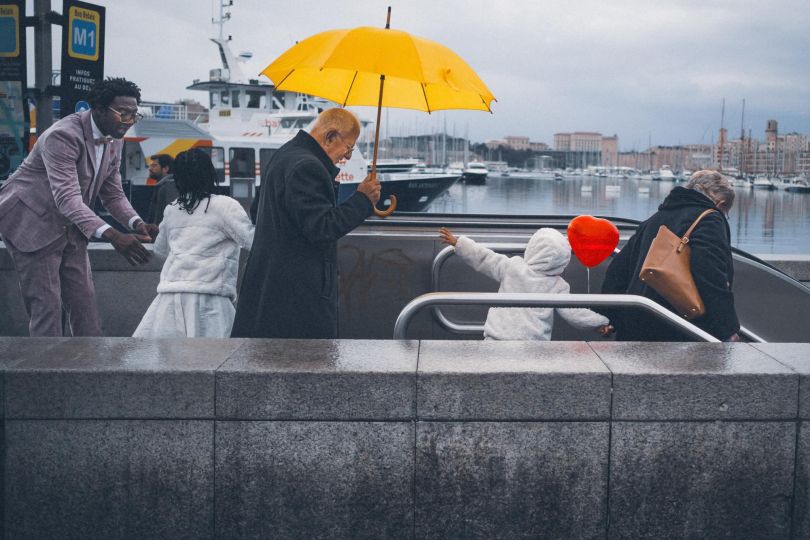
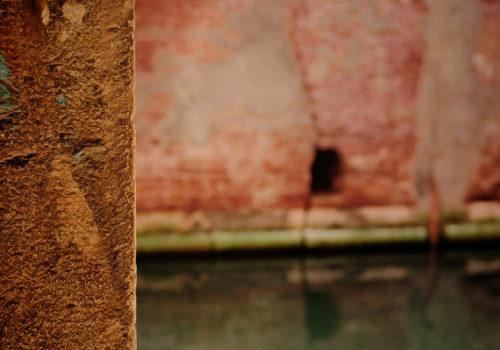
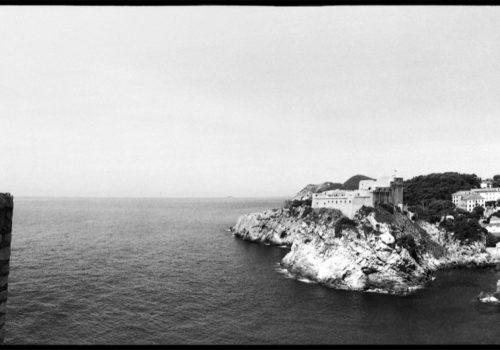
These photographs represent my perspective on that old country, one hundred and forty years after my ancestor fled the poverty and injustice of the Austro-Hungarian Empire. He had come to the United States to build his success and—alongside my Irish grandmother—he paved the way for four generations, opening the door to an educated, progressive, and prosperous life for both men and women alike. Martin and Mary Ellen raised a large family in Tacoma, Washington—the very city where his widowed mother had raised him; where he had built his business; where his sons and daughter had grown up; and where his grandchildren had spent their childhoods.
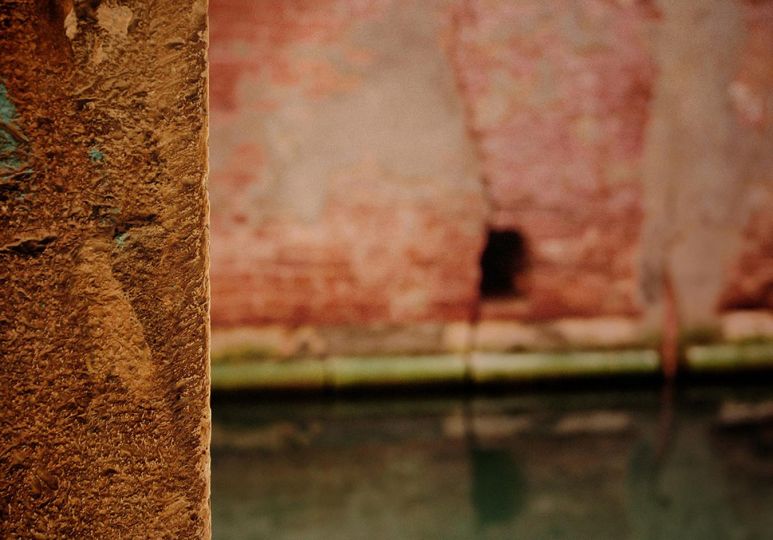
Tacoma borders the Salish Sea, just as Hvar borders the Adriatic. What I discovered in Croatia was a rugged land, where the Adriatic karst breaks through to the surface or lies just beneath it. Near Selce—where my grandfather was born, on the island of Hvar—stones are so abundant that centuries of terracing the steep mountain slopes have barely diminished their presence. One can stand before mounds of stone, within arm’s reach, upon ground that is itself strewn with them. The Petrich cemetery is little more than a vast cairn of stone, set into the hillside, overlooking the sea. This land cannot be farmed; there is no topsoil. One can grow olive trees there, and one can fish. There is no future here for the young, other than to place themselves in the service of tourists.
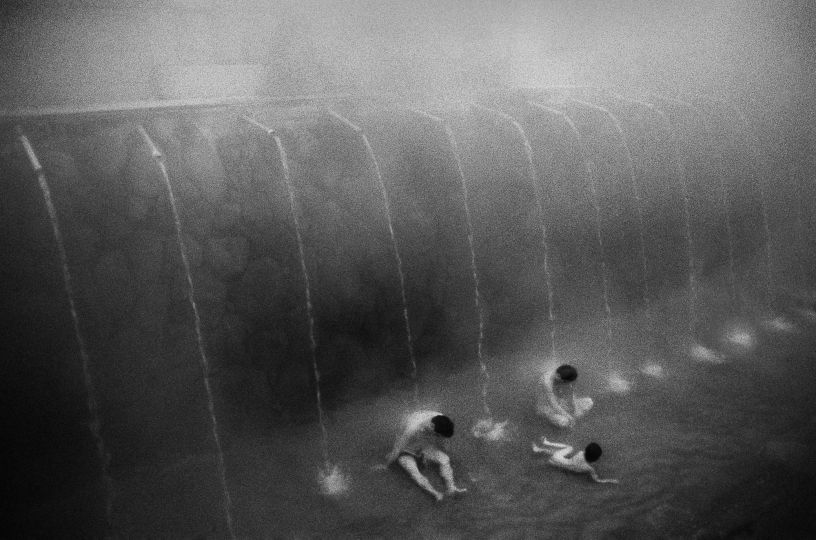
Water is omnipresent in Croatia. Where rocky islands and coastline emerge from the sea, the landscapes are sublime. Where mountains rise inland, the porous karst causes crystalline springs to gush forth at every turn. This Balkan land is intoxicating in its contradictions: water abounds, yet the soil is too barren to farm. The seas teem with fish, yet the market is limited, as the population is sparse. Conversely, Tacoma stretches across a lush, verdant landscape right by the sea. It offered my grandfather and his family a livelihood, thanks to their expertise in seafaring and fishing. What Croatia lacked, the Pacific Northwest provided. For us, however, the fish have vanished—just like the boat builders. Yet it is here, after all this time, where I raised my family; and it is here, today, that I am growing old.
Note: These images were captured with a Widelux F7 panoramic camera.