I first met Natascha Stellmach on the occasion of her solo show, I Don’t Have a Gun in 2013 at WAGNER + PARTNER gallery in Berlin. It was also when she first performed THE LETTING GO, which already caught my eye back then.
In view of her upcoming book and future exhibitions, it’s my pleasure today to share more about Stellmach’s inspiration and way of celebrating this unique project and ritual. Enjoy the read!
Nadine Dinter : In 2026, your legendary project, THE LETTING GO will celebrate its 13th anniversary. How did everything start?
Natascha Stellmach : THE LETTING GO is a participatory art practice that uses bloodline tattooing as part of a holistic experience. After years of performing the practice, it still struck me as both wonderful and bizarre, so much so that I returned to university to complete a Master’s degree in order to understand what it actually was. I even studied with ritual tattooing monks in Thailand. Thirteen years on, it remains just as powerful—an artistic practice that embraces what I call “the wonder in our wounds”.
The project began in 2012, when I started developing the practice as a performance art work, to explore an alternative form of intimate personal enquiry within a contemporary art context. The inscription-based approach was informed by an earlier pen-tattoo project, Agent Provocateur. That work critiqued art-world conventions while involving participants of all ages; it was playful, celebratory, and encouraged body positivity.
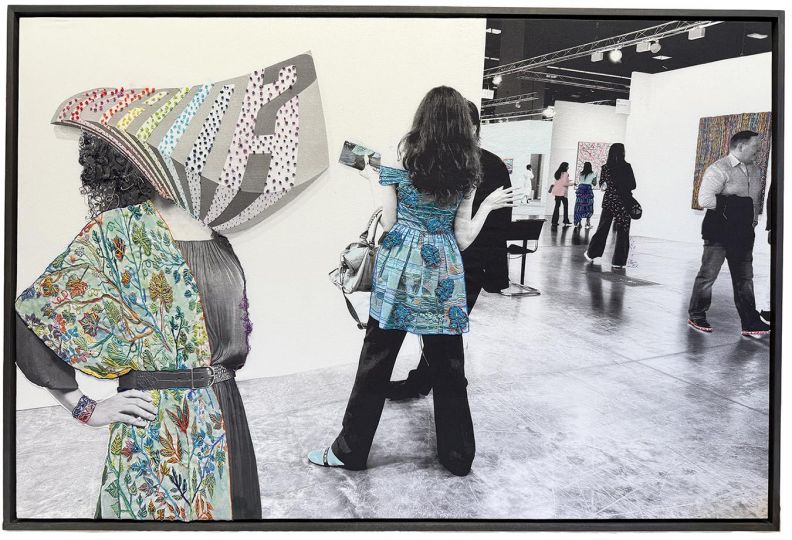
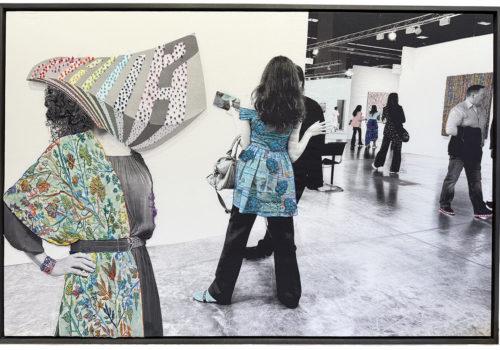
I performed Agent Provocateur at sites such as Documenta in Kassel and at an art fair in Miami, and despite the hectic nature of these environments, a surprisingly intimate atmosphere emerged. Perhaps because I was writing directly onto the skin of participants, the process quite literally touched them. People began to open up, sharing personal thoughts and struggles, often using the session as a kind of confessional—a moment to release a secret or burden.
While my background as a therapist certainly helped foster trust and intimacy, other dynamics were equally important: the participatory and ephemeral nature of the work; the immediacy of engaging directly with the artist; receiving a unique artwork on one’s skin and the performative thrill of wearing—and walking—the artwork back into everyday life.
All of this led me to a central question: could “walking out” the artwork be analogous to working through an issue?
I realised that for my next project, I wanted to go further—quite literally, to get more personal and under the skin. At that point, it became clear that I had to learn to tattoo.
What was your inspiration? And, did the idea spark through a personal experience or need?
Natascha Stellmach : To answer this, I returned to my 2018 Master’s thesis—soon to be published in the upcoming book—because it concisely captures how this project emerged. It also reflects an important truth: inspiration rarely comes from a single moment or experience; it’s often a culmination of many biographical and artistic influences over time.
THE LETTING GO is informed by my wider artistic practice, which works with text and image, and includes:
- my own unnameable vulnerability, shaped by an in-between immigrant identity—Australian-Germanness—marked by a sense of cultural shame. This shame stemmed from the unspoken personal, historical and cultural wounds of my parents, and later expanded to include an awareness of the atrocities inflicted on First Nations Peoples during Australia’s colonisation. My work, The Maroon and the Blue (2006) most clearly articulates these Australian-German wounds and appears in my 2007 publication, The Book of Back;
- the poetics of the German language;
- my therapeutic background;
- the influence of artists such as Marina Abramović and Joseph Beuys, particularly his concept of “the wound”;
- the positive resonance from Agent Provocateur participants;
- the intimate relationship between skin and language;
- and the empowering potential of vulnerability and trust.
Put simply, THE LETTING GO emerges from my lived experience and from interdisciplinary intersections between visual and performance art, psychotherapy, somatic practices, Buddhism, and ritual tattooing.
This project seems to be more than performance or body art. Could you explain how the ritual that informs this project works?
Natascha Stellmach : THE LETTING GO is a participatory art practice that employs bloodline tattooing as part of a holistic, ritualised experience. The method involves tattooing without ink—a bloodline tattoo—and inscribing a word on the body as a “word-wound” to address a personal obstacle and initiate an intimate enquiry. It is important to stress that this is not scarification, and that the practice follows strict protocols around confidentiality, health, and safety.
The work takes place in a one-to-one session with me and begins with a guided meditation. In response to the question, “What would you like to let go of?” the participant identifies, names, and embodies a personal obstacle. This obstacle is inscribed on the body as a “word-wound”. Over time, as the wound heals, the word gradually fades and disappears, allowing the participant to experience impermanence and healing through the body.
The practice unfolds over six distinct stages, takes between 2 and 4 hours, and aims to encourage self-awareness and a state of empowered vulnerability.
Although a tattoo machine is used, this is where any similarity with tattooing ends. No ink or carbon is used, and THE LETTING GO situates itself outside tattoo culture and body art. Instead, it aligns with participatory performance, ritual practice, and embodied enquiry. Further details of the method will be revealed in the forthcoming publication.
Where do you find your “people”/”protagonists”? Open call or recommendation:
Natascha Stellmach : My participants come from all over, usually through word of mouth, or—if the performance is public—through media channels. Participants apply for a session with me, and the process includes an online screening to clarify their intentions and ensure there are no medical contraindications.
The idea of “letting go” has increasingly entered conversations around mental health and wellbeing. Do you see your work as part of this spiritual yet holistic movement?
Natascha Stellmach : The concept of “letting go” has long been part of my life and artistic practice. It first emerged in childhood. In 1976, at the end of my first visit to Germany—the homeland of my parents—I had to farewell cousins and family I had met for the first time and deeply bonded with over several months. In the 1970s, we weren’t as connected: phone calls were prohibitively expensive, and Australia felt like a universe away from Europe. I encountered it again in the 1980s, when my parents moved from Melbourne’s northern suburbs to the south-eastern ones, and later through my work with patients as an Occupational Therapist in the early 1990s.
Over time, I deepened my understanding through yoga and Buddhist practices, and over the last decade I’ve explored it further while working with high-functioning clients as a coach. The more we release our grip on negative attachments—Buddhists would argue that all attachments are problematic, but let’s start there because that’s hard enough—the more we heal and experience freedom.
Artistically, one of my most media-hyped projects, Set Me Free, which later became Complete Burning Away, involved the cremains of a rockstar. Its title refers to the Sanskrit definition of Nirvana, suggesting a state of mind free of attachment: one of life’s great “letting go’s”.
Ultimately, all the “letting go’s” of our lives—despite their urgency and emotional weight—are preparations for our biggest, ultimate letting go: death. The concept of memento mori has long accompanied my practice and is most evident in my longest-running project, ORACLE, a collaboration with the German photographer Boris Eldagsen. We frottage the gravestones of the infamous dead to receive a “message from the beyond”, resulting in a golden work-on-paper “oracle” that speaks to the living by honouring life.
In your upcoming book, you present a beautiful selection of “letting go” portraits. What was your photographic approach, and what did you choose to avoid—both when taking the photographs and when curating the final selection (for example, showing faces or identifying the individuals?)
Natascha Stellmach : Photographically, I approach each session individually, taking into account the participant and their needs—for comfort, wound care, and confidentiality— as well as the setting, lighting, equipment, and whether the performance is public or private.
Some photographs appear like snapshots, others resemble studio portraits, but my aesthetic remains consistent, focusing on both the “word-wound” and the person. This might mean only a hint of a defining feature, such as a ring on a hand. At other times, I choose to photograph a face—but only with the participant’s consent—to reveal their humanness. I deliberately avoid photographing many faces, as it reduces mystery and privacy. We make countless assumptions about someone when we see their face. But when we see only an arm, an item of clothing, jewellery, or a glimpse of a scar, the person becomes an enigma. This invites viewers to construct their own stories and perhaps transpose their own emotions. Empathy is central at every stage of the project—from pre-interview questions, through meditation, tattooing, photographing and follow-up—and is reinforced by the positive feedback I receive.
Confidentiality has always been paramount. My background as a therapist and work as a coach inform the sensitivity with which I engage with participants. From the outset, I decided to include only first names and the city where each person lives. This “internationality” provides context, highlighting the universality of human struggles. All participants work within a framework of legal waivers and agreements, giving them agency over how they are identified. Very few choose a pseudonym, but everyone’s city of residence at the time of the session is accurate.
Each participant receives their photograph as a digital file, but the book goes further. Together with my graphic designer, we curate a dramaturgy that takes the reader on a “letting go journey,” incorporating not only my portraits but also reflections, comments, and selfies provided by participants as their wound heals.
For one of the texts in your book, you invited the psychiatrist and psychoanalyst Dr Matthew McArdle to contribute. Had you worked together before, and how did you first introduce the project to him?
Natascha Stellmach : Meeting Matt and collaborating with him was pure serendipity. I was invited to a friend’s beach house in January 2025, and Matt and his family were there when I arrived. The atmosphere was wonderfully summery and relaxed, full of generosity and people openly sharing their lives. Our host, an excellent facilitator, introduced us. That evening, over a shared meal, they spoke about THE LETTING GO, thinking Matt and the others might really connect with it.
At the time, I had no plans to collaborate with a psychoanalyst. While I’d secured a great publisher (Kettler), and successfully received support from Creative Australia (The Australian government’s peak arts funding body) for an upcoming crowdfunding campaign, I was still in the early stages of the pre-production phase. However, I’d always wanted to work with an analyst as part of my practice.
Matt reached out after our meeting, and seven months later, I found myself in Sydney presenting THE LETTING GO to a room full of psychiatrists and psychoanalysts (daunting, but utterly rewarding), at this year’s Australian Psychoanalytic Society’s annual conference. Matt delivered a stunning paper, reflecting on my practice, which we then edited for the book. His contribution is a beautiful, poetic piece that not only explores “letting go” through an analytic lens but also offers his responses to my practice.
Matt is one of the leading figures in his field, with immense knowledge and empathy for the human condition. It was an honour to collaborate with him, and I’m sure you’ll find his powerful insights fascinating when you read them in the upcoming book.
How do you prepare yourself for a new “letting go” session? Do you follow a particular routine?
Natascha Stellmach : Yes, I follow a particular routine. The sessions take between 2 and 4 hours, and the set-up involves very specific equipment, hygiene protocols, ambience, and body/mind preparation, which can take several hours. I use detailed checklists to ensure everything runs smoothly. In a public performance context, I have assistants, which helps to keep everything on track.
THE LETTING GO process is unique and requires a lot of myself. It demands that I be utterly present and available for the participant. Being truly available means having a calm nervous system, so I make sure to eat, hydrate, meditate, and ideally do some yoga beforehand. I also provide tea, water and healthy snacks for the participant. Afterwards, I have a specific routine to clear myself of the participant’s struggle. My self-care is essential to caring for others, which is at the heart of THE LETTING GO.
Working at the intersection of contemporary and performance art, and engaging with deeply personal subjects with each participant, do you still see yourself primarily as an artist, or as something new?
Natascha Stellmach : Artists not only create works, but also new ways of seeing life’s great conundrums. Ideally, our works ask questions and invite reflections. So, yes, I still see myself as an artist—it’s just that I often choose to break out of traditional roles and media. While I have a formal education in photography and visual arts/performance, I’ve worked with all kinds of media and actions: from smashing guitars to making Worry Dolls, and even inviting participants to smoke a spliff containing rock star cremains with me. For me, it’s not about the medium but about the questions, reflections, and experiences it invokes.
I’ve always challenged the status quo. This was no different when I worked as an Occupational Therapist in rehab and pain management over 30 years ago, introducing yoga, meditation and aromatherapy—modalities that many medical professionals were sceptical of at the time, but are now recognised as effective treatment approaches. Ultimately, that’s what artists do (at least the ones I admire and respect): they forge new pathways for our body/mind.
With regard to the upcoming launch of your book in Basel and the associated exhibitions, could you give our readers a glimpse of what to expect?
Natascha Stellmach : THE LETTING GO will be published in 2026 by Kettler in English (and some German). It’s a comprehensive publication featuring a foreword by acclaimed actor Sandra Hüller, along with essays by curator and arts writer Kelly Gellatly, and psychiatrist and psychoanalyst Dr Matthew McArdle.
Bringing together over 120 previously unpublished stories, the book explores themes of vulnerability and empowerment through my decade-long performance practice. It interweaves evocative photography, academic research, and participant-contributed selfies and intimate accounts to offer a deeply human portrait of what it means to let go.
An invitation to embrace “the wonder in our wounds,” THE LETTING GO will resonate with lovers of performance art, ritual practices, embodied enquiry, contemporary photography, and those engaged in conversations around mental health and wellbeing.
The book will launch from June 18 to 21 in Basel, with further presentations on July 8 in Berlin, followed by Melbourne from August 20 to November 8, 2026. Exact details are below.
More information about the launches and exhibition will be shared via my newsletters, which you can sign up for on my website. I’m deeply grateful to the crowdfunding donors and funders who are making this project possible, including Creative Victoria, Creative Australia’s Match Lab, and Goethe Institut Australia.
As you may know, producing an offset printed book and creating works for exhibitions is an expensive endeavour, with all funds flowing directly into production costs. If you’d like to be one of the first to receive the book, as well as support the project and help reduce my personal costs, the best way is to pre-order the book via thelettinggo.net.
For more information, check out the artist’s website nataschastellmach.com project site thelettinggo.net or IG account @nataschastellmach.com
SAVE THE DATES:
Première Book Launch: June 18 to 21, 2026: Parallel to Art Basel at I Never Read Art Book Fair (Verlag Kettler stand) in Basel.
Berlin Launch: July 8, 2026 at Silent Green Kulturquartier, Berlin.
Melbourne Launch and Exhibition: August 20 to November 8, 2026 as part of Natascha Stellmach’s exhibition at Linden New Art, Melbourne.