Part of what makes my job so exciting is constantly being introduced to new faces, emerging artists, and exceptional talent. So you can imagine how eager I was to dive into the work of Arthur Heck, whom I discovered through the Swiss collector Marco Habrik. Don’t miss this in-depth interview – enjoy the read!
Nadine Dinter: Your upcoming show is called I Might Have Burned Myself. Can you tell us more about the origin of the title and what will be on view?
Arthur Heck: It’s about that moment, after a day lying in the sun, when you realize you might have gotten sunburned. But it’s also that moment when you realize you might have gone too far in a relationship with your feelings – that maybe you’ve caught fire and gotten burned. It relates in a way to longing, passion, and a sense of loss. I’m always playing with the notion of heat, fire, and combustion in my titles. It’s a recurring thing; an obsession.
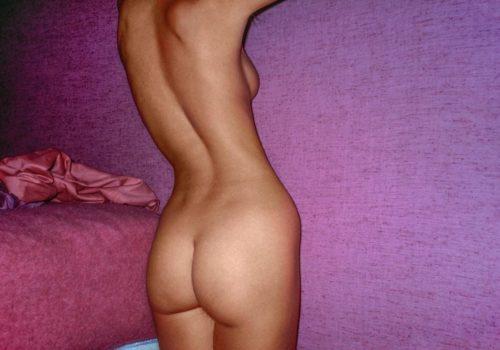
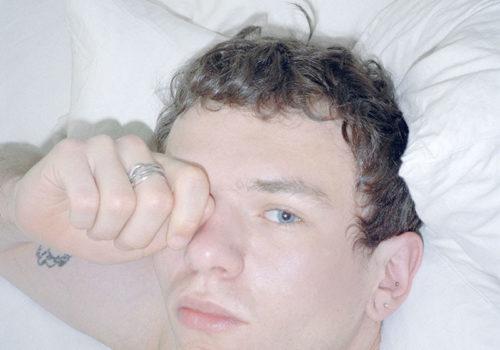
The works I’m showing for the upcoming exhibition are images and sculptures that all deal with the topic of intimacy. They are related to that moment when things ignite with someone – or the ashes left behind. I think the idea of traces is also quite important here. What’s left after. Like a sunburn on your shoulder that slowly fades. The show unfolds through landscapes and portraits layered with diary entries engraved on the sides of the frames, and sculptures scattered throughout the room.
ND: Your exhibition is presented in tandem with We Met in Summer, a selection from the holdings of Swiss-based collector Marco Habrik, featuring works by Greg Gorman, Wolfgang Tillmans, Herbert List, and others. What connects the two shows, and where do you see your work within this constellation?
AH: We Met in Summer | I Might Have Burned Myself are two sentences that meet and complete each other. I like to think they do, even though they also stand on their own. We Met in Summer tells the love story of two boys who met in the summer of 1994. When thinking of a title for my show, I wanted to open up what might have happened. I wanted to play with the idea of a summer fling – those intense love stories you can have in summer, or just before summer, when you’re already longing for someone to share the sweat with under a scorching sun. Some of them stay with you and follow you for a long time. Others leave a strong impression while you’re in it, then fade once it’s over.
In terms of the artists presented in Marco’s collection, I like to think my work continues the path laid by many of them. Some have been references for me for a while now, so presenting my work alongside theirs is exciting and truly an honor. My practice is tied to the more global history of queer minorities and the political aspect of being a part of that. Some of the photographers, like David Armstrong and others from the so-called Boston School captured images during times of crisis for our communities, like the AIDS epidemic, and their work is charged with those layers of meaning. Still, there’s a softness in some of their works that is quite inspiring to me.
I think there’s an urgency, a necessity, in capturing emotional, sensitive moments during times of crisis. Today, with the rise of far-right parties around the world, the rollback of many of our rights, and a looming climate crisis, my work is marked by all of that, by all these urgencies. The stories of love and loss in my pieces are, in some ways, part of that larger context.
ND: You were born in Strasbourg and recently graduated from the Zurich University of the Arts (ZHdK). What are your next steps?
AH: Move to London, maybe? Or the UK in general? I have this thing where every three years, I feel the need to jump. And this feeling is burning inside of me again. I just came back from a trip to the UK, and it reignited a desire to live there. I’ve always been drawn to it, so maybe it’s time to start a new chapter there. Of course, I’ll continue developing my artistic practice. I’m currently working on the series featured in I Might Have Burned Myself and want to focus on it more deeply.
ND: Your work explores “entanglements of intimacy, social conditions, and sexuality.” What inspires you, and how do you find and cast your subjects?
AH: Daily life is a key inspiration for my practice. It’s tied to the people around me – and I some have really great people in my life right now. Many of them are in my photographs. I’d like to start photographing strangers as well. Some people just draw you in – it’s hard to explain. I like the tension between what’s visible on the surface and the mystery of what’s going on inside. Over time, you notice your attention gravitates to certain things again and again. I recently realized how influential my upbringing has been. The people and places from my youth – I find myself returning to them when I’m low on energy or inspiration. There’s something so affirming when I’m there, when I visit the places of so many beautiful queer experiences – in a village where no one would expect to see two boys holding hands on a log by a dry river, maybe sharing a kiss. Of course, I’m also inspired by other artists. David Robilliard, for example – he had such a beautiful way of expressing his world, the people who surrounded him, the encounters and love stories he had. I’ve been feeling quite inspired by him these days.
ND: Reflecting on your background, would you describe your work as autobiographical?
AH: In a way yes, definitely. As I mentioned, the place I come from and the experiences I had there play a big role in the development of my practice. The body of work I present in I Might Have Burned Myself is deeply tied to growing up surrounded by nature, and how, as a young queer boy, my sense of intimacy took root in those spaces. How my own intimacy was linked to nature and its vulnerability. But beyond autobiography, I aim to tell broader, more collective stories. I open up the personal to more global and political questions that run through the society we live in. The autobiographical aspect might trigger a project or story I feel the need to voice, but then the story expands, and I go out into the world to find ways to narrate it.
ND: Some of your works go beyond the classic photograph to include diary-like elements. How do you compose these multidisciplinary artworks?
AH: There are many ways I incorporate text into my work. Photography is one language I use to tell stories. Written text is another – through books, readings. Then there’s sculpture and space. More recently, I’ve started engraving the sides of my frames with excerpts from books that inspire me and from my personal diaries. It’s about poetry, and offering multiple layers and ways of reading the work. When the works come together in a space, a story begins to unfold. Spaces are just larger pages in the book I’m writing.
ND: Who were your icons or role models during your studies?
AH: I had many, haha. I was obsessed with Tillmans when I started art school. It was my first year of art school, when a teacher introduced me to his work, and it blew me away. I used to borrow all his books from the library – just to have him close. It felt like I had found someone who spoke the same language as me. Since then, more artists have joined that constellation – many of whom are actually on the walls of Marco’s part of the exhibition We Met in Summer I I Might Have Burned Myself.
ND: Do you follow a particular process or ritual when photographing? Any steps you always repeat before or after a shoot?
AH: I mostly work with analogue photography. I started with the medium, and found a way to develop a language with it. The time between the moment you shoot something and the moment you see the image when the film is developed gives me space to reflect, project, and build a story around what I’ve captured. That’s also where the poetic side of my work lives. I write a lot during that in-between time. Sometimes it’s long; sometimes I rush to the lab to see the results. But the true ritual is enjoying that moment of longing and participation, and to make the most out of it. I think it’s a way for me to have something meaningful, even if the photo doesn’t work out. It’s a bit like the beginning of a love story.
ND: If you could speak with any legendary photographer about their work, who would it be?
AH: I’d say David Armstrong. I’m deeply moved by his work and the quiet melancholy that resides within it. The tenderness he saw and captured in the people he photographed, especially those moments that feel so intimate yet universal. I imagine he had incredible stories to tell. And I love listening to good stories, especially those that reveal something unspoken between the lines of an artistic practice.
Save the Date:
“I Might Have Burned Myself”
Opening: June 27, 2025, 6 pm
The Ballery, Nollendorfstrasse 11–12,
10777 Berlin
For more information, check out Arthur’s IG account @ahck._ and https://arthurheck.com