Sandra WIS Formatger – The intimate as language.
Sandra WIS occupies a singular place at the intersection of art and care. A filmmaker, visual artist, and systemic creative therapist, she has always treated the image as a language—one that interrogates as much as it heals. After studying art history, documenting a pivotal journey in Bosnia, and spending two decades working with channels such as France 2, Arte, and Canal+, she established a distinctive audiovisual voice with Le Photosophe, des instants avec Frank Horvat. Both intimate and luminous, this work—a subtle dialogue between lucidity and poetry—was acclaimed at the International Festival of Films on Art (FIFA) in Montreal and at the Paris Art Film Days.
Today, Sandra explores a striking transversality between visual creation and therapeutic practice. Trained in art therapy and systemic approaches, she uses image, sound, and video as mediators of transformation—whether in her private practice, at the CMPE, or within collective projects addressing domestic violence.
And as if images were never enough, she is currently presenting Le secret at the REZA Center for Photographic Art, an exhibition that visually and intellectually extends her exploration of the invisible, of memory, and of intimacy.
Through her films, her therapeutic work, and her current exhibition, Sandra WIS embodies the conviction that creativity is a vital force—an instrument of knowledge, healing, and connection. In this conversation, she invites us to follow her pathways of image, emotion, and care, whether collective or profoundly personal.
Instagram: @sandra_wis
Website: www.sandrawis.com
Your first photographic trigger?
Sandra WIS: My first photographic trigger happened in Sarajevo in 1992, shortly after the war. I was a student, participating in a humanitarian project linking my city, Barcelona, with Sarajevo. It was the time of the Olympic Games in Barcelona, while war was raging in the Balkans. I realized that History with a capital H is marked by wars, and that politicians—even during the Olympics—often look away. I photographed the city and its people, and I made meaningful encounters. That journey changed my life. When I returned, I exhibited my images at the University of Toulouse, where I was then studying Art History. I wanted to bear witness through my images and texts to the violence of that war. I was born and raised in Barcelona, Spain, during a turbulent historical moment. Franco, the dictator, had just died, and Spain was entering its democratic transition. From a very young age, I was drawn to and inspired by photojournalism that revealed the human condition while denouncing injustice, armed conflicts, suffering, violence… My childhood memories are filled with photo reportage images from the news.
The image-maker who inspires you?
Sandra WIS: The work of photojournalist REZA inspires me greatly. His images, and the writings of Rachel Deghati—his wife, who has accompanied his books and exhibitions for over 30 years—form a tandem of words and images that profoundly moves me. REZA’s photographs explore the human condition while also being filled with beauty. Each image, paired with Rachel’s texts, is a journey deep into ourselves. At this very moment, I have the privilege and honor of exhibiting my work alongside REZA’s images, in an exhibition conceived and curated by Rachel Deghati and Pierre Bongiovanni at the REZA Center for Photographic Art.
The image you wish you had made?
Sandra WIS: “The Vulture and the Little Girl” by Kevin Carter. I wish I had taken it in support of the photographer. He dared to do it, but he couldn’t survive the consequences of that choice. He took his own life. This photograph tells the story of the violence of war, of its impact on children and generations to come. It speaks of domination, but also of human vulnerability in the face of nature—here represented by the animal waiting to devour the child.
The image that moved you the most?
Sandra WIS: Always the same: “The Vulture and the Little Girl” by Kevin Carter. Just thinking about it makes me want to take that child in my arms.
The image that made you angry?
Sandra WIS: Again, the same one. First, anger towards humankind’s endless need to demonstrate power through war. Then, anger towards international politics, incapable of acting for peace. And finally, anger towards those who attacked the photographer, who eventually committed suicide. The role of the photojournalist is always controversial. People ask why he didn’t help or save the child. Yet these photographs reveal and denounce what we would otherwise never know. Too often we forget that these photographers are themselves in danger.
A key image in your personal pantheon?
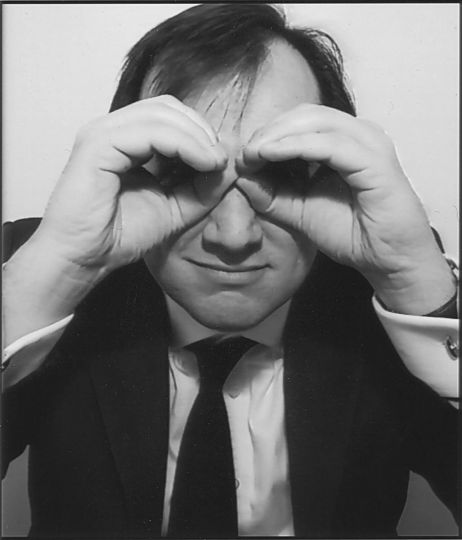
Sandra WIS: A photograph by Frank Horvat connected to my personal story. I made a documentary with him, Le Photosophe, and one day, while looking at one of his photographs, he told me: “This image is you, because it represents strength and fragility.” Frank Horvat, like many other photographers, spoke through his photographs. Photography is a language. And we spoke to each other through his images.
A photographic memory from your childhood?
Sandra WIS: When I was a child, my parents argued constantly. My mother was often angry. She would redirect the violence of my father against her onto me. In those moments of immense sadness, I loved to contemplate a large portrait of her in red, taken by a photographer friend. She looked very beautiful and seemed very happy. I wondered if she truly was… Very early on, I began questioning what an image shows and what it hides.
The image that haunts you?
Sandra WIS: Always the same: “The Vulture and the Little Girl” by Kevin Carter. Often, when I look at photographs of current events, it reappears in my mind. Today’s war photographs resonate with that image. One traumatic event awakens another. And I wonder—how is it possible that we are still here?
The image that changed the world?
Sandra WIS: Always the same: “The Vulture and the Little Girl” by Kevin Carter.
The image that changed your world?
Sandra WIS: Again, the same one. And also my own personal work, which has been “self-therapeutic.”
Without limits of budget, which work would you dream of acquiring?
Sandra WIS: I have no desire to buy a work. On the other hand, I would gladly take that money to create projects that teach children the language of images—so that images can be tools of construction, not weapons of destruction.
In your opinion, what quality is essential to be a good photographer?
Sandra WIS: Curiosity, observation, patience, quickness, intuition—and sometimes courage and commitment.
The secret of the perfect image, if it exists?
Sandra WIS: For me, perfection (in any field) doesn’t exist—and thankfully so! It’s this very pursuit of perfection that keeps us clicking. And yet very often, the first shot is the right one, the best one… because it was taken spontaneously, intuitively.
The person you would most like to photograph?
Sandra WIS: Today I am both artist and therapist, and I often think how interesting it would be to photograph some of the people I work with in therapy—before and after a session—to share with them what I see in the transformation of their body once they have put words to their wounds. And when I say “words,” I don’t mean only spoken language. It can also be images, drawings, sounds, body expression… Here, “words” is meant in the broad sense of communication and expression of suffering, of trauma.
In any case, these are images I make without a camera. They are inscribed in my memory. When someone enters my office for the first time, before I listen, I look—I take an image. I observe what the body says, because the body never forgets… and often it speaks before we do.
The person you would like to be photographed by?
Sandra WIS: No one, because I don’t like being in front of the camera.
An essential photo book?
Sandra WIS: Between War and Peace: 30 Years of Reporting by REZA, with texts by Rachel Deghati. I also really love a small book by photographer Madeleine de Sinety, who photographed life in a small village in Brittany in the 1980s. It’s a little gem!
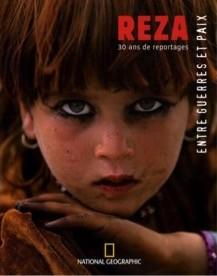
Entre guerres et paix – REZA, 30 ans de reportages © REZA 2008
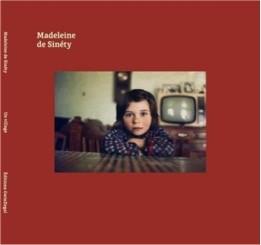
Madeleine de Sinety, 2020
The camera of your childhood?
Sandra WIS: I don’t remember—I have a very bad memory. I just know it was my father’s camera, and unfortunately, I lent it out and never got it back.
The one you use today?
Sandra WIS: iPhone.
Your favorite drug?
Sandra WIS: Contemplation.
The best way for you to disconnect?
Sandra WIS: Walking in nature, having a deep conversation and reinventing the world with someone I love. Imagining how things could evolve, finding solutions…
Your relationship with the image?
Sandra WIS: In the word “image,” I see “imagination.” And imagination brings creativity. And creativity means finding solutions. I have a lot of imagination. I love to imagine. I love to find solutions. For me, images always come before words. Then I like to put words to images. I live in images. I think in images. I have a visual memory.
Your greatest quality?
Sandra WIS: Curiosity and commitment.
Your last madness?
Sandra WIS: I can’t tell you…
An image to illustrate a new banknote?
Sandra WIS: A tree.
The job you would not have liked to do?
Sandra WIS: Politician.
Your greatest professional extravagance?
Sandra WIS: Asking a great photographer to undress so I could film him. I suggested it because I thought it would be interesting for him to put himself in the place of models who are asked to bare themselves at the photographer’s request.
Which photograph changed the world?
Sandra WIS: The world moves forward, and images help people become aware of events, but I’m not sure a single photo can change the world. Still, if an image—like Kevin Carter’s “The Vulture and the Little Girl”—helps even one person to realize the violence of the world, of their own violence, or something else, then that is already a lot.
And which photograph changed your world?
Sandra WIS: Again, the same one. And later, my own personal work, which has been self-therapeutic. The series Who Am I? Autopsy of an Emotion Buried Since Childhood and the series De-fragmented.
Does photography have the power to change collective perception of an event or an era?
Sandra WIS: Oh, absolutely yes!!
How do you see the influence of social networks on how photographs are made and perceived today?
Sandra WIS: I think we must move forward with technology—work with it and use it wisely. Once again, what matters is that each person takes responsibility for how they use the tool. It can be used to build or as a weapon of destruction. It’s up to each of us to choose.
An Instagram account that must be followed?
Sandra WIS: I’m not very active on social media or Instagram. But I do find it interesting that people can share their creations and ideas.
The last thing you did for the first time?
Sandra WIS: A week-long fast! I had wanted to do it for a while but never found the courage. Now it’s done! A week of fasting, with beautiful meditative walks in nature, accompanied by a wonderful, caring team of professionals. I’ll definitely do it again!
What is a successful photo?
Sandra WIS: One that conveys a message, that moves us, and at the same time has a good composition.
What interests you most in an image?
Sandra WIS: What it tells. What I see inside the photo, and what I see outside the photo.
What is the difference between photography and art photography?
Sandra WIS: Photography is an image taken by someone. Art photography is a photograph that someone—an artist, gallerist, curator, art critic…—has decided to designate as Art.
The city, country, or culture you dream of discovering?
Sandra WIS: Mongolia, Nunavut, Patagonia, the Amazon, and their Indigenous peoples.
The place you never tire of?
Sandra WIS: Nature! When I hike in the mountains, look at the ocean, or contemplate the sky…
Your greatest regret?
Sandra WIS: I forgot…
Color or black and white?
Sandra WIS: Both, depending on the moment, the desire, the situation.
Daylight or artificial light?
Sandra WIS: Daylight.
In your opinion, the most photogenic city?
Sandra WIS: New York and Tokyo are both extremely photogenic.
If God existed, would you ask him to pose for you, or take a selfie with him?
Sandra WIS: Neither. I would ask the goddess Gaia to pose for me.
If I could organize your ideal dinner, who would be at the table?
Sandra WIS: Those who are already here with me.
The image that represents the current state of the world?
Sandra WIS: A tree with dead branches and many others just beginning to grow.
If you had to start over?
Sandra WIS: I start over at every new cycle, keeping what is worth keeping and trying to transform what is not.
The final word?
Sandra WIS: Movement and creativity.
“As soon as you set out on the path, the path appears.” — Rumi