Philippe Echaroux – When light becomes language
Photographer, street artist, and portraitist, Philippe Echaroux has established himself over the past decade as one of the most singular French artists of his generation. His work, situated at the intersection of urban art, photography, and installation, questions the role of images in public spaces and their ability to foster social and ecological connections.
Coming from portraiture and graffiti culture, he has made light his primary medium. Rather than painting on walls, he illuminates them: through his Street Art 2.0, he projects monumental, often ephemeral portraits onto urban facades, natural landscapes, or symbolic sites. This approach, both poetic and non-invasive, transforms light projection into a respectful artistic gesture — an art of trace with no physical impact but strong emotional resonance.
His series The Crying Forest, created in the Amazon in Brasil with the Suruí tribe, remains emblematic of his approach. By projecting the faces of community members directly onto trees, Philippe Echaroux creates a powerful metaphor: a living nature watching humans in return. This project, both ecological and spiritual, marked a turning point in his career, establishing him as an artist aware of environmental issues and humanity’s place within the living world.Straddling digital art, conceptual photography, and environmental performance, he explores new forms of visual storytelling in the age of connected images. His practice questions the boundary between reality and illusion, presence and erasure, image and light. Influenced as much by humanist portraiture as by digital culture, he embodies a generation of artists for whom technology is not a cold tool but a sensitive extension of hand and eye. For him, the beam of light replaces the brush — and every projected face becomes a call to collective memory, a reminder of the fragility of the world.
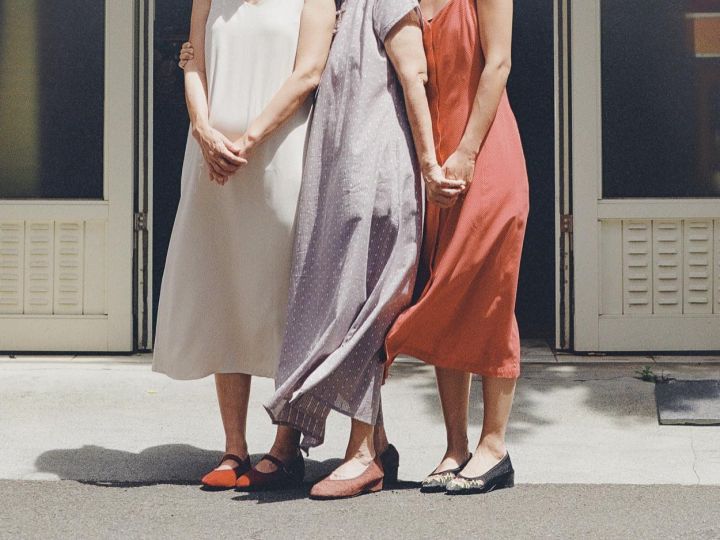
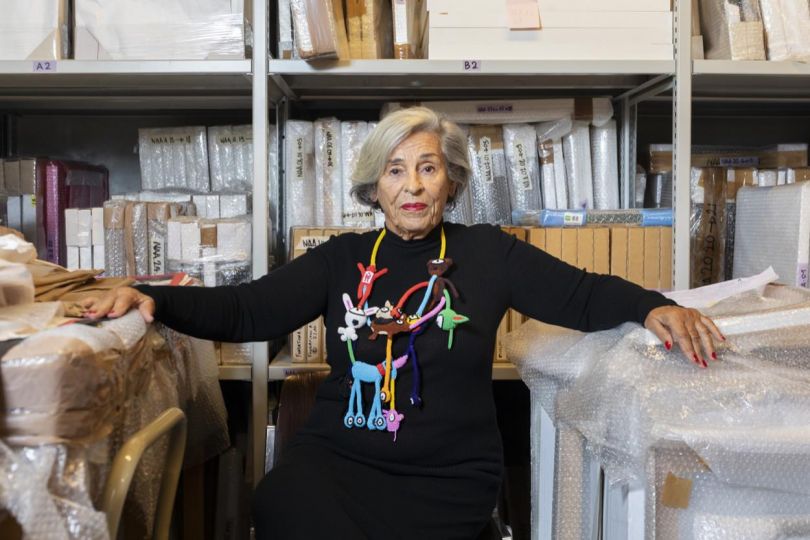
Currently, Philippe Echaroux is presenting his TEMPI project in South Corsica, a series of portraits of elders projected onto facades, quays, and natural spaces at nightfall. This installation, both poetic and social, integrates residents’ faces into the urban and heritage landscape, creating an unprecedented dialogue between local memory, territory, and light. Through this gesture, the artist goes beyond the gallery space, engaging the viewer in an immersive experience where each projection becomes a living testimony to history and community.
To be discovered at night from Porto Vecchio to Pianottoli-Caldalrello.
Website : www.philippe-echaroux.com / www.tempi.corsica
Instagram : @philippe_echaroux
Currently: TEMPI, an immersive exhibition celebrating Corsica through the eyes and memories of its elders. Between Porto-Vecchio and Bonifacio, the elders of the various communes are highlighted, both literally and figuratively, through a series of photographic portraits and outdoor light projections in public spaces.
Your first photographic trigger?
Philippe Echaroux : Curiosity!
A photographic memory from your childhood?
P.E. : Not really, except being intrigued by Polaroid cameras, but I was more interested in the strange aspect of the object than anything else.
The camera from your childhood?
P.E. : I didn’t really have one.
The one you use today?
P.E. : A Nikon Z8.
The man or woman in images who inspired you?
P.E. : Strangely, I don’t have one. I’m more inspired by athletes or musicians.
The image you wish you had created?
P.E. : A portrait of Nelson Mandela.
The one that moved you the most?
P.E. : More than an image I might have seen, it’s seeing people discover themselves through one of my photos that moved me the most.
And the one that made you angry?
P.E. : Not really. Generally, I refuse to do things I don’t feel, precisely to avoid that.
Which photo changed the world?
P.E. : There are many, but I’d say a photo of the Earth from space.
And which photo changed your world?
P.E. : I couldn’t say; I don’t think of any particular image.
A key image in your personal pantheon?
P.E. : portrait of Zizou or my Amazon project, but I don’t fixate on those two projects.
What interests you most in an image?
P.E. : The message!
Which details do you look for in a face, a landscape, or an object?
P.E. : The message as well! Sometimes just the aesthetics, but to me, that gets boring quickly.
Elliott Erwitt said: “Color is descriptive. Black and white is interpretive.” Do you agree?
P.E. : Quite, yes! Elliott is clever.
Do you think technique can sometimes outweigh emotion in photography?
P.E. : Never. But we shouldn’t skip technique altogether, at least at the beginning.
Is beauty in photography purely aesthetic for you?
P.E. : For me, it comes from the message. It’s very personal.
What elements can make silence visible in a photograph?
P.E. : Instinctively, I’d say: chaos.
Does the uniqueness of a photograph come from the moment or the staging? Can a photograph be truer than reality?
P.E. : At the start, I did staged photos to convey a message, so I’d say yes. It’s a bit like cinema, actually.
Can a photograph change our perception of an event?
P.E. : Absolutely, and that’s also a big danger.
Is photography a testimony or a form of manipulation?
P.E. : Both are possible. Like any technology, it depends on how you use it. We talk a lot about AI, but we’ve already experienced that with photography earlier, though obviously on a smaller scale.
What makes a good photo?
P.E. : Emotion.
In your opinion, what quality is necessary to be a good photographer?
P.E. : Curiosity.
How do you choose your projects?
P.E. : My guiding principle is meaning. If there’s no meaning, no message, then there’s no project.
How would you describe your creative process?
P.E. : I’d say it’s instinctive. I prepare a lot for a project in advance, but I let things happen, because that’s where the art is, in my opinion. Control is the enemy of creativity.
An upcoming project that is particularly close to your heart?
P.E. : Not really. I often work on several projects simultaneously, but I have no preference. We’ll see when and if they come to life!
The person you would like to photograph?
P.E. : Putin or Trump. Not that I like them, far from it, but out of curiosity to see what these guys project in real life.
The person you would like to be photographed by?
P.E. : I’d say: no one, I don’t particularly like being photographed.
The last photo you took?
P.E. : A photo of one of my light projection installations in southern Corsica.
On social media, are you more Instagram, Facebook, TikTok — and why?
P.E. : Instagram and Facebook, but I’m less and less into social media. I can’t stand that ego trip anymore. Honestly, I struggle to force myself to “exist” there. Competing over who has the coolest life isn’t my thing.
What has changed in photography since the rise of social media?
P.E. : The democratization is great: many more people can show what they do, and that’s positive!
An Instagram account to follow at all costs?
P.E. : Hold down the Instagram icon for three seconds, then tap “delete” and go outside to see the real world? I see disconnecting as the real luxury today.
Your view on AI?
P.E. : I see AI as a tsunami. Like any technological revolution, it’s as exciting as it is dangerous. But like any big wave, you either ride it or get crushed.
Color or black and white?
P.E. : Both! Whatever feels right!
Natural light or artificial light?
P.E. : I love both, but my work in portraiture or projections is based on artificial light, so I lean towards that. But my favorite is still mixing the two!
The city that seems most photogenic to you?
P.E. : Marseille! I’m a bit biased, admittedly.
The city, country, or culture you dream of discovering?
P.E. : Maybe Japan, it’s a part of the world I’ve never been to.
A place you never get tired of?
P.E. : Corsica, obviously!
The image that represents the current state of the world for you?
P.E. : I couldn’t say.
In your opinion, what is missing in today’s world?
P.E. : Modesty and empathy.
If God existed, would you ask him to pose for you or take a selfie with him?
P.E. : I don’t really believe in God, but I think if such an entity existed, it would be far more interesting to talk to it than to take a photo.
Your favorite drug?
P.E. : Learning!
Your best way to disconnect?
P.E. : Surfing the swells with a foil.
Your latest folly?
P.E. : I couldn’t say, and I admit that’s sad. Thanks, because I need to change that!
Your biggest professional extravagance?
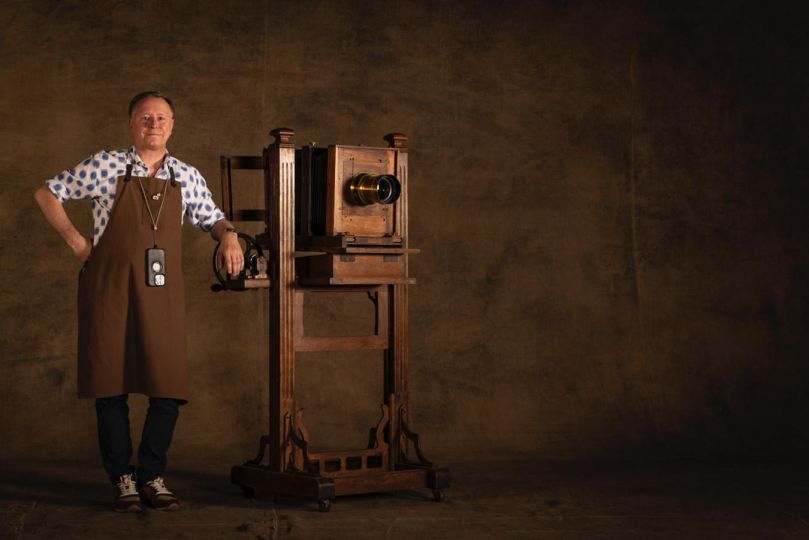
P.E. : Dressing up as a portable studio and trying to take portraits at a photo fair where I was invited.
The job you wouldn’t have wanted to do?
P.E. : Tons: garbage collector, laborer, septic tank cleaner… I often measure my luck, really. I come from social work, so that has always helped me keep things in perspective.
Which question throws you off the most?
P.E. : Maybe this one 😂
The last thing you did for the first time?
P.E. : Pump track skateboarding!
Your biggest regret?
P.E. : I try not to have any. But there are a few particular waves I’d like to explore with a foil, so I shouldn’t let too much time slip away.
If you had to start all over again?
P.E. : Fully! The beginning seems like the trickiest part, but it’s also the best time! So yes, start again, and start other things today, definitely!
If I could organize your ideal dinner, who would be at the table?
P.E. : I couldn’t say. I don’t really have that kind of “dream.” Maybe a one-on-one dinner with Bob Dylan, to learn from him.
What do you like people to say about you… afterward?
P.E. : I don’t have that ambition. If I’ve been able to help a few people start doing what they really love and break a daily life that weighs on them and seems unbreakable, then I’m happy.
The one thing people must absolutely know about you?
P.E. : Oh, I don’t have the pretension to answer that. I’m an average guy.
One last word?
P.E. : Go for it, you’ll be surprised.