Lily Gavin : Beyond the Visible
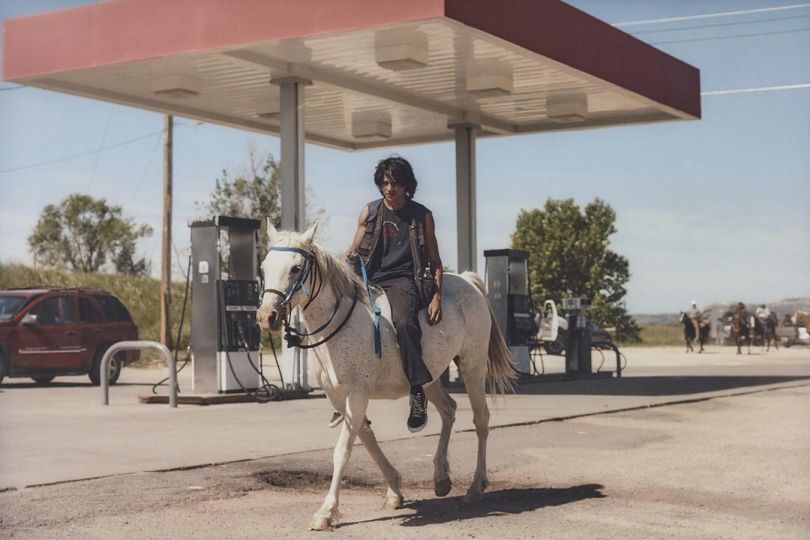
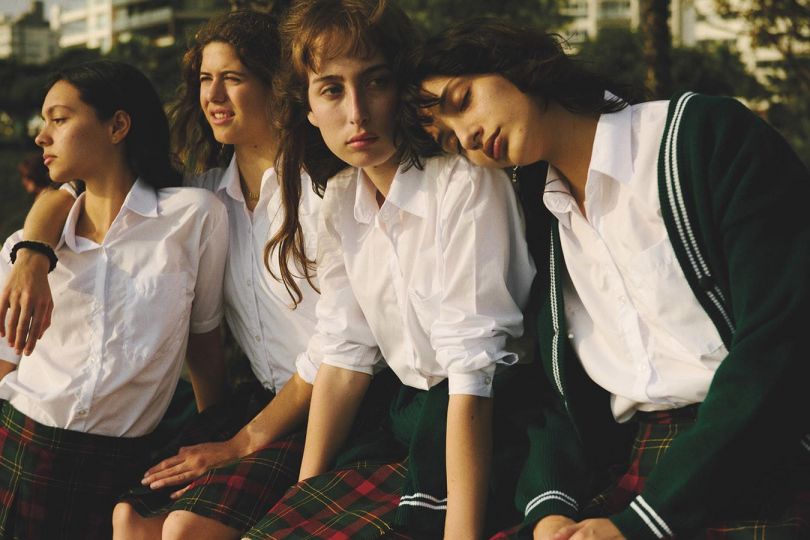
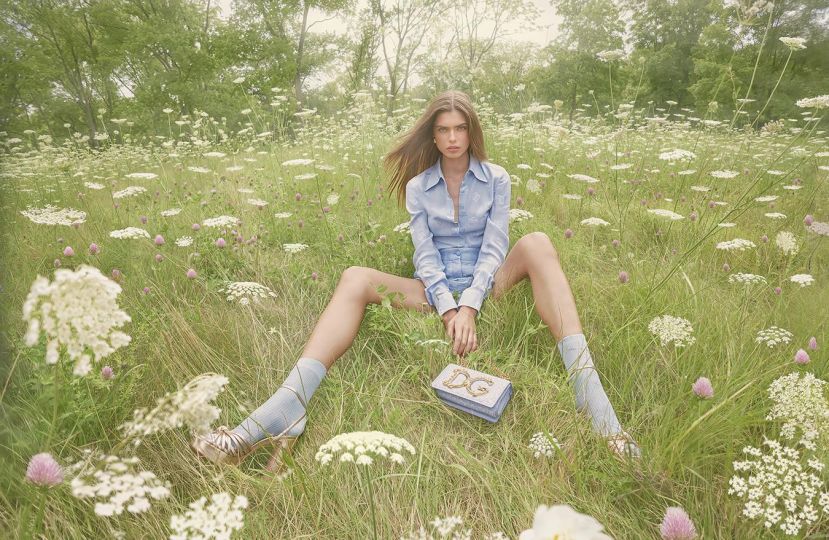
There is a rare way of seeing the world in Lily Gavin’s work: a gaze that does not merely capture light, but seeks what lies behind it, in the shadows, in the interstice, where truth surfaces before disappearing. An American photographer trained in film from an early age, she held her first camera at two, an omen. Since then, the camera has been for her neither a tool nor an object of power, but a bridge: a way of existing in the world while stepping slightly aside to better interrogate it.
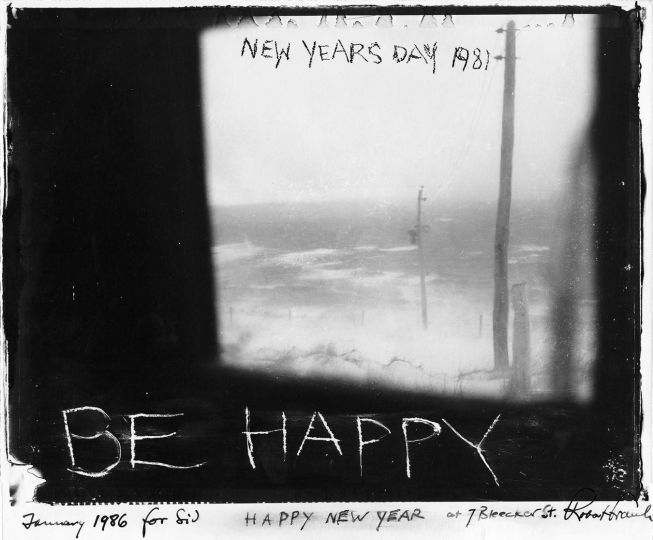
Her practice relies on a unique alchemy of intuition and refinement. Whether outdoors or on a film set, she shoots instinctively, guided more by sensation than concept. In the studio, she constructs carefully thought-out, almost architectural images, yet the moment of capture remains instinctive, as if photography could only occur at the intersection of intention and surrender. This tension defines her style: a blend of spontaneity and depth, where the soul emerges just beneath the surface. Lily Gavin seeks neither perfection nor seduction. She avoids overly calculated images, preferring a form of inner harmony, an organic sincerity. Her photographs — whether landscapes, faces, or objects — always seem to return to the essential. She strips away, removes, scours the superfluous to reach the naked truth of forms. For her, beauty is a sacred territory, a space that transcends aesthetics to embrace an almost metaphysical dimension. Her work is profoundly touched by the invisible. She sees divinity behind things — not as dogma, but as a living mystery. Her images invite contemplation of what eludes us: a silence, a breath, a vibration. Photography of intimacy, vulnerability, and real presence. Her portraits of pregnant women, for instance, capture a strange, almost extraterrestrial beauty: the fragile border between two worlds, between before and after, between life and its emergence. Influenced in her youth by Robert Frank’s The Americans, she understood early on that photography could be both a form of testimony and an illusion, a prism, an act of interpretation. For her, an image can be truer than reality — or contradict it. It can freeze a lie or reveal a world. It can change how we perceive an event, a face, or an era.
In her recent work, currently exhibited in London at Kearsey & Gold, Lily Gavin opens a window onto her inner landscape. The ten images of Innocence do not aim to capture reality, but to materialize what exists only in the mind: constructed, imagined visions, almost as if the artist was photographing the fragmented, luminous, secret content of her own thoughts. By composing miniature worlds from found objects, natural materials, or frames crafted from clay or raw canvas, she blurs perception and awakens a form of phenomenological innocence in us. Gavin plays with scale and perception to transform even the smallest detail into sacred territory. Her frames become portals to parallel realities, openings where a subtle, barely veiled magic surfaces. Her images return us to a childhood state where objects seemed animated, spaces infinite, and every corner of the world however mundane become a subject of fascination. Lily Gavin belongs to the kind of artists whose curiosity guides their practice. She listens to her projects as much as she initiates them. She claims no certainties, only fidelity to what moves through her. She continues to work in film, aware that the future of photography may lie in preserving gesture, time, and materiality all that digital excess tends to erase.
In an era of visual saturation, Lily Gavin resists the temptation of spectacle. She chooses density, truth, and that fragile space where mystery resides. Her work, built of intuition and delicacy, reminds us that photography is not merely a gaze upon the world, but a dialogue between the visible and the invisible, between reality and what transcends it.
Website: www.lilygavin.com
Instagram: @lilygavin
Exhibition: Innocence, Kearsey & Gold Gallery, 19 Cork Street, London, until 13 December 2025 (www.kearseygold.com)
What sparked your passion for photography?
Lily Gavin : There is a photograph of me when I’m two years old sitting on the floor holding a Nikon fe staring into its lens. I’d say its more of a tool I’ve used to interact with the world and to process it from a very young age. I think seeing an image come to life in the darkroom for the first time in high school was like witnessing magic, so maybe that was a crucial moment.
Which photographer has inspired you the most?
Lily Gavin : The first photographer I was really aware of was Robert Frank and his book The Americans. It’s the first time I saw an entire body of work from a photographer that spoke to me.
What photo do you wish you had taken?
Lily Gavin : The one of Muhammad Ali posing underwater.
What was the last photo you took?
Lily Gavin : Ten minutes ago, a picture on my phone of sunflowers and eucalyptus I arranged on the kitchen table.
What’s the strangest photo you’ve ever taken—intentionally or not?
Lily Gavin : Maybe the photographs of pregnant women, there is something so beautiful and alien every time I’m capturing that moment in the last weeks before a child enters the world, only thinly veiled by the skin of their mother’s stomach.
How do you choose your projects?
Lily Gavin : They choose me, it feels like ideas or projects land on me and it’s not clear where they came from.
What balance do you strike between intuition and thought in creating an image?
Lily Gavin : It depends what the images are. When I am out in the world with a camera or on set of a film it’s completely intuitive. If I’m in the studio then I’d say the images were born from a thought but the moment of taking them is again intuitive.
What makes a photo “successful” to you?
Lily Gavin : I don’t see them as successful or not successful, because I don’t like images that are trying to sell something or are overly calculated or overly succeed in their intention since most photography is an exploration of something. But I think there is a certain sense of visual harmony that exists in photos I’m drawn towards, a completeness, no matter what the subject is.
What makes a photo memorable? And what makes an image timeless?
Lily Gavin : It’s memorable if you don’t forget it, but we don’t understand why some things stick and others don’t. I’m a very visual person, so I will always remember a face or a scene from a film or a visual detail, over a name, a title or a date. I think we collect every image we’ve ever seen into some kind of collective conscious cabinet; some images strike a chord collectively and the ones that are timeless inform the way we perceive the world, they truly affect us, they might return to us like memories, or they work on more subliminal levels.
What details do you look for in a face, a landscape, or an object?
Lily Gavin : I look for the truth of something, I like things stripped down to their essence and true nature and not covered up. Because there’s already so much detail to be found in nature’s original forms, often the details are being hidden behind something less interesting.
Can technique ever outweigh emotion in photography?
Lily Gavin : Technique itself can create emotion in photography, like a cyanotype. Often the photography is a window into the soul of the person behind the camera, in one way or another, and I think that’s where we feel the sincerity of the images, the originality or sentiment lies in the person’s purest intention or spontaneous outlook, this is something invisible that I can feel almost immediately when I see a picture. The more curious a photographer is the more interesting the photos tend to be.
Is beauty in photography purely aesthetic for you?
Lily Gavin : I think beauty is a very sacred thing. We can experience beauty through the visual, but our conceptual ideas of beauty have been very corrupted and limited culturally. Photography is a visual medium; I don’t know how something could be beautiful in photography without being aesthetic.
What elements help make silence visible in a photo?
Lily Gavin : Mystery.
Does the uniqueness of a photo come from the moment or the staging?
Lily Gavin : Either! Depends on the result.
In one word, how would you describe your relationship with photography?
Lily Gavin : Essential.
What interests you most in an image?
Lily Gavin : I don’t know until I see it!
Are you more into color or black & white?
Lily Gavin : I mostly take black & white photographs, but I love color.
Natural light or studio?
Lily Gavin : Natural light. Unless its night time.
Can color be a form of storytelling?
Lily Gavin : Of course.
Can we talk about photography without mentioning time?
Lily Gavin : Yes.
What role does the invisible play in your images?
Lily Gavin : It plays a huge role. Most of my images are a way to point to and reflect on the invisible, the unseen. The divinity behind all things.
Can a photo be truer than reality?
Lily Gavin : Yes, because what is reality?
Can a photo change the way we perceive an event?
Lily Gavin : Definitely. It can be full of facts or illusions.
Is photography a testimony or a form of manipulation?
Lily Gavin : It can’t be so easily defined.
Which photo changed the world? And which one changed your world?
Lily Gavin : The photo of the atomic bomb cloud over Hiroshima changed the world. Seeing photographs of my childhood changed my world.
What was the first image that deeply moved you? And the one that made you angry? Lily Gavin : The first images that deeply moved me were probably images from films as a kid. Once you understand that a picture is 1/24th of a second of a film, you don’t separate the two so strongly. A lot of images I see of women presented very much as sexual objects make me angry, especially when its used to sell products.
If you had to choose one photo to represent you, what would it be?
Lily Gavin : Maybe an Irving Penn flower.
If you could photograph the inside of your thoughts, what would it look like?
Lily Gavin : It depends on the day, but the pictures being shown at my current show (Innocence at Kearsey & Gold in London) is a window to my inner world. They are images that I constructed and created, not ones that exist in plain sight.
What was the last thing you did for the first time?
Lily Gavin : Yesterday I had a hug from Amma, the hugging saint. People gather from all around the world and wait for hours. It was my first time doing something like that.
A key image in your personal pantheon?
Lily Gavin : It’s personal!
A photographic memory from your childhood?
Lily Gavin : I remember having a scary reoccurring dream when I was in kindergarten. I can see the dream perfectly now and can see myself sitting in school the next day thinking about the dream.
What is your greatest regret?
Lily Gavin : I have no regrets in life other than time wasted. I really believe that most time spent on social media is precious life being lost.
Does a photo still belong to you after you’ve shared it?
Lily Gavin : Not really, technically you might own the photo but once its shared it enters the minds of others so its a shared experience.
An indispensable photo book?
Lily Gavin : Robert Frank The Americans. Francesca Woodman On Being an Angel.
What was your childhood camera?
Lily Gavin : Polaroid camera and Nikon FE.
What camera do you use today?
Lily Gavin : Nikon FE & Mamiya RZ 67 & iPhone.
Your favorite addiction?
Lily Gavin : A good song played on repeat all day long.
If your camera could talk, what would it say about you?
Lily Gavin : She knows when to press the button.
In your opinion, what is the role of photography in how we perceive the world?
Lily Gavin : It is a way to process the world, to both remove ourselves from the world in order to look at it and not just be in it, but also to reflect on the world by going back in time and reviewing it.
What are the major challenges for the future of photography?
Lily Gavin : The loss of craft and the chemical reaction that takes place in analogue photography. Darkroom printing.
How are social media influencing the creation and reception of images today?
Lily Gavin : Quantity vs quality.
If photography were a weapon, what kind of “shot” would you prefer?
Lily Gavin : I don’t understand this question.
If you could photograph a historical and/or contemporary figure, who would it be and why?
Lily Gavin : I’d love to photograph Prince. Frida Kahlo. Or Thich Nhat Hanh right before he passed a few years ago. Gena Rowlands. So many people. I think some actors are interesting to photograph because of their relationship to the present moment.
If photography could capture emotions as well as images, what emotion would you want it to convey?
Lily Gavin : Vulnerability.
If you had an interdimensional portal, what would be the first photo you’d take in another world?
Lily Gavin : A photo of earth from afar.
If your camera were a superhero, what would its secret power be?
Lily Gavin : Bring healing and confidence to every person I take a photo of.
If a photo of you were to illustrate a futuristic invention, what would it look like?
Lily Gavin : There’d be no one in the photo because I’d be wearing an invisible cloak. Is this answering the question?
An image to illustrate a new banknote?
Lily Gavin : An image of whatever material the banknote was made out of.
What photo would you love to take… but that could ruin your career?
Lily Gavin : Nothing comes to mind but if something did, I’m sure describing it is as bad as taking it.
If you had to photograph the story of an ordinary object, which would you choose to turn into a masterpiece?
Lily Gavin : The story of butter from its origins to now. My mom is French and we love butter in France. I love that still life painting, “Mound of Butter” c. 1875 – 1885.
Which city do you find most photogenic?
Lily Gavin : Mexico City.
If God existed, would you ask Him to pose for you, or would you prefer a selfie with Him?
Lily Gavin : God exists inside of everything you photograph. Or to put it simply, not a selfie.
If I could organize your dream dinner, who would be at the table?
Lily Gavin : My closest friends. I like to be at peace and cosy when I’m eating. Or kids. They’re fun and unfiltered.
The image that best represents the current state of the world, in your eyes?
Lily Gavin : Maurizio Cattelan’s Comedian, a banana duck taped to the wall of a gallery.
The one essential thing people should know about you?
Lily Gavin : I care deeply for my subjects.
One last word?
Lily Gavin : Love.