Jennifer Westjohn : Through the Lens
In the contemporary landscape of photography, Jennifer Westjohn emerges as an artist whose lens does more than capture—it awakens. Her work moves gracefully between the macro and the panoramic, from the intimate textures of earth and foliage to the expansive sweep of sky and sea, inviting the viewer into a quiet dialogue with the natural world.
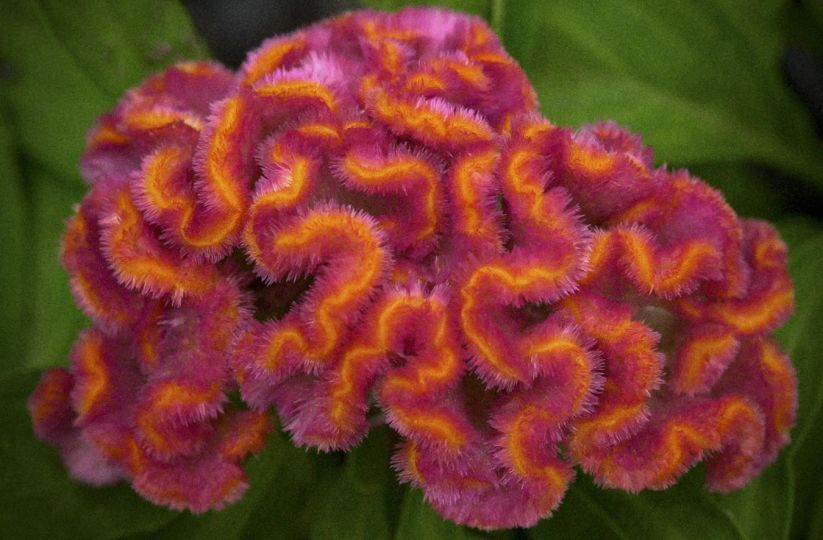
Westjohn’s photographs are imbued with a rare sensitivity, a poise that balances aesthetic precision with an almost spiritual contemplation. Each image resonates with the pulse of life, a reminder of the sacred rhythms that traverse our environment. Whether through the shimmering surface of a lake, the intricate weave of a leaf, or the subtle interplay of light across a landscape, her vision suggests that nature is a text to be read with care, patience, and wonder.
Her recent exhibition, Higher Ground, exemplifies this approach. It is not merely a presentation of landscapes but a meditation on elevation physical, emotional, and spiritual. The works speak of instinctive awareness, they are a call to reconnect with the elemental forces that sustain life, yet do so without didacticism, allowing the images to unfold their own narratives.
There is a quiet strength in Westjohn’s work. It is an art of observation, of reverence, where every frame is an invocation to presence. The photographs encourage a slowness often lost in our contemporary rhythm, urging the viewer to inhabit the moment, to consider the invisible threads that link human consciousness to the vastness of the natural world.
In a time when photography often strives for spectacle or shock, Westjohn reminds us of the power of subtlety. Her work is a gentle insistence that beauty, attention, and care are a form of resistance, and that art can, in its quiet way, nurture awareness, reflection, and ultimately, a deeper sense of belonging.
Jennifer Westjohn does not simply show us the world; she guides us toward it with sensitivity, reverence, and a rare poetic vision, positioning her firmly as one of the reflective voices of contemporary photography.
Website : www.jenniferwestjohn.com
Instagram : @jenniferwestjohnphotos
Your first photographic trigger?
Jennifer Westjohn : An underwater photograph taken by my father in the Mediterranean.
A photographic memory from your childhood?
J.W. : My father’s small red darkroom at home.
The camera of your childhood?
J.W. : A small film camera given by my father, though I don’t really remember it. I think I also had many disposable Kodaks… like many young people at the time, especially for school trips.
The one you use today?
J.W. : Canon 5D Mark II with different lenses.
The man or woman of image who inspired you?
J.W. : Robert Mapplethorpe, for his sense of harmony. I love both his portraits of “members” and the little kitten tucked in a corner of the sofa. There is strength, tenderness, things that shouldn’t go together, yet it’s a harmonious artistic work of great purity.
The image you would have liked to take?
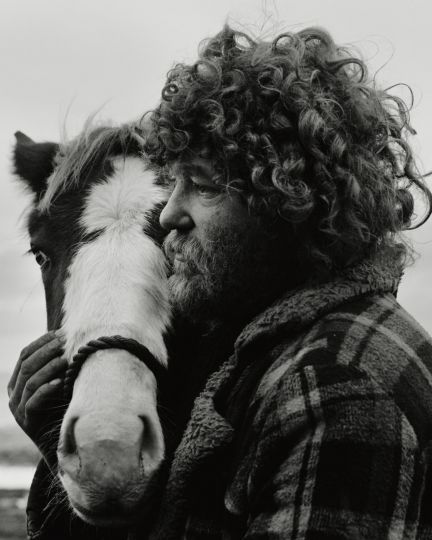
J.W. : Richard Avedon, “Ronald Fischer, Beekeeper,” Davis, California, May 9, 1981.
The one that moved you the most?
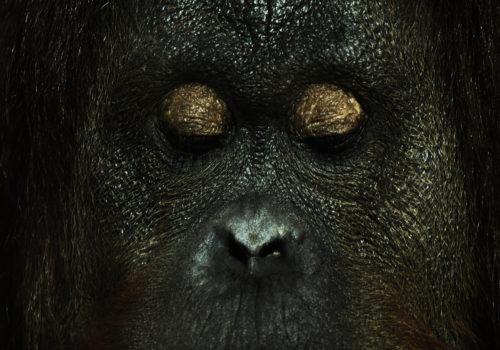
J.W. : The photograph “Dream” I took of an orangutan with closed eyes moves me deeply.
And the one that made you angry?
J.W. : Selfies on social media showing a “real or fake” golden life full of possessions, making people believe, as Alain Souchon sings so well, that happiness comes from having, which makes many people unhappy and disoriented.
Which photo changed the world?
J.W. : I don’t know which one exactly, but for me it’s generally the photos of photojournalists covering war.
And which photo changed your world?
J.W. : A photo by Sebastião Salgado during his exhibition at the BNF. Sorry, I don’t remember exactly which one, but I know it was taken in the Sandwich Islands. I vowed to go there, I went, and this “difficult” journey profoundly changed me.
A key image in your personal pantheon?
J.W. : The image of my American grandfather Larry dressed as a sailor, whom I never met.
What interests you most in an image?
J.W. : It’s the emotion a photograph gives me, whether it’s a landscape or a portrait. What touches me is an image that triggers something I feel I’ve already experienced like a smell or a piece of music that reminds you of a place, a person you love, a moment in life, good or bad.
What details do you look for in a face, a landscape, or an object?
J.W. : A certain “depth.” It’s something heavy, magnetic, but actually found in a detail… In my series “Awake,” the photo “La Nuit” is an example. It’s a fairly simple composition, yet the detail of the light on the ocean gives the photograph its entire depth.
Elliott Erwitt once said: “Color is descriptive. Black and white is interpretive.” Do you agree?
J.W. : Yes for black and white, because it is constructed. For color, I’m not sure, because you can also play with color, so it’s not always “reality” or “descriptive.”
Can technique, in your opinion, ever take precedence over emotion in photography?
J.W. : Yes, perhaps in advertising or fashion photography. This is not a criticism; the work is enormous, and there are many beautiful fashion photographs, but sometimes they lack emotion. Sarah Moon’s work, for example, is exceptional and very poetic.
Is beauty in photography, for you, purely aesthetic?
J.W. : No. I’ve always thought beauty is the flaw we fall in love with the imperfection of charm. That’s the only truth. I like showing the beauty of natural things.
What elements can make silence visible in a photograph?
J.W. : A landscape, even if no living being is visible, does not necessarily represent silence the sound of natural elements, waves, wind in tree leaves… or even the inner feeling the photograph evokes can be “noisy.” Yet a being with closed eyes invites silence.
Does the uniqueness of a photograph come from the moment or from the staging? Can a photograph be truer than reality?
J.W. : A photograph is always unique; it is always subjective. It depends on what the photographer chooses to show or the staging that has been created. You can see this in Robert Doisneau’s work.
Can a photograph change our perception of an event?
J.W. : Yes, of course. A photograph doesn’t show reality, but a perspective. It can influence us and, of course, take things out of context.
Is photography a testimony or a form of manipulation?
J.W. : Both.
What makes a good photo?
J.W. : Many things: emotional impact, aesthetic quality, and even technical quality. By technical, I mean image resolution and how well it’s managed. (When a photo is printed as big as 9,84 feet, it is impressive, but that alone does not make it a good photo you also need at least one of the other two qualities.)
According to you, what is the necessary quality to be a good photographer?
Be free, daring, never give up.
How do you choose your projects?
J.W. : By instinct, by need; it’s quite visceral.
An upcoming project that’s close to your heart?
J.W. : I am working on book projects: one about universal love, the other about ladyboys. A book allows a larger message and universe than a single photo. I also paint and draw a lot since last year.
The person you would like to photograph?
J.W. : A gorilla.
The one you would like to be photographed by?
J.W. : Richard Avedon; I love the portraits in his series “In the American West.”
An indispensable photo book?
J.W. : I don’t know; there are many good photo books.
What is the last photo you took?
J.W. : The sunrise.
In terms of social networks, are you more into Instagram, Facebook, TikTok—and why?
J.W. : I don’t have a Facebook account or TikTok, but Instagram allows me to showcase my work and see others’ work partially.
What changed in photography since the success of social media?
J.W. : Photography has exploded on social media, but it makes professional photographers’ work harder. Social media provides filters and tricks to improve photos, so anyone can take a good photo. On social media, you’ll find a huge number of good photos, but what’s hard is having a large number of truly excellent photos and that requires long-term work.
An Instagram account to follow absolutely?
J.W. : Animal protection, the “SPA”…
What is your point of view about A.I.?
J.W. : In art, I don’t like it. I want art to be the direct creation of a human soul. For other things, I’m unsure. But like anything, it will have good and bad sides.
Color or B&W?
J.W. : Color.
Daylight or artificial light?
J.W. : Natural light.
Which city do you think is the most photogenic?
J.W. : For me, it’s Varanasi, India, but New York is also very photogenic.
The city, the country, or the culture you dream of discovering?
J.W. : Tribes in the Amazon or Africa.
The place you never get tired of?
J.W. : Iceland.
The image that represents for you the current state of the world?
J.W. : One image would not be enough.
According to you, what is missing in today’s world?
J.W. : A certain freedom of expression; people censor themselves out of fear.
If God existed, would you ask him to pose for you, or would you opt for a selfie with him?
J.W. : To pose for me. I am not religious, but I feel God exists; He is everywhere in nature.
Your favorite drug?
J.W. : The love of my dog.
The best way to disconnect for you?
J.W. : Walking in nature.
Your latest folly?
J.W. : Changing my life, which is actually the most reasonable thing.
Your greatest professional extravagance?
J.W. : I’ve had two so far: the first was “human”—photographing ladyboys in the nightlife and prostitution scene in Thailand in the 2010s; the second was going to Antarctica.
The job you would not have liked to do?
J.W. : Criminal lawyer—I wouldn’t sleep!
What question gets you off track?
J.W. : Your penultimate question: “The one thing we absolutely must know about you?”
What was the last thing you did for the first time?
J.W. : Went to hear the deer rutting in nature at nightfall.
Your biggest regret?
J.W. : Not being able to say “I will love you forever” and “thank you” to my grandparents before they passed away.
If you had to start all over again?
J.W. : I would do everything the same, maybe with fewer mistakes.
If I could organize your ideal dinner party, who would be at the table?
J.W. : Nostradamus, Vivaldi, Nietzsche, Francis Ford Coppola, an Egyptian from the time of the pyramids (to finally solve the matter), the people I love, and above all a good chef! Eating well is a great happiness.
What do you like people to say about you… after?
J.W. : I’m happy if they understand and love my work.
The one thing we absolutely must know about you?
J.W. : I don’t know.
A last word?
J.W. : Thank you, Carole, for this interview.