Jean-Pascal Hesse: Looking in order to tell a story
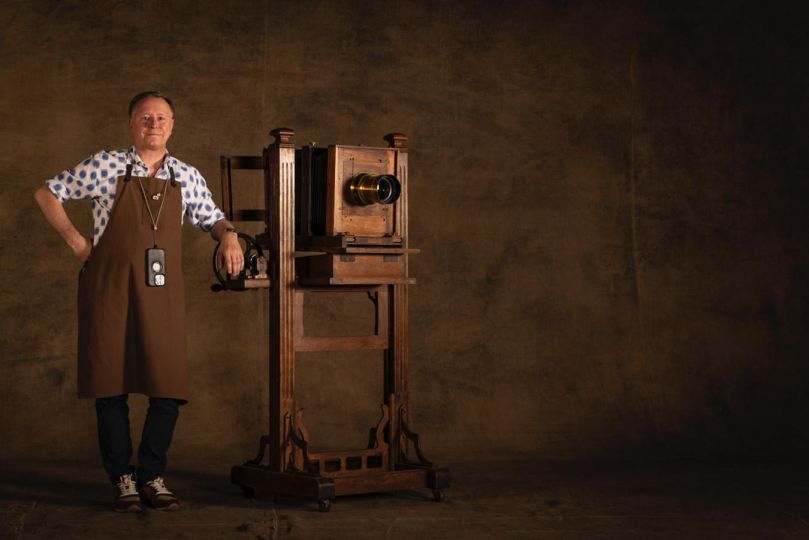
Jean-Pascal Hesse has always viewed the world with an intensity almost cinematic. A trained historian, a writer by vocation, and a communicator by instinct, he has turned the image—still or moving, real or imagined—into the common thread of a unique path that weaves through culture, style, and emotion. Far from superficial aesthetics, his relationship to imagery resembles a quest: one for beauty, memory, and the revealing detail. Through his many works—on Pierre Cardin, Maxim’s, the Palais Bulles, or the secret landscapes of the Luberon—he has crafted a true scenography of the real, where each place, object, or silhouette becomes a pretext for storytelling. It’s never about decorating, but about evoking, suggesting, transmitting. For him, the image is language. It summons the past while celebrating modernity. It invites the eye, but above all, it invites feeling. In a world saturated with fleeting visuals, Jean-Pascal Hesse instead cultivates a demanding, almost artisanal, approach to the image—where light, framing, and texture matter just as much as intention. Meet a man for whom writing, narrating, and showing are never separate gestures, but rather multiple expressions of a deeply sensitive and committed gaze—one dedicated to the art of revealing.
Website: www.jeanpascalhesse.com
Instagram: @jpgs75
Upcoming release: Salon de Provence, Mémoires d’une ville, to be published by Éditions Odyssée in June 2025.
Your very first photographic trigger?
J-P.H.: The hills of my childhood in Pélissanne.
The man or woman of image who has inspired you?
J-P.H.: A fashion model emblematic of the 1950s: Marie-Hélène Arnaud.
The image you wish you had taken?
J-P.H.: The first known photograph in history, taken by Niépce: View from the Window at Le Gras.
The one that moved you the most?
J-P.H.: A photo of my parents, young newlyweds, leaving Algiers for good in June 1962, boarding a plane to Marseille.
And the one that made you angry?
J-P.H.: War photographs.
Which photo changed the world?
J-P.H.: The photo of the first man on the moon in July 1969: Buzz Aldrin walking on the lunar surface.
And which photo changed your world?
J-P.H.: The one I took with my very first iPhone.
What interests you most in an image?
J-P.H.: The aesthetic of the image and the mystery of its beauty.
The last photo you took?
J-P.H.: A bouquet of flowers.
A key image in your personal pantheon?
J-P.H.: A portrait of Albert Camus by Yoshi Takata, taken the day he received the Nobel Prize in Literature.
A photographic memory from your childhood?
J-P.H.: Family vacation memories at my grandparents’ country house in Lapradelle, in the Aude region.
What makes a great photo?
J-P.H.: The emotion it evokes—whether it’s joy or sorrow.
The person you would most like to photograph?
J-P.H.: The child I never had.
An essential photography book?
J-P.H.: All books on interior design—beautiful art books.
The camera of your childhood?
J-P.H.: My father’s Kodak camera with its leather case.
And the one you use today?
J-P.H.: A Lumix.
An upcoming project close to your heart?
J-P.H.: Renovating a house in Lozère.
Your favorite guilty pleasure?
J-P.H.: Regular Coca-Cola!
Your best way to unplug?
J-P.H.: Traveling—just leaving.
What’s your personal relationship with the image?
J-P.H.: Complicated—I rarely like how I look in photos.
Who would you like to be photographed by?
J-P.H.: Annie Leibovitz.
Your latest indulgence?
J-P.H.: Buying a house in Lozère, in a small village at the edge of the Aubrac.
An image to illustrate a new banknote?
J-P.H.: One that represents France and speaks to the greatest number of people: the Eiffel Tower?
The job you’d never want to do?
J-P.H.: Mortician.
Your most extravagant professional moment?
J-P.H.: My job interview with Pierre Cardin.
A question that would throw you off?
J-P.H.: Anything that gets too intimate.
A question you wish someone would ask—but never has?
J-P.H.: None. I’ve been asked every imaginable question.
The last thing you did for the first time?
J-P.H.: Disputed my lawyer’s fees and entered into conflict with him.
The city, country, or culture you dream of discovering?
J-P.H.: Oceania.
A place you never tire of?
J-P.H.: Capri.
Your greatest regret?
J-P.H.: Trusting too easily.
On social media, are you more Instagram, Facebook, TikTok—and why?
J-P.H.: Instagram, for the pleasure of posting my photos.
What have social media brought us—for better or worse?
J-P.H.: A way to communicate and get into people’s lives. And the bad: staged images that show the lack of spontaneity, the addiction to image, and the pressure to conform.
Color or black & white?
J-P.H.: Both.
Natural light or artificial light?
J-P.H.: Natural light.
Which city do you find the most photogenic?
J-P.H.: Hydra.
If God existed, would you ask to photograph Him—or take a selfie with Him?
J-P.H.: Ask Him to pose for me.
If I could organize your dream dinner, who would be at the table?
J-P.H.: Everyone who formed the roots of my life.
The image that best represents the current state of the world?
J-P.H.: The melting ice in the Arctic.
What do you think is missing in today’s world?
J-P.H.: More humanity.
If you had to start all over again?
J-P.H.: I would like to say “no” more often.
What would you like people to say about you… afterward?
J-P.H.: I don’t know… It’s too soon.
The essential thing to know about you?
J-P.H.: I am most often driven by good intentions.
One last word?
J-P.H.: Thank you, life.