Bootsy Holler : Between memory and desire.
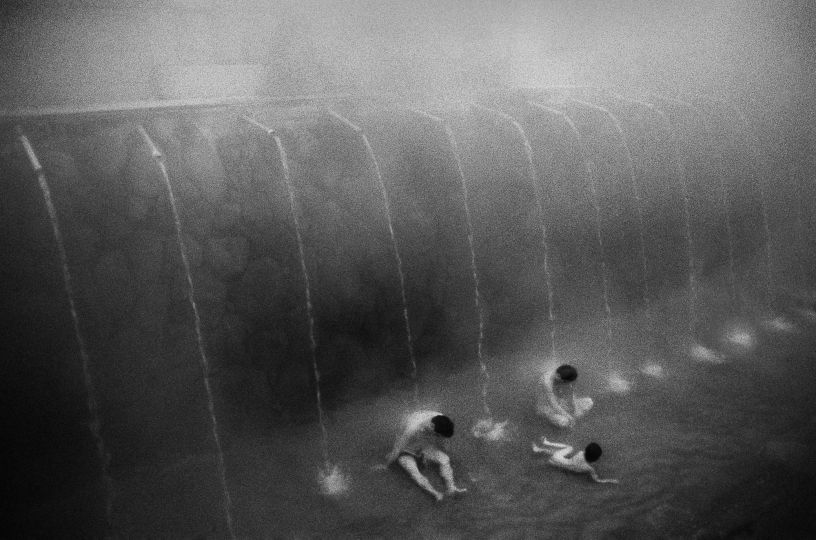
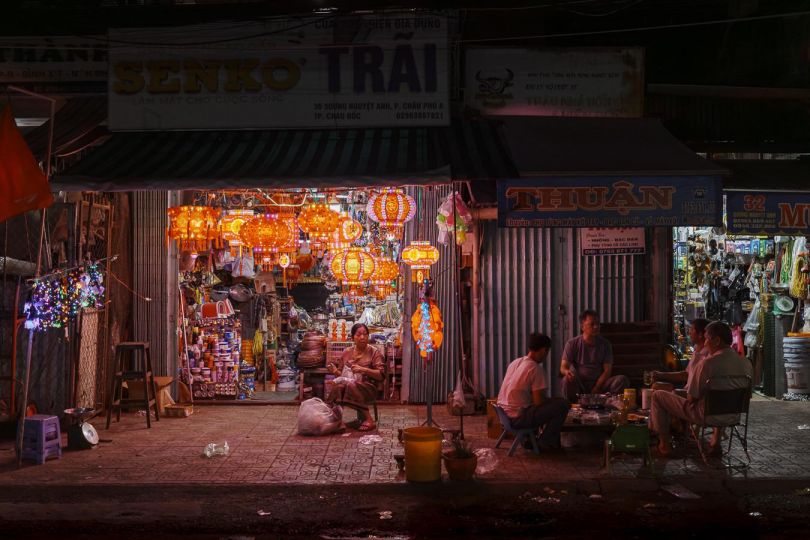
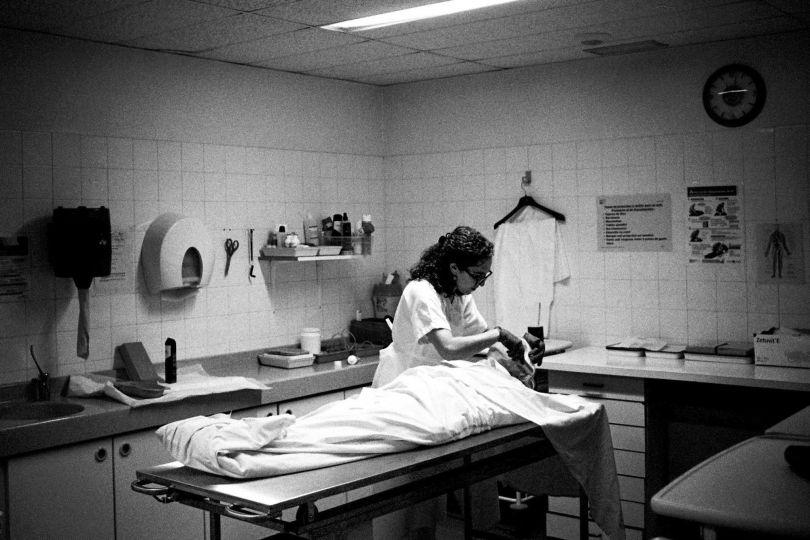
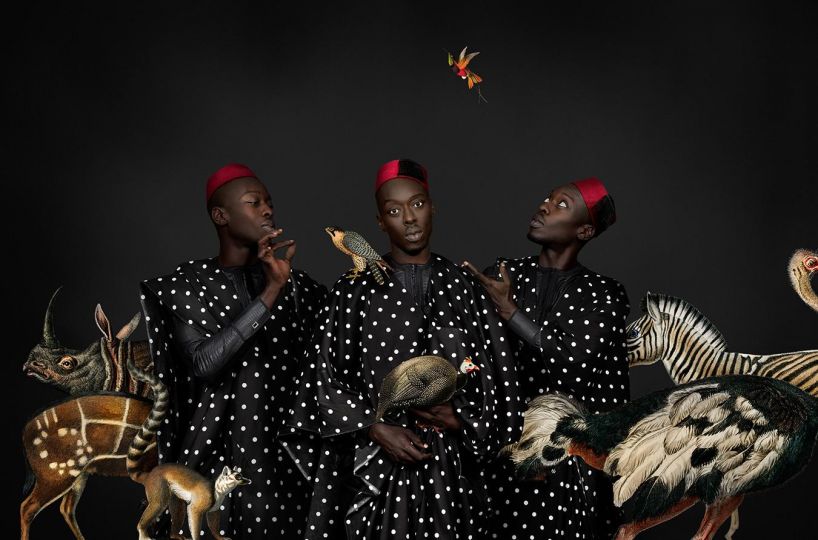
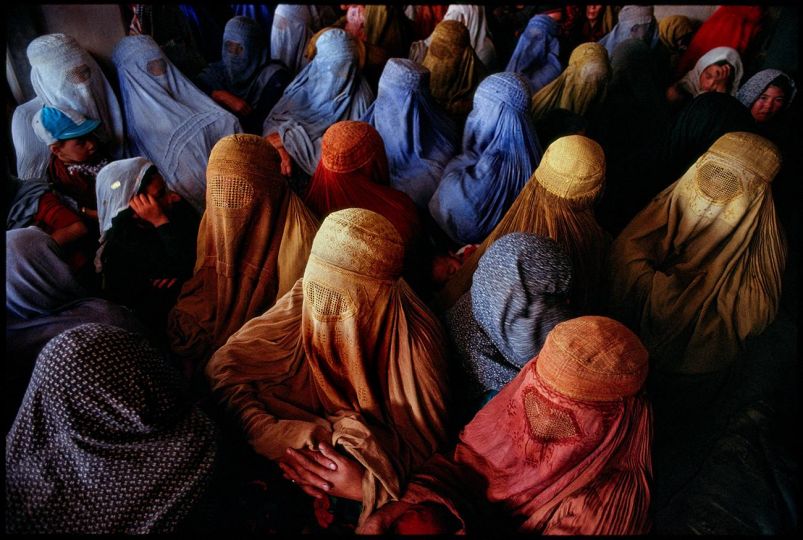
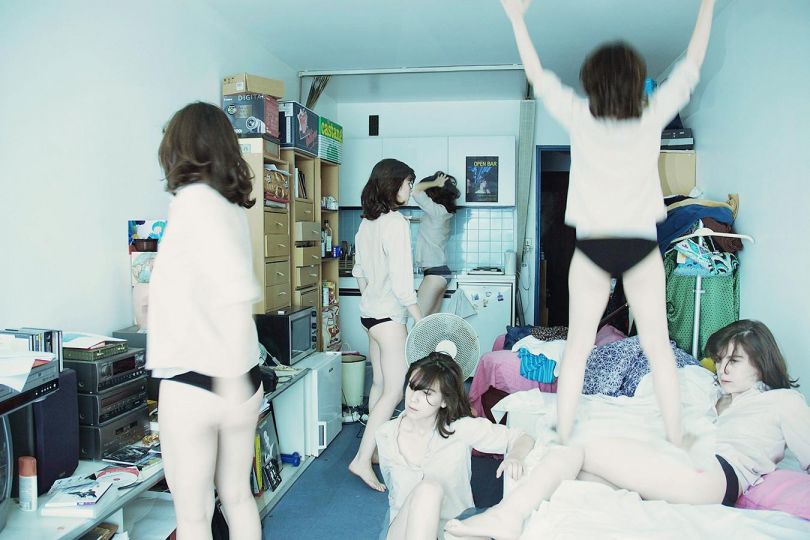
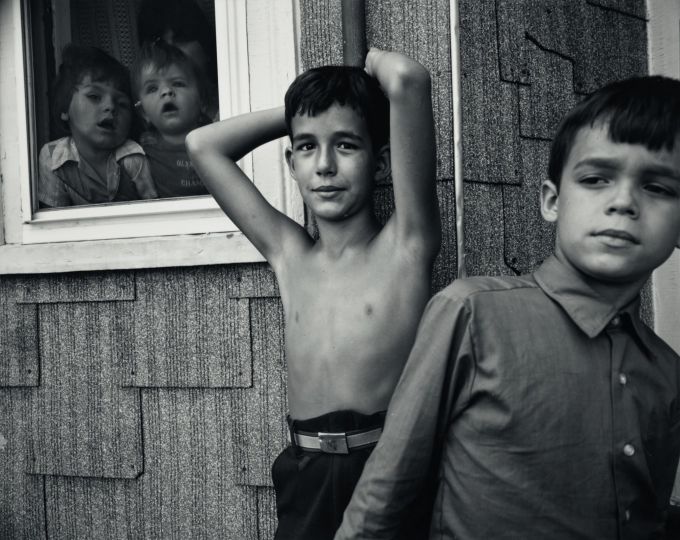
Bootsy Holler captures the world as one might hold a breath, in a fragile, immediate, intimate way. Her images are not mere portraits: they are suspended fragments of life, moments oscillating between memory and desire, between the familiar warmth of home and the exhilaration of a musical stage. Each photograph seems to arrest time, turning the ephemeral into eternity, revealing the hidden beauty of everyday gestures, fleeting glances, and spaces traversed with care.
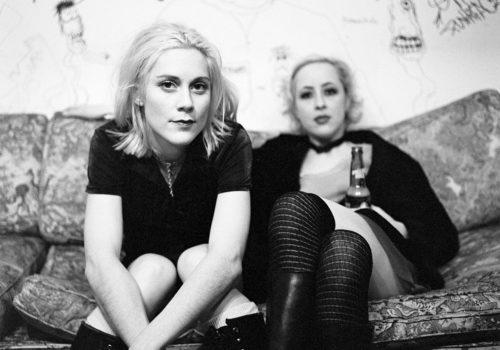
Born in Seattle’s humid air, Bootsy Holler grew up to the rhythm of dissonant indie and punk chords, in a city where melancholy and creativity constantly echo one another. Her photographs tell the story of this city in subtle undertones, its dim lights, rainy streets, makeshift concert venues but above all, they capture the intimacy of those who inhabit it. Every face, every object, every gesture becomes sensitive material, charged with emotion and silent poetry, as if the image alone could convey the vibration of a lived moment.
Her work goes beyond mere documentation: it engages in dialogue. It whispers to bodies, places, and memories as one might murmur to the living and the absent. Light, texture, and detail are her instruments; composition becomes a score, and time stretches, suspended, as if each image contained the eternity of a single instant and the very breath of life. There is in her gaze a rare ability to capture the imperceptible, the shadow of an emotion, the trace of a gesture, the presence of silence.
With Bootsy Holler, the gaze becomes a passage: one enters a universe where music resonates in the silence of portraits, where the mundane transforms into the sublime, and where the inner world is illuminated through the precision of the eye and the poetry of gesture. It is an art of proximity and sensitivity, a vibrant testimony to what it means to truly see, to truly look and to feel. Her photography is not merely vision: it is listening, intuition, vibration, leaving the viewer with the lingering impression that the world, fragile and immense, can be grasped in a single breath, if only for a moment.
Website : www.bootsyholler.com
Instagram : @bootsyholler
News : Her newest book “MAKiNG iT” (published by Damiani) has been presented at Paris Photo. It dives into fame, fantasy, and self-invention — a visual journey through pop culture, music, and style. Shot between 1992–2008, it captures Seattle’s indie and post-grunge scene — with portraits of Pearl Jam, Yeah Yeah Yeahs, R.E.M., Moby, and many many more — exploring what it really means to “make it” in an image-driven culture.
Event on Nov 22 at New York Leica Gallery and Store 11AM signing and talk w/ special guests
Carole Schmitz : What sparked your passion for photography?
Bootsy Holler : My passion for photography started by looking at fashion magazines. I thought I was going to be a designer very early on because I loved to sew and make things. I have had a subscription to VOGUE since I was 12.
Which photographer has inspired you the most?
B.H. : The first photographer to really inspire me was Helmut Newton.
What photo do you wish you had taken?
B.H. : I don’t wish to take photos like others.
What was the last photo you took?
B.H. : I made a portrait of my teenage son for a project I’m working on.
What’s the strangest photo you’ve ever taken—intentionally or not?
B.H. : A beautiful black and white documentary image of a bride sitting half dressed in a corset and nylons, smoking a cigarette, and holding a red Solo cup full of beer, with one guy pulling the hair with a brush and another one moving through the background, all lit by a big window with all the light falling out behind her. When I did shoot weddings, this was the image I advertised with. If you didn’t think this was amazing and funny, then I didn’t want to shoot your wedding.
How do you choose your projects?
B.H. : My projects usually choose me, they are usually sparked by play or experimenting and then turn into full blow series.
What balance do you strike between intuition and thought in creating an image?
B.H. : For me, I move with intuition constantly. I often am triggered by moments that bring me to ideas through the environment, objects, or an incident. Then when I go to make the image, I plan but also let my intuition guide me to a finished photograph.
What makes a photo “successful” to you?
B.H. : For me, it is how it makes me feel. If I don’t feel anything for the image, then it’s not as successful. Next would be balance or movement in an image.
What makes a photo memorable? And what makes an image timeless?
B.H. : Black and white photos always feel timeless. What is memorable is probably how each person connects to an image or story.
What details do you look for in a face, a landscape, or an object?
B.H. : I’m always looking for the beauty in each and try to show what others might not notice as beautiful.
Can technique ever outweigh emotion in photography?
B.H. : Technique can outweigh emotions in a photograph, but I do think emotions are what make a memorable image along with personal style and knowledge of technical skills.
Is beauty in photography purely aesthetic for you?
B.H. : No, beauty in a photo is not purely aesthetic. It comes from inside the shooter; how we feel about the subject when we are creating an image and how the subject feels. Then I think beauty in the image comes through to the viewer if the photograph has balance and is completed well. Everyone’s idea of beauty is different, so as a photographer I’m always trying to show people what I think is beautiful.
What elements help make silence visible in a photo?
B.H. : How do you take flat images and make them speak? I think often it comes down to what is happening in the picture, what gives the idea of movement or a feeling, does the eye move when viewing the photograph?
Does the uniqueness of a photo come from the moment or the staging?
B.H. : Uniqueness comes from having a style, then planning or staging, and then knowing when things are working and being there to capture that moment.
In one word, how would you describe your relationship with photography?
B.H. : Passionate.
What interests you most in an image?
B.H. : What is most interesting to me in a photo is how it makes me feel.
Are you more into color or black & white?
B.H. : I love both for different reasons, but I think because I started out in B&W it made my work better when I started shooting in color.
Natural light or studio?
B.H. : Natural light is always amazing, nothing beats natural lighting.
Can color be a form of storytelling?
B.H. : Yes, color gives feeling to an environment so that becomes a strong storytelling element.
Can we talk about photography without mentioning time?
B.H. : No, photography is a moment only in time.
What role does the invisible play in your images?
B.H. : Emotions are the invisible in an image. If people can feel from your image, then you have just passed on the invisible. But not everyone is that tapped in to their emotions.
Can a photo be truer than reality?
B.H. : Sometimes.
Can a photo change the way we perceive an event?
B.H. : Yes.
Is photography a testimony or a form of manipulation?
B.H. : A testimony.
Which photo changed the world?
B.H. : The Terror of War photo of ‘Napalm girl’ from the Vietnam War changed the world’s view of war.
And which one changed your world?
B.H. : Nan Golden’s images from The Ballad of Sexual Dependency.
What was the first image that deeply moved you?
B.H. : I was deeply moved by Jock Sturges’ work. And the one that made you angry? Not sure if I’ve ever been angry about an image, only if I think the photographer is showing a subject in a poor or hurtful way.
If you had to choose one photo to represent you, what would it be?
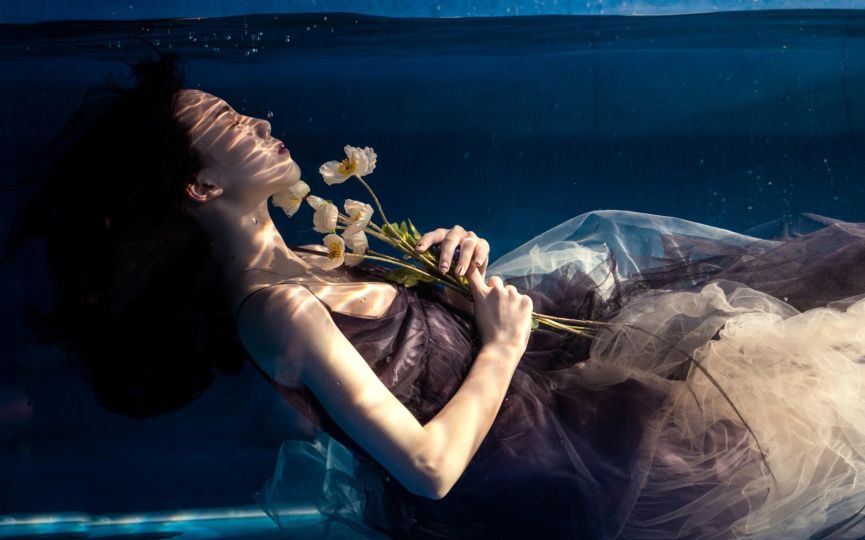
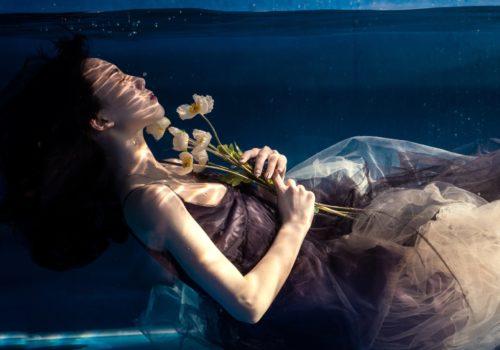
B.H. : One of my own images of a woman floating face down in a pool at night, shot from above, lit by the blue pool light.
If you could photograph the inside of your thoughts, what would it look like?
B.H. : The inside of my thoughts would look like the art I make.
What was the last thing you did for the first time?
B.H. : Said my last goodbye to my mother before she passed away.
A key image in your personal pantheon?
B.H. : “Minna Northern California,” 1978 by Jock Sturges.
A photographic memory from your childhood?
B.H. : The moment I thought I was going to drown while inner-tubing on a lake. The boat was not strong enough to pull my friend and me out of the water, and my friend’s arm was holding me down even after I let go. I was 14, and it was the 80s. I definetely had enough time to realize I was possibly not going to make it. The guys lifted me out of the water and I purged water out of my lungs.
What is your greatest regret?
B.H. : Not shooting more when I was in a music scene in Seattle in the 90s and 2000s, I didn’t know I was in the middle of something bigger than myself. Money was always an issue as this was pre-digital and it was just my life.
Does a photo still belong to you after you’ve shared it?
B.H. : I don’t think any art belongs to the maker once it is out in the world. Art becomes the viewer’s story once out.
An indispensable photo book?
B.H. : I have so many, it’s hard to say. My first photo book I bought was “The Last Day of Summer” by Jock Sturges.
What was your childhood camera?
B.H. : An Olympus XA 35mm rangefinder pocket film camera + the flash.
What camera do you use today?
B.H. : I shoot on many different cameras depending on the project, but most recently the Hasselblad X2D and my 1960s Rolleflex twinlens.
Your favorite addiction?
B.H. : Making things, dogs, and coffee.
If your camera could talk, what would it say about you?
B.H. : If my camera could talk, it would probably say, just ignore her.
In your opinion, what is the role of photography in how we perceive the world?
B.H. : Photography is a major piece of how we perceive history and why we understand what is going on in different places. Not everyone reads, but anyone can take a second to look at an image and learn.
What are the major challenges for the future of photography?
B.H. : AI will be the challenge of photography because as much as a photos can be manipulated, anyone can create false narratives with AI.
How are social media influencing the creation and reception of images today?
B.H. : Media is flooded with imagery right now, but true photographers shooting with a point of view on a subject will break off and become a higher art form, separating the two.
If photography were a weapon, what kind of “shot” would you prefer?
B.H. : A straight shot.
If you could photograph a historical and/or contemporary figure, who would it be and why?
B.H. : I would want to have the chance to create a portrait of our first female President of the US. So future historical.
If photography could capture emotions as well as images, what emotion would you want it to convey?
B.H. : I like it to convey love.
If you had an interdimensional portal, what would be the first photo you’d take in another world?
B.H. : I would probably shoot while going through the interdimensional portal if it had light. Then the first thing that showed light.
If your camera were a superhero, what would its secret power be?
B.H. : That’s easy, it would have to be invisibility. One reason I love to shoot from the hip with my old Rolleiflex twinlens.
If a photo of you were to illustrate a futuristic invention, what would it look like?
B.H. : I have no idea.
An image to illustrate a new banknote?
B.H. : It would be the portrait I took of the first female US President.
What photo would you love to take… but that could ruin your career?
B.H. : No image is worth sacrificing your reputation as a trusted shooter.
If you had to photograph the story of an ordinary object, which would you choose to turn into a masterpiece?
B.H. : Ordinary objects are one of my favorites to photograph, and I made a book about all the objects in my mother’s home that I had known for 44 years at the time. The Diamond Deb nail file, the coaster, the old washcloth, and the green ashtray kept for my Aunt Jane to use. But the 1970s washcloth image is a masterpiece on its own. All these together in a small postcard book I created with a short line on the back about each of the 44 objects’ life.
Which city do you find most photogenic?
B.H. : Anywhere in the NW works for me where the magic light comes from being so far north in the summers. Seattle or Vancouver, BC.
If God existed, would you ask Him to pose for you, or would you prefer a selfie with Him?
B.H. : I would love to be able to capture an image of it.
If I could organize your dream dinner, who would be at the table?
B.H. : Frida Kahlo, Egon Schiele, Alfred Stieglitz, Georgia O’Keeffe, Jan Saudek, Mary Ellen Mark.
The image that best represents the current state of the world, in your eyes?
B.H. : A toddler eating a bowl of spaghetti and meatballs.
The one essential thing people should know about you?
B.H. : I’m a much better talker than a writer.
One last word?
B.H. : Night.