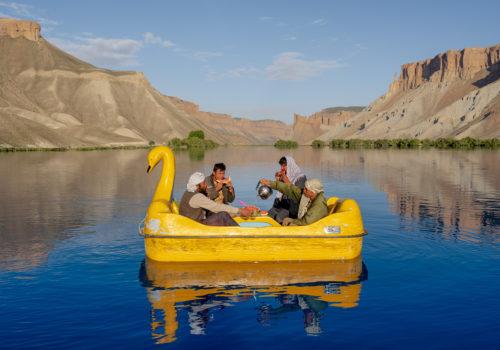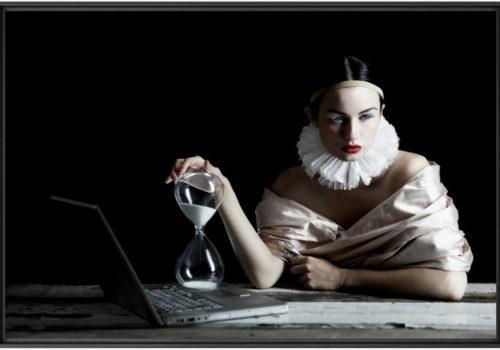
Alexandre de Metz – The Instinct for Image
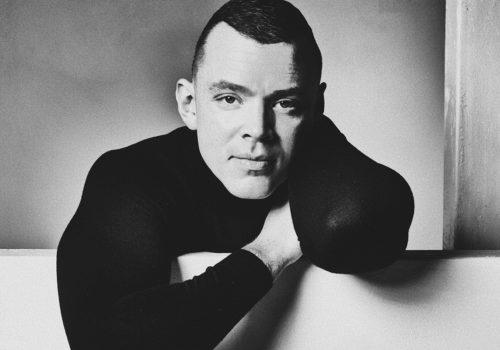
A clear vision, a sharp eye, and a keen sense of the market. Alexandre de Metz embodies a new generation of cultural entrepreneurs who have successfully bridged the gap between artistic excellence and accessibility. As co-founder of YellowKorner—a brand that has become a global reference in the distribution of fine art photography, he has spent nearly two decades pursuing a singular ambition: to take photography out of closed circles and bring it into everyday life. But never at the cost of quality prints are entrusted to expert art labs, or to artistic integrity, with a curatorial line where legendary figures of contemporary photography meet promising new voices.
A graduate of ESSEC, trained in economics but driven by a deep love of culture, he launched YellowKorner in 2006 with his partner Paul-Antoine Briat. What began as a bold wager quickly grew into a phenomenon. Going against the grain of traditional galleries, they imagined a new way of collecting: more direct, more emotional, more free. Today, YellowKorner boasts over 130 galleries around the world—from Paris to Shanghai, New York to Dubai—promoting a cosmopolitan vision of photography at the crossroads of luxury, aesthetics, and visual storytelling.
Yet Alexandre de Metz is not defined by entrepreneurial success alone. He is a discerning enthusiast, as likely to cite Paolo Roversi as Sarah Moon, to be moved by a Robert Frank print or shaken by Juliette Hanrot’s Madonna of Bentalha. He speaks about photography as one might speak about music: with emotion, precision, and passion. What he seeks is what stirs, what halts, what displaces. Behind the entrepreneur lies an eye and behind the eye, a sensibility.
An insatiable collector, he hunts rare books, roams auction houses like one browses a secret library, and confesses a long-standing affection for darkened cinemas, piano recitals, and sad clowns captured by Nadar. At the intersection of commerce and the intimate, he represents a singular way of being with the images, aware of its power, but also its vulnerability.
A modern humanist, Alexandre de Metz believes photography has the power to shift perception, reveal invisible truths, and awaken consciousness. In a world saturated with visuals, he advocates for a more mindful gaze, more demanding, more embodied. A gaze that transcends time and speaks to the spirit of our age.
www.yellowkorner.com
Instagram : @akthyrka / @yellowkorner_official
Your first photographic spark?
It was the smell of chemical baths in Ousson-sur-Loire. I was around fifteen, making my first silver prints in the darkroom of our family home.
The image-maker who inspires you?
Clara Haskil. An exceptional pianist with a destiny of immense fragility and rare intensity. With her, it’s all about nuance and controlled tension.
The image you wish you had taken?
Probably one of the photographs from Richard Avedon’s American West series.

© The Richard Avedon Foundation
The one that moved you the most?
Recently, I rediscovered Jane Evelyn Atwood’s portrait of an incarcerated woman giving birth, lying on her bed a raw, frontal image of overwhelming intensity.
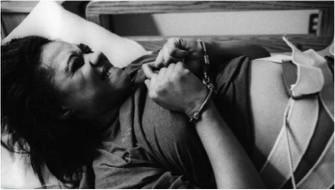
© Jane Evelyn Atwood
The one that made you angry?
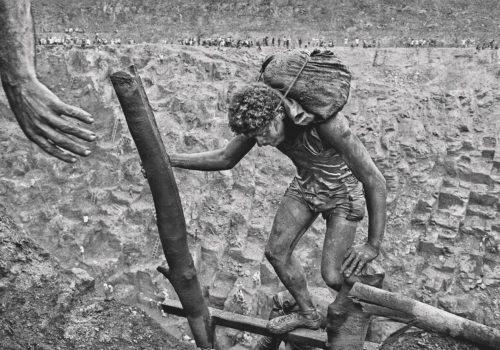
Sebastião Salgado’s photographs of the Serra Pelada gold mines.
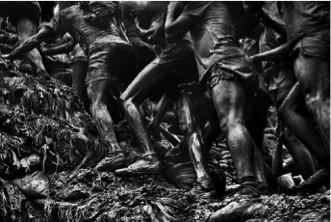
© Sebastião Salgado
A photographic memory from your childhood?
A stolen photograph taken with my first film camera: a farmer and his cows in the morning fog of the Loire Valley.
The image that haunts you?
One of Paolo Roversi’s portraits of Natalia.
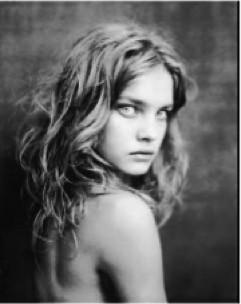
© Paolo Roversi
The one that changed the world?
Dali Atomicus by Philippe Halsman—a technical and creative tour de force.
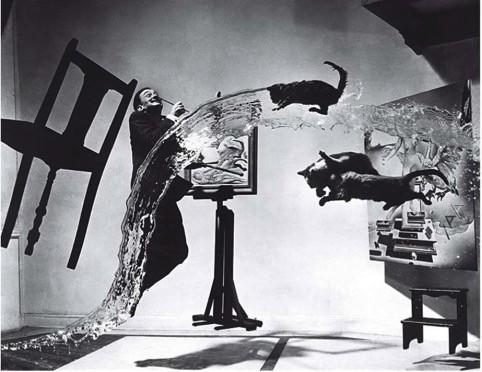
© Philippe Halsman
The one that changed your world?
My parents’ wedding photo, in black and white, with a row of altar boys an image suspended in time.
If budget were no limit, which artwork would you dream of acquiring?
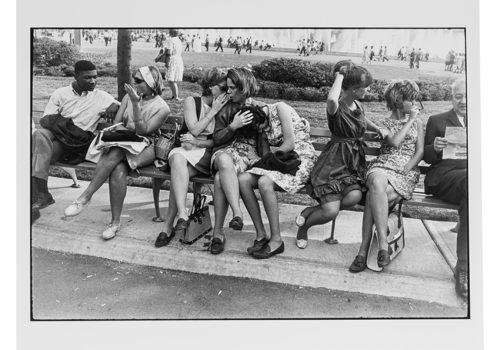
An original print from Robert Frank’s The Americans. This book is a visual and narrative punch. It speaks of the fragility, loneliness, and beauty in the margins of a country and an era.
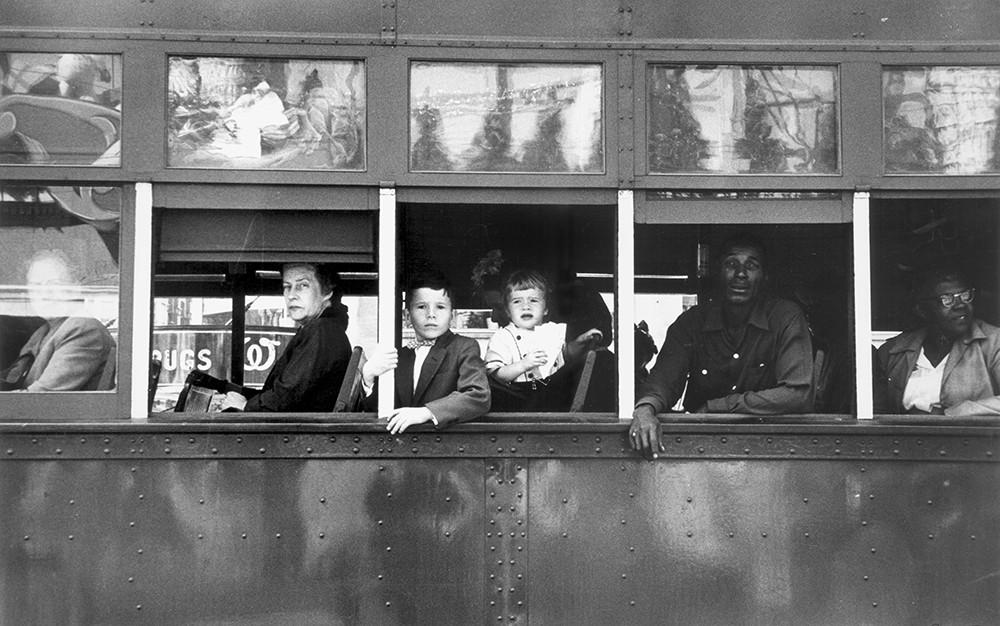
© Robert Frank
In your opinion, what quality does a good photographer need?
Photography is writing with light you must have the image in your mind before you even press the shutter, yet still be open to reality surpassing and surprising you.
The secret to the perfect image, if it exists?
It doesn’t exist. But if it stops you, if it speaks in silence, then it is right. Avedon said, “All photographs are accurate. None of them is the truth.”
The person you’d like to photograph?
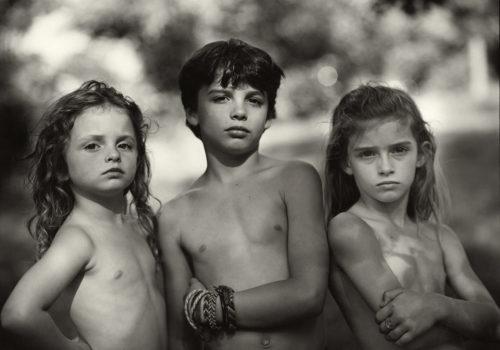
A jazz band in full swing or seemingly ordinary families, as Tina Barney did.
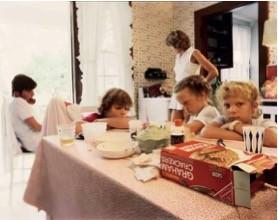
© Tina Barney
The person you’d like to be photographed by?
Jamie Hawkesworth, for his ability to suspend time and bring grace out of silence or Elizaveta Porodina for her boundless creativity.
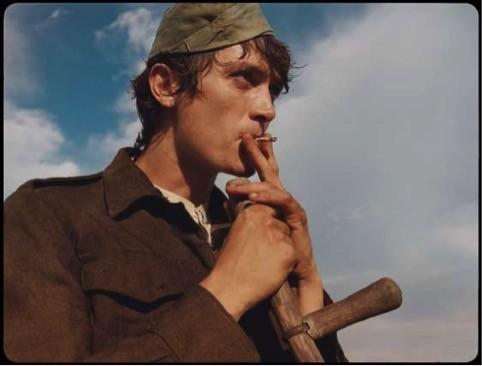
© Jamie Hawkesworth
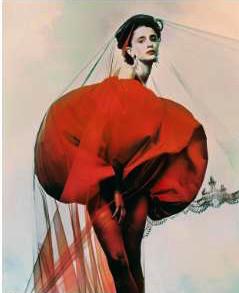
© Elizaveta Porodina
A must-have photo book?
Blue Note: Photographs of Francis Wolff. A whole era, a style, a way of listening with your eyes.
Your childhood camera?
A Rolleiflex 6×6 2.8 Planar. I was fascinated by it you had to look into a well of light and frame at waist level: a discreet and direct gaze.
The one you use today?
An iPhone, like everyone else. But I keep my cameras like talismans.
Your favorite addiction?
Auction houses until midnight. I hunt for rare books, invisible editions, like treasure.
Your best way to disconnect?
A piano concert. The dark room and the silence before the first note already carry you away.
What’s your relationship with the image?
The image is immediate. Photography is memory. An image tells. A photograph touches. They are two different visual regimes. Often, the image reassures, and the photograph destabilizes.
Your greatest quality?
Curiosity. I’m always looking for a new perspective.
Your last extravagance?
An original drawing by Akira Toriyama, who passed away last year.
An image to illustrate a new banknote?
Sarah Bernhardt by dressed as a clown for its cynicism.
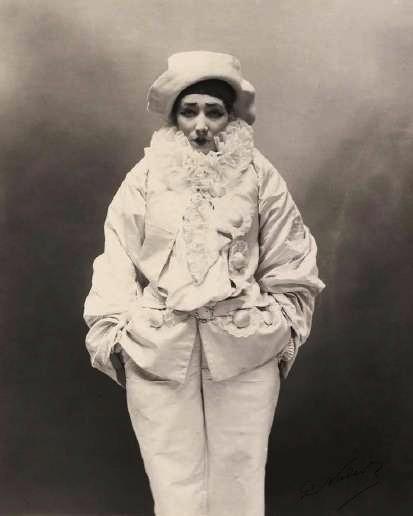
© Nadar
A job you would never want to do?
Politician.
Your greatest professional extravagance?
Co-founding YellowKorner in 2006. No one expected us. We went all in. It was dizzying, intense, sometimes insane, but always sincere and passionate.
Does photography have the power to change collective perception of an event or era?
Absolutely. I think of Juliette Hanrot’s photo La Madone de Bentalha, of a woman silently screaming in 1997 near Algiers. She holds her murdered child in her arms. The image transcends testimony to become an icon of civil suffering and the horror of war. It etched itself into minds, crystallizing both a mother’s unspeakable pain and the absurdity of violence. Through that photo, the view of the Algerian conflict shifted it became a universal human tragedy.
How do you view the influence of social media on the way photographs are made and perceived today?
Instagram is a multiplied mirror sometimes flattering, often distorting. But it also gives photography greater visibility and accessibility. It’s up to us to embrace innovation while preserving photographic standards.
An Instagram account not to miss?
I follow more and more curated accounts that offer inspiring feeds and let you discover authors—sometimes emerging ones. One example is The Analog Club, where every post opens a door into a photographic world. (@the.analog.club)
What’s the last thing you did for the first time?
Re-read a book for the third time: Journey to the End of the Night by Céline.
What makes a successful photo?
It’s a photo that stops you for a fraction of a second or for a lifetime.
What’s the difference between photography and fine art photography?
Photography records; fine art photography interprets. One documents; the other transforms.
The city, country, or culture you dream of discovering?
North Korea, which moved me deeply on an artistic and photographic level. I’m thinking in particular of Philippe Chancel’s work. I would love to see it with my own eyes.
A place you never tire of?
Vézelay a village steeped in mystery where spirituality is ever-present. Everything becomes reflection and silence.
Your greatest regret?
Not saying yes when I was asked to photograph James Brown. I didn’t believe it at the time.
Color or black and white?
I have deep respect for silver black and white, but when mastered, color becomes a form of writing.
Daylight or artificial light?
Natural light.
In your opinion, the most photogenic city?
It’s hard to choose, but I’d say New York.
If I could host your ideal dinner, who would be at the table?
My wife if Vivian Maier would kindly babysit. Fun fact: she was a nanny.
If God existed, would you ask Him to pose or take a selfie?
I think I’d ask Him to sign a contract so I could distribute the photo through YellowKorner.
An image that represents the current state of the world?
A photo by Alex Webb: layers of life, gazes that ignore each other, a saturation of images, or a photo by Martin Parr.
If you had to start over?
I wouldn’t start over I’d keep going. I believe in building step by step. This is only the beginning.
Note from the Publishing Director
Carole Schmitz has complete editorial freedom over her Questionnaires.
Their tone can sometimes reflects, as is the case here, a different editorial line from that of L’Oeil de la Photographie.
In fact, L’Oeil de la Photographie does not support YellowKorner’s commercial approach.
Jean-Jacques Naudet / Publishing Director