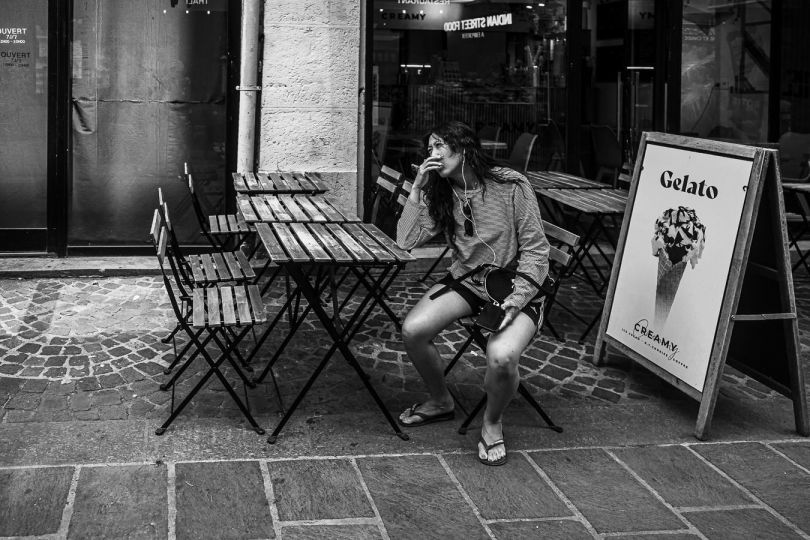
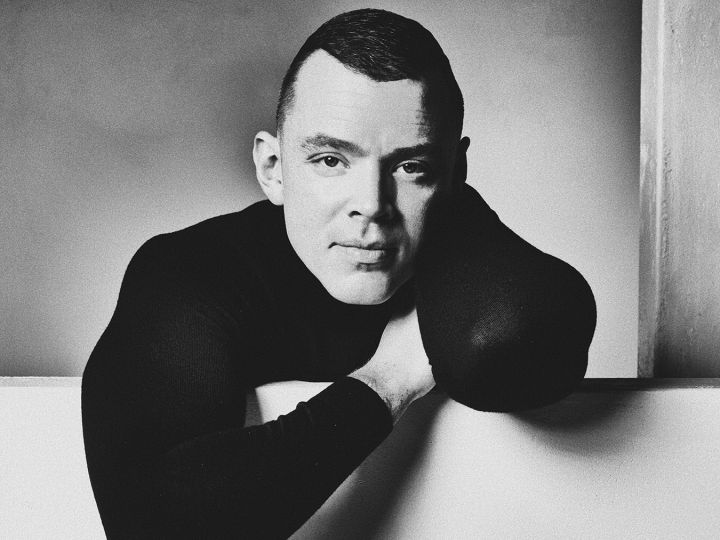
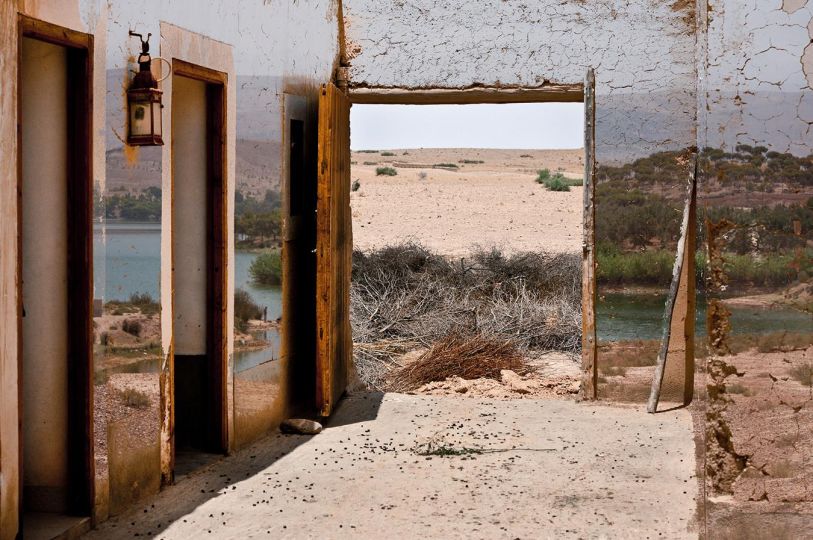
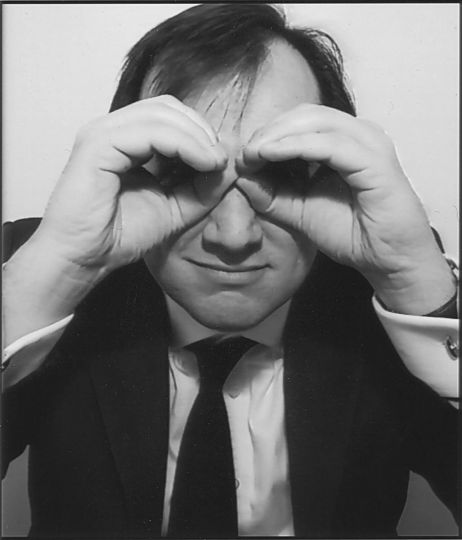
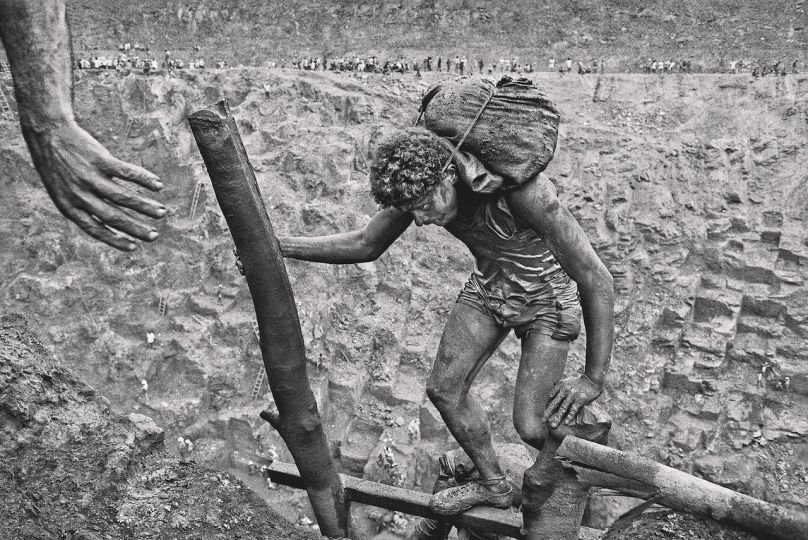
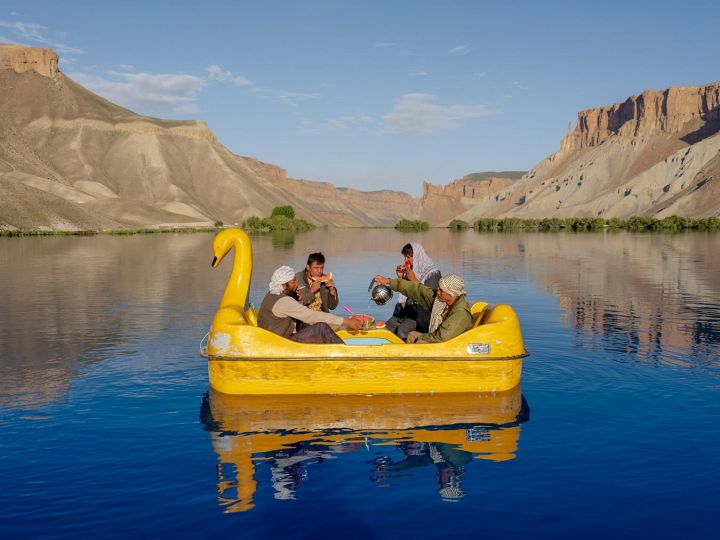
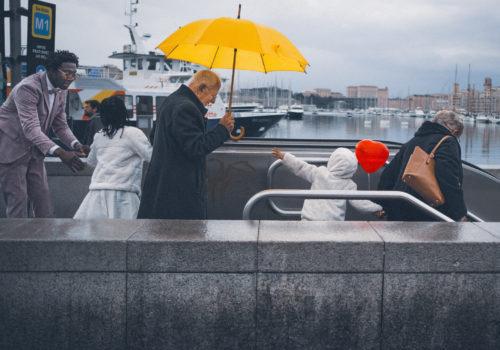
Al Satterwhite : Emotion above all.
A singular figure in American photojournalism, Al Satterwhite has the rare ability to transform a documentary moment into a cinematic scene. Trained in the rigorous standards of the press — LIFE, Sports Illustrated, Esquire, Time — he quickly transcended its codes, favoring over journalistic neutrality a vision saturated with light, movement, and desire.
In the 1970s, as America was inventing a mythology caught between political disillusionment and mechanical euphoria, Satterwhite captured its tension with uncommon acuity. His pioneering use of color, far from any mere aesthetic flourish, became a narrative language. Each image appears frozen from a film at its climax: a glance, a spark, a suspended breath.
His portraits of Muhammad Ali, Steve McQueen, Paul Newman, and journalist Hunter S. Thompson — in the cult series The Cozumel Diary — reveal a fascination with figures of excess and freedom, characters in whom grace always flirts with extravagance. He excels at revealing the in-between: the raw energy of the ring, the languor of a paddock, the fragile instant when the mask cracks. For him, photography is both choreography and confession. His precise framing, mastery of backlighting, and appetite for risk give his images an almost physical density. They pulse with essence, dust, sweat, speed — and yet also with melancholy.
Actually represented in the collections of the MoMA and the Getty Museum, Al Satterwhite remains one of the few photographers to have successfully combined the rigor of reportage with the sensuality of cinema, offering American memory a brilliance that is at once radiant and lucid.
Website : www.alsatterwhite.com
Instagram : @al_satterwhite
Galleries : Morrison Hotel Gallery (www.morrisonhotelgallery.com) / Art Exchange (www.sfae.com) / C+C Galleries (www.candcgallery.com) / Musichead Gallery (www.musichead.com) / Photographs Do Not Bend. www.pdnb.com
Your first photographic trigger?
Al Satterwhite: Life magazine cover, April 16, 1965, photo by Larry Burrows. It’s a shot of the interior of a helicopter gunship in which the door gunner is looking back toward the camera so he can see the severely wounded soldier on the floor, who later died of his injuries. That photo was the most intense, gut-wrenching image I had ever seen. From that point on, I knew I wanted to be a Life magazine photographer.
A photographic memory from your childhood?
A.S.: I was shooting photos for a science project in 8th grade. Who knew you could be so clueless yet later turn out to be a lifelong professional?
The camera of your childhood?
A.S. : It started with a Kodak Brownie Hawkeye, then moved to the Argus C3 (the ‘brick’), where I first encountered Kodachrome film, which was to be my film of choice for the next 50 years until it was discontinued in 2010 because it really made the colors pop.
The one you use today?
A.S. : I use Leica SL3 mirrorless and M11 rangefinder cameras. I have two of each. I used Nikons for 40+ years with film, but I was mostly unhappy with the range of digital cameras until the M11 and SL3 were introduced. I use them every day. (I still have my original Leica M2, but I don’t shoot film.)
The man or woman of image who inspired you?
A.S. : Larry Burrows for his photojournalist images, Pete Turner for his use of color.
The image you would have liked to take?
A.S.: The one I am going to take tomorrow. There are so many images I love to look at and wished early on that I could shoot ‘like that.’ The true masters of the day were an inspiration. I wanted to shoot like them, but I wanted to do my own work.
The one that moved you the most?
A.S. : Larry Burrows’ Life cover, mentioned above. There is so much emotion in the image, and if you followed the picture story inside the magazine, it is very emotional. There are few picture stories like that anymore. Just because digital has lots of room for pictures, it’s not the same as holding a magazine in your hands and turning the pages.
And the one that made you angry?
A.S. : Ones that look mundane. Ones that don’t seem to tell a story or evoke any type of emotion.
Which photo changed the world?
A.S. : Unfortunately, photos do not change the world; sometimes they get people to think about change. The obvious one that people will know is the 1970 image of the girl kneeling over the body of a Kent State University student who was shot by the National Guard.
And which photo changed your world?
A.S. : Any photo by Pete Turner, Art Kane, or Ernst Haas because of their exquisite use of vibrant, powerful color.
A key image in your personal pantheon?
A.S. : Too many to list. I love color; I love B&W. When I see an image that ‘speaks to me,’ moves me emotionally in some way, I spend some time with it.
What interests you most in an image?
A.S. : Emotion—the connection it makes on an emotional level, the way it makes someone feel or react.
What details do you look for in a face, a landscape, or an object?
A.S. : Something unusual, something that grabs my attention. With women, it could be the eyes, the mouth, the hair; with a landscape, probably the lighting; with an object, how to light it in an interesting way.
Elliott Erwitt once said: “Color is descriptive. Black and white is interpretive.” Do you agree?
A.S. : Not necessarily. For me, color has to be strong, bold, and appealing; Black & White is more emotional, more person-oriented.
Can technique, in your opinion, ever take precedence over emotion in photography?
A.S. : Never. You can have a technically good image with no soul. The emotion has to be there so that every time you revisit or look at that image, you feel something. Ansel Adams’ great image Moonrise, Hernandez, New Mexico is a photo with excellent technique and also emotion.
Is beauty in photography, for you, purely aesthetic?
A.S. : It must have some emotion, something that makes you want to keep looking at the image. What triggers the emotion is different for each individual.
What elements can make silence visible in a photograph?
A.S. : Whatever invokes the emotion of silence, of quiet emptiness.
Does the uniqueness of a photograph come from the moment or from the staging? Can a photograph be truer than reality?
A.S. : When I was a photojournalist, it was always the moment: ‘F8 and be there.’ Years later, when I was an advertising photographer, I staged everything. As a Director of Photography for feature films, we have a script but look for that special something that happens in the moment. The moment is always the unexpected and is usually the best. Many times, it was about taking a chance that you might fail or miss the ‘big picture.’ I wanted something different, something special. Take a chance. A photograph might look real, but if you pulled back or changed the framing, it might change the reality, as the photographer controls the framing.
Can a photograph change our perception of an event?
A.S. : Of course. The photographer controls where the camera is pointed, what it ‘sees.’ Photojournalism/news photos are supposed to be happenings in front of the camera that are recorded. Advertising images are controlled by the photographer; anything in the frame is intentionally put there by the photographer. Both can play on your emotions or perceptions.
Is photography a testimony or a form of manipulation?
A.S. : It’s pretty much always manipulation of a sort, unless it is pure documentary work. It always depends on the photographer’s point of view, emotional state, what he/she is thinking or feeling when they press the shutter release. That is influence and direction of a sort, consciously or not.
What makes a good photo?
A.S. : It’s memorable, emotional, makes you think about the image. What’s going on, why did the photographer choose the subject, the location, that moment to release the shutter?
According to you, what is the necessary quality to be a good photographer?
A.S. : Be a good observer, with a great sense of what is about to happen in front of you—timing.
How do you choose your projects?
A.S. : These days it’s strictly what interests me, usually the people I want to photograph. Many times, I want/need to go somewhere I have not been before to open my eyes, see something new and different. But sometimes it’s just a matter of being aware of what is around you and noticing a nuance you haven’t noticed before.
How would you describe your creative process?
A.S. : When I decide on a project, I usually have a simple idea of what I want to shoot as a plan, but I really wait until I’m on location and let things develop in front of me. I want to be surprised. If nothing is surprising, I can always fall back on my plan.
An upcoming project that’s close to your heart?
A.S.: America, Lost and Found, 60 years of images I have taken from 1962 to the present, edited down to maybe 200 images, 125 pages.
The person you would like to photograph?
A.S. : Anyone I find interesting, who are most often random people I happen upon as I walk the streets of whatever city I’m in.
The one you would like to be photographed by?
A.S.: Avedon—who else?
An indispensable photo book?
A.S. : Photo Design by Prof. Harald Mante, 1971. It is a small book with numerous illustrations on design and composition of various photographs. I read through it once, and those simple, straightforward elements stayed with me to this day.
What is the last photo you took?
A.S. : Early morning yesterday, on the sidewalks of New York City. It was of a guy who walks around carrying a large cross who stopped to give a homeless man some money.
In terms of social networks, are you more into Instagram, Facebook, TikTok — and why?
A.S. : My wife posts some of my images on my Instagram account weekly. The problem for me on social media is that I don’t have time to properly engage on those platforms. Too often, my images end up getting stolen and used in ways that violate my copyright. People either have little or no respect for copyright ownership, or they don’t care.
What changed in photography since the success of social media?
A.S. : Social media is a sea of photography, which seems to dilute the value and understanding of what it takes to capture a compelling image that will last beyond the moment. As Richard Avedon was quoted: “When someone buys a word processor (computer), they don’t call themselves writers, yet when they buy a camera or use the camera in their mobile phone, they tend to call themselves photographers.”
An Instagram account to follow absolutely?
A.S. : I don’t have the time. I’m sure I’m missing out on some great photography, especially by photographers I know and admire. I know my wife follows my account…
What is your point of view about A.I.?
A.S. : Perhaps it will be helpful in tracking down my images that are misappropriated, but more likely it will be the death of anyone trying to make a decent living as a professional photographer.
Color or B&W?
A.S. : Black and White. I started with Tri-X for the first 20 years, then switched to Kodachrome 25 for 90% of my work over the years. Now I’m back to B&W for most of my work. 95% of the time, people photograph better in B&W. Color has to be all about the color and the design within, at least for me.
Daylight or artificial light?
A.S. : I prefer natural light.
Which city do you think is the most photogenic?
A.S. : Paris and New York City, because they’re vibrant, romantic, have great light, and are full of diversity with all kinds of interesting people.
The city, the country, or the culture you dream of discovering?
A.S. : Anyplace that is new and unknown is a challenge and a calling.
The place you never get tired of?
A.S.: Paris and New York City.
The image that represents for you the current state of the world?
A.S. : Times Square, NYC – the “No Kings” protest images shot on October 18, 2025.
According to you, what is missing in today’s world?
A.S. : Humor and kindness.
If God existed, would you ask Him to pose for you, or would you opt for a selfie with Him?
A.S. : If there’s a smile on His face and a kind word, I’d gladly take a selfie with almost anyone.
Your favorite drug?
A.S. : My drugs of choice… It starts with café lattes in the morning and throughout the day, switching to a nice Cabernet in the evening.
The best way to disconnect for you?
A.S. : Reading a good book or taking a walk-through Central Park.
Your latest folly?
A.S. : Raced to catch a subway and ended up going in the wrong direction.
Your greatest professional extravagance?
A.S. : Buying 2 Leicas and 3 Summicron lenses in a single day.
The job you would not have liked to do?
A.S. : Politician. I spent a year as the personal photographer for the Governor of Florida after leaving the newspaper. Although I had great respect for him and we remained friends until his death, I got a close-up look at how politics and politicians work. Not for me, thank you.
What question gets you off track?
A.S. : An interruption when I’m in the middle of a thought or talking with someone.
What was the last thing you did for the first time?
A.S.: I taught my cat how to climb down from a 10-foot-tall, narrow library ladder.
Your biggest regret?
A.S. : That I hadn’t moved to NYC sooner.
If you had to start all over again?
A.S. : Move immediately to New York City.
If I could organize your ideal dinner party, who would be at the table?
A.S.: Always fun and interesting people, my friends. But on a slow night, M.C. Escher, Modigliani, and Caravaggio might be fun over several bottles of wine.
What do you like people to say about you… after?
A.S. : That I was someone who gave it his all.
The one thing we absolutely must know about you?
A.S. : Probably that I love the life I’ve lived as a photographer.
A last word?
A.S. : Just one?… Be true to yourself.