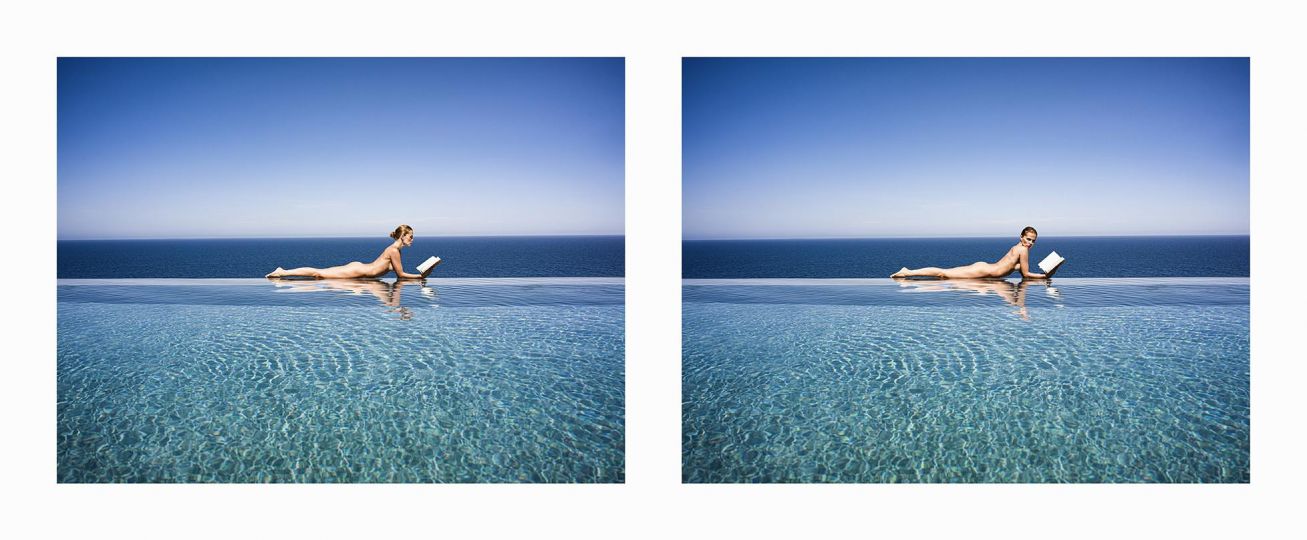
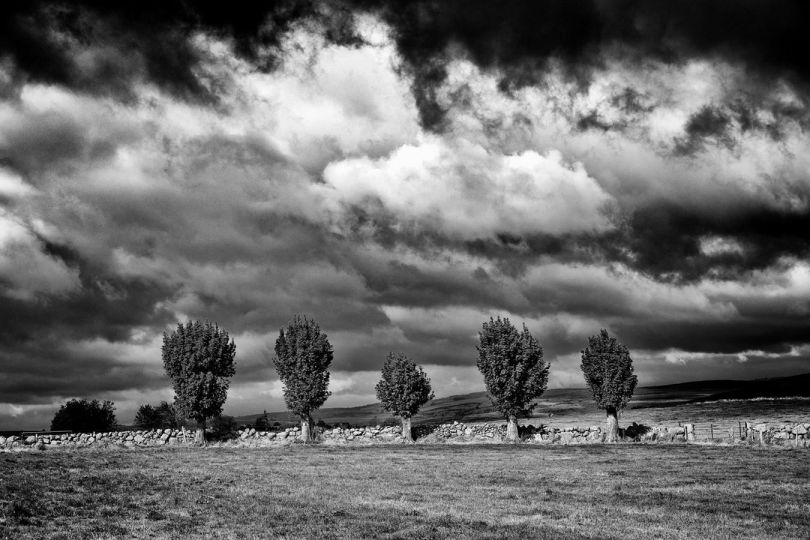
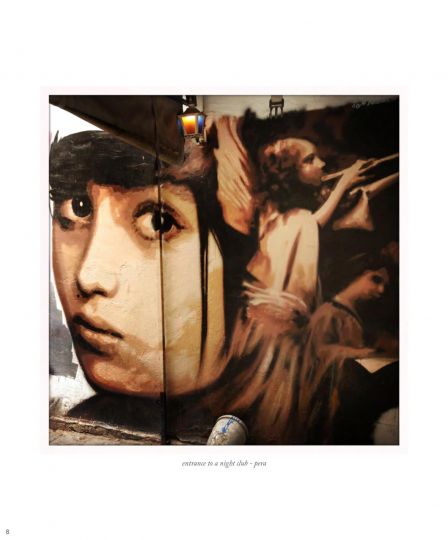
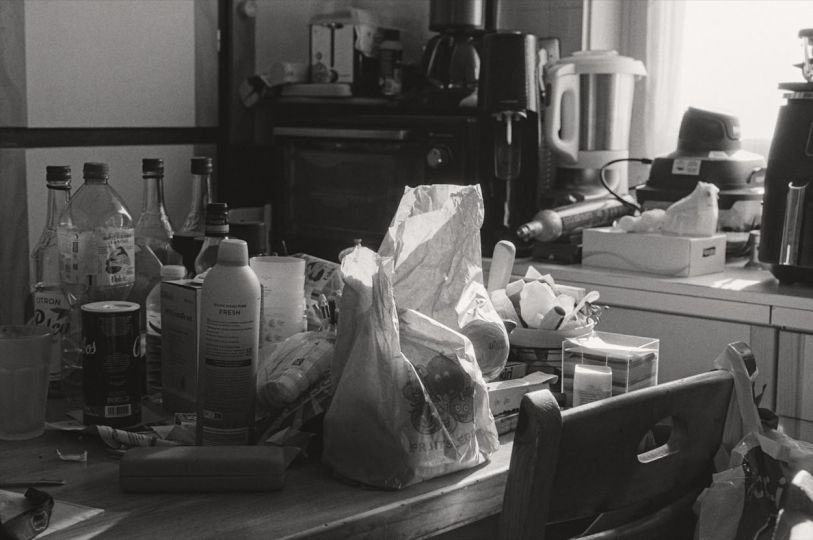
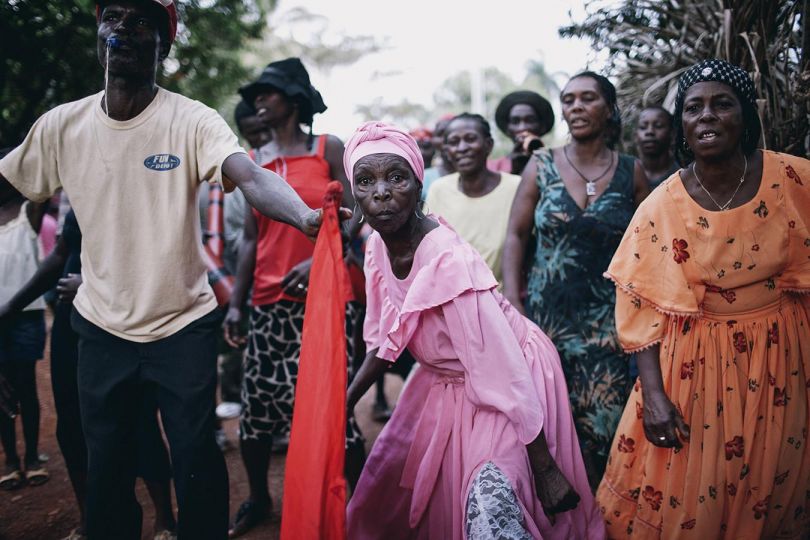
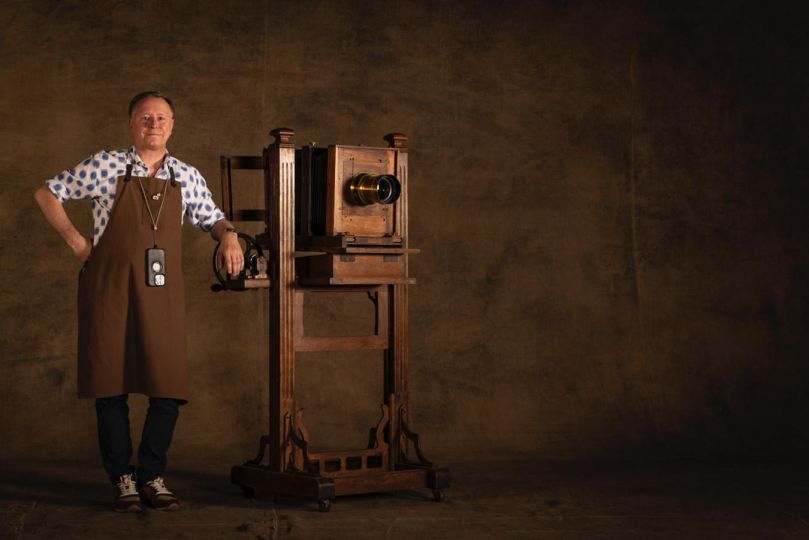
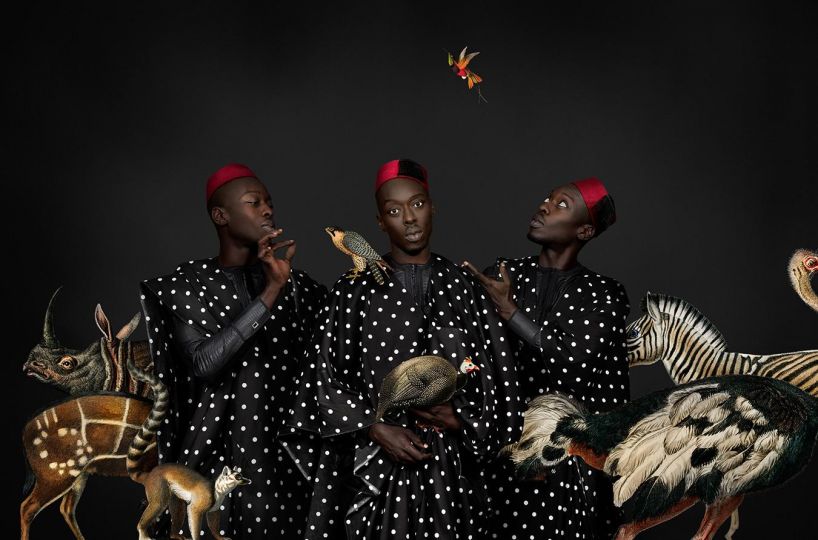
I met Julia de Bierre, many years ago during one of the private receptions at the Helmut Newton Foundation. But it was only when I visited her Galerie Huit Arles for one of the openings that we started talking… so it’s my pleasure today to share a thorough recap with you. Enjoy the read!
Nadine Dinter: When and how did you start your career in the arts/photography business?
Julia de Bierre: My initial background in theater studies veered off in many unexpected directions, and by the mid-1990s, there I was, creating a series of arts-focused workshops in a medieval castle deep in the Swiss countryside. Meanwhile, a close friendship with Helmut and June Newton was honing my eye – not just to the very best in photography, but also to the special universe of these two great artists.
The front room of my tiny Malaysian shophouse in George Town, Penang – my island birthplace – was the informal setting for my very first exhibition: photographs by James Bain Smith. I loved the open-door interaction with Asian street life and finding original ways to combine a domestic interior with images on the walls. In a way, I’ve continued the tradition in my Arles house, just in a much bigger space.
ND: What was your main motivation to open a gallery? Do you have any particular role models or idols?
JdB: As far as role models, I’m seduced by the notion of the Wunderkammer or Cabinet of Curiosities, epitomized by Lord Alistair McAlpine, the legendary art collector who also owned a gallery in London. Since Alistair loved the collector’s chase but disliked the selling process, it was a brief adventure!
Another inspiration was the Hotel Furkablick, the Swiss mountain location of gallerist Mark Hostettler’s Furk’art. Here I encountered site-specific contemporary art – Marina Abramović and Ulay, Richard Long, Daniel Buren – within a deserted 19th-century hotel setting. I still treasure the sets of installation photographs, presented in postcard form, dating from my ‘90s visits.
ND: Who was the first artist you exhibited at Galerie Huit Arles?
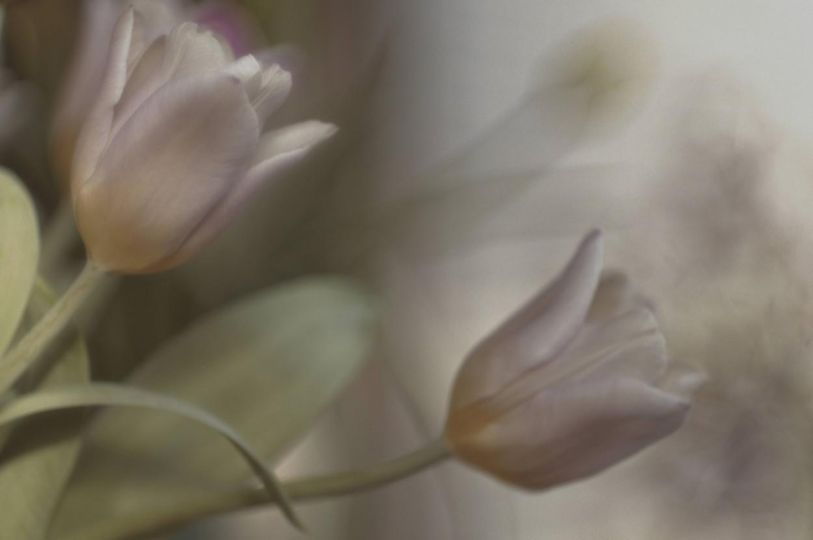
JdB: In 2007, the first artist to be exhibited in my still-to-be restored gallery space was presented by friend Françoise Bornstein, founder of Galerie SIT DOWN in Paris. Rachel Levy’s beautiful Sweet Surrender depicted flowers either dead or in the process of dying. Since I was struggling to mend a recent heartbreak, the images – pinned unframed onto the dusty, decayed paneling of the Salon Vert – mirrored my mood in the most poetic of ways.
ND: After how many years in the business did you get the affirmation you needed? What drives you to continue working as a gallerist in your space?
JdB: In those early Arles days, I was, by some miracle, invited to collaborate with major art institutions and leading book publishers. Simon Annand’s portrait exhibition The Half came courtesy of the Victoria & Albert Museum, and was followed by The Blind Photographer with Redstone Press, London, and Factum Arte, Madrid, who produced wonderful 3D versions of the photographs on show. One summer, Taschen’s huge art edition of Sebastião Salgado’s Genesis, on its Tadeo Ando-designed stand, filled my whole entrance alongside Salgado’s prints.
From 2013 I hosted the Manuel Rivera-Ortiz Foundation’s award-winning images for documentary photography. By the third year, my foundation friends were so charmed by Arles that they found their own amazing building a few doors from mine, and I went on to partner with the British Journal of Photography for the annual OpenWalls award.
These happy collaborations with distinguished players on the global stage certainly gave me the confidence not only to continue but also to risk unusual or non-commercial choices.
In my adopted home of France, it took a while longer to really feel part of the photography community. Nowadays I’m regularly invited to serve on the judging panel of national juries or to review portfolios, for example during Photo Days Paris. Galerie Huit Arles’ annual participation in Salon Photo Doc blossomed into our co-creation 8 Shades of Memory, an installation combining personal archives, voiceover, and a love story. It’s still visible in a mystery nook of my gallery.
Although the arts scene has changed enormously since I first opened my doors, I’m still just as passionate about giving visibility to both emerging and more established photographers. A gallery such as mine has a privileged platform, thanks in part to the Rencontres d’Arles, which brings the who’s who of the photography world to our town during the summer months. The LUMA Foundation, open all year, has also brought a great new dynamic.
ND: What’s your business philosophy?
JdB: This will be my shortest answer: Philosophy maybe, business…not so much! That said, I suppose I’m doing something right, since, as the song goes, “still crazy after all these years.”
ND: How many shows have you represented so far?
JdB: About 80. This includes shows in the Arles gallery and shows I’ve traveled with, either to art fairs or festivals.
ND: Has there been a big turning point, overhaul of the gallery line-up, or major move (of whatever kind) since first opening your art space?
JdB: As for many of us, confinement during the 2020 pandemic was a watershed moment. Emerging from that, I no longer had quite the same urgencies nor aims. I changed my commercial gallery status to a non-profit structure, engaged in community projects such as Les Zoomers, and became an active member of Gallery Climate Coalition. This means that I analyze the carbon footprint of each exhibition, recycle frames and packaging, and only participate in art fairs if I can carry the exhibit on public transport. To prepare my upcoming exhibition, for instance, I traveled 11 hours by train between Arles and Berlin instead of flying. It’s a tiny drop in the ocean, but a discipline that I’ve grown to enjoy.
ND: Any highlights or challenging moments?
JdB: During the opening week of Les Rencontres, I was hosting a vernissage for about 100 guests while my assistant led small groups of ten visitors each down to the cellar, where, Arles-style, we occasionally exhibit installation work. Suddenly, the whole town suffered a power cut, which also affected internet and phone coverage. In the midst of the ground floor mayhem, I found myself organizing a candlelit rescue operation for the cellar group.
I’ve since ensured that, along with fire extinguishers, the cellar has state-of-the-art emergency lighting – and guess what: we now only use the space to store frames…
ND: What’s new and what’s in store for 2025/2026?
JdB: On July 7, 2025, we’re thrilled to open Alice Springs: Front Row, in collaboration with the Helmut Newton Foundation – 50 magnificent portraits, resonating through the ground-floor salons until mid-August. Upstairs, visitors will find, among other works, Anh Nguyen and The Kitchen God, our series winner of OpenWalls, in partnership with British Journal of Photography and WePresent. And of course, throughout the summer months: the occasional guided visit, pop-up event, screening, or curated exhibit.
I usually start defining my yearly program in November, just after Paris Photo. By then, I’ll have caught up with photographers, institutions, and colleagues I don’t always have time to see while immersed in my Arles gallery.
ND: Your advice for photography collectors?
JdB: In a nutshell:
- Make sure you understand the terminology.
- When buying contemporary photography, remember the importance of numbered editions.
- Support emerging photographers and new talent – by doing this, you reinvigorate the medium and encourage other collectors.
The auction sale by the talented students of the National School of Photography in Arles (ENSP) is a great place to start or add to your collection.
ND: No-gos and to-dos when it comes to the photography or gallery business?
JdB: No-gos: I receive many emails from photographers hoping for the possibility to exhibit – particularly during the summer. Quite often, the message is a round-robin, sent to any and every gallery. However talented the photographer might be, the lack of a personalized approach or real interest in a specific gallery is rarely a good start.
To-dos: I’m an old-fashioned believer in solidarity and professional respect between fellow gallerists.
ND: Photographers and institutions on your watchlist?
JdB: Dikayl Rimmasch, an American photographer and filmmaker who has just spent a few weeks staying in our artist residency.
Stay tuned & in touch with Julia de Bierre through her gallery’s website www.galeriehuitarles.com and on Instagram at @galeriehuitarles
Save the date:
Alice Springs: Front Row
7 July – 16 August 2025
at Galerie Huit Arles
8 rue de la Calade
13200 Arles, France