Sacha Goldberger: Between Solitude and Daydreams
An unclassifiable photographer, Sacha Goldberger never ceases to blur the boundaries between reality and imagination. From his early détournements of superheroes into everyday heroes to the baroque staging of Mamika, his work explores collective mythologies while always weaving in an intimate dimension.
Today, he presents two very different projects in quick succession, deeply connected by their ability to question our relationship with images and memory.
With Augmented Solitude, created for Photoclimat in collaboration with the association Petits Frères des Pauvres, he gives voice and face to isolated elderly persons, whose “imaginary friends” come to life through artificial intelligence and augmented reality. Through humor, tenderness, and paradox, he reminds us that the virtual will never replace the warmth of human presence.
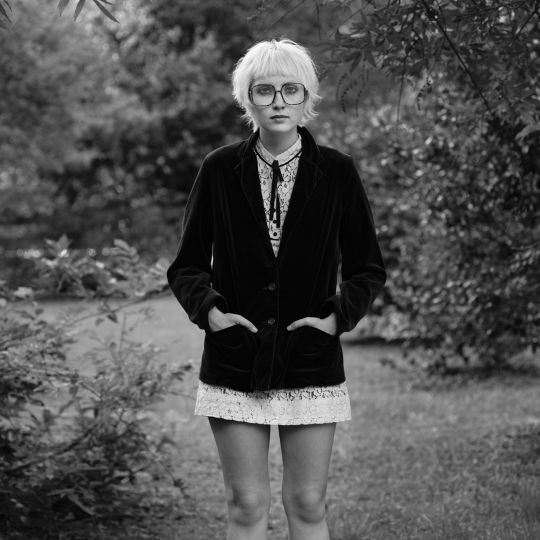
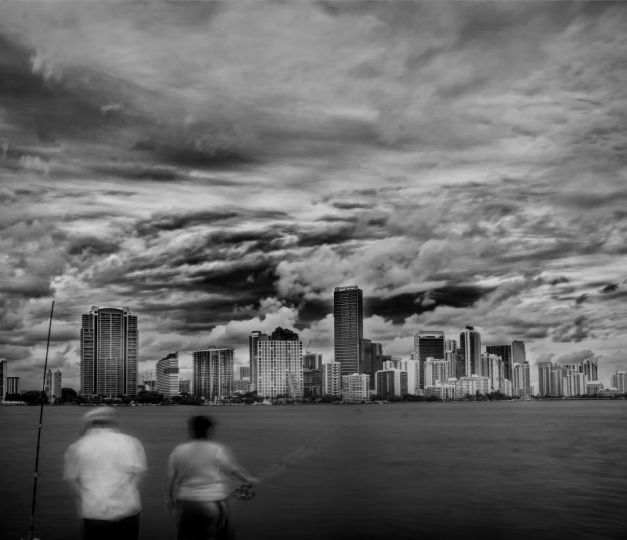
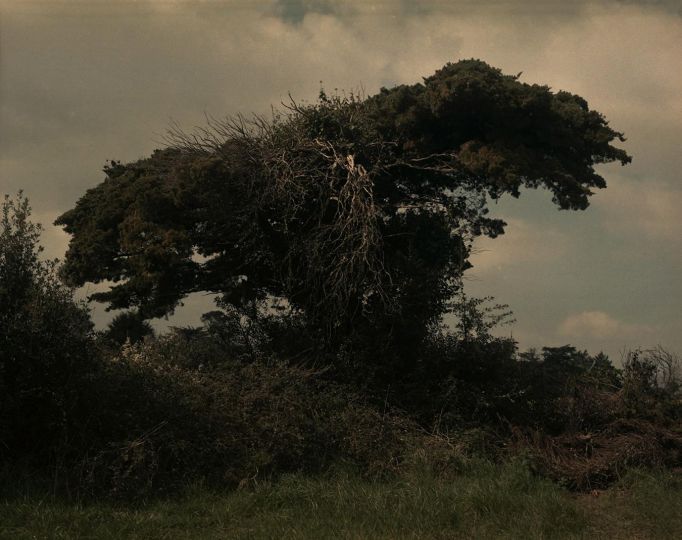
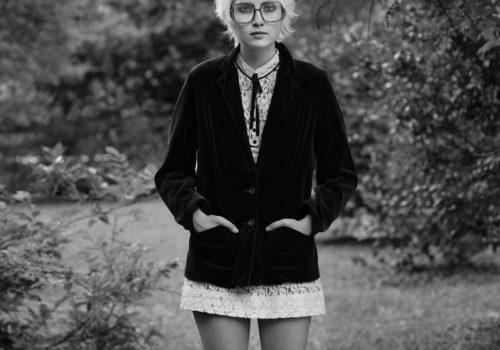
In Daydreams, exhibited at Galerie XII, he embarks on daydreaming at the edge of the American West. With sun-drenched deserts, forgotten motels, enigmatic apparitions: here, the artist confronts California’s mythological imagery with his own intimate fantasies. As always, Goldberger cultivates ambiguity, oscillating between collective memory and personal invention, between softness and strangeness.
Two projects which, each in their own way, reveal the essence of his approach: using photography as a space of doubt, suspension, and encounter.
Website: www.sachagoldberger.com / Instagram: @sachagoldberger
News:
“SOLITUDE AUGMENTÉE” September 12 – October 12, 2025, Place de la Concorde, Paris
DAYDREAMS, September 17 – October 29, 2025, Galerie XII – 14 rue des Jardins Saint-Paul, 4th arrondissement, Paris
How did the idea come about to give voice to eight isolated elderly people and to transform their words into a visual and immersive experience?
Sacha Goldberger: “Augmented Solitude” was created for the association Petits Frères des Pauvres. It felt natural to build the series around humanity and solitude, while bringing in a playful touch with artificial intelligence and augmented reality. The project evolved gradually. At first, I thought I would invent the imaginary friends of all the association’s beneficiaries. Later, it seemed more interesting to ask them who their imaginary friends were. During the shoots, we recorded their wishes, which I then used to prompt the AI-generated elements of the images. These can be discovered in augmented reality thanks to Les Filles du 9 novembre, who managed that part of the project.
The project was conceived in collaboration with Petits Frères des Pauvres. How did this partnership enrich your vision and the way you approached solitude?
S.G.: I was already very sensitive to the solitude of elderly people, having taken care of my grandmother Mamika for many years. That is probably why Photoclimat and the association chose me for this series. The shoots were very moving, full of beautiful encounters. We really took the time to spend time together.
What struck you the most in the confidences of these men and women aged 77 to 90?
S.G.: Each of them has a story — their story. The common thread I noticed was often about love, and the loss of a partner. That was the case with Lucille, Jeanne, and Daniel. My encounter with Daniel, in particular, was deeply moving. He told us about his wife, their meeting, and the emptiness since she passed away. He writes to her every day to tell her what he does. I believe he hasn’t left his home in over six years… To select the excerpts, we asked them who they would like to spend time with, or who they dreamed of meeting. Their answers were surprising, sometimes funny, sometimes serious, always touching.
Why did you associate their stories with figures such as Simone Veil, Jesus, Bruce Lee, Napoleon, or Meryl Streep?
S.G.: Those are their words, their desires for encounters, their imaginary friends. We didn’t interfere in any way.
AI and augmented reality bring these “imaginary friends” to life. How did you strike the balance between realism and imagination?
S.G.: It was important that the imaginary friends clearly not belong to this world, so that it was immediately understood they were virtual and imaginary.
Your approach shows that the virtual can never replace human presence. In your view, how can art become a bridge between isolation and social connection?
S.G.: I’ve always tried to denounce certain realities through humor and irony. I did it with my grandmother to talk about old age, Alzheimer’s, and solitude. I hope this playful series will raise awareness abour our elders needs of human presence and connection. Screens are taking up more and more space in our lives, often at the expense of those closest to us.
The solitude of the elderly is often invisible. Do you believe photography can make the invisible visible?
S.G.: Thanks to Photoclimat, we have a platform to speak about this issue. I hope to use it well. If this project helps Petits Frères gain more volunteers, or encourages us to visit our loved ones more often, then I will have achieved my goal.
This exhibition takes place Place de la Concorde. What importance do you attach to the public and accessible dimension of this location?
S.G.: I think the subject is so important that it deserves the Place de la Concorde. We have a responsibility toward our elders. At their age, we will reap what we have sown. I hope the virtual component of the project helps highlight the importance of the reality and of human encounters.
Between technology and humanity, what tension or complementarity do you want visitors to feel?
S.G.: The project is highly paradoxical. I use the virtual in a playful way to show that it is not enough and will never replace real encounters. When you scan the photos with your phone, you hear the elders’ testimonies while watching cold, lifeless virtual images. It’s like a meeting that never really happens. If you look carefully, you’ll see there is no interaction between the real photos and the virtual images: no one looks at each other. Everyone remains alone.
What would you like the audience to take away from Augmented Solitude?
S.G.: A little bit of everything. When I created the Mamika series with my grandmother, I often received messages from people saying they went to see their grandparents more often, or even took photos of their elders to celebrate them. I would read those messages to my grandmother, and it filled us with joy.
The title Daydreams evokes a waking reverie. What led you to explore this uncertain frontier between reality and imagination?
S.G.: I’ve always loved working on imagination in photography. I’m drawn to the power of ideas in cinema, literature, painting, and of course in photography, where it is often too scarce for my taste. Daydreams is a more intimate series than my previous works; it draws on my childhood.
Why did you choose the American West, with its deserts and motels, as the setting for these visions?
S.G.: My father introduced me to American black-and-white films, westerns, and war movies. That aesthetic has always had an important place in my imagination. When I traveled to Los Angeles for my exhibition Alien Love, I took a few days to photograph the America of my childhood — the one I knew through those films. I used those images to create this series.
The characters in your images seem to emerge from the subconscious. Who are they to you?
S.G.: They all have a story, a bit like the characters in David Lynch’s Twin Peaks. The series reflects some of my influences: surrealist photography (Man Ray, Lee Miller, Hans Bellmer), literature (Asimov, Philip K. Dick, H.G. Wells), cinema (Once Upon a Time in the West, John Wayne films, Yellowstone), as well as many personal references. My maternal grandfather lived in London, where I spent much time, while my paternal grandfather bred horses. There’s also the sense of irony and humor passed down to me by my mother and my grandmother Mamika.
In your work, narrative remains open-ended, almost enigmatic. Is this an invitation for viewers to project themselves?
S.G.: This series speaks of me and my vision of the world, but it is absurd enough that everyone can find a bit of their own story in it.
You combine traditional photography with artificial intelligence. How did you find the balance?
S.G.: I think artificial intelligence, when used precisely, is perfect for revealing the imaginary. It doesn’t replace photography it’s an additional element that enriches what the photographer has in mind. Reality and imagination are then brought together through Photoshop.
Did AI allow you to create images that would otherwise have been impossible?
S.G.: I couldn’t have made this series without AI. It allowed me to reveal certain images that are inconceivable in photography. I see its use in this context as a gift. It should never replace photography, but it is perfect for bringing imagination to life.
Daydreams plays with collective memory and personal fantasy. How do you navigate this dialogue?
S.G.: The American Dream is part of my personal dreams. I love this vision of California that takes me away from the hardships of daily life. That, I believe, is the role of literature, cinema, and photography.
The exhibition combines prints on Japanese paper with a presentation as part of the collective show Fiction(s) du réel. What does this choice mean to you?
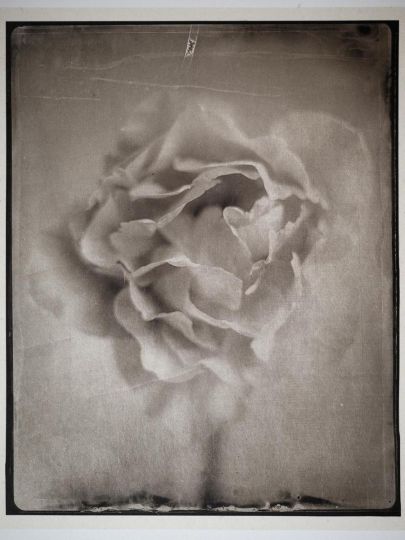
S.G.: Everything in the series is meant to immerse us in a dream. The choice of paper and the framing are part of the story. They support the images in conveying a floating vision of a blurred reality much like dreams themselves.
What place does surrealism hold in your work?
S.G.: I love surrealism; it’s part of my influences in painting and photography. I generally have a rather surrealist vision of things. This series draws on imagination in the way automatic writing does.
What would you like visitors to feel after experiencing Daydreams?
S.G.: I would hope for a sense of gentle reverie. That’s what I wish for all of us in these troubled times.
Interview by Carole Schmitz