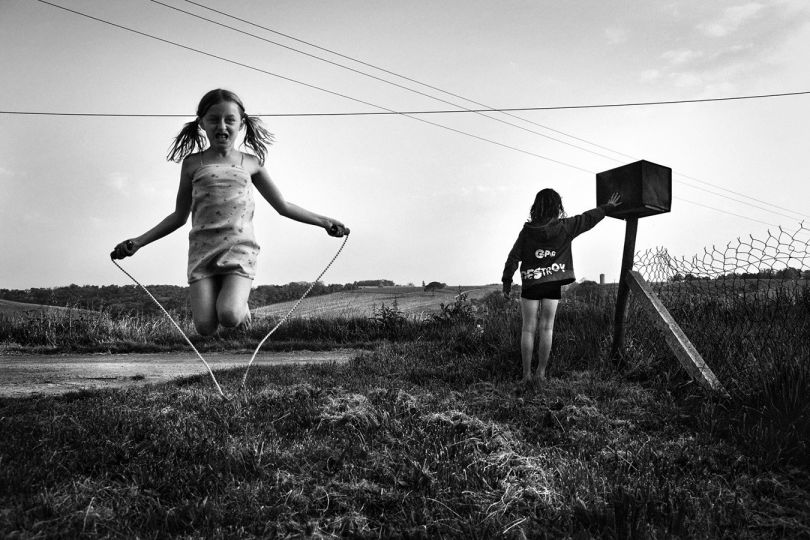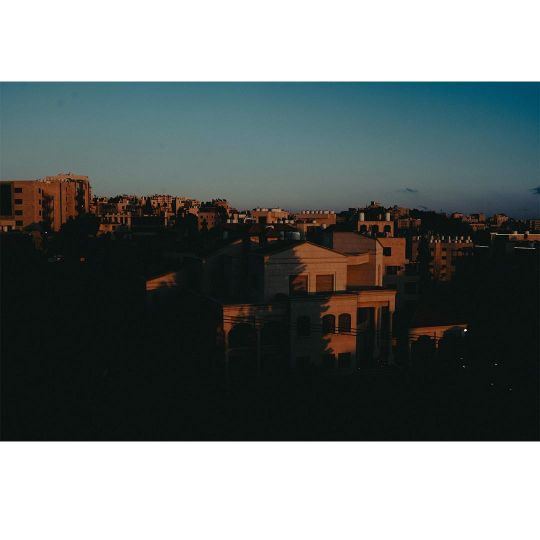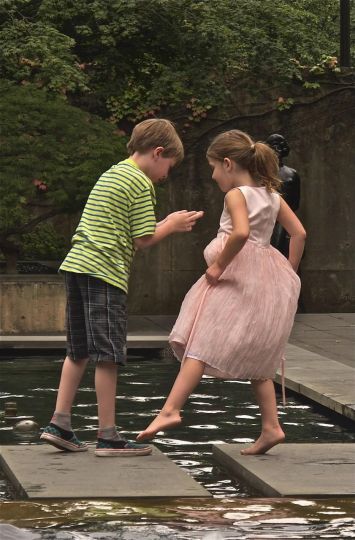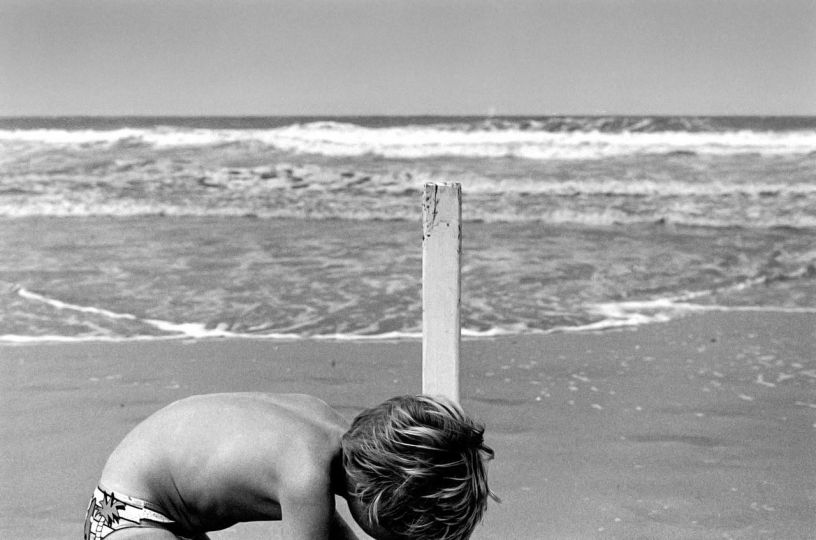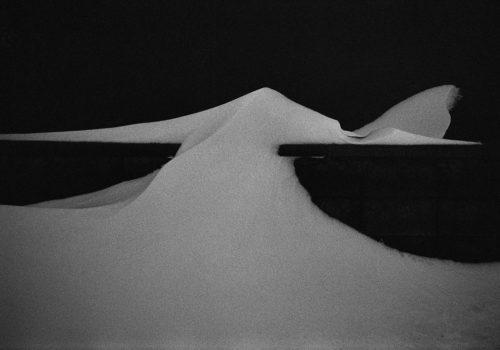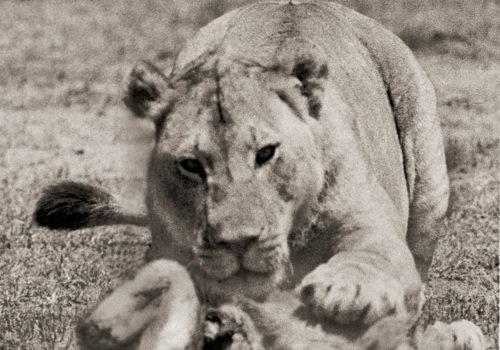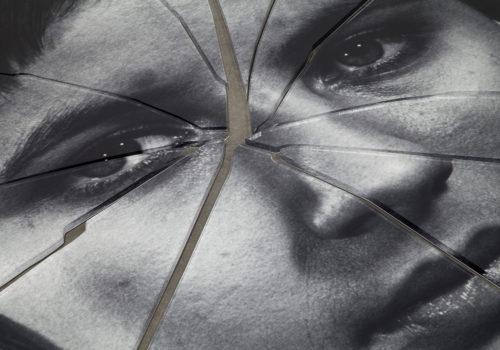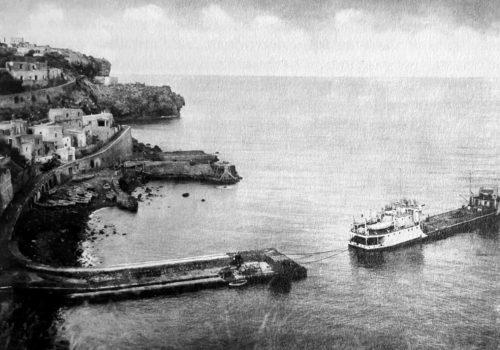
A photographer, an architect, and an island. The Acquad’oro project by the Phosphore collective offers a photographic and visual perspective born from a desire to explore Mediterranean insularity. A conversation with Sarah Witt and Matthieu Fares, the duo at the heart of the project.
How did Phosphore come about?
Sarah Witt: I’m a photographer and Matthieu is an architect. The idea quickly came up to work on projects together to blend our disciplines.
Matthieu Fares: Architecture has a visual aspect that integrates well with photography, while allowing us to step outside the traditional framework of photos printed on paper.
How did you come to focus on work centered around Mediterranean islands?
Sarah Witt: Matthieu is passionate about insularity and islands. That captivated me. I remember very clearly a drawing where he had redrawn the 180 islands of the Mediterranean and ranked them from smallest to largest. I thought we could do something centered on islands with my photos, that I could immerse myself in that world too.
Matthieu Fares: It was something I was doing in my spare time, and since Sarah took an interest in it, it gave me a new lease on life.
What were the first steps?
Sarah Witt: To start with, we went on study and research trips to some of these islands to gather material for our projects. We took our first photos and wrote our first drafts.
Matthieu Fares: What took a long time was figuring out what we wanted to convey. These are very touristy islands, very “postcard-perfect,” and we didn’t want to show that. We asked ourselves: How do these islands function? How do people experience these islands, how do they live on them? How do these micro-territories, defined by the sea, manage to sustain themselves?
Sarah Witt: That led to Vivre l’île, a sort of catalog of all the places and people that make up the island, that bring the island to life.
Matthieu Fares: Fernand Braudel, a historian who bridges the gap with geography, views the island as a microcosm of what happens on Earth and as a way to explain other phenomena found elsewhere. For him, islands are laboratories for what happens in the world. That really guided our approach.
Building on the success of Vivre l’île, the Acquad’oro project was born.
Sarah Witt: For Acquad’oro, we focused on one island Salina and one theme: water. This gave us a much more concrete angle. Salina is an island formed by a volcanic eruption that, by its very nature, has no water. It arrives to the island only via a water tanker, the Jeranto, which is very old and in poor condition. We wanted to tell the story of this boat, to explore the connection between the residents and this boat, and their relationship with water on the island.
Matthieu Fares: The locals explain, in particular, that the evolution of their islands linked to living standards and tourism means they are increasingly dependent on these boats, which now make several round trips a day.
It sounds a lot like investigative work, a documentary, or a news report. What direction is the project taking?
Sarah Witt: In the field, it’s really investigative work, but in the final product we don’t want to explicitly show the documentary aspect it’s more implied. We want to create something artistic, something poetic. If we make a book, the documentary element will provide context and substance.
Many photographers have already explored the Mediterranean islands what are your thoughts on their work?
Sarah Witt: We buy every book related to island life! We have a wonderful collection for inspiration, and we look closely at what others are doing, in photography and beyond. There are artists we particularly love, such as Frédéric Boissonnas, an early 20th-century photographer who drew on the mythological tales surrounding Ulysses to create beautiful, mystical photos. And even more contemporary photographers: a friend named Kamil Zihnioglui did a project on Corsica with a very dreamlike quality. Or Clément Chapillon, who created Les Rochers Fauves on an island in Greece and who inspired us greatly. We met and discussed our projects.
Matthieu Fares: The world of cinema also inspires me a lot. I’m thinking in particular of Jean-Daniel Pollet’s Méditerranée, which uses a series of static shots that successfully recreate the essence of the Mediterranean atmosphere.
In practical terms, how do the two of you work together?
Sarah Witt: I’m the one who takes the photos, but we go out into the field together and brainstorm together. It’s often Matthieu who sets the artistic direction. I remember the first photos where he told me that you couldn’t really feel the water. It threw me off, but I loved it. One thing led to another, and we started experimenting with materials. When we get back, we rework the photos using artistic techniques: applying gold leaf, doing collages.
Matthieu Fares: At first, I did most of the post-production. Then we gradually wanted to do it together. I introduced Sarah to gold leaf, and now she does most of it. In the end, when you look at the creations, it doesn’t matter who does what: it’s a collective effort.
What new directions does this collaborative work take you in?
Sarah Witt: On a day-to-day basis, I work alone most of the time. What I really love about working together is that it pushes me beyond my usual style of photography. It forces me to do things I would never have done on my own. As soon as we start working on the project, it makes me feel good.
Matthieu Fares: In our fields, it’s incredibly enriching to see this multidisciplinary approach—these disciplines, these visions, these ways of working that are different but, at their core, converge. That’s the future. I see it in architecture: all our background is very interesting, but as soon as we bring it together with other perspectives from graphic designers, photographers the project gains strength and scope.
What have you revealed about this project?
Matthieu Fares: We presented a progress report at the Festival OFF in Arles in 2024. What we’d like to do is hold an exhibition at the art center on the island of Salina.
How do you know when a project is finished?
Sarah Witt: I’d say we’re satisfied with our shots, but we know it’s not over because we don’t have the final visual result yet.
Matthieu Fares: We tell ourselves we’re not far from the end, while also telling ourselves there might not be an end. That it’s just a step toward continuing in a different way: there are so many possibilities.
Sarah Witt: I can’t wait for us to do the next one. We’ve explored the theme of water, and I really want to go back to another island, to explore a different theme.
Plus d’informations