Klavdij Sluban: The Image Against Evidence
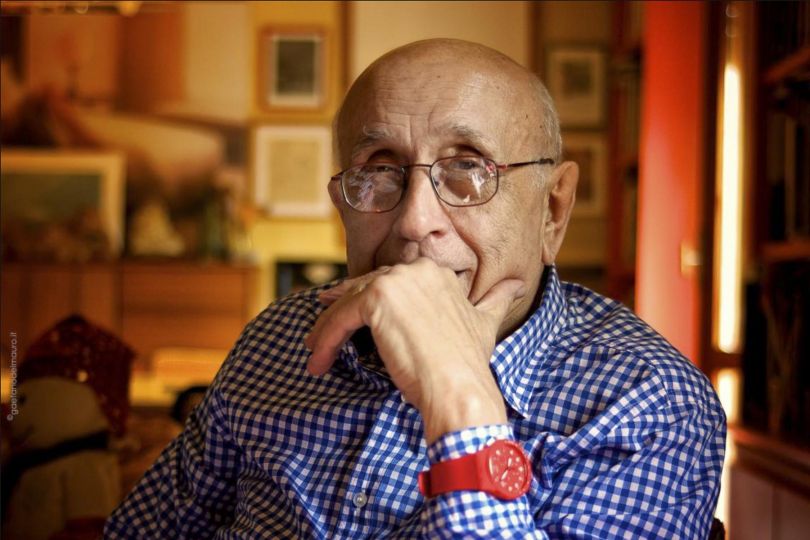
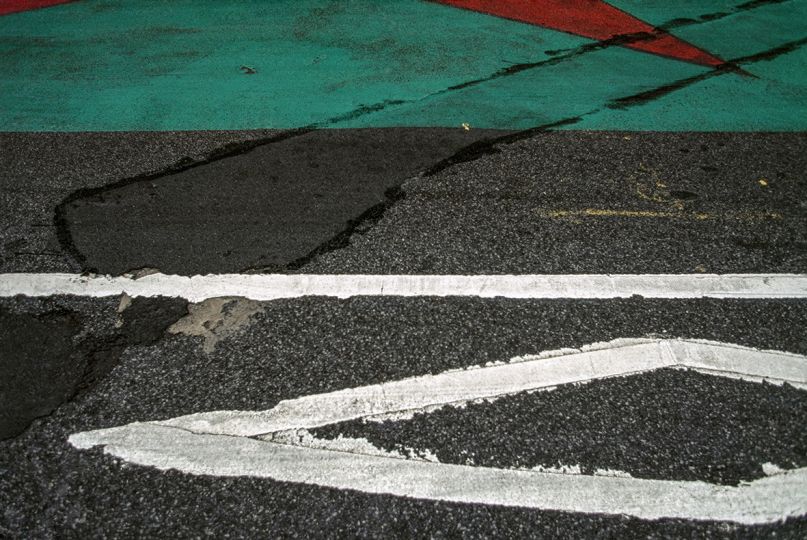
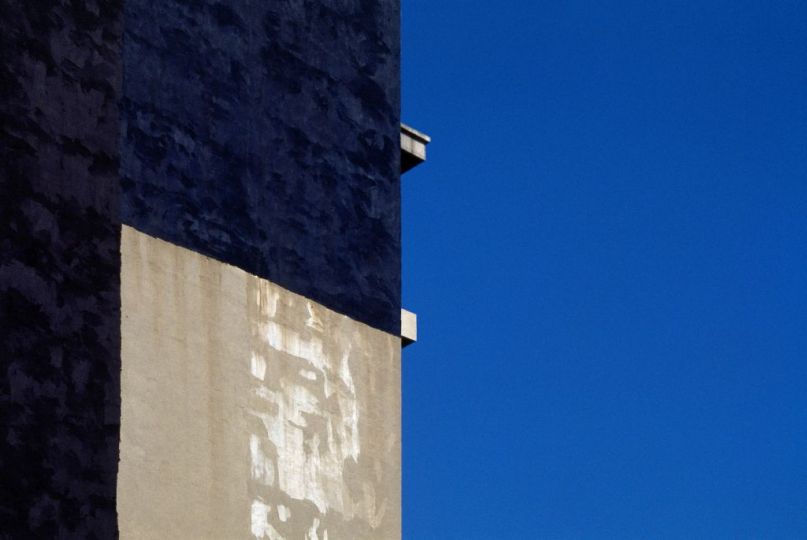
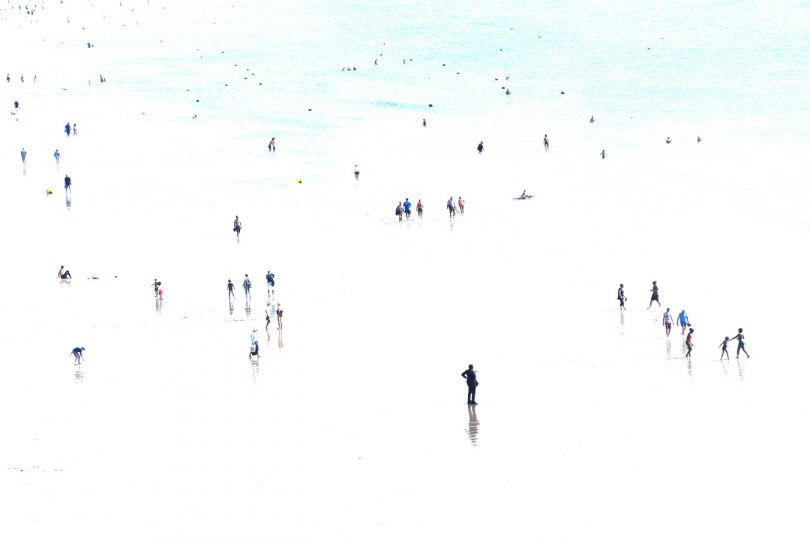
There are photographers who show us the world. Klavdij Sluban belongs to that much rarer breed who question it. For him, photography does not document; it clarifies. It seeks neither proof nor spectacle, nor even the decisive moment. It moves against the tide of time, at a deliberately unhurried pace, until reality ceases to be an obvious fact and becomes a question. Born in Slovenia and arriving in France as a teenager, Sluban has spent more than three decades developing a body of work that stubbornly resists categorisation. Neither documentary nor conceptual, nor truly belonging to the realm of visual art, his photography is above all a form of writing. Each image is conceived as a fragment, a breath, a punctuation mark within a larger body of work in which correspondences matter more than the subjects themselves. Borders, peripheral territories, juvenile prisons, the Balkans, the Trans-Siberian Railway, the Kerguelen Islands and buried memories are less themes than places from which to contemplate absence, transmission and the fragility of the gaze. The black and white he employs with an almost ascetic rigour becomes a language rather than an aesthetic. A recipient of the Prix Niépce and an educator who has worked with incarcerated teenagers for more than thirty years, Sluban advocates a form of photography that resists the immediate consumption of images. At a time when images proliferate to the point of exhausting their own meaning, he insists on the time required for maturation, memory and silence. He says, moreover, that he never “takes” photographs, but “makes” them. His entire philosophy is contained in that distinction. For a photograph, in his view, is not born at the moment the shutter is released, but in everything that precedes it: a prolonged absorption of the world, until an image finally agrees to exist.
This reflection finds a particularly resonant echo today in Solitudes insulaires, on view at the Abbaye de La Celle until November 1st 2026, in partnership with the Rencontres de la photographie d’Arles. More than an exhibition, the project unfolds as an inward journey in which two photographic bodies of work the Kerguelen Islands and Japan converge around a shared experience of insularity.On one side, the austere landscapes of “the Island of Desolation”, where human beings appear only in proportion to their own fragility against the mineral immensity of the landscape; on the other, a Japan in which the island becomes a state of consciousness, an inhabited, almost spiritual solitude. Within the minimalist spaces of the former Cistercian abbey, whose silence seems to answer that of the images, the photographs cease to be mere representations and become places of contemplation. Faithful to his refusal of staging, Sluban pursues here the same quest: to make photography not the story of a territory, but the sensory experience of being present in the world.
Site Web : www.lemasterklass.com
Instagram : @klavdijsluban
CURRENT EXHIBITION
“SOLITUDES INSULAIRES” UNTIL 1 NOVEMBER 2026
ABBAYE DE LA CELLE
DEPARTMENTAL CENTRE FOR PHOTOGRAPHIC ART
9 Place des Ormeaux
83170 La Celle, France
“I Don’t Take Pictures, I Make Photographs”
What first triggered your desire to make photographs?
Klavdij Sluban: To preserve the memory of my closed one, knowing I would one day be separated from them.
A photographic memory from your childhood?
Klavdij Sluban: I was photographed more often than Tito. I spent my childhood in Yugoslavia, and my adoptive family constantly “paparazzied” me so they could send pictures to my parents in France.
What was the camera of your childhood?
Klavdij Sluban: Memory.
And the one you use today?
Klavdij Sluban: Memory on film.
Who is the image-maker that has inspired you the most?
Klavdij Sluban: The person who smeared their dirty hands all over the cave walls.
Was that person considered a good-for-nothing, fit for nothing else? Or were they the living gods or goddesses of the cave? Even then, there was already the question of the positive hand or the negative hand, depending on the technique employed: placing a pigment-covered hand against the rock, or blowing pigment around it. One can easily imagine prehistoric wars between positive hands and negative hands, foreshadowing future massacres between the tribes of colour and the tribes of black and white, the tribes of grain and the tribes of pixels. It also raises the question of artistic precarity or rather, of the mistreatment of photographers in our contemporary economic system, which supports and institutionalises every field of artistic creation except photography. Were those positive and negative hands the prehistoric etymology of the word photographer already starving? Another etymology, this time in modern Greek, for the word photographer. Forty or sixty thousand years before Nicéphore Niépce… How did those triggering hands survive? What share of the mammoth did they receive?
What image would you have liked to make?
Klavdij Sluban: In utero.
Which image has moved you the most?
Klavdij Sluban: Brezhnev kissing Honecker on the lips.
And which one has made you angry?
Klavdij Sluban: Honecker kissing Brezhnev on the lips.
Which photograph changed the world?
Klavdij Sluban: None. We’d know if one had.
And which photograph changed your world?
Klavdij Sluban: One of those almost ordinary images we’ve seen countless versions of it: refugees in a forest.This time, a young, gaunt woman stands with three terrified children at her feet in a makeshift camp. Around them sit exhausted soldiers, their rifles lying on the ground. Every anonymous figure embodies the archetypes of fear, hunger, despair and the shadow of death.Except that this time it is my grandmother, with her three daughters, who spent the entire Second World War hiding in the forest.My grandfather, was one of the exhausted soldiers and this is the last photograph ever taken of him he was a partisan commander. He died shortly before the Armistice, weapon in hand.
Which image occupies the most important place in your personal pantheon?
Klavdij Sluban: All the photographs that will never be shown, yet will never be deleted. They inhabit the foundations of the house, the invisible base of the work in progress. Invisible photographs, yet profoundly alive unlike those displayed on social media, which are often stillborn. I spend my nights explaining to them why they are essential. They ensure the foundations, the stability, the anchoring of the house. The obvious, load-bearing photographs are often full of themselves. The subtler ones are the connecting photographs the ones that build bridges between chapters. I only fall asleep once I have convinced them, reassured them, even restored their pride before they take their place beneath the house. I am at peace with myself only when every photograph is exactly where it belongs, happy to be there.
What interests you most in an image?
Klavdij Sluban: Suggestion.
What details do you look for in a face, a landscape, or an object?
Klavdij Sluban: The part that evokes the whole.
Elliott Erwitt once said, “Colour is descriptive. Black and white is interpretive.” Do you agree?
Klavdij Sluban: Many people have said many things. Someone else once said: “Perception without rules cannot give rise to representation.”
Can technique sometimes take precedence over emotion in photography?
Klavdij Sluban: Can technique sometimes take precedence over emotion in love?
Is beauty in photography, for you, purely aesthetic?
Klavdij Sluban: Aesthetics without ethics equals cosmetics.
What can make silence visible in a photograph?
Klavdij Sluban: When a photograph is deaf.
Does the uniqueness of a photograph lie in the moment or in the staging? Can a photograph be truer than reality?
Klavdij Sluban: Reality is a construct of the mind. Through a subjective perception of reality translated in a subjective way, a photograph may generate the representation of reality or at least of one particular reality.
Can a photograph change the way we perceive an event?
Klavdij Sluban: A photograph eternalises the event. The photographed event becomes a photograph. Every photograph disguises the event. A photograph points to the moon. The visually illiterate stare at the moon.
Is photography a testimony or a form of manipulation?
Klavdij Sluban: “Testimony” and “manipulation” are not always contradictory. The very first photograph does not depict reality, since its exposure time exceeded twenty-four hours, producing absurd shadows across the façades. Nor does the first photograph featuring a human figure Boulevard du Temple record reality. Because of its roughly fifteen-minute exposure, the bustling crowd vanished, leaving only the shoeshiner and his customer. The only thing this image truly proves is that the shoeshiner was a conscientious worker, meticulous, proud of a job well done.It would be interesting to know how many of those fifteen minutes he actually spent polishing those shoes.From a Marxist perspective, might the only real manipulation be that of the worker almost certainly underpaid by the dominant bourgeois? Doesn’t the symbolic value of the upright, elegant bourgeois towering above the labourer bent over his miserable condition already suggest a subliminal representation of class relations in 1838?
What makes a good photograph?
Klavdij Sluban: A “good” or a “bad” photograph is a personal judgement, one that differs from person to person.An inhabited photograph is an invitation. It can welcome as many viewers as its surface allows.
In your opinion, what is the essential quality of a good photographer?
Klavdij Sluban: Making photographs that rhyme with one another.
How do you choose your projects?
Klavdij Sluban: From the depths of the calm sea of despair.
How would you describe your creative process?
Klavdij Sluban: So slow it would irritate Niépce.
Is there an upcoming project that is especially close to your heart?
Klavdij Sluban: Between 1942 and 1943, twenty members of my Slovenian family died in the concentration camps of Rab Island in Croatia and Gonars in Italy. Today I photograph, record and film the testimonies of the seventeen survivors who are still alive. For decades, Italy denied the existence of these concentration camps. Silvio Berlusconi, with denial, contempt and disrespect, referred to them merely as vacanze forzate—”forced holidays.” That is why I gave this major body of work, begun in 2023 and still ongoing, that title. It involves long walks retracing the deportees’ routes, from one camp to another, from the camps where they were imprisoned back to their villages, across forests and beyond national borders. Like my series on incarcerated teenagers, which I began thirty years ago, this is a deeply personal body of work, written with an author’s voice and grounded in real events. Beyond my photographic interpretation, archives, testimonies, writings and film form the very heart of this project.
Who would you most like to photograph?
Klavdij Sluban: The wind.
By whom would you most like to be photographed?
Klavdij Sluban: By one of my invisible photographs.
An indispensable photography book?
Klavdij Sluban: An illustrated dictionary.
What is the last photograph you made?
Klavdij Sluban: I don’t take pictures. I make photographs.
On social media, are you more Instagram, Facebook or TikTok—and why?
Klavdij Sluban: Facebook shut down my account because its algorithm detected too many keywords such as “prison,” “disciplinary camps,” and “Russia.”
Instagram is useful for sharing professional information.
What has changed in photography since the rise of social media?
Klavdij Sluban: The inflationary accumulation of photographs on social media has created a thick layer of images that have never been carried within oneself, that have never experienced latency, that have never been given the time to reveal themselves, to open their eyes. Premature images piling up before they have even had the chance to exist.Yet manure is an excellent fertilizer. It nourishes whatever demands time, care, knowledge and experience to grow. It nourishes what we carry within ourselves before its birth and accompany patiently until it reaches maturity. It takes a long time before one acquires the intimate conviction that a photograph is ready to be revealed.
One Instagram account everyone should follow?
Klavdij Sluban: Follow the Guide
THE GUIDE — Follow the guide!
A TOURIST — I am the guide.
HIS DOG — I am my master.
A BEAUTIFUL WOMAN — I am the guide. Therefore I am not a woman, since I am a man.
THE TOURIST — I am that beautiful woman.
THE DOG — And so am I, because I am my master.
THE GUIDE — Follow the guide. I am not the guide, because I am the guide.
THE TOURIST — I would very much like to know who this beautiful woman is that I happen to be.
THE DOG — I am not my master, because I am my master, and that bores me.
THE BEAUTIFUL WOMAN — I am the guide. I am the crowd. I am a regime. I am fashion. I am no longer a child… Oh! I’ve had enough! I am no longer anyone. (She disappears.)
THE GUIDE — Oh! I’ve had enough! I resign. (He disappears.)
THE TOURIST — Oh! I am no longer the guide, no longer a man, no longer a woman. I am nothing anymore. (He disappears.)
THE DOG — At last! I am no longer my master; therefore I am my master, and I shall not be visiting the Loire Valley châteaux!
— Jacques Prévert, Fatras
THE PHOTOGRAPHER — I am no longer Instagram. I am nothing. I am everything. And I shall not photograph the Loire Valley châteaux.
What is your view of AI?
Klavdij Sluban: My life is AI: Intense Love.
Colour or black and white?
Klavdij Sluban: Your mother or your father?
Natural light or artificial light?
Klavdij Sluban: The undoing of darkness.
Which city strikes you as the most photogenic?
Klavdij Sluban: An invisible city with an unobstructed view.
Which city, country or culture do you dream of discovering?
Klavdij Sluban: AI.
A place you never tire of?
Klavdij Sluban: Her face.
Which image best represents the current state of the world?
Klavdij Sluban: Every photograph on social media compressed into a single image.
What do you think is missing from today’s world?
Klavdij Sluban: AI.
If God existed, would you ask Him to pose for you, or would you rather take a selfie with Him?
Klavdij Sluban: Why the conditional?
Your favourite drug?
Klavdij Sluban: Developer, followed by a dose of fixer.
Your favourite way to disconnect?
Klavdij Sluban: To fly.
Your latest act of madness?
Klavdij Sluban: Answering this questionnaire seriously.
Your greatest professional extravagance?
Klavdij Sluban: Killing time.
A profession you would never have wanted to do?
Klavdij Sluban: Judge.
Which question unsettles you the most?
Klavdij Sluban: Every question puts me on the road.
The last thing you did for the first time?
Klavdij Sluban: Attempting carefreeness.
Your greatest regret?
Klavdij Sluban: “No, nothing at all… No, I regret nothing…” Neither the good that was done to me, nor the bad.
If you had to start all over again?
Klavdij Sluban: I would begin from now.
If I could organise your ideal dinner, who would be sitting around the table?
Klavdij Sluban: All the animals that were left behind and never made it onto Noah’s Ark.
What do you like people to say about you… once you’re gone?
Klavdij Sluban: To pronounce my first name correctly.
The one thing people absolutely need to know about you?
Klavdij Sluban: I am cloudy.
One final word?
Klavdij Sluban: Let’s begin.