In a photographic world marked by both an abundance of exhibitions and the fragility of the sector, the Vives! collective questions the role of curatorship. Speaking with three voices, Chloé Goualc’h, Salomé d’Ornano and Coline Plançon advocate a collective perspective, attentive both to existing works and to emerging artists.
Can you look back on your respective paths in the field of photography?
Coline: I started at Magnum Photos in London and then in Paris, before collaborating in particular with the agency Myop. I know collectives well. For about ten years now, I’ve been focusing on developing cultural projects within photographic agencies, especially around editorial and cultural initiatives. For the past year, I’ve been working independently and collaborating in particular with the PhotoSaintGermain festival.
Chloé: I’m very much a product of public institutions. I started at the Centre Pompidou, where I worked on photographic collections, collection management and exhibition curating. I then moved on to the French National Archives, and for the past four years I’ve been working at the Cnap, where I oversee the documentary photography support system.
Salomé: Initially, I was particularly interested in documentary photography, archives and war photography. I mostly worked on exhibition production and content, at the Institut du monde arabe, the Fondation Henri Cartier-Bresson, and also with the Approche fair. That’s where I discovered the gallery world. I ran the Fisheye gallery for three and a half years, and two years ago I joined the Écho 119 gallery.
When did your paths cross, and how did the desire to work together emerge?
Chloé: The photography world is a small one! And within this microcosm, there are a few women between 30 and 40 who came together through a WhatsApp group. The bonds gradually grew stronger, leading to the desire to launch this project.
Coline: This group allowed us to build bridges between our projects, to advise one another, and ultimately to structure ourselves together. Through our exchanges, we became aware of what we wanted, but also of what was missing in our respective professional fields. We realised that we had to create things in order for them to exist.
Chloé: With Salomé, we wanted a space of freedom, a framework that would allow us to propose things, to be creative and to work with people we genuinely wanted to collaborate with. We started talking about exhibition curating, and it seemed to us that something was missing in a duo: with three people, complementarity is stronger. That’s how Coline joined the project.
Coline: We operate in three very different fields and look at photography from distinct perspectives: public institutions, private sector, the art market, and the photographers’ point of view. This plurality makes the discussions particularly rich.
What issues did you want to address when founding Vives!?
Coline: We observed that today there is an abundance of exhibitions, but paradoxically little attention paid to works that have already been produced. Exhibitions are mounted, then the works are returned to photographers, who have to find storage spaces. All of this is happening in a sector that is facing significant budget cuts, with fewer and fewer resources allocated to production. This situation seemed interesting for us to study. We also wanted to offer different perspectives and to renew the ways photographers are presented. With the fragility of the sector, we sense a certain timidity, a growing fear of risk-taking within exhibition and dissemination structures. We wanted to design group exhibitions that bring together established figures and emerging artists around shared themes. This intention has driven us since the collective was founded.
How do you conceive the role of curating today, and how does collective work transform it?
Coline: The curator is a bit like the conductor of a choir: someone who carries one or more visions and connects them to the public, so that the audience leaves with a message, an interpretation. It’s about writing a story from the works, shaping a narrative. This requires in-depth research into the work of one or more artists in order to create links. Working as a group involves different ways of thinking; you have to accept sharing your vision.
Salomé: You have to be able not to assume that the initial idea, conceived alone, will necessarily be the one that prevails. It’s a matter of balance, of forces and of compromise.
We are familiar with photographer collectives. What about curator collectives?
Chloé: We don’t know many. Apart from Fetart, which operates with eight or nine people. Curating is most often handled by a single person, and very often it’s the artists themselves who take on this role.
Your first project was born out of a collaboration with another collective, Hors Format. How did that come about?
Chloé: I knew several members of Hors Format. They shared with me their desire to design an exhibition to celebrate their five-year anniversary, around the theme of the collective, and to work with a curatorial collective. The meeting happened very naturally, just as we had created Vives!
Coline: They gave us carte blanche and placed great trust in us, letting us take the reins of the exhibition. This stance was both very clear and very humble on their part. I had already worked with Myop on the occasion of their twentieth anniversary, and it was very interesting to share with Salomé and Chloé the reflections drawn from that experience. It allowed us to quickly address essential questions: how to work collectively, how to celebrate both the group and individual singularities within highly committed bodies of work that show, for example, young people who have dropped out of school in France alongside armed groups in the DRC, how to ethically and responsibly respect the subjects while enabling them to enter into dialogue without creating misinterpretations.
How did you manage to stage this desire for collectivity?
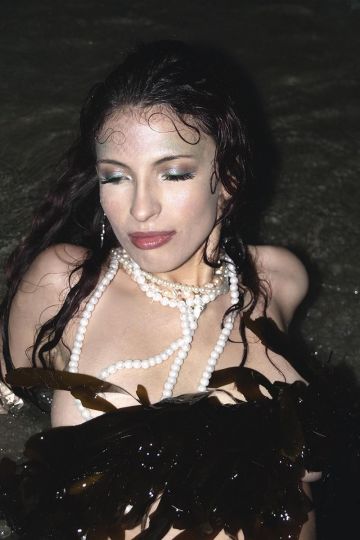
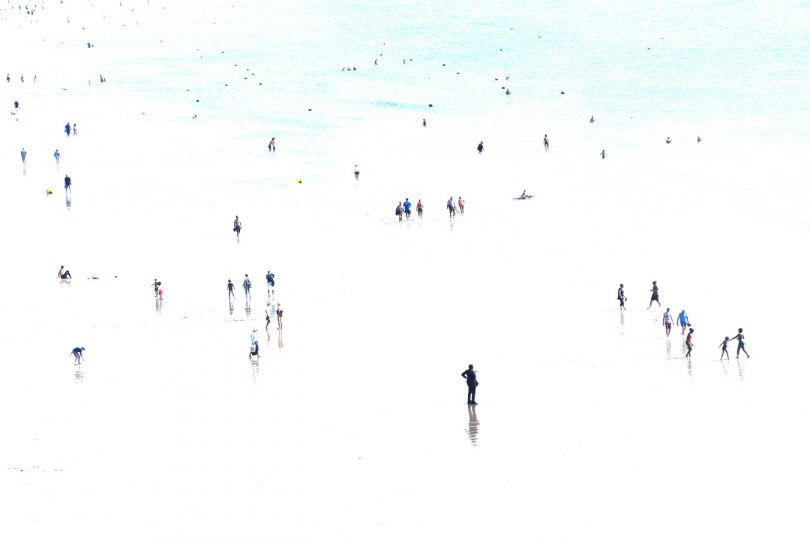
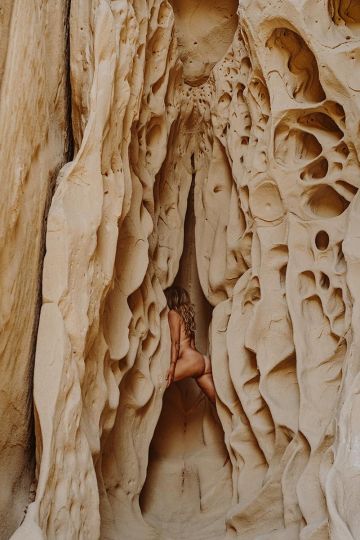
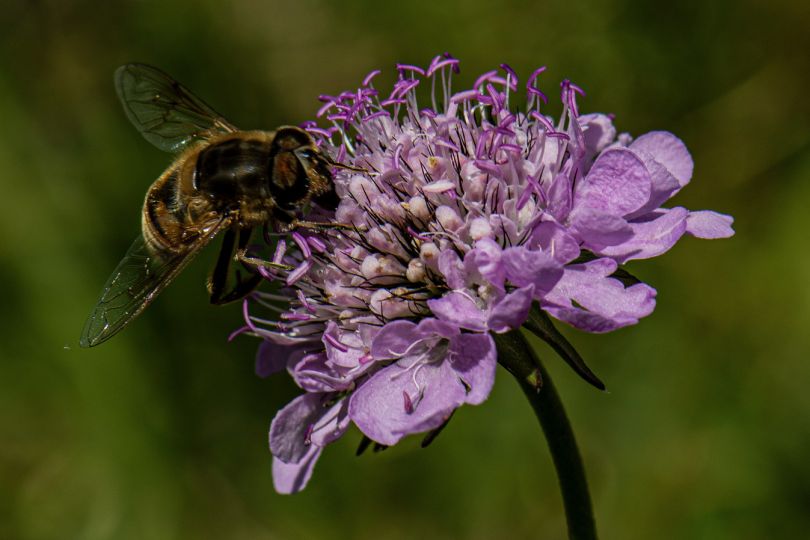
Chloé: Quite quickly, we wanted to situate ourselves within art history. We reflected on artist collectives that had worked on this notion, and we soon arrived at the Surrealists and the practice of the exquisite corpse, a well-known collective form. From there, we developed the idea of creating links between their works while clearly identifying series for each artist. We chose to articulate them according to the principle of Dorica Castra, a literary figure in which the last syllable of a word is taken up at the beginning of the next. We transposed this to photography: the last image of one series echoed the first of the next.
Salomé: There was also within Hors Format a strong desire to work collectively, to the point where individual photography no longer existed as such. They wanted a resolutely surrealist collage, evoking the 1920s and 1930s. This gave rise to a central installation, a deliberately cacophonous ensemble of images taken out of their original context, linking the different series.
Coline: The venue lent itself particularly well to this approach: Sample, in Bagnolet, offers a central space with a great ceiling height. This allowed us to imagine the exhibition in a circular form, a readable path in all directions, with this central totem as a point of convergence. The exhibition title also referred to this Dorica Castra, to this endless loop: Comme une forme commune (Like a Common Form).
How is your work organised as a trio within Vives!?
Chloé: In principle, Salomé is the queen of scenography. For this first project, she was the one who imagined the totem. I focused mainly on the texts and the concept, and Coline was more involved in production.
Chloé: It all happened very naturally. We were lucky to discover just how complementary our strengths were.
Why do you prefer the term “image professionals” to “curators” to define your collective?
Coline: We chose not to include the term “curator” because we wanted to propose something more global. In a more traditional framework, a curator often calls on a scenographer or other professions. On our side, the three of us form a kind of “package” that allows us to conceive an exhibition in its entirety.
The collective was founded in 2025. What will 2026 look like?
Salomé: We’ll soon be celebrating our first anniversary. We’re working on it with a lot of enthusiasm and ambition. Most likely in the spring, we’ll launch an exhibition accompanied by a festive moment, as well as portfolio readings. The idea is to support artists, to discover and meet photographers, to nourish our perspective with new images and to reflect on possible forms of collaboration. We also aim to produce a more personal exhibition in Seine-Saint-Denis in the autumn.
Coline: We are rooted in the north-eastern quarter of the Paris suburbs. The association is based in Pantin, with a desire to be fully embedded in this territory, which is particularly dynamic culturally: former industrial sites, rehabilitated factories, As the three of us all live in this area, it seemed essential to anchor ourselves here and to contribute to decentralising Parisian cultural events, to develop proposals elsewhere.
Chloé: This will be a curatorial project in the département 93 that we will carry from start to finish: a project we will design, with artists we will choose, following an eco-design approach, combining new productions and existing works. Vives! was born from this idea: to give works a new life, to put them back into circulation. The name also refers to white water, to the notion of circulation.
Interview by Benjamin Rullier
More information