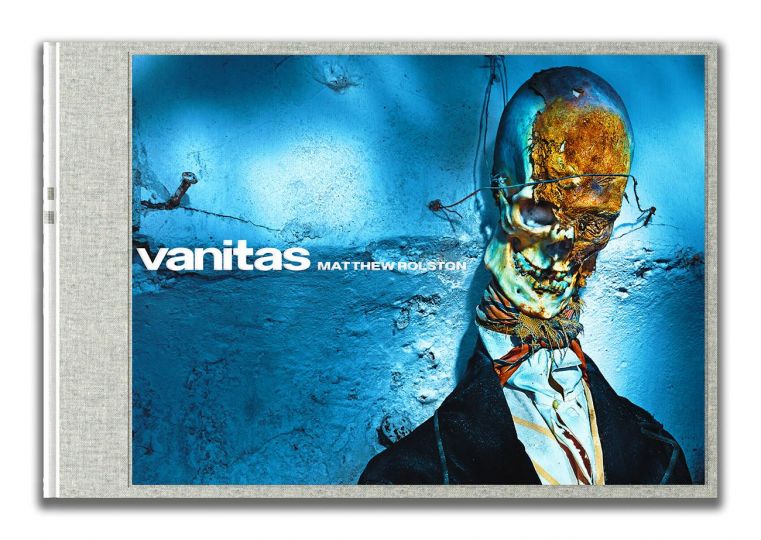


Vanitas: Eternity And Dust
By Matthew Rolston
The Latin “vanitas” has multiple meanings. Its primary definition is the same as the English word “vanity”: vainglory, untruth, self-deception. A secondary definition is “nothingness”. Yet a third definition of the word refers to a type of still-life painting characteristic of the 17th century Dutch school, a form of art that is symbolic of mortality. “Vanitas vanitatum et omnia vanitas” – Ecclesiastes, 1:2 – translates as “vanity of vanities; all is vanity”. This phrase can serve to instruct us on how to best view such an image.
My photographic series, Vanitas: The Palermo Portraits, is an artwork very much in the spirit (if not the form) of the Dutch ‘vanitas’. The series is devoted to portraits of mummified human remains, housed in the Capuchin Catacombs at the Church of Santa Maria della Pace in Palermo, Sicily.
There, in a place held holy as a direct portal to the divine, the religious, aristocratic, and affluent classes from the 16th through the early 20th centuries chose to display their mummified dead, upright, as if standing, exposed to view and fully clothed, in an effort to bring them closer to eternal salvation. The Vanitas portraits comprise an intertwined narrative of beauty and the grotesque, asking anthropological and philosophical questions about life, death, and the ability of art to connect with the beyond.
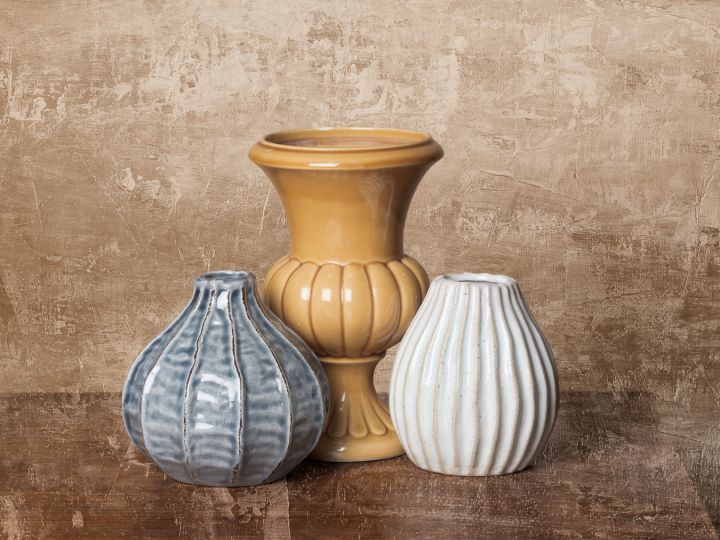
At first, works characterized as ‘vanitas’ seem to proclaim death, however their meanings are far more nuanced. The intent is to serve as vessels of meditation upon how we, the living, may reconcile life and death during our lifetimes. To modern eyes, these 17th century works may appear strange, even disturbing, with their seemingly random depictions of skulls, dying flowers and worldly riches, yet not a single object is without meaning. Each item symbolizes the transience of worldly pleasures – the fragility and ephemerality of life. In the context of a ‘vanitas’ artwork, contemplating the daily presence of death is meant to be employed in the pursuit of spiritual growth: an incentive to live a life more worthy.
A ‘vanitas’ work of art further denotes the futility, aimlessness and emptiness of being obsessed with material objects; material objects will eventually fade. To be fixated upon worldly possessions, unnecessary adornment, the pursuit of social status and excessive wealth, then, is to be fixated upon that emptiness. It has been said, “you can’t take it with you”, but what can one take from this earthly realm? One’s soul, if such a thing exists.
In the Vanitas series, the choice of dominant blue tones signifies that hue’s devotional relevance to traditional Catholic dogma and display. As such, the color carries with it a quality that conjures both the melancholy and the transcendent. The Vanitas images are an examination of visually-heated subject matter, yet also nod to art-historical touchstones in the works of prominent painters and photographers — a handful of whom have created art works that specifically depict the macabre inhabitants of the Capuchin crypt — among them Otto Dix, Richard Avedon, Peter Hujar, and Sigmar Polke. Other more formal influences for my Vanitas images include the works of Francis Bacon, Egon Schiele, James Ensor, Lucian Freud and El Greco.
The curious catacombs of the Capuchin monks in Palermo remain disturbing evidence of humanity’s romantic visions of immortality. Upright, as if already risen, some attired in decaying vestiges of worldly wealth, believing themselves first in line for resurrection on the Day of Judgment, the frati Cappuccini, religious leaders, aristocrats, and persons of means line this underground necropolis. Today, left to neglect, reduced to shreds of their former glory, these mummies remain both twisted and eternally poised, as mannered as Schiele’s watercolors of tortured flesh.
The Vanitas portraits attempt to portray humanity’s stubborn insistence to touch the eternal and thereby achieve immortality, wrought here literally as portraits of decaying bone, silk and cotton clinging to existence even with the spirit long departed.
Matthew Rolston
Eros and Thanatos
By Philip Gefter (excerpt)
Death is always the elephant in the room. We can’t escape its enormity nor its ubiquity, the menace of its inevitability, its unfathomable permanence, and the pall of darkness, emptiness, and grief it leaves in its wake. We tiptoe around the subject, necessarily, in order to proceed with our daily activities, in order to believe in the future, in order to survive in the world. While it’s one thing to gape at a fatality on the side of a road or to comb the details of a local murder in a newspaper headline — the fate of strangers — to stare death directly in the face is a challenge most people do not choose to endure. In 2013, Matthew Rolston, a photographer known to have redefined Hollywood glamour with the roster of celebrity portraits he had made over the years, spent a week at the Capuchin Catacombs in Palermo, Sicily staring into the faces of seventy mummies.
“I would like to know why I’m here,” Rolston said, musing about the essential existential questions that led him make the Vanitas series, consisting of fifty of his photographs of these mummies from the Capuchin Catacombs. “I would like to feel important in the cosmos of my own world, that my existence has some kind of meaning. Where do we come from? Where are we going? What is the reason for my existence?”
Driven by a realization that his career in high-style Hollywood portraiture had foregrounded youth and beauty in its inherent denial and negation of death, Rolston proceeded with the impulse of the artist to make portraits of each mummy, their hollowed-out faces and contorted remains providing a focus of contemplation about the meaning and purpose of our time here on earth, the transitory beingness of life and the phenomenon of consciousness, and the inescapable destination for us all — the implacable nothingness of death.
Philip Gefter
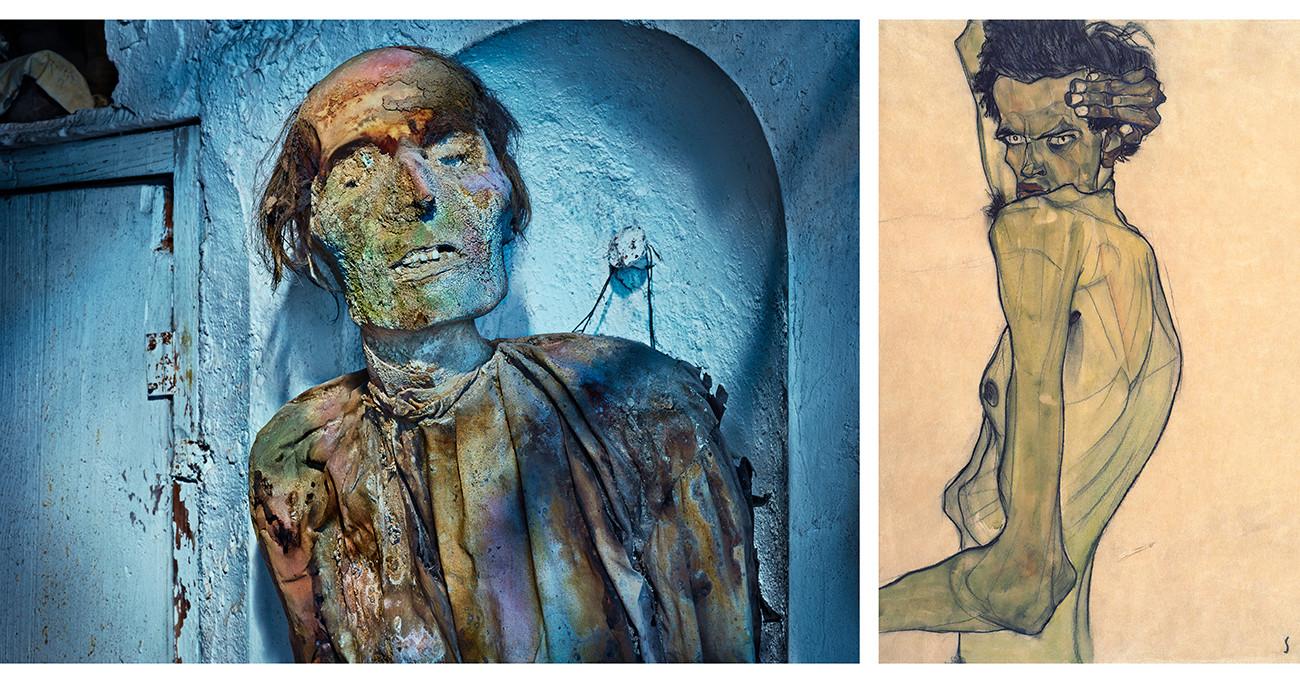
L- R , Matthew Rolston, Untitled (Burned), Palermo, 2013; Egon Schiele, Self-Portrait with Arm Twisted Above Head, 1910
Egon Schiele, the Austrian Expressionist whose work is imbued with torment, decadence, and allusions to death, is an important influence on Rolston. Schiele’s self-portrait is made with watercolor and charcoal, his emaciated torso twisted with jutting bones, protruding veins, and a swelled nipple. He projects a tortured and fanatical come-hither eroticism. The mummy, left, whose decomposing flesh is rendered with “the colors of a bruise,” as Rolston had intended with his lighting, is photographed as if he, too, is in a seductive, come-hither repose — conjuring the attitude of a decadent of another era.
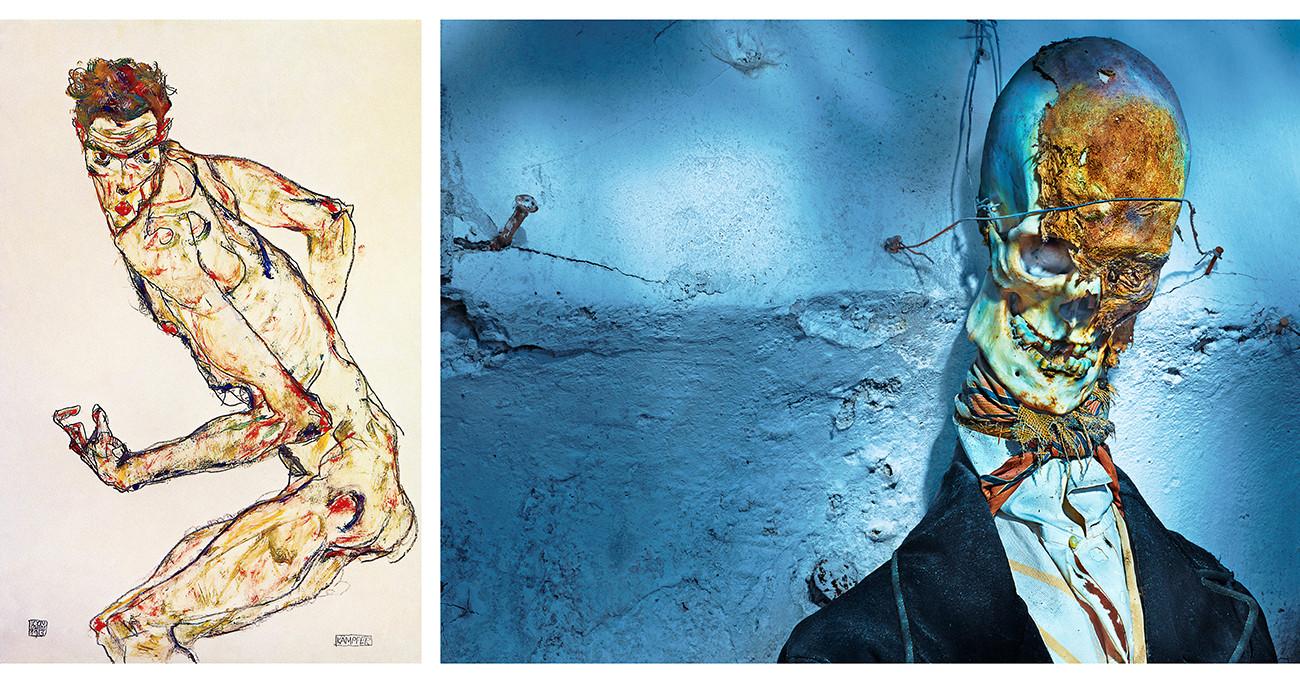
L- R , Egon Schiele, Fighter, 1913; Matthew Rolston, Untitled (Long Face), Palermo, 2013
Egon Schiele depicted his obsessions with alienation and death in grotesque exaggeration of the human form. In this nude self-portrait, he is feral and predatory, with an elongated body and a gesture of agitation. He strikes a pose as combative as it is protective. In juxtaposition with Rolston’s mummy, at right, Schiele’s fighter, drawn as if with the rust of the blackened wires holding up the mummy’s skull, recoils with the same instinctive reaction we bring to the elongated skull, hollowed out eyes, decomposing flesh, and demonic expression that composes a chilling vision of death.

L- R , James Ensor, Man of Sorrows, 1891; Matthew Rolston, Untitled (Beard), Palermo, 2013
The Belgian artist James Ensor had a lifetime preoccupation with mortality. Death masks and cloaked skulls appear throughout his work. “Man of Sorrows” is a thinly veiled self-portrait as Christ to represent his own suffering, the specter of death reflected in the blood on his face and his cry of pain. Ensor is another artist Rolston considered while making the Vanitas portraits. The mummy, right, might be thought of as a modern interpretation of Ensor’s self-portrait as Christ, the death mask skull a haunting demonic parallel to Ensor’s expression of pain and fear.
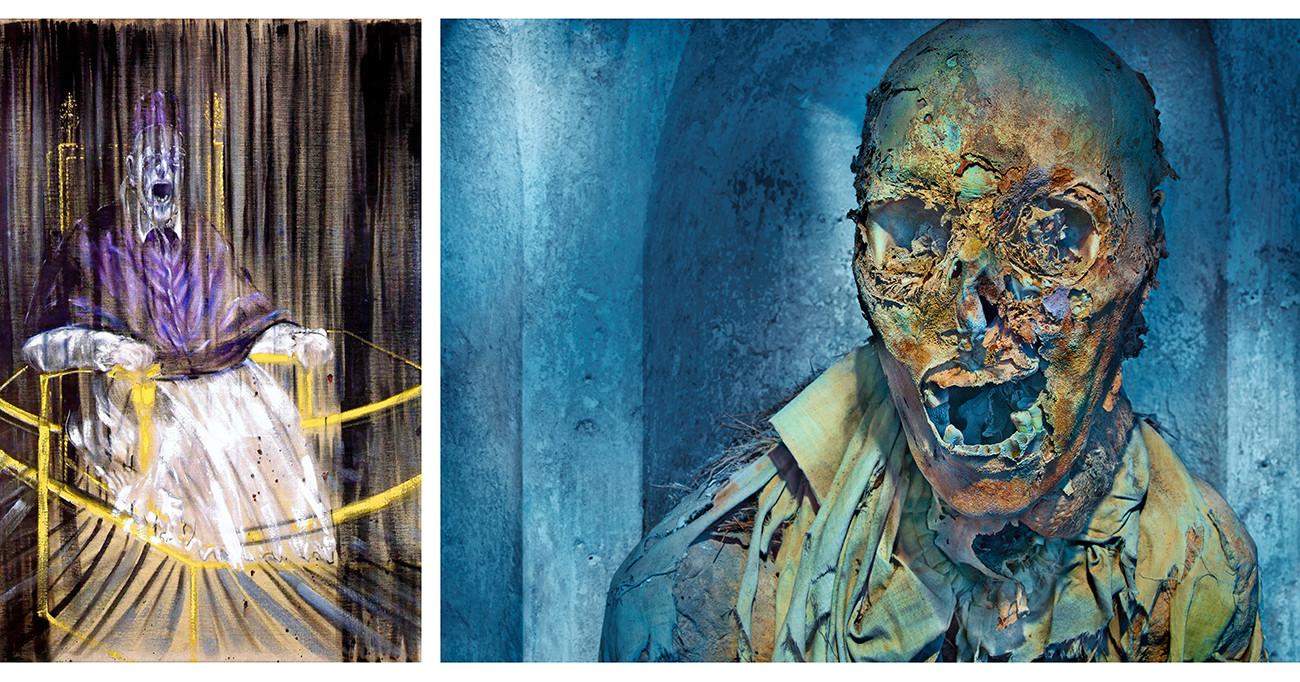
L- R , Francis Bacon, Study After Velasquez’ Portrait of Pope Innocent X, 1953; Matthew Rolston, Untitled (Scream), Palermo, 2013
Francis Bacon never saw Diego Velasquez’s “Portrait of Pope Innocent X,” 1650, considered one of the greatest portraits ever painted. But Bacon was obsessed about the hypocrisy of the duplicitous Pope, whose expression in the Velasquez’ portrait is one of serenity and reserve. Bacon depicted Pope Innocent X screaming, frightened with doubt about God’s existence, in pain as if it the throne were an electric chair. Rolston had Francis Bacon in mind while photographing the mummies in the Capuchin Catacombs. The screaming mummy, at right, in particular, is in dialogue with Bacon’s screaming Pope.
All captions by Philip Gefter
PROJECT WEBSITE: https://www.vanitasproject.com/monograph
© Copyright Matthew Rolston Photographer, Inc. All rights reserved.