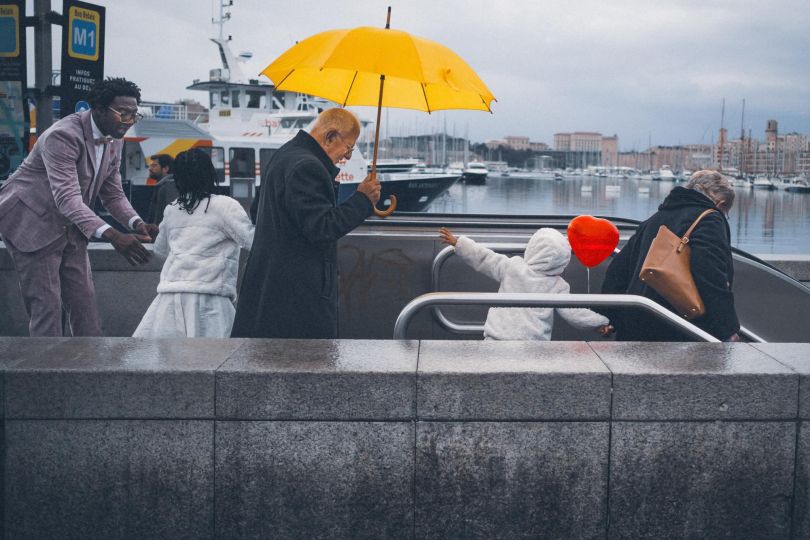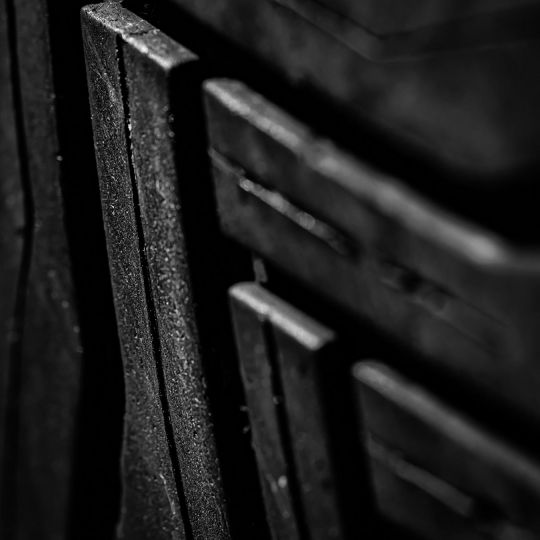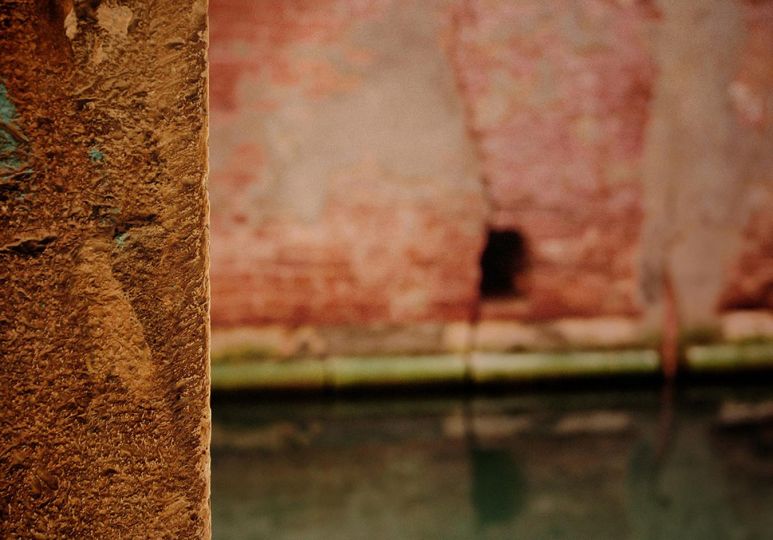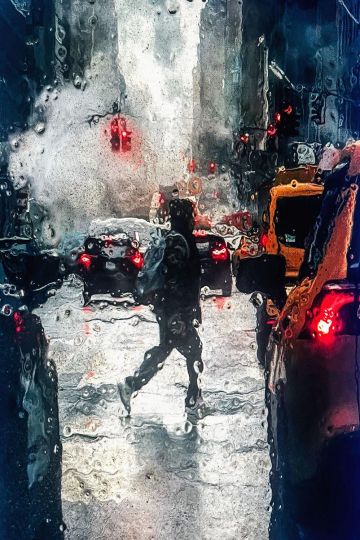
True to the approach of Albert Kahn(1860-1940), philanthropist and banker, the Friends of the Albert Kahn Museum association continues its commitment to contemporary photography, which began in 2017 with the creation of its Photography Prize.
Léonce Raphaël AGBODJELOU
Egungun series
Winner of the 2026 Friends of the Albert Kahn Museum Prize
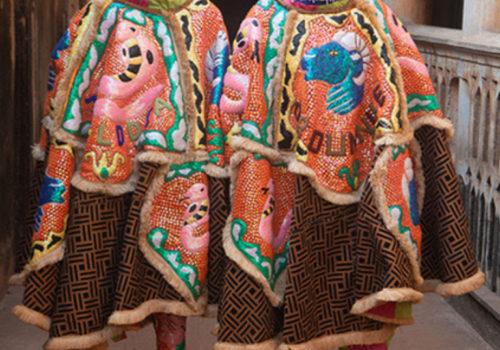
In the Yoruba (Benin, Nigeria and Togo) and Fon (Benin) traditions, the Egunguns represent the spirits of ancestors who symbolically return to the living during sacred ceremonies. They embody the continuity between the past and the present, the visible and the invisible, the protection and transmission of family and community values.
Through his photographs, Léonce Raphael Agbodjélou reinterprets this tradition by placing it in a contemporary context. He stages the Egunguns in modern settings, creating a powerful dialogue between ancestral heritage and current reality. He does not simply document a tradition: he recontextualises it.
Léonce affirms a strong Beninese identity, proud of its roots and conscious of its history. His work stands as a visual exploration of the link between ancestral heritage and contemporary reality, celebrating a proud Beninese identity firmly rooted in its history.
Born in 1965 in Porto-Novo, Benin, Léonce is a leading photographer in West Africa. The son of renowned photographer Joseph Agbodjélou, he was introduced to studio photography and portraiture at a very young age, trained directly by his father. This family legacy has had a profound influence on his artistic vision.
As a photographer and teacher, he plays an essential role in the development of photography in Benin, founding the country’s first photography school and chairing the Association of Photographers of Porto-Novo. His best-known work, the series Citizens of Porto-Novo, highlights the daily life, traditions and modernity of the Beninese capital through sensitive and expressive portraits. Collections combining traditional heritage with contemporary themes such as identity and modernity, Léonce Agbodjélou has established himself as a key figure in contemporary African photography on the international scene.
His works have been acquired by numerous institutions, including the National Gallery of Canada, the Musée du Quai Branly, the Brooklyn Museum, the Museum of Fine Arts in Houston, and the Carnegie Museum of Art in Pittsburgh.
Thierry BOUËT
Series #1
Special mention from the Prix des Amis du Musée Albert-Kahn 2026
A photographer renowned in France and internationally, Thierry Bouët travels the globe in search of subjects that no one pays attention to. His work is distributed in the press and exhibited in numerous cultural institutions around the world. He exhibited at the Rencontres d’Arles in 2015 and was a resident at the Villa Medici in 2023. In 2021, he posted his collection of more than 14,000 photographs online.
Thierry Bouët explores everyday subjects. Sensitive to the poetry of the anecdotal, he does not hesitate to meet people and observe their environments in order to visually question what makes up our worlds.
The series #1
One by One is an inventory of buildings bearing the number 1 on their street in the twenty arrondissements of Paris. The first blue enamel plaque appeared during the First Empire.
The series contains 600 photographs of façades stamped with a number 1 plaque visible in the photo. Each arrondissement has 30 photos for a total of 20 arrondissements.
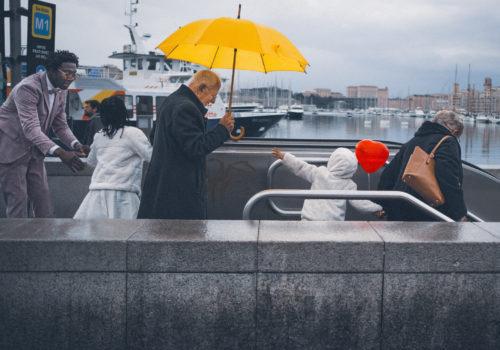
The method consists of standing in front of the doors and photographing all movements for an hour. The device includes a full-frame Nikon camera screwed onto a tripod to lock the frame. The advantage of this principle is that it allows characters to be kept or removed. No longer fully complying with documentary certification, the result is a staging of real characters who have never crossed paths in reality.
During the exposure time, the doors are pushed open to encounter residents, agreements and quarrels. The testimonies allow us to pass through the wall and learn about the life of small territorial communities.
Each photo is presented as a theatre scene with its own story, unity of time, place and action. The narration contributes to a journey of wonder.