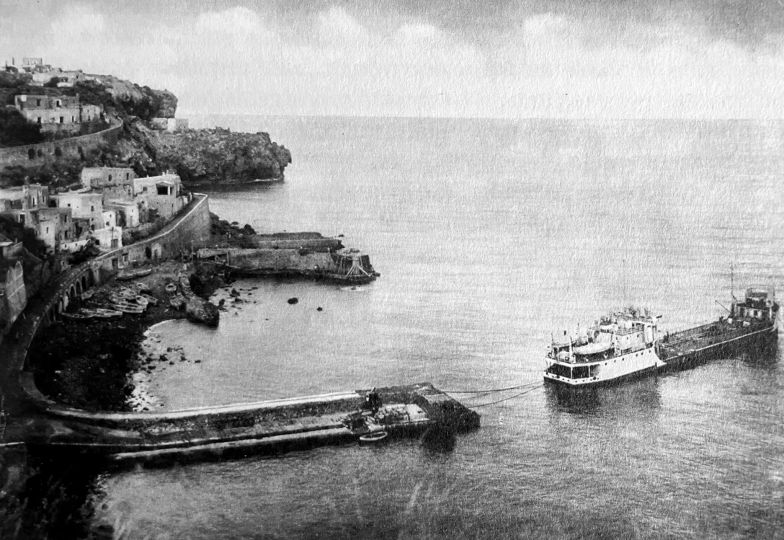
Joseph Bellows Gallery presents LeRoy Robbins: New Deal Photographs through January 16th, 2026, in the gallery’s Atrium space. The show features vintage photographs of California taken in the 1930s while the photographer worked for the Works Progress Administration’s Federal Art Project, during the New Deal era, documenting the economic and social impact of the Great Depression. The New Deal set up a number of ambitious projects, with different administrators and constituencies, but which functioned together to give comprehensive support and encouragement to art and artists. The largest and most famous of these, the Works Progress Administration’s Federal Arts Project (WPA/FAP) which was active from 1935 through 1943, sought to aid artists by employing them to focus on large cities where most already lived.
“For the first time in our history the government supports art, assigns tasks to painters, sculptors, graphic artists and teachers, or accepts their freely created work, and pays a weekly wage. The projects may be limited and the conditions poor, but the whole program is an immense step toward a public art and the security of the artist’s profession.” – Meyer Schapiro, Art Front, (November, 1936)
In 1936, LeRoy Robbins became part of the Federal Arts Project at the invitation of Edward Weston, joining a group of California photographers that included Edward Weston, Brett Weston, Sonya Noskowiak, William Abbenseth, Nacho Bravo, Hy Hirsch, and others. This talented group of photographers stood out from other FAP groups in the state, which focused primarily on the photo-documentation of public artworks and other undertakings of the Federal Arts Project. Robbins and his contemporaries displayed a deep commitment to their subject’s form and beauty, and an attention to more understated subjects. Their photographs were in many ways the beginning of a new synthesis in photography – one between aesthetic consideration and social concern.
In 1937, Berenice Abbott, then a FAP supervisor, commented on the significance of photography: “Photographs of things and objects tell the story of mankind as much as the “candid” shot. In the past how have we learned about history? Not only from portraits and genre paintings, but also from the very rocks and stones, from the surviving architecture, the things built by man. Photography has the double range of communication, speaking to the present, but speaking also to the future and telling what sort of world it was.” – Berenice Abbott, “Photography, 1937-1939,” Art Front (May 1937)
Ansel Adams wrote, “There is a quiet assurance of beauty in LeRoy Robbins’ work, and a confidence that beauty persists – both in the world about us and in the mind and spirit of the artist.” Robbins’s finely crafted black-and-white prints render their subjects with a sensibility that balances the aims of documentary photography while conveying a modernist artistic intent.
LeRoy Robbins : New Deal Photographs
Until January 16th, 2026
Joseph Bellows Gallery
7661 Girard Ave.
La Jolla, CA 92037
www.josephbellows.com