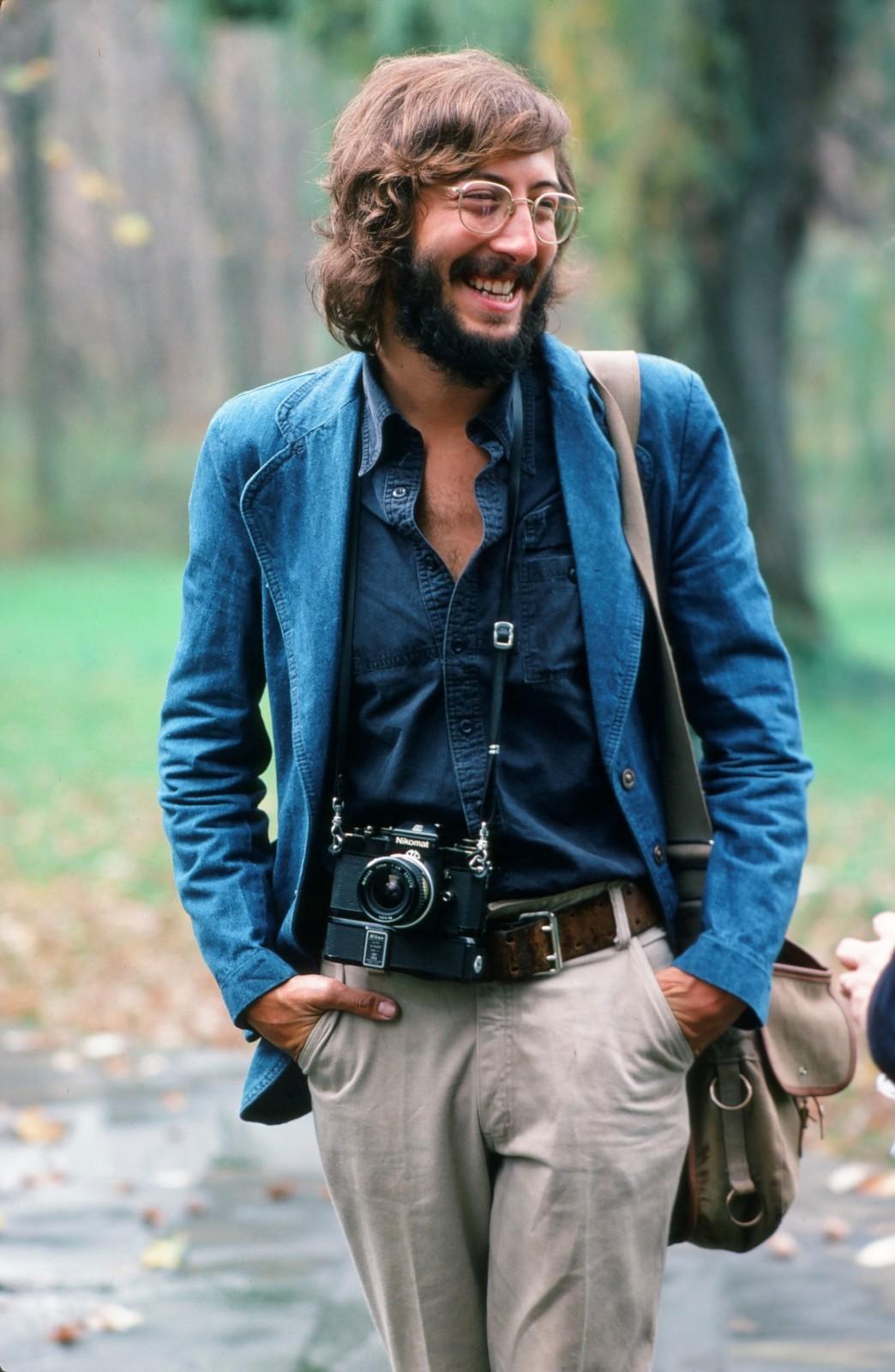


The Hamdan Bin Mohammed Bin Rashid Al Maktoum International Photography Award (HIPA) has celebrated the 14th season of its 2025 Awards on the theme ‘Power’. American photographer, author and innovator Rick Smolan received the Photography Appreciation Award.
Your interest in photography began when your father gave you a camera at 16 years old. Where were you living at the time, and how did those early experiences shape you?
Rick Smolan: I was painfully shy as a teenager. I had very few friends, I was an amateur radio operator, and I would sit in the basement talking to people in Morse code. I couldn’t make eye contact, especially with girls. When my father gave me a camera, everything changed. One day at school, a group of cheerleaders asked me to take their picture. Suddenly everyone—athletes, hippies, all kinds of groups—wanted me around. Photography became a way to be present without having to push myself socially. Even today my wife says, “Put the camera down and be here,” but back then it opened every door for me. I realised I liked the power it gave me.
My father also gave me a book by Elliott Erwitt, who would later become my father-in-law. Erwitt’s images fascinated me: funny, human, confusing in the best way. I felt that watching people through a camera would help me learn how to relate to them, something that didn’t come naturally to me. I told my father I wanted to be a photographer, and he said absolutely not—I should become a doctor or lawyer. He didn’t want to send me to college “to take baby portraits.”
How did you manage to study photography despite his resistance?
He refused to let me go to any college with a photography program, so I enrolled somewhere that had none. During the first week, I asked the head of the art department if I could create my own major. No one had ever asked that before, but he agreed. My father was furious at first, but later proud.
I had very conventional expectations for how a career should unfold: you start in a small studio, then maybe a local paper, and if you’re lucky, a magazine when you’re fifty. Instead, Time Magazine hired me at 24. And my father couldn’t understand how it happened. I later learned that an editor at Time, John Durniak, sought out one young photographer a year and threw them into major assignments to see if they could swim.
What was it like working under that pressure?
I discovered I perform best when I’m scared. My first big assignment for Time was a color cover story, even though I had only ever shot black and white. They had backup stories ready if I failed, but I didn’t know that at the time. Every assignment brought a mix of excitement and imposter syndrome. I thought everyone else had gone to photography school, until I started meeting other photographers and realised most of us were self-taught.
Who were your early influences besides Elliott Erwitt?
Cartier-Bresson, many Magnum photographers like Philip Jones-Griffiths and Burt Glinn, and others like Bill Owens and Duane Michals.
You later joined Contact Press Images. How did that come about?
A group of us formed the agency: David Burnett, Douglas Kirkland, Eddie Adams, Annie Leibovitz… I was the youngest by far. The arrangement was that I would take assignments the others didn’t want. One day Burnett called and asked if I’d ever been to Japan. Pan Am was launching the first nonstop New York–Tokyo flight, and photographers were being sent to document it. It was supposed to be a quick trip: fly there, photograph two men shaking hands, fly back. I asked if I could stay. He said yes—at my own expense. I ended up staying eleven months.
Time Magazine quickly realised I was in Tokyo and started assigning stories: Muhammad Ali, political visits, everything. I became their de facto correspondent.
Did you get to know Japanese photographers while you were there?
Yes. One I remember most is Hiroshi Hamaya. He was extremely kind to me. Recently I found a portfolio he had given me, signed and stored in a box. At the time it was just an exchange among colleagues, but today it feels incredibly valuable.
That trip to Japan eventually led me to Australia, where I met my wife Robin, and later to the idea behind “A Day in the Life.”
You lived in Australia for several years. Did the “Day in the Life” series begin there?
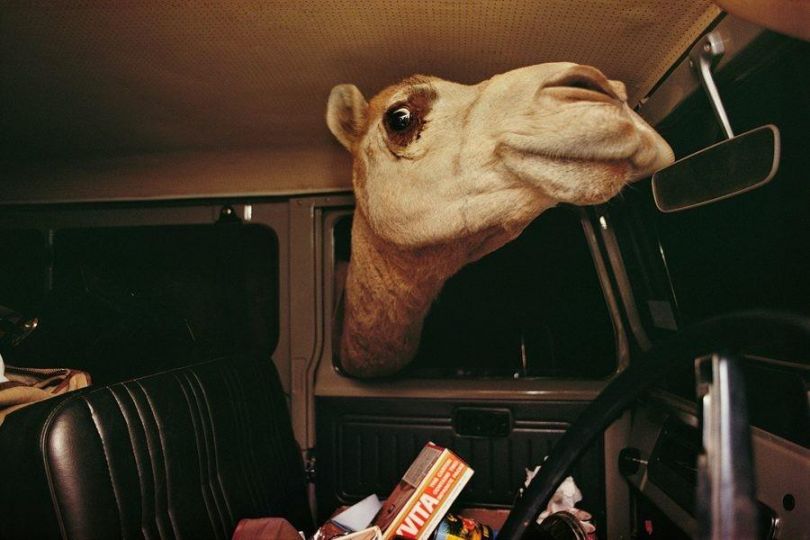
Yes. After my first trip in 1976 and a camel trek in 1977, I was based there for five years. In 1980 I began “A Day in the Life of Australia,” published in 1981. I never intended to become a publisher—I preferred working alone as a photographer—but the book’s success changed everything. Every new edition pushed us to innovate: TV specials, exhibitions, interactive CD-ROMs, later smartphone apps linked to photos.
Your publishing house, Against All Odds, eventually created a whole catalogue of large collaborative projects. Which was the most successful?
“A Day in the Life of America.” Ironically, it’s my least favourite because it’s hard to see your own country clearly. In Japan I felt like an alien discovering a new world. In America everything felt familiar, almost random. But the book sold 1.2 million copies—the first photography book ever to become the number-one bestseller in the U.S.
You’ve mentioned strict editorial choices. How did that influence the projects?
We never aimed to be “fair.” If we lacked a great picture for an important topic, we simply didn’t include it. We also refused product placement for sponsors. And we didn’t guarantee inclusion for any photographer. Some had bad days, bad assignments or bad weather. I lost friends because of this: they felt betrayed after travelling far and not getting into the book. But my loyalty had to be to the project itself.
Editing showed me how much randomness shapes a book. A bad editor can bury great work. Once, after reviewing a photographer’s disappointing selection, my wife and I re-opened all his Kodachrome boxes after hours and discovered extraordinary images overlooked by the editor. It changed the entire book.
Technology seems to have played a major role in your projects. How did your relationship with Apple begin?
When we were producing “A Day in the Life of Japan,” I asked Apple in Tokyo if we could borrow a Macintosh. They not only agreed—they invited us to set up the entire project in an empty Apple office tower. One day Steve Jobs walked in unexpectedly. At first he was shocked that non-Apple personnel had moved in, but when I proposed paying our photographers with Apple computers instead of cash—about $3,000 worth per person—he immediately agreed. For seven years we paid photographers in Macintoshes. Later Apple distributed our CD-ROM narrative “From Alice to Ocean” for free in every Macintosh box. Half a million copies went out. It helped push interactive storytelling into the mainstream.
You are receiving the HIPA Lifetime Achievement Award this year. How do you feel about it?
It’s my first lifetime award. Watching the retrospective video last night felt surreal, like the cliché of one’s life flashing past—without the dying part. At this stage of my life I think a lot about my children, and sharing the moment with them was meaningful. They grew up surrounded by photographers and creative people. My daughter is a photographer—you published her work—and my son is a filmmaker whose first short film is screening internationally. Seeing them find their own paths is the greatest reward.
Listening to your story, it seems shyness played a major role early on. Do you still feel it?
I do. My wife doesn’t believe I was ever shy, but I still feel it internally. I’ve just learned to push past it. Photography was my tool for doing that—just as writing or filmmaking can be for others. It’s a bridge.
More information