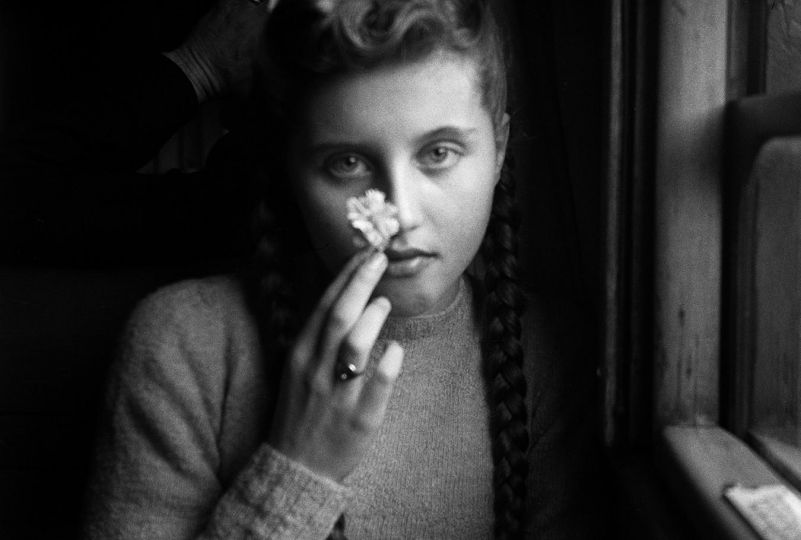
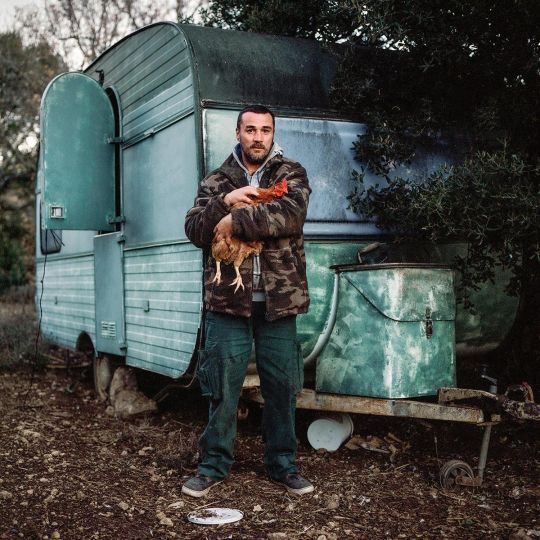
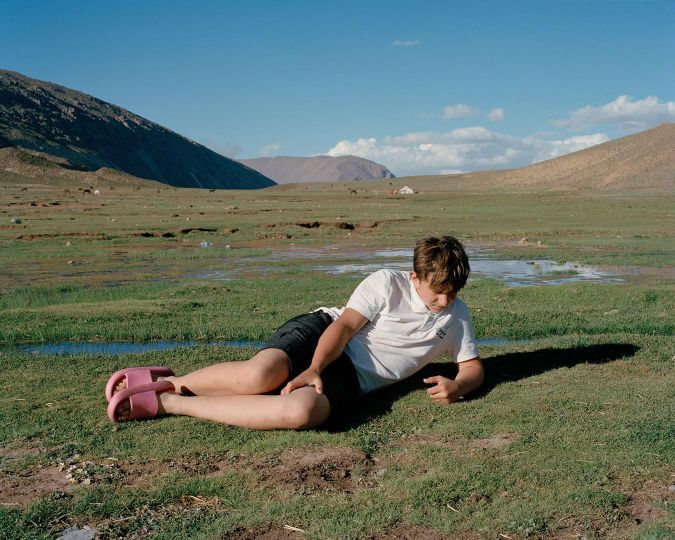
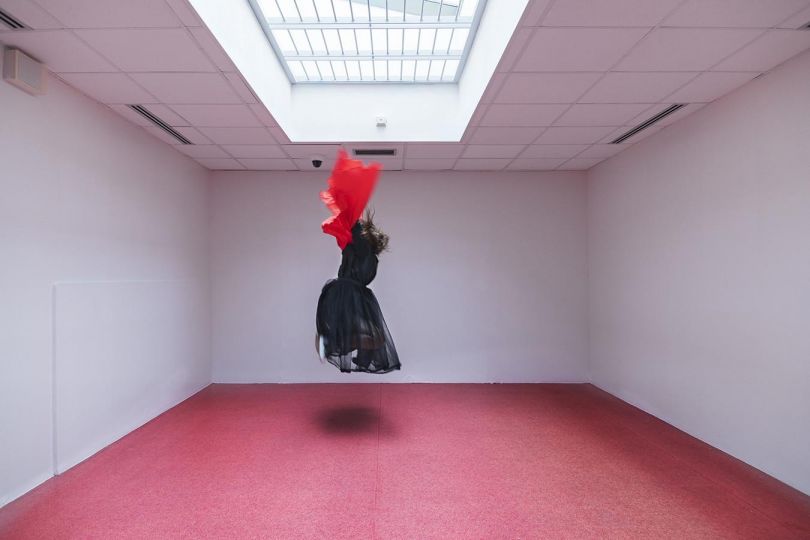
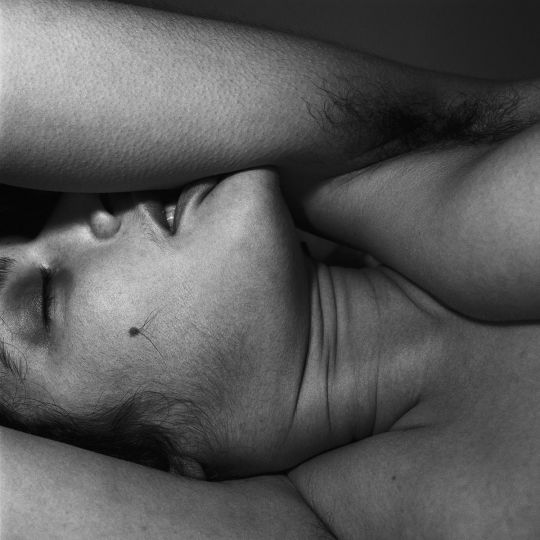
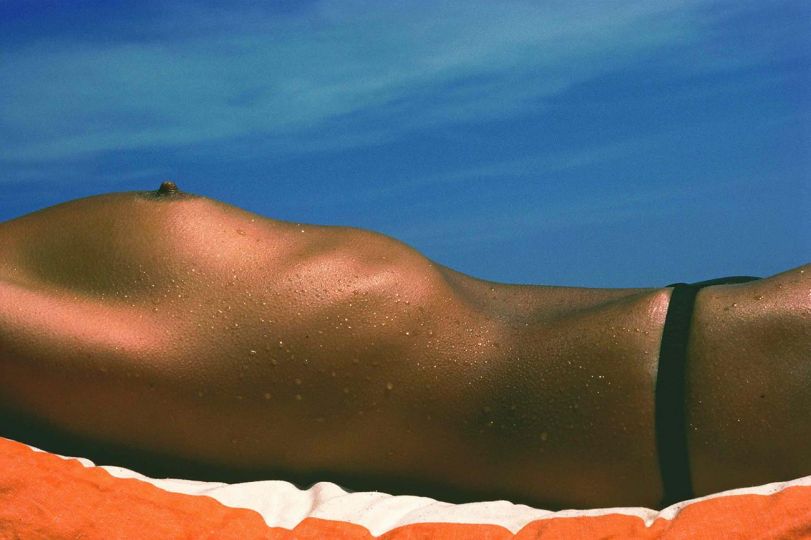
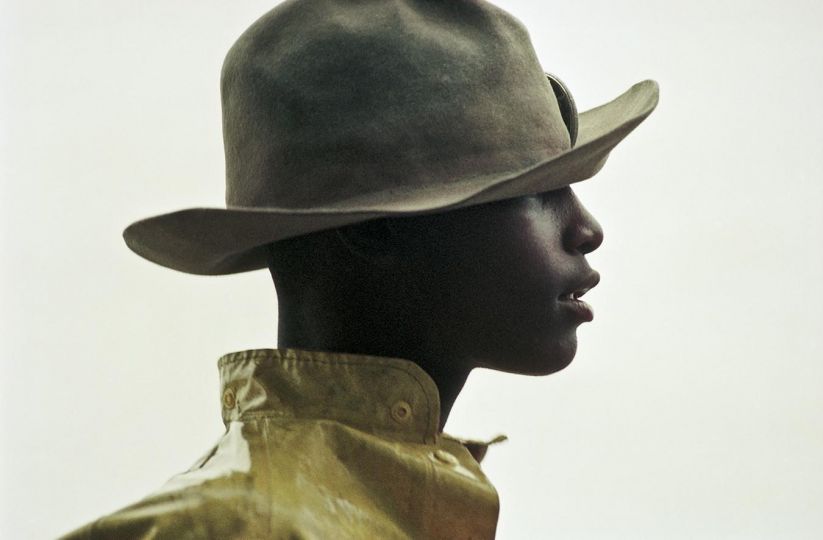
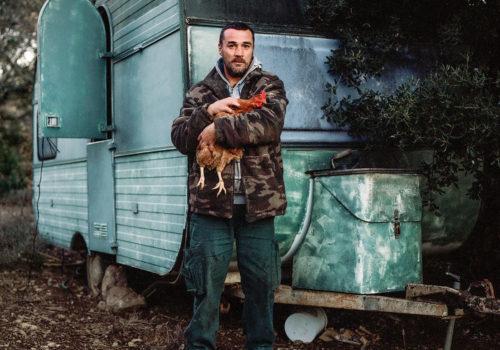
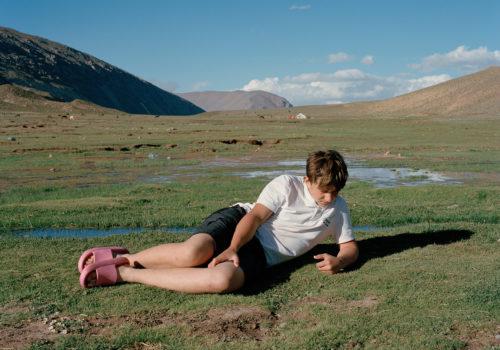
The 21st edition of the Festival FOTOGRAFIA EUROPEA held in Reggio Emilia dedicates its exhibitions to ghosts, understood as the presence of something that could happen. Chiostri di San Pietro, Palazzo da Mosto, Palazzo dei Musei, Palazzo Scaruffi, Chiesa dei Santi Carlo e Agata and the OFF Circuit spaces welcome exhibitions by leading photographers and emerging talents.
From 30 April to 14 June 2026, Reggio Emilia will once again look at contemporary changes through the eyes of leading photographers and emerging talents with the 21st edition of FOTOGRAFIA EUROPEA, the festival promoted and organised by Fondazione Palazzo Magnani and the Municipality of Reggio Emilia, with the support of the Emilia-Romagna Region.
“GHOSTS OF THE MOMENT” is the theme chosen by the Festival curators: Arianna Catania (founder and director of Gibellina Photoroad / Open Air & Site-specific Festival), Tim Clark (editor and curator at 1000 Words) and Luce Lebart (researcher at the Archive of Modern Conflict and artistic director of the Pavillon Populaire in Montpellier). In addition, there is a historical overview by Walter Guadagnini (photography historian and teacher at the Academy of Fine Arts in Bologna) dedicated to 200 years of photography.
The “ghosts” we will meet and take on are the shadows of something that has lost its body, yet keeps knocking at the night of the mind. These ghosts are not just apparitions, but memories that refuse to be consigned to the past, fears dressed as mystery and presences made entirely of absence. They dwell in the corridors of silence, live in the cracks of memory and feed on what was left unsaid. When they manifest, at times they make us tremble; at others they shield us into forgetting. They have no face, only a thousand masks. You can drive them off with the light of an idea, or listen to them to learn what they hunger for. Yet ghosts are not only a menace, they are latent presences, suspended potentials, ideas that never quite departed. This edition of Fotografia Europea is an invitation to seek out the unseen and the invisible, paying attention to the whispers of what has been and what could be. The featured artists reveal the silent stories that inform and guide our present while simultaneously opening up new paths for the imagination. The Festival explores the quiet endurance of memory – how memories fade and yet refuse to vanish entirely. Each photograph holds its own echo, a spectral reminder that even as time slips away, it keeps its essence suspended. In these exhibitions, the past is not gone, it breathes softly within the now.
For two centuries, photography has captured shadows, preserved faces and constructed collective memories, moving among these ghosts. The second part of this journey will delve into its history, examining how images have accompanied, interpreted and sometimes reinvented the lives of men and women from the 19th century to the present day.
It is here that our dialogue with the “ghosts” takes shape, traversing archives, authors and technologies that have shaped the way we see, perceive and understand the world around us.
LES EXPOSITIONS
The Chiostri di San Pietro, home as always to the ticket office and beating heart of the Festival, will play host to ten exhibitions curated by Tim Clark and Luce Lebart, revealing the ghosts of the moment.
The journey begins with Bravo, a work by Felipe Romero Beltrán, winner of the 2025 KBr Photo Award by Fundación MAPFRE. The photographer explores stories of migration along the Rio Bravo River, on the border between Mexico and the United States, which becomes a symbol of suspended and silent waiting. Through three chapters – Endings, Bodies and Breaches – Beltrán uses photography as a critical tool, challenging systems of classification, enclosure and identification that govern border regimes.
With his project Our Hidden Room, Mohamed Hassan explores identity, family and mental illness through his relationship with his father and Egypt, his native land, weaving images and words in a story of memory and healing. The work, winner of the Star Photobook Dummy Award, is a visual journey that turns private pain into a universal tale about searching for one’s roots.
In Automated Refusal, Salvatore Vitale analyses the precariousness of working in the gig economy, between algorithmic surveillance, rankings and the reduction of free time in the context of digital professions. The film, part of the Death by GPS research, is a visual critique of the inequalities and exploitation generated by automation.
With Le Jardin d’Hannibal, French photographer Marine Lanier tells the story of the Lautaret Garden, the long-standing conservatory of alpine flora and scientific research hub. Through evocative images that intertwine historical memory and legends, such as that of Hannibal, who is said to have crossed the Alps to take on the Romans, the project blends past and future in a poetic vision of nature in need of preservation.
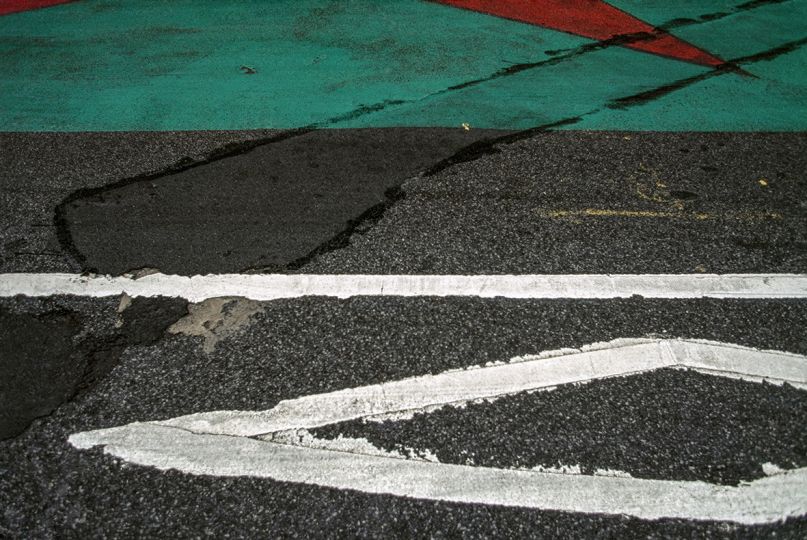
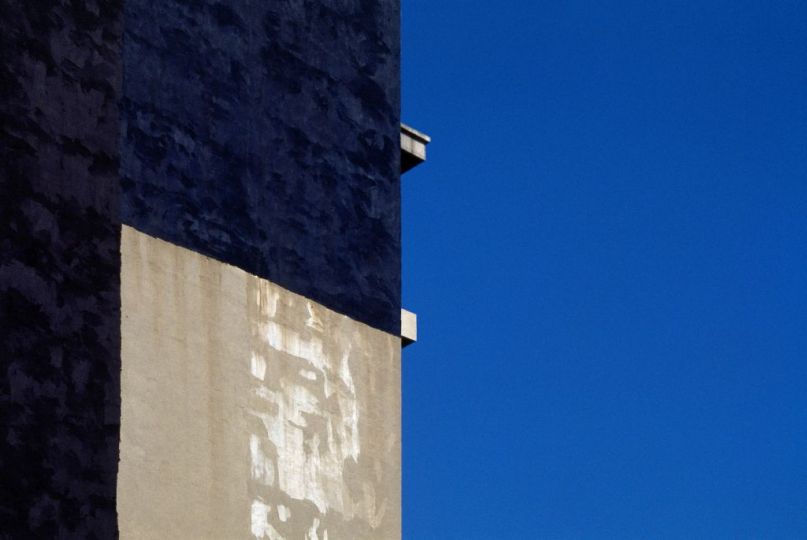
Stains and Ashes is the result of work by Ola Rindal, who turns his gaze on the stains, cracks and imperfections in the world around us, elements that are usually overlooked but here become material for contemplation turned into abstract visions. Through blurring, the project evokes the fragility of memory and the impossibility of fully grasping reality.
In Subject Studies, the Mexican photographer Tania Franco Klein explores how the perception of a subject changes based on the context and the viewer’s gaze, recreating the same scene with different people. The project considers subjectivity and how identity and meaning are constructed through photographic staging and the observer’s cultural baggage.
Inspired by Milan Kundera’s Slowness, Giulia Vanelli investigates the relationship between speed, memory and forgetting, translating an existential equation about time into images. The Season becomes a visual reflection on the desire to hold on to the past or to flee from it, through the rhythm of movement and memories.
In the large central corridor on the first floor of the Chiostri, Frédéric D. Oberland exhibits Vestiges of the Future in which images and sound create a multisensory experience that spans over a decade of psychedelic visions and premonitions captured in 35mm and Super 8 film. The project explores the human condition, the relationship between visible and invisible, and the connection between myth, civilisation and nature.
The rooms on the ground floor of the Chiostri welcome a project commissioned for this year’s Fotografia Europea from photographer Simona Ghizzoni. Originally from Reggio, she presents work that focuses on the female figure as a repository of memory, as well as imagination and planning, in workshops combining words and images held across the local area.
The ground floor display concludes with Keep the Fire Burning by Francesco Colombelli in partnership with the AÏDA day centre for teenagers. Through a selection of photographic books, the exhibition investigates how myths, tales, popular beliefs and traditions continue to inhabit our present, building an emotional and cultural geography that crosses borders and generations.
Palazzo da Mosto, near the Chiostri, hosts the collective exhibition Ghostland, curated by Arianna Catania, which explores the hypermediated age in which we live, where reality takes on the guise of a “spectral” realm constantly filtered through bright screens. The exhibition considers screens not only as devices, but as cultural environments capable of shaping perceptions and behaviours, revealing what eludes our gaze and inviting us to question the blind spots in our vision. In the same vein, Alisa Martynova (ANIMA) transports the viewer to a dreamlike landscape created by artificial intelligence, where organic and artificial become confused; Zoé Aubry (Effet miroir | Faire écran) shows how our image reflected everyday on screen shapes new identities; Mykola Ridnyi (Blind Spot) erases the vision of war, which dissolves into countless blind spots, thereby changing the way conflicts are perceived; Vaste Programme (It’s All Fun and Games) turns the fun peep-board attraction forcing us to confront the climate crisis and our own capacity for empathy; Visvaldas Morkevičius (Camouflage) compels us to see drone warfare, transforming conflict into abstraction, distancing action from violence; Indrė Šerpytytė (This Is How We Win Wars) stages the gestures and dances of soldiers, shared on their social media accounts, suspended between ritual, trauma and human fragility; Sara Bezovšek (SND) leads the viewer through a maze of digital pathways, where the possible futures of the planet are revealed through personal interactive choices; and finally, Carolyn Drake (Next Door) turns neighbourhood video surveillance images, used to foment social prejudices, into compositions that reflect moments of everyday life.
The projects by Indrė Šerpytytė and Visvaldas Morkevičius are part of the Cultura Lituana in Italia 2025–2026 programme, created by the Institute for Lithuanian Culture and the Embassy of the Republic of Lithuania to the Italian Republic.
Displayed on the ground floor at Palazzo da Mosto, the Open Call projects selected by the Festival’s curators include more than 700 works by participating artists and curators, offering a look at the most original research on the contemporary scene. With L’albergo della lontananza, Federica Mambrini turns the geographical distance between Italy and Chile into a symbolic architectural space in which bridges, deserts and everyday gestures become tools for forging tangible bonds between two hemispheres. Emilia Martin, in The Serpent’s Thread, interweaves history and legend by reconstructing the story of the five Andersson sisters, who lived in a Swedish village at the turn of the 20th century, and their textile dowries. Reflecting on female identity and the material legacy passed down through generations, the artist reconstructs the story by exploring the profound significance of dowries as symbols of identity and social destiny.
Palazzo Scaruffi, a fully renovated and restructured 16th-century palazzo located in the historical centre of Reggio Emilia, will display the show curated by Walter Guadagnini, 200×200. Due secoli di fotografia e società (Two hundred years of photography and society). The project celebrates the two centuries that have passed since the decisive year of 1826, highlighting the importance of photography in defining the global collective imagination. More than a mere chronology of masterpieces, it explores the mechanisms of the dissemination of images and their social impact. The exhibition alternates an historical approach with reflections on language, showing how photography has been used to describe, invent and falsify the world.
Elena Bellantoni’s exhibition entitled GHOSTWRITER, curated by Fulvio Chimento, is on display in the ninth-century Chiesa dei Santi Carlo e Agata, on Via San Carlo, right in the heart of Reggio. The project conjures up the “ghosts of history” through symbolic figures expressed by the artist’s body. Using photography, auteur cinema, sculpture and installation, Bellantoni reflects on history told from the female perspective, understood as an “unexpected body”.
Speciale Diciottoventicinque is also back; this educational project for young people aged from 18 to 25 leads to the design and creation of a work linked to the theme of Fotografia Europea 2026 that goes on to form part of the event’s official circuit.
This year’s tutors are Marcello Coslovi and Alex Tabellini from Sugar Paper, a Modena-based company dedicated to promoting and disseminating contemporary photography, especially through photographic books. The end result will be the creation of a story in the form of a small publication in which various aspects of the theme will emerge. The work will offer a group vision of what it means to new generations to confront the “ghosts of the moment”.
The festival will be surrounded by other partner exhibitions organised by the city’s most important cultural institutions and housed on their premises.
At the Palazzo dei Musei, Luigi Ghirri takes centre stage, explored from a new perspective, namely the deep connection between his visual aesthetic and the world of sound. The exhibition investigates how music – from Bob Dylan to CCCP – influenced Ghirri’s way of “constructing” images, turning them into visionary narratives. This dialogue is enriched by a collaboration with the musician Iosonouncane, who curates a section dedicated to the soundscape, linking the ecology of Ghirri’s gaze with the acoustic approach taken by Murray Schafer to reflect on the environmental saturation of our time. The exhibition promoted by the Municipality of Reggio Emilia (Civic Museums, Panizzi Library) in collaboration with the Luigi Ghirri Foundation, I Teatri Foundation, ISIA Urbino.
Held at the same venue, the 13th edition of Giovane Fotografia Italiana presents the “Voci” project, curated by Ilaria Campioli and Daniele De Luigi. The exhibition stages the research of seven talented under-35s who investigate photography’s ability to reveal what remains invisible or unspoken. The seven finalists competing for the Premio Luigi Ghirri are: Susanna De Vido with “Quando torneremo a guardare le stelle”, Karim El Maktafi with “Archivio del mare”, Alice Jankovic with “Green Paradox”, Cinzia Laliscia with “Finalmente posso andare”, Anie Maki with “Milk, Weight, Gravity”, Eva Rivas Bao with “Una storia italiana” and Federica Torrenti with “La fortezza”.
The exhibition is made possible thanks to European funds from the Emilia-Romagna Region. Promoted by the Municipality of Reggio Emilia in partnership with the Luigi Ghirri Foundation and the IIC in Stockholm. In collaboration with Associazione GAI, Fotografia Europea, Fotodok Utrecht; Fotofestiwal Łódz; Photoworks Brighton. With the contribution of Reire srl and Gruppo Giovani Imprenditori Unindustria Reggio Emilia. Technical sponsor Pirru.
Moving on to the Spazio Gerra, attention will be focused on the poetry of Francesco Guccini with the exhibition “Canterò soltanto il tempo”. This intimate journey into the Italian singer-songwriter’s career is structured like a visual “concept album” that explores the value of words as the only way to stem the passing of time. The story is enriched by contributions from various artists and illustrators, including the photographic research of Paolo Simonazzi, who maps the “sentimental geography” of Pavana, and Kai-Uwe Schulte-Bunert, who attempts to give an abstract and fragmentary form to the fluid matter of memory.
Finally, the Collezione Maramotti presents Ndayé Kouagou’s first solo show in Italy: “Heaven’s truth”. Kouagou offers a disconcerting narrative experience that ranges from video to performance, using language as the main driver for his practice. Through recent works and a new production inspired by photonovel, the Parisian artist leads the visitor on a deliberately incoherent and playful journey, exposing the ambiguities of communication and the fragility of our society.
The fifth edition of the FE+SK Book Award, the photographic book award founded by Fotografia Europea with Skinnerboox – a specialist contemporary photography publishing house based in Jesi (Ancona) – has just reached its conclusion. From among the entries received, the jury consisting of Chiara Capodici, Tim Clark and Milo Montelli chose the project by Raisan Hameed “Pixels of Memories بكسلات الذاكرة”.
Like every year, the Festival is enhanced by a calendar of events for visitors during the opening days – 30 April, 1, 2, 3 May – until 14 June: conferences, meetings with artists, book presentations, book signings, portfolio readings, workshops, an independent publishers’ book fair and shows. These events are all designed to fuel a cultural debate that begins with photography and tackles wide-ranging themes, involving an increasingly broad and heterogeneous audience who know that Reggio Emilia offers the best that contemporary photography produces and provides.
The festival’s focus on younger visitors continues this year with special guided tours and a rich programme of EDUCATIONAL EVENTS: from the opening weekend to mid-June, a range of events and workshops are aimed at involving children and young people more closely in the Festival’s varied programme, as well as a special exhibition map and workshops for families. Educational events for adults in partnership with Edu Iren are also available.
The OFF CIRCUIT – a collective and independent event that expands the Festival and brings it to life with a packed calendar of exhibitions spread across the city – offers works by professional photographers as well as young beginners, enthusiasts and associations, all asked to consider the “Ghosts of the Moment” theme. The artworks will be displayed in different types of spaces around the city: shops, restaurants, professional offices, courtyards and private homes, as well as historical sites and art galleries, turning the whole urban landscape into an exhibition map. The OFF@school project that involves schools from across the province of Reggio Emilia is also part of this circuit. The special Off Circuit evening, including the awarding of the Premio Max Spreafico, will be held on 9 May. The winner will be given the chance to create a new exhibition to be part of the 2027 OFF Circuit.
Confirmed for 2026:
Special Sponsor: Iren
Main Sponsor: Coop Alleanza 3.0, FCR – Farmacie Comunali Riunite and Attolini Spaggiari Zuliani & Associati Studio Legale e Tributario
Sponsor: Assicoop, Coopservice, Emak, Comet, Tecomec, Sabart and Studio Tre.
FOTOGRAFIA EUROPEA
April 30 – June 14, 2026
Inaugural events 30 April – 3 May 2026
For everything you need to know, visit www.fotografiaeuropea.it