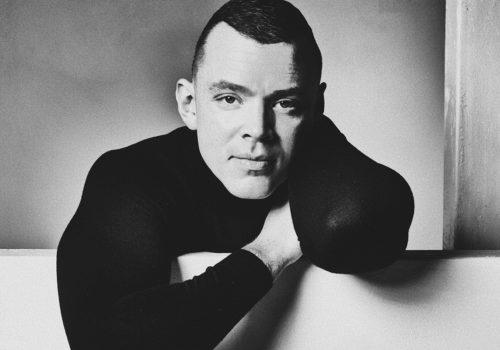
Greg Davis, living in Fort Worth, Texas is a published and contributing photographer for National Geographic/Disney and was represented by the National Geographic Image Collection for over a decade. Over two hundred of his works can still be found in the archives at National Geographic. Davis’s work was recently published in National Geographic photo books, “America the Beautiful“, “Destinations of a Lifetime” and “Women: The National Geographic Image Collection”, which also has a worldwide traveling exhibition, “Women: A Century of Change“, that features some of his work.
In 2017, he was honored as the Ambassador of the Year for Austin based non-profit, Well Aware, the first time they had ever awarded this recognition. Well Aware funds and implements sustainable clean water systems that drive development and empower communities in East Africa. Davis work now hangs in private and institutional collections worldwide: The Wittliff Collection, The Raymond James Collection and The Grace Museum among others.
Greg’s first major solo exhibit for the Museum of the Southwest followed the stories of individual pilgrims to India’s 2013 Kumbh Mela, the largest religious pilgrimage in history, about which he also completed his first short documentary film, Cloth Paper Dreams.
Davis is currently offering his latest traveling exhibit, Oaxacan Gold, to art centers and museums. The purpose of this exhibition is to bring awareness to the stunning beauty, cultural depth and mystical nature of the great Mexican State of Oaxaca through an educational multi-media cultural experience including photography, folk art, textiles, dance and music.
Website: https://gregdavisphotography.
https://www.instagram.com/gregdavisphotography/
https://www.facebook.com/gregdavisphotographyfanpage
Oaxaca Tour:
http://www.tinyurl.com/oaxacangoldvirtualtour
Patricia Lanza : How did you come to create the touring photographic series and multi- media cultural event Oaxacan Gold?
Greg Davis : The genesis of Oaxacan Gold began with an invitation—simple in form, yet profound in consequence. In 2018, Art Center Waco asked me to help inaugurate their newly reborn space, a striking cultural landmark brought to life in a new location through a multi-million-dollar transformation. What began as a curatorial proposal soon unfolded into something far more immersive: a journey into the heart of one of the most culturally rich and spiritually resonant regions of the Americas.
From the outset, I traveled not only with my cameras, but also with my ears and my heart—photographing, listening, forming bonds of trust and friendship with artisans, guides, and cultural stewards. Out of these relationships emerged Oaxacan Gold, a celebration not of a single art form, but often distinct expressions of cultural brilliance: photography, traditional Zapotec dyeing and weaving, the luminous alchemy of black clay and red clay sculpture, the mythic forms of alebrijes, the fierce elegance of hand-carved devil masks, the embodied beauty of traditional dance, the ancestral poetry of cuisine, and the sacred spirit of mezcal.
Since its debut, the exhibition has taken on a life of its own, traveling to two additional art centers across Texas over the past few years. The vision now is to bring Oaxacan Gold to at least five more venues—a continuation of its journey outward, sharing with new audiences the depth, beauty, and mystical nature of Oaxacan culture.
What was your research in preparing to work on this project. The research, if it can be confined to that word, was less a phase of preparation and more a deep and ongoing immersion—an apprenticeship of sorts, not to a singular discipline, but to a world.
Greg Davis : I spent countless hours in the quiet company of books, museums, journals, photographs, and fragments of film—tracing the contours of Oaxaca’s history, its art, its languages, its sacred geography. But no less important were the conversations: with artisans and elders, with mezcaleros and musicians, with fellow wanderers who had, in their own way, fallen under Oaxaca’s spell. The internet, too, became a kind of modern codex, filled with stories, archives, and glimpses into ceremonies that spanned generations.
But the more I learned, the more the landscape seemed to recede—growing ever more intricate, more elusive. Oaxaca is not a subject one masters; it is a living entity, a cultural tapestry so layered and vast that even a lifetime of study would leave you humbled by how much remains unseen, unspoken, untranslatable.
In the end, my research became a way of listening—a practice in humility and wonder. It taught me not just about Oaxaca, but about how to approach it: not with the eyes of an outsider seeking to define, but with the heart of a guest seeking to understand.
The state of Oaxaca has eight main regions with large diverse cultures, where did you go and what was your process and themes?
Greg Davis : While I didn’t set out with the intention of documenting each region individually, I made several month-long trips over the course of six journeys spanning four years (plus one more after the premiere). In the end, I was able to capture representative images from five of the eight regions: Valles Centrales, Costa, Sierra Sur, Cañada, and Mixteca. My method, if it could be called that, was one of listening—first to the wisdom of local guides who became friends, and then to the rhythm of the land itself. With a rented car and a heart wide open, we followed the contours of intuition more than itinerary, allowing each road to reveal its own story. It was never about control, but surrender—about the humility to bear witness rather than direct the scene.
Was this a linear (journey-based), episodic (a series of themes), or immersive (focused on one or several community or element over time
Greg Davis : The exhibition unfolded not as a chronological journey, but as a constellation of themes—each one a portal into a world unto itself. I curated the images with intention, ensuring that each thematic pillar stood grounded in the lived realities and ceremonial rhythms of Oaxaca. Among them: the enduring presence of folk art, where form is never divorced from spirit; the sacred intoxication of mezcal, distilled not just from agave but from centuries of ritual and reverence; the vibrant pulse of Afro-Mexican identity along the coastal enclaves; the mysticism of mushrooms and the masked vitality of the Huehuentones; the ancestral wisdom encoded in Día de los Muertos; the grand choreography of the Guelaguetza, a celebration as much about reciprocity as spectacle; the solemn architecture of churches and ruins that echo both conquest and resilience; and cacao—not merely as sustenance, but as a symbol of divine offering.
How did you produce your publication on Oaxacan Gold and what are you looking to do with this special edition and the exhibition?
Greg Davis : From the very beginning, Oaxacan Gold was never meant to be confined to a gallery wall. The impulse behind it—indeed, it’s very soul—was to carry home as much of the cultural spirit of Oaxaca as possible: not just through images, but through sound, story, ritual, and presence. The exhibition arose from that same impulse—a tactile vessel for memory, meaning, and tribute. A way to ensure that what was shared in the ephemeral moment of an exhibition might endure in the hands and hearts of those who encounter it.
The journey toward that vision began, fittingly, with an encounter that felt almost fated. On the eve of my very first departure to Oaxaca, I crossed paths with Edgar Yepez, Director of Ballet Folklorico de Austin. It was one of those rare moments that feels orchestrated not by chance, but by some deeper rhythm. Upon hearing the vision for Oaxacan Gold, Edgar responded not just with interest, but with conviction—offering his artistry and his ensemble’s deep cultural lineage and the talent of his dance troupe to help shape the living heartbeat of the project.
Since then, Edgar has become an indispensable partner, helping to transform the exhibition from a visual journey into a full-bodied experience—one that moves, sings, and breathes. The exhibit, in turn, seeks to reflect that layered richness. It is more than a catalog; it is a curated offering—a tribute to the artisans, dancers, storytellers, and spirit-keepers who gave the project its life.
As for what lies ahead: I see the exhibit as both artifact and ambassador. I hope it continues to open doors—into other institutions, other communities, other conversations—carrying with it the warmth, complexity, and unshakable beauty of Oaxaca’s cultural inheritance.