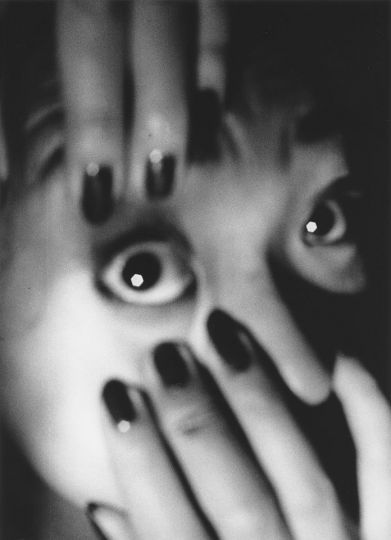
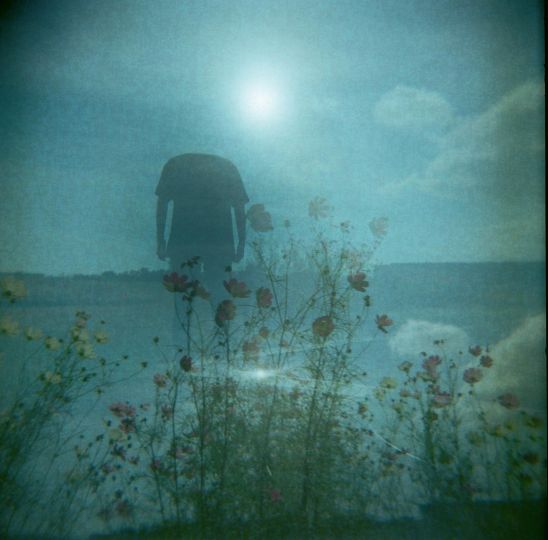
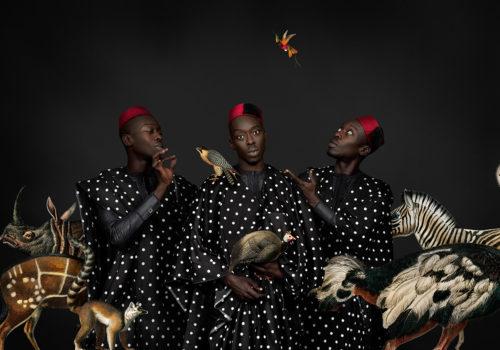
The Centre Mondial de la Paix, des Libertés et des Droits de l’Homme(World Center for Peace, Freedom, and Human Rights) is showing Les Ombres de l’Atome (Shadows of the Atom), a photographic creation by Jean-Philippe Pernot presented on the occasion of the 80th anniversary of Hiroshima and Nagasaki. Pernot writes:
I have often found myself thinking that, on certain weekends, I could have said I was going to the cemetery. Crossing the Picardy landscapes especially those that follow the valleys of the Somme always gave me that impression. There, the graves of soldiers who came from France, Germany, the British Isles, Australia, Canada, New Zealand, South Africa, India, North Africa, Asia, and even Central Africa form a world map rising out of a world in the process of tipping over. I have often wondered whether, without the First World War, Hiroshima and Nagasaki would have met the same fates.
I cannot rewrite history, even if some have tried. Nor can I speak the unspeakable. The unspeakable of the trenches, with their smells of decomposition, the heat of blood never truly dry, the earth turned into a slurry of flesh, bone, and viscera. Closer to me barely four generations ago are the unspeakable events of Hiroshima and Nagasaki. Survivors speak of unsteady silhouettes, begging for water, eyes hanging in their palms, held only by the optic nerve. Skin swollen, hardened, turned to leather.
Faced with these abysses, human beings often choose to close their eyes. Musset spoke of the livid corpse of truth; I believe that metaphor has never been so apt. After the Great War, society drew the curtains to let in the Roaring Twenties, relegating the survivors to silence. After Hiroshima and Nagasaki, the Hibakushas were pushed to the margins, kept at a distance for a long time before finally being recognized, notably with the 2024 Nobel Peace Prize. Yet voices Chevalier, Céline, Ernst Jünger, Genevoix had already drawn the uncompromising portrait of what human beings can do to one another. With the Shoah, then with Little Boy and Fat Man, a trilogy of destruction imposed itself on the world.
It is within this constellation of memories that my exhibition takes place. I tried to approach the unspeakable not through raw description, but by building an artistic sum from the work of memory, documentation, and the laboratory. I sought a terrifying beauty not to soften what it contains, but to make visible what the human gaze too often refuses to bear. Each work demands time: gazes, bodies, landscapes intertwine until, at their own pace, they let through the impressions that emerge from them. Restorative and revelatory gold converses with the decay of matter; chemical alterations become witnesses to breath, burning, keloids.
I am not trying to make people find these images “beautiful.” in the decorative sense of the term. That would only prolong blindness. I want everyone to take the time to let the essence of these fragments of history infuse, so as to leave with a spark of memory. If I cannot rewrite the past, I can contribute to writing tomorrow. François Mitterrand reminded us that creators have a responsibility to build beacons. This exhibition is one such beacon; I try to keep it lit, and I hope that those who come across it will help to make it shine a little brighter.
Jean-Philippe Pernot
Jean-Philippe Pernot : Les Ombres de l’Atome
from 12 January to 30 April 2026
Le Centre Mondial de la Paix, des libertés et des Droits de l’Homme
Pl. Mgr Ginisty
55100 Verdun, France
https://cmpaix.eu/fr/